Iran Denies US Talks: A Blow to Donald Trump’s Peace Hopes 2026
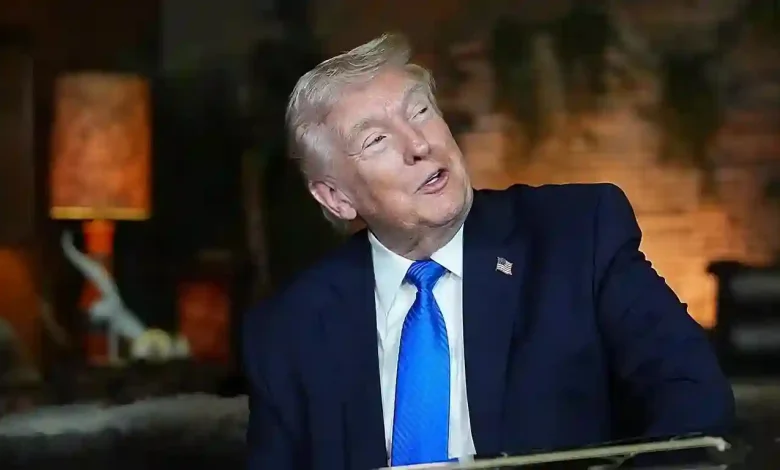
Table of Contents
Iran has flatly denied that negotiators plan to meet with their US counterparts on Monday in the latest blow to Donald Trump’s hopes of an imminent end to the war. The dramatic public contradiction underscores a deep geopolitical impasse as both nations navigate a highly unstable conflict in the Persian Gulf. While President Donald Trump declared to reporters over the weekend that formal diplomatic negotiations were scheduled to resume on Monday afternoon, Tehran’s official response has been swift and unyielding. Iranian Foreign Ministry spokesperson Esmaeil Baghaei clarified during his weekly press briefing that no direct or indirect talks are currently taking place with the United States, throwing a wrench into Washington’s optimism for a rapid resolution.
The dispute comes at a critical juncture in the ongoing war, which has disrupted international maritime safety, closed vital energy chokepoints, and sent shockwaves through global markets. As regional mediators attempt to defuse the escalating tension over the Strait of Hormuz tanker shipping lane, the prospects for a comprehensive peace deal remain dim. The public posturing of both administrations suggests that while the U.S. seeks an immediate diplomatic off-ramp to contain rising economic damage, Iran remains committed to leveraging its strategic position until Washington removes its military blockade.
Introduction: The Contradiction in Gulf Diplomacy
Diplomatic efforts in the Persian Gulf have descended into a war of words, with Washington and Tehran offering entirely incompatible narratives about the status of negotiations. U.S. President Donald Trump has repeatedly framed his administration’s strategy as a masterclass in pressure, claiming that his military posturing has brought Iran to the negotiating table. However, the reality on the ground indicates a far more complex stalemate, where theatrical declarations of peace clash with the hardline demands of Iranian sovereign interest as reported by Reuters. This divergence has created a chaotic environment for international observers, who are left to parse whether the two sides are genuinely moving toward a ceasefire or merely positioning themselves to shift the blame for future escalations.
The Core of the Dispute: Monday’s Canceled Talks
The immediate catalyst for the current diplomatic dispute was President Trump’s announcement on Saturday that formal peace talks would resume on Monday. According to Trump, he had agreed to a request by regional leaders—and allegedly Iranian representatives themselves—to call off what he described as “the biggest attacks since World War II.” This statement followed a recurring pattern in the conflict, wherein the White House threatens devastating military action, only to pull back at the last minute in favor of a purported diplomatic breakthrough. For example, when Trump cancels Iran strikes at the eleventh hour, it is often presented as a generous gesture to allow Tehran “one last chance” to negotiate.
Tehran’s response on Monday morning was a cold bucket of water on the U.S. administration’s claims. Esmaeil Baghaei declared that Iran had no plans to host foreign mediators or send a delegation abroad for talks with U.S. officials. He described reports of imminent negotiations as “fake news” designed to manipulate financial markets and salvage Trump’s domestic political standing ahead of upcoming midterm elections. Baghaei emphasized that Iran would not negotiate under the shadow of military threats or naval blockades, establishing a firm boundary that contradicts the White House’s depiction of an eager Iranian delegation.
Oman’s Intermediary Role and the Strait of Hormuz
Despite denying any direct talks with the United States, Iran has confirmed active bilateral discussions with the Sultanate of Oman. Muscat has historically acted as a reliable backchannel between Western powers and Tehran, and its current mediation is focused strictly on localized maritime security rather than a broad geopolitical settlement. According to Baghaei, the focus of the Iranian delegation is exclusively on establishing a temporary safe passage route through the Strait of Hormuz, which has been largely closed to commercial traffic since the war began in late February.
Shipping Coordinates and Strategic Sovereignty
The discussions between Iran and Oman have reportedly yielded significant technical progress. Baghaei revealed that the two nations have reached a preliminary agreement on the precise geographical coordinates of a navigable shipping channel through the strait. This agreement would theoretically allow merchant vessels to bypass the most contested zones of the waterway under joint Omani-Iranian supervision. However, the technical feasibility of this channel is heavily overshadowed by the broader military reality. The Iranian military establishment, particularly the hardline factions of the Islamic Revolutionary Guard Corps (IRGC), is determined to maintain near-total control over any transit corridor to prevent foreign military assets from exploiting the route.
The Sufficiency of the Oman Accord
While the technical agreement with Oman represents a positive step, the Iranian Foreign Ministry has cautioned that a bilateral accord is not a magic bullet. Baghaei explicitly stated that reaching an understanding with Muscat is “not sufficient” to reopen the Strait of Hormuz to international commerce. The core of the problem, according to Tehran, lies not in regional coordination but in the ongoing “U.S. aggression.” As long as the United States maintains its aggressive naval blockade of Iranian ports and continues its aerial operations, the conditions inside the strait will remain fundamentally unchanged. For Iran, the reopening of the waterway is a major piece of diplomatic leverage that will not be surrendered without a reciprocal lifting of American economic and military sanctions.
Donald Trump’s Diplomatic Gambits and Strategic Retreats
For President Trump, securing a deal to reopen the Strait of Hormuz is a matter of immense political urgency. The closure of the waterway, which previously handled approximately 20% of global oil and liquefied natural gas, has triggered high inflation and soaring fuel prices worldwide. With domestic economic pressure mounting, the Trump administration has engaged in a high-stakes game of brinkmanship, alternating between massive military threats and sudden offers of dialogue. This erratic strategy is viewed by many international analysts as a sign of frustration rather than strength, as the administration struggles to find an honorable exit from a costly and unpopular conflict.
The “Last Chance” Ultimatum
Following Iran’s public denial of the talks, President Trump took to social media to lash out at Tehran’s leadership, calling them “unbelievably duplicitous.” He insisted that negotiations were, in fact, “going on right now” through backchannels and warned that the current diplomatic window represented a “last chance” for Iran to avoid a devastating military escalation. Speaking to reporters in the Oval Office, Trump suggested that if Tehran refused to sign a “good document” in the coming days, his administration would have no choice but to authorize unrestricted military strikes, implying a threat of “decapitation” against the Iranian leadership. This aggressive posture is aimed at maintaining pressure, but its efficacy is diluted by the frequency with which previous ultimatums have been issued and subsequently postponed.
Reopening the Strait: Phase One vs. Phase Two
The White House has outlined a two-phase framework for any potential resolution to the war. Under this plan, “Phase One” would focus exclusively on the immediate, complete, and total opening of the Strait of Hormuz, allowing global shipping and energy exports to return to prewar levels. Once maritime stability is restored, “Phase Two” would commence, focusing on long-term geopolitical issues, including the complete denuclearization of Iran and the restriction of its ballistic missile program. Iran, however, has rejected this sequential approach, arguing that it would strip them of their primary leverage (control of the strait) before any discussions on U.S. military commitments and sanctions relief even begin. This fundamental disagreement on the sequencing of talks represents a major diplomatic obstacle.
The Military Dimensions: Blockade and Retaliation
The geopolitical standoff is further complicated by the intensifying military actions on the ground. The U.S. military, operating under Central Command (CENTCOM), has maintained a strict naval blockade on Iranian ports, intercepting commercial vessels and redirecting cargo destined for the Islamic Republic. This blockade was reinstated in mid-July after a brief, fragile ceasefire collapsed, leading to a renewed cycle of violence. The constant threat of military encounters at sea has turned the Persian Gulf into a highly volatile theater, where a single miscalculation could trigger a wider regional war.
The Role of the IRGC and Local Resistance
Within Iran, the political landscape is heavily influenced by the Islamic Revolutionary Guard Corps (IRGC), which holds a virtual veto over any diplomatic agreement involving territorial waters. Hardline military figures, such as Mohsen Rezaei, a senior military adviser to the Supreme Leader, have warned that American forces will face “serious risks and casualties” if they continue to violate Iranian sovereignty. The IRGC argues that accepting a U.S.-mandated transit route through the strait would be tantamount to surrender. This domestic pressure makes it extremely difficult for Iranian civilian diplomats to make concessions, as any deal perceived as weak could trigger internal political backlash or non-compliance from the military. The situation is exacerbated when regional intelligence warns of Iran’s surprise attack capabilities, which remain primed for deployment if diplomacy fails completely.
Red Sea Escalation and Houthi Actions
The conflict has also expanded far beyond the Persian Gulf, with Iran’s regional allies actively engaging coalition forces. In the Red Sea, Yemen’s Houthi rebels have intensified their campaign against commercial shipping, launching ballistic missiles and explosive-laden drone boats at vessels associated with the U.S. and its partners. This parallel escalation has stretched coalition naval resources thin, forcing the U.S. to maintain a high-tempo military presence. The regionalized nature of the war means that even if a local understanding is reached in Hormuz, hostilities in the Red Sea could easily spill back and disrupt the Persian Gulf, creating a continuous cycle of instability. Indeed, this tension follows a cycle where U.S. airstrikes hit Iran for a 12th night as Red Sea blockades and counter-strikes dominated the headlines.
Economic Fallout: Oil Markets and Regional Repercussions
The economic consequences of the closed Strait of Hormuz cannot be overstated. Before the outbreak of hostilities, the waterway was the primary artery for energy exports from Saudi Arabia, Iraq, the UAE, Kuwait, and Iran itself. The prolonged closure has forced global supply chains to adapt, driving up shipping insurance rates and forcing tankers to take longer, more expensive routes around the Cape of Good Hope. Global financial markets are highly sensitive to these shifts, as seen in the volatile oil prices projected for the upcoming quarters, with Brent crude repeatedly hovering near the $80 mark despite temporary dips on rumors of a diplomatic breakthrough.
For regional economies, the war has been a disaster. Neighboring Gulf states, which depend heavily on stable maritime trade, have watched their export revenues decline and their sovereign risks rise. This economic pain has prompted countries like Saudi Arabia and Qatar to put immense pressure on the Trump administration to find a diplomatic resolution. However, as the conflict enters its sixth grueling month, surpassing the milestones of Iran war day 154, the lack of progress has led many to fear that a quick resolution is impossible. Analysts warn that the ongoing naval blockade has led both nations into a strategic dead end with no immediate resolution in sight.
Diplomatic Alternatives: The Pakistan and Qatar Channels
With direct U.S.-Iran negotiations stalled, international diplomatic efforts have increasingly shifted to alternative mediation channels. While Oman remains the primary intermediary for technical shipping issues, other regional powers are working behind the scenes to establish a political framework for talks. Pakistan, which shares a long land border with Iran, has taken a proactive role. Islamabad recently issued an urgent invitation to Iranian Foreign Minister Abbas Araghchi to visit Pakistan to discuss regional security and potential diplomatic off-ramps. Pakistan’s involvement is seen as a constructive effort to bridge the gap between Washington and Tehran, particularly after Iraq denies approving coalition military operations within its sovereign airspace, showing the reluctance of neighboring nations to get dragged into the conflict.
In addition to Pakistan, Qatar continues to provide crucial administrative and logistical assistance to the mediation process. Doha has frequently served as a host for indirect talks and has worked closely with Western envoys to keep lines of communication open. However, both Pakistani and Qatari mediators face the monumental task of reconciling two fundamentally opposed positions: a U.S. administration that demands an immediate, unconditional reopening of the strait under the threat of devastating military strikes, and an Iranian government that views the closure of the strait as its ultimate shield against foreign aggression.
Summary of Positions on the Strait of Hormuz Resolution
To understand the current diplomatic stalemate, it is helpful to contrast the official positions of the United States, Iran, and the regional mediator, Oman. The following table outlines the key demands, leverage points, and proposed outcomes of each party involved in the current negotiations over the strategic waterway.
| Country/Actor | Key Demands & Objectives | Primary Strategic Leverage | Proposed Framework for Resolution |
|---|---|---|---|
| United States | Immediate and total reopening of the Strait of Hormuz; complete denuclearization of Iran; end to commercial ship attacks. | Naval blockade on Iranian ports; superior air strike capabilities; global financial sanctions. | Two-phase approach: Phase One opens the strait; Phase Two addresses the Iranian nuclear and missile programs. |
| Iran | Lifting of the U.S. naval blockade; cessation of military strikes; recognition of sovereign control over territorial waters. | Physical control of the Strait of Hormuz; proxy forces (Houthis); threat of regional energy disruption. | Simultaneous resolution: Reopening the strait is contingent upon the immediate end of the U.S. blockade and military pressure. |
| Oman (Mediator) | Prevention of regional war; establishment of a safe, neutral transit channel; restoration of maritime commerce. | Neutral diplomatic reputation; trusted relationship with both Western powers and Tehran’s leadership. | Bilateral maritime agreement establishing clear geographical coordinates for a temporary navigable shipping lane. |
Conclusion: A Precarious Standoff with No Clear Off-Ramp
The flat denial by Iran of any planned Monday meetings with the United States represents a sobering reality check for those hoping for a swift end to the conflict. It exposes the limits of a “maximum pressure” strategy that relies on public threats and eleventh-hour diplomatic grandstanding. While President Trump continues to insist that a deal is close, Tehran’s refusal to play along with Washington’s timeline indicates that the road to peace will be long, arduous, and fraught with military risk.
As long as the U.S. naval blockade remains in place and Iran continues to demand reciprocal concessions before reopening the Strait of Hormuz, the region will remain a tinderbox. With Oman working diligently to finalize a localized shipping agreement and countries like Pakistan and Qatar attempting to facilitate broader political discussions, the diplomatic machinery is active, but its engine is stalling. Until both Washington and Tehran are willing to move past public posturing and address the core security concerns of the other, the strategic dead end in the Gulf will persist, threatening the stability of the global economy and the lives of millions across the Middle East.