Iraq Denies Approving Joint US-Saudi Strikes on PMF Sites 2026
Table of Contents
Iraq stands at a dangerous geopolitical crossroads as the Baghdad government forcefully asserts it had absolutely no prior knowledge of, or consent for, the recent joint US-Saudi airstrikes executed on its sovereign territory. The military operation, which struck multiple coordination centers and military outposts, has inflicted massive damage and resulted in the deaths of at least 20 members of the country’s state-sanctioned but Iran-backed Popular Mobilisation Forces (PMF). In the immediate aftermath of this unsanctioned foreign intervention, the Iraqi government announced the postponement of a high-profile diplomatic visit to Riyadh, signaling a severe fracture in the fragile diplomatic detente between the two neighbors. The unilateral action has also sparked intense anger in Baghdad, where national sovereignty has once again been placed under immense strain by external military powers carrying out strategic campaigns inside Iraqi borders.
The Diplomatic Shockwave of Unsanctioned Strikes
The sudden and lethal airstrikes have sent shockwaves through the political establishment of Iraq. Government spokesperson Haider al-Aboudi delivered a stern, late-night televised address confirming that Baghdad did not authorize, facilitate, or tolerate the joint foreign offensive. These comments directly contradict statements originating from Washington and Riyadh, which described the operation as a coordinated strike designed to eliminate immediate security threats. The escalation represents a dangerous step backward for Iraq, which has spent years attempting to balance its diplomatic relations between regional rivals like Saudi Arabia, Iran, and the United States.
By bypassing the Iraqi government completely, the allied military forces have forced Baghdad into a defensive corner. While the US and Saudi Arabia claim the operations were necessary to protect vital infrastructure, Iraqi authorities view the unilateral bombardment of sovereign territory as an illegal act of aggression. The situation has raised serious questions about the future of security agreements and bilateral partnerships, creating a massive diplomatic crisis that threatens to pull Iraq deeper into the wider vortex of regional conflict. This latest flashpoint is a reminder of the volatile nature of the Middle East, echoing the ongoing violence witnessed during Day 148 of the Iran war, which has continuously destabilized global oil markets and regional safety corridors.
The Deconstruction of Prior Knowledge Claims
In his official statement, government spokesperson Haider al-Aboudi sought to systematically dismantle claims that the Iraqi leadership was complicit in the attacks. Al-Aboudi explicitly stated that the Iraqi administration “has not granted any approval for attacks on specific sites or groups within Iraqi territory” and reaffirmed that “the government had no prior knowledge of the attacks on Iraqi territory”. This absolute rejection of coordination highlights the widening divide between the Iraqi sovereign leadership and its international partners.
The PMF, which bore the brunt of the lethal airstrikes, is legally integrated into the Iraqi state’s security framework under the Popular Mobilization Forces Commission, yet it maintains strong ideological, political, and material ties with Tehran. By targeting PMF centers, the US-Saudi coalition effectively struck state-sanctioned military assets, a move that the Iraqi Ministerial Council for National Security has vehemently condemned as a direct breach of international law. As Iran-US war updates indicate, proxy networks and state forces are increasingly blurring together, leaving intermediate states like Iraq to bear the operational and political costs of external geopolitical clashes.
Chronology of the Joint US-Saudi Air Campaigns
The events leading up to the Wednesday morning strikes outline a highly synchronized, pre-planned military operation. According to security reports, the joint allied air assets targeted seven separate provinces across Iraq, including high-density PMF strongholds in the Nineveh Plains, Salah al-Din, and western Anbar. The strikes hit intelligence centers, weapons depots, and communications hubs, leaving at least 18 to 20 PMF personnel dead and over 20 wounded. This coordinated aerial assault marks one of the most significant joint military actions executed directly by Riyadh and Washington on Iraqi soil in recent years.
The trigger for this joint campaign lies in the previous days’ events. On Monday and Tuesday, Saudi Arabia reported that its critical infrastructure and the capital city, Riyadh, were targeted by hostile drone strikes. The Saudi Defense Ministry claimed these drone swarms originated directly from inside Iraqi territory and were operated by Iran-backed proxy factions. Rather than waiting for an official Iraqi investigation to conclude, joint forces launched their retaliatory strike in the early hours of Wednesday. This rapid response bypasses traditional diplomatic channels, underscoring the shift toward unilateral military deterrence. In other theaters, tensions have routinely boiled over, such as when the IRGC targets US base facilities, creating an ongoing cycle of action and reaction that repeatedly engulfs sovereign Iraqi territory.
Dissecting Donald Trump’s Coordination Assertions
A major source of confusion and political tension following the attacks stems from public comments made by US President Donald Trump. In a high-profile media interview, Trump asserted that the military operation was carried out in full coordination with the Iraqi government. This narrative was quickly weaponized by domestic Iraqi opposition groups who accuse the prime minister’s cabinet of secretly conspiring with Western forces to weaken sovereign military groups. However, Baghdad’s immediate and public condemnation of the strikes tells a very different story.
Political analysts suggest that the Trump administration’s claims of coordination may be designed to legitimize unilateral actions and shift the blame for domestic political fallout onto Baghdad. This aggressive rhetorical style is characteristic of Trump’s expanding regional offensive, which often prioritizes domestic messaging and deterrence over the delicate diplomatic sensibilities of sovereign allies. By contrast, the sudden shifts in US military engagement—such as Trump’s cancellation of direct strikes in past confrontations—demonstrate a highly volatile operational environment where local partners are rarely kept in the loop, despite claims to the contrary made by American officials in Washington.
Iraq’s Complex Balancing Act and Security Dilemma
For Iraq, maintaining a balance between the influence of neighboring Iran and the security demands of the US-Saudi axis has become a near-impossible diplomatic challenge. The Iraqi state relies heavily on American logistical support and international training, yet its internal security landscape is dominated by pro-Tehran political factions and paramilitary forces. When Iran strikes US assets in retaliation for regional escalations, Iraqi soil is inevitably utilized as a theater of war, undermining the authority of the central government in Baghdad.
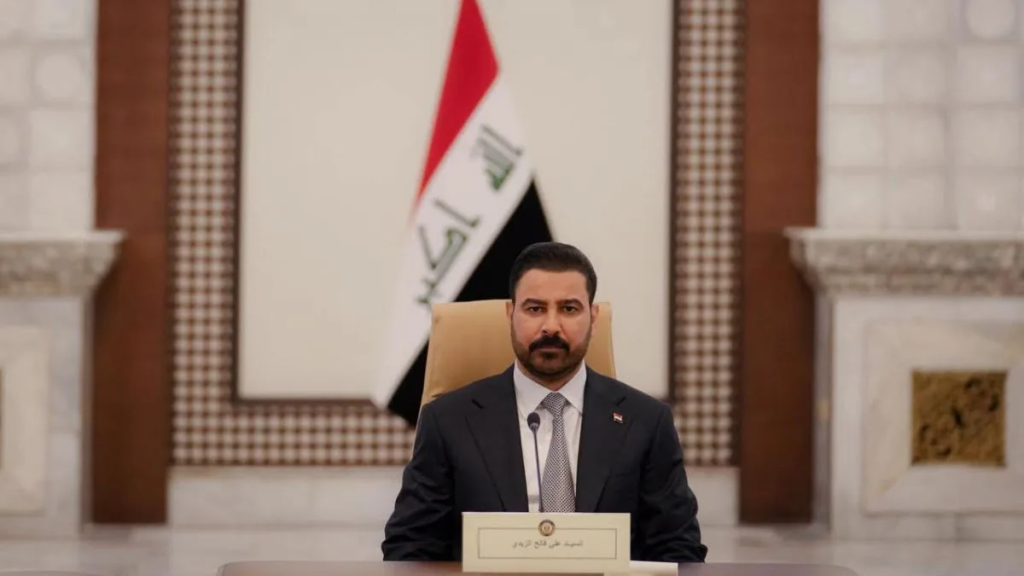
The Prime Minister’s spokesperson, Sabah al-Numan, emphasized that Iraq remains committed to preventing non-state actors from launching attacks from its soil, while simultaneously resisting foreign military incursions. However, Baghdad’s actual ability to disarm or fully control these proxy groups is heavily constrained. The central government simply does not possess the political or military capital required to suppress powerful factions within the PMF without triggering a destructive domestic civil war. Consequently, Iraq remains caught in a painful security dilemma: unable to satisfy the defensive demands of Riyadh and Washington, yet unable to tolerate the lethal breaches of sovereignty carried out by those same allies.
Baghdad’s Demands for Substantive Evidence
To assert its sovereignty and de-escalate the situation, Iraq has officially demanded that Saudi Arabia provide concrete, verifiable evidence regarding the alleged launch of drones from Iraqi territory. Government spokesperson Haider al-Aboudi revealed that Baghdad has formed specialized security and military investigative committees to thoroughly examine Riyadh’s allegations. However, to date, these local committees have found no supporting evidence to substantiate the claims that the drone strikes targeting Riyadh on Monday and Tuesday were launched from Iraqi soil.
By demanding formal data sharing from Riyadh, Iraq is attempting to shift the discourse back toward established international norms. The Prime Minister’s office has formally requested that Saudi security agencies share their telemetry, radar data, and intelligence feeds. This would allow Iraqi sovereign forces to investigate and legally prosecute any unauthorized actors operating within their borders. Until such evidence is provided, Baghdad views the allegations as unproven pretexts used to justify a highly destructive air campaign that violated Iraqi sovereignty and killed domestic security personnel.
Wider Geopolitical Fallout and Regional Ramifications
The fallout from these unsanctioned strikes extends far beyond the borders of Iraq and Saudi Arabia. Geopolitically, the confrontation threatens to derail the broad security framework of the Persian Gulf. In particular, this conflict could severely complicate maritime security, which has already been heavily disrupted by the ongoing Strait of Hormuz tanker crisis. Increased military friction in Iraq naturally leads to heightened alerts across shipping lanes, raising insurance premiums and threatening the stable transit of oil and gas from the region.
Furthermore, the escalation carries profound financial consequences. The economic fallout of the Iran conflict is already being felt globally, and any further destabilization of Iraq—the second-largest crude producer in OPEC—could spark sudden spikes in energy prices. By postponing the Prime Minister’s visit to Riyadh, Baghdad has frozen bilateral discussions on joint economic investments, electricity grid connections, and border security. This freezing of diplomatic ties leaves both nations more isolated and increases the risk of miscalculation, potentially turning a localized security dispute into an uncontrolled regional war.
Comparative Assessment of Conflicting Official Accounts
The narrative surrounding the joint US-Saudi strikes is highly fragmented, with each major actor presenting a radically different version of events. To help understand the conflicting positions, the following comparison table outlines the official stances of Baghdad, Riyadh, and Washington regarding the key dimensions of the crisis.
| Crisis Dimension | Baghdad’s Official Position | Riyadh’s Stance | Washington’s Narrative |
|---|---|---|---|
| Prior Knowledge & Consent | Categorically denied; zero coordination, notification, or approval. | Asserts strikes were a necessary defensive and preventative response. | Claimed the operation was fully coordinated with Iraqi leadership. |
| Origin of Drone Launches | Demands evidence; local investigations have found no proof of Iraqi origin. | Claims clear intelligence proves drones targeting Riyadh originated from Iraq. | Attributes drone strikes to Baghdad-based Iranian proxy organizations. |
| Operational Targets & Casualties | At least 20 PMF personnel killed across 7 provinces; condemns loss of life. | Focused on neutralizing threat actors responsible for attacking oil sites. | Targeted command centers and weapons storage facilities of hostile proxies. |
| Diplomatic Action | Postponed Prime Minister’s state visit to Riyadh; condemned sovereignty violation. | Demands immediate Iraqi action to disarm hostile cross-border factions. | Vows to continue defending regional partners from hostile Iranian influence. |
This stark divergence in official accounts illustrates the deep distrust and geopolitical friction defining the contemporary Middle East. As Iraq fights to preserve its national sovereignty and protect its state institutions, it remains vulnerable to the unilateral military decisions of superior global and regional powers. Whether Baghdad can successfully mediate between Riyadh and the powerful domestic factions of the PMF remains to be seen, but the postponement of high-level diplomacy suggests that a peaceful resolution is currently far from reach.