Oil Prices Projected to Rise in 2026 Amid Shipping Disruptions
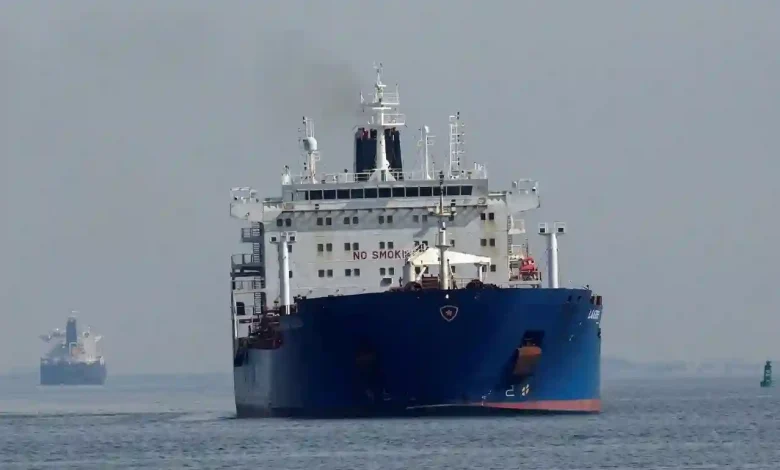
Table of Contents
Oil prices are expected to experience sustained upward momentum throughout the remainder of this year as major maritime transport corridors face unprecedented geopolitical volatility. Ongoing disruptions in the Strait of Hormuz, alongside persistent, highly targeted maritime assaults in the Red Sea corridor, have injected a permanent risk premium into global crude benchmarks. With energy security experts warning of protracted bottlenecks, energy markets are bracing for a period of supply-side inelasticity that could challenge central bank policies and drag on macroeconomic growth across both advanced and developing economies.
Introduction to the Global Energy Risk Matrix
The global trade architecture relies heavily on a handful of narrow oceanic passages, or chokepoints, to distribute crude oil, liquefied natural gas (LNG), and refined petroleum products from major production hubs in the Middle East to processing plants and end consumers in Europe, Asia, and North America. As geopolitical tensions boil over, the physical security of these transit routes has deteriorated rapidly.
Consequently, the risk of a severe supply disruption is no longer a tail risk but a baseline assumption for energy analysts. The compounding nature of these crises—where a disruption in one corridor forces shipping liners to reroute around entire continents—exacerbates transit times, drastically inflates shipping insurance premiums, and strains global maritime capacity. This fragile system forms the backdrop for the latest commodity projections, illustrating how localized defense and geopolitical frictions quickly metastasize into global financial challenges.
The Reuters July 2026 Poll and Forecast Adjustments
According to the latest Reuters poll of 31 economists and analysts, commodity strategists have officially revised their near-term projections upward. The July survey indicates that Brent crude, the global benchmark, is now expected to average $85.22 per barrel in 2026. This represents a notable increase from the previous month’s forecast, where the June consensus pegged the average price at $84.50 per barrel.
The revised numbers reflect a growing consensus that the structural factors driving prices upward are not transitory. Analysts polled by Reuters point to a combination of rigid OPEC+ production discipline, deteriorating security in shipping lanes, and higher-than-expected demand in emerging markets. As Iran war enters day 149, shipping routes have been systematically altered, necessitating longer voyages around the Cape of Good Hope, which absorbs vast amounts of bunker fuel and reduces effective tanker availability. Below is a comparative table summarizing the shift in forecast metrics between the June and July commodity surveys.
| Forecast Indicator | June 2026 Survey Consensus | July 2026 Survey Consensus | Net Revision ($/bbl or %) | Primary Price Drivers Identified |
|---|---|---|---|---|
| Brent Crude (2026 Average) | $84.50 / bbl | $85.22 / bbl | +$0.72 / bbl | Strait of Hormuz tensions, Red Sea rerouting |
| WTI Crude (2026 Average) | $80.15 / bbl | $81.10 / bbl | +$0.95 / bbl | Declining US commercial inventories, export pull |
| Global Shipping Cost Premium | Baseline +15% | Baseline +28% | +13.00% | Extended voyage times, high war-risk insurance |
| OPEC+ Compliance Level | 96.50% | 98.20% | +1.70% | Rigid adherence to voluntary supply reductions |
Geopolitical Bottlenecks: Strait of Hormuz and Red Sea Threats
The structural vulnerability of international energy markets lies in their geographic concentration. Two key chokepoints—the Strait of Hormuz and the Bab el-Mandeb (Red Sea)—are experiencing heightened security threats that directly affect daily flows of millions of barrels of crude oil. These disruptions have caused massive U.S. economic shockwaves as global supply chains contract under the pressure of delayed shipments and skyrocketing freight tariffs.
When transit through these passages is compromised, the immediate impact is a sharp escalation in spot freight rates. Shipping companies must weigh the financial costs of paying inflated war-risk premiums against the logistical costs of adding up to 14 days to their voyages by circumnavigating Africa. This structural friction acts as an artificial supply constraint, driving up the landing price of crude regardless of underlying extraction volumes.
Analyzing the Strait of Hormuz Chokepoint
The Strait of Hormuz is widely regarded as the most critical oil transit channel in the world. Located between Oman and Iran, it connects the Persian Gulf with the Gulf of Oman and the Arabian Sea. Approximately one-fifth of the world’s liquid petroleum consumption passes through this narrow waterway daily, making it highly sensitive to regional geopolitical conflicts.
A notable escalation occurred when a Strait of Hormuz tanker attacked in mid-July disrupted localized traffic and forced vessel operators to execute emergency evasive maneuvers. Because alternative routes bypass only a fraction of the Strait’s total volume, any prolonged closure or systematic targeting of tankers in this area quickly leads to a severe supply squeeze in Europe and Asia, which rely heavily on Middle Eastern heavy sour grades.
The Red Sea Crisis and Houthi Maritime Attacks
Further west, the Bab el-Mandeb strait, which serves as the gateway to the Red Sea and the Suez Canal, has transformed into a highly contested maritime zone. Yemen-based Houthi militants, backed by regional actors, have conducted frequent drone, missile, and asymmetric naval attacks against commercial vessels transiting these waters. The ongoing Houthi embargo targets Saudi shipping and other coalition vessels passing through the Bab el-Mandeb, complicating regional logistics.
These security measures have severely affected regional shipping, as the Houthis blockade Saudi ships to leverage political pressure. As a result, major container lines and tanker operators have completely suspended transit through the Suez Canal, opting instead for the lengthy route around the Cape of Good Hope. This systemic shift has permanently tied up active shipping capacity, leaving fewer tankers available in the spot market and keeping transport costs exceptionally high.
Macroeconomic Impacts of Sustained High Crude Costs
The escalation of crude prices has direct and immediate consequences for global macroeconomic stability. High oil prices function as a de facto tax on global consumers, reducing disposable income and raising operating costs for businesses across virtually every industry sector. Transport, logistics, agriculture, and chemical manufacturing are particularly vulnerable to these price increases, leading to secondary price rises across consumer goods networks.
This multi-theater escalation has sent energy bills soaring, with US retail gasoline prices climb above $4 amid Middle East hostilities. Higher transport costs quickly feed into food and core manufacturing supply chains, keeping global headline inflation rates elevated. Central banks, which had been planning to ease monetary policy, are now forced to maintain higher-for-longer interest rates to combat sticky, energy-driven inflationary pressures.
Supply Side Vulnerabilities and OPEC+ Posturing
The geopolitical supply risks are occurring in a market already characterized by tight supply-side management. The OPEC+ alliance, led by Saudi Arabia and Russia, has consistently maintained production curbs to support prices. Although some member nations have expressed a desire to gradually phase out these voluntary cuts, the current geopolitical environment provides little incentive for them to flood the market with excess oil.
Furthermore, domestic production growth in non-OPEC countries, particularly the United States, has begun to plateau as shale operators prioritize capital discipline and shareholder returns over aggressive volume expansion. This lack of a flexible supply cushion means that any sudden, physical disruption in the Middle East cannot easily be compensated for by increased output elsewhere, reinforcing the bullish sentiment captured in the July Reuters poll.
Global Demand Resilience vs. Inflationary Pressures
Despite these high prices, global oil demand has remained surprisingly resilient. Industrial demand in India, China, and southeast Asia continues to expand, driven by urbanization and petrochemical expansion projects. This steady demand, coupled with constrained supply, is a key reason why economists have revised their price forecasts upward.
Financial markets are highly sensitive to these bottlenecks; deep-seated inflation threatens the economy as war in Iran shows no immediate signs of de-escalation. If prices remain above $85 per barrel for an extended period, it could trigger a period of stagflation in import-dependent economies, combining stagnant GDP growth with high inflation. For a detailed breakdown of global commodity dynamics, the Reuters commodity research portal provides real-time tracking of futures markets and physical trade flows.
Strategic Options for Energy Consumers and Import-Dependent Nations
To mitigate these risks, major consuming nations are looking to diversify their energy import profiles and expand their strategic petroleum reserves (SPR). However, replenishing these reserves at current price levels is a costly endeavor. Military expenditures are also ballooning, with estimates showing the war with Iran costs $37.5b in direct and indirect defense allocations to protect critical trade lanes.
Governments are also accelerating investment in alternative energy sources, such as offshore wind, solar, and hydrogen networks, to reduce their long-term dependence on imported fossil fuels. However, because transitioning industrial and heavy transport sectors to low-carbon fuels takes decades, physical crude oil will remain the primary driver of global transport and economic activity for the foreseeable future. Consequently, navigating the current shipping disruptions in the Strait of Hormuz and the Red Sea will remain a key priority for policymakers and market participants alike.