Frank Beard: Legendary ZZ Top Drummer Dies at 77
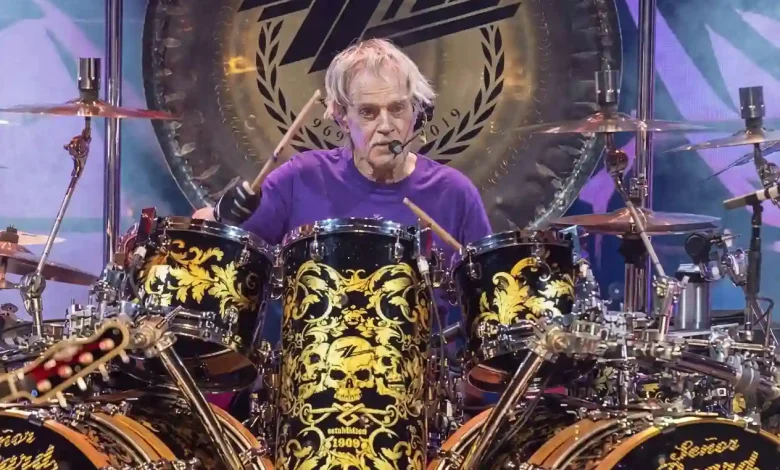
Table of Contents
Frank Beard, the legendary powerhouse who defined the rhythmic spine of American blues-rock, has passed away at the age of 77. For over five decades, Beard served as the unrelenting engine behind ZZ Top, a band that achieved global superstardom while remaining fiercely loyal to its raw Texan roots. Alongside guitarist Billy Gibbons and the late bassist Dusty Hill, Beard formed one of the most enduring and stable lineups in the entire history of rock music. From their initial jam sessions in 1970 to their multi-platinum visual era in the 1980s, the trio maintained a near-mythic presence on the stage, redefining the boundaries of Southern rock, boogie, and synthesized arena pop.
His passing on August 17, 2026, at his home in Richmond, Texas, marks the end of an era for rock and roll enthusiasts worldwide. With his precise, pocket-heavy drumming, Beard proved that you do not need to play fast to play hard. While Gibbons and Hill occupied the visual foreground with their matching chest-length beards, sunglasses, and spinning guitars, Beard sat quietly behind his massive drum kit, anchoring the groove that made millions of people dance. Just as other classic ensembles relied on the architect of eternal rhythm to craft a fluid, conversational style on stage, ZZ Top depended on Beard’s rock-solid foundation to deliver their trademark “Texas shuffle”.
Introduction: The Beat of Texas Silenced
The announcement of Frank Beard’s death sent shockwaves through the global music community, prompting tributes from fellow musicians, industry veterans, and generations of fans. The band’s representative confirmed that Beard passed away peacefully under hospice care, surrounded by his family at his ranch. Following the devastating loss of Dusty Hill in 2021, the passing of Beard leaves Billy Gibbons as the sole surviving original member of ZZ Top’s classic line-up. As music fans navigate the tragic loss of iconic figures in music history, Beard’s departure is a poignant reminder of the mortality of our rock-and-roll gods.
Yet, the band has made it clear that their journey does not end here. Just as Dusty Hill requested that his bass technician, Elwood Francis, step in to keep the band moving forward, Gibbons has expressed his commitment to keeping ZZ Top on the road, as Beard himself wished. The band’s “The Big One!” tour continues to hit major venues, showcasing the timeless appeal of a catalog that spans more than half a century. To understand the impact of Frank Beard’s passing, one must look back at how a young man from Texas helped shape the global soundscape of blues-infused hard rock.
The Early Life and Musical Beginnings of Frank Beard
Born on June 11, 1949, in Frankston, Texas, Frank Lee Beard was deeply immersed in the Lone Star State’s rich musical heritage from a young age. He was raised in Irving, Texas, during an era when local radio stations played an eclectic mix of country, rockabilly, and deep electric blues. Like many teenagers of his generation, Beard’s life changed forever with the arrival of the British Invasion. Hearing bands like The Beatles and The Rolling Stones inspired him to pick up the drumsticks, but it was his exposure to regional blues musicians that gave his style its distinctive flavor. He frequently snuck into Dallas blues clubs to watch masters like Freddie King perform, absorbing the relaxed, swinging grooves that would later define his own style.
Before achieving international fame, Beard spent his formative years playing in a succession of local garage bands. He joined forces with bassist Dusty Hill in various outfits, including the Warlocks, the Cellar Dwellers, and American Blues. These early experiences allowed the rhythm section of Beard and Hill to develop an almost telepathic musical connection. They became known as some of the most reliable and energetic sidemen in the Texas club circuit, capturing the essence of regional boogie and delivering it with a hard-rock edge. Their work during this period laid the groundwork for their future success, serving as a testament to the power of beloved Southern entertainment figures who brought authentic regional culture to the global stage.
How the ZZ Top Trio Formed: Gibbons, Beard, and Hill
In late 1969, guitarist Billy Gibbons was looking to restructure his band, the Moving Sidewalks, following their disbandment. He envisioned a power trio that could blend heavy psychedelic rock with traditional Mississippi Delta and Texas blues. After ZZ Top’s original drummer, Dan Mitchell, departed, Frank Beard stepped in to fill the vacancy. Recognizing that they still needed a permanent bassist who could match Gibbons’ intensity, Beard suggested his longtime collaborator and friend, Dusty Hill.
In February 1970, the trio played their very first gig together at a Knights of Columbus Hall in El Paso, Texas. The chemistry was instantaneous. Gibbons’ fiery, pinch-harmonic-laden guitar work found the perfect counterbalance in Hill’s thumping, overdriven bass lines and Beard’s steady, driving backbeat. Under the guidance of manager Bill Ham, the group quickly signed a record deal with London Records and released ZZ Top’s First Album in 1971. The record showcased a band that was already remarkably fully formed, blending humor, grit, and incredible musicianship. The early 1970s was a period of high creative energy, much like how rising stars in the creative space seek to redefine established genres by blending traditional and modern elements.
Establishing the Powerhouse Southern Boogie Rhythm
ZZ Top’s rise to national prominence was fueled by their third studio album, the 1973 classic Tres Hombres. The album featured the breakout hit “La Grange,” a song inspired by a famous Texas brothel. “La Grange” became an instant rock staple, largely thanks to Frank Beard’s masterclass in the “Texas shuffle”. This drumming technique requires a rare combination of relaxed swing and absolute rhythmic precision. Rather than overcomplicating the rhythm with flashy fills, Beard held down a steady, undulating beat that allowed Gibbons’ guitar riffs to breathe.
This minimalist yet incredibly powerful approach is often referred to as “chooglin’,” a style that feels loose and laid-back but drives forward with the force of a freight train. Whether performing the slow-burning blues of “Blue Jean Blues” or the fast-paced boogie of “Tush,” Beard was the rock upon which the band’s entire sound was built. His ability to maintain a rock-solid pocket allowed the band to tour relentlessly throughout the 1970s, building a reputation as one of the most formidable live acts in North America. To learn more about the band’s rich history and upcoming tour plans, you can visit the Official ZZ Top Website.
The 1980s Transformation: Synthesizers and Global Superstardom
While many of their 1970s peers struggled to adapt to the changing musical landscape of the 1980s, ZZ Top embraced technology with open arms. With their 1981 album El Loco and their monumental 1983 release Eliminator, the band integrated synthesizers, sequencers, and electronic drum pads into their signature blues-rock sound. For many legendary cinematic figures and musicians, the transition from local fame to worldwide stardom represents a hard-fought journey of reinvention, and ZZ Top’s pivot to high-concept music videos on MTV was a stroke of genius.
The album Eliminator became a certified diamond-selling record, spawning iconic hits such as “Sharp Dressed Man,” “Legs,” and “Gimme All Your Lovin'”. The music videos for these tracks—featuring the sleek, cherry-red 1933 Ford coupe, keychains, and three mysterious women helping ordinary people overcome their struggles—became cultural touchstones of the MTV generation. Behind the scenes, Frank Beard’s drumming underwent a major transformation. He successfully merged his acoustic drumming style with electronic sequencers and drum machines, creating a highly polished, driving beat that was perfect for both rock radio and dance clubs.
Beard’s Role in the Era of Eliminator and Afterburner
Adapting to drum machines was a challenge that frustrated many traditional rock drummers of the era, but Beard embraced the precision required. On tracks like “Legs,” the drums are highly quantized, yet they retain a human element that prevents the music from sounding cold or mechanical. Beard’s adaptability ensured that ZZ Top remained at the vanguard of modern rock throughout the decade, culminating in the highly successful 1985 album Afterburner.
The following table outlines the contrast between ZZ Top’s classic era and their synthesizer-driven 1980s period, highlighting the evolution of Frank Beard’s drumming styles across their most iconic albums:
| Album Title | Release Year | Key Tracks | Frank Beard’s Drum Style / Signature Beat |
|---|---|---|---|
| ZZ Top’s First Album | 1971 | “Brown Sugar”, “Bedroom Thang” | Loose, blues-rooted shuffle with a laid-back pocket |
| Tres Hombres | 1973 | “La Grange”, “Jesus Just Left Chicago” | The iconic, driving Texas boogie shuffle |
| Fandango! | 1975 | “Tush”, “Blue Jean Blues” | Energetic blues-rock boogie and heavy rock grooves |
| Eliminator | 1983 | “Sharp Dressed Man”, “Legs”, “Gimme All Your Lovin'” | High-precision, synthesizer-synced hybrid acoustic/electronic backbeat |
| Afterburner | 1985 | “Sleeping Bag”, “Velcro Fly” | Heavy, quantized electronic-rock rhythm structures |
| La Futura | 2012 | “I Gotsta Get Paid”, “Chartreuse” | Return to raw, analog, heavy-grooved garage blues |
The Irony of “The Beard” Without a Beard
No discussion of ZZ Top is complete without mentioning the famous piece of rock trivia that has delighted fans for decades. Despite his surname, Frank Beard was the only member of the Texan trio who did not wear a long, flowing beard. While Billy Gibbons and Dusty Hill famously let their facial hair grow to chest-length proportions starting in the late 1970s, Beard preferred to remain clean-shaven, occasionally sporting a neat mustache or short goatee.
This irony became an ongoing joke within the band and a beloved quirk among their global fanbase. In interviews, Beard often joked that his surname was his contribution to the band’s aesthetic, leaving the actual physical growing of the beards to his bandmates. This playful approach to their image was a key part of ZZ Top’s charm, exemplifying how maintaining a cohesive identity is essential for building long-term commercial success in any creative industry.
Managing Later Years and Health Struggles
As the decades progressed, ZZ Top continued to tour and record, releasing their fifteenth studio album, La Futura, in 2012. The album represented a return to their raw, low-down blues roots, with Beard delivering some of his heaviest and most organic drum performances in years. However, the physical demands of decades of touring eventually began to take a toll on the band members.
In 2021, the band suffered a monumental loss when bassist Dusty Hill passed away at the age of 72. At Hill’s insistence, the band continued their touring schedule with Elwood Francis stepping in on bass. Over the next few years, the band navigating personal grief and health struggles remained a priority, as they worked hard to preserve their legacy while dealing with the realities of aging. Beard faced several health issues, including foot and ankle injuries in 2025 and illnesses that forced him to temporarily step back from live performances. During his final weeks, Beard returned to his home state, relying on specialized health and social services and hospice care, before passing away peacefully on August 17, 2026.
Tributes Pour in for a Rock Legend
In the wake of Frank Beard’s passing, tributes from all corners of the music world have celebrated his incredible rhythm and gentle character. Billy Gibbons released a moving statement, saying: “Today, Elwood and I lost a great friend and collaborator, and the world lost one of the most naturally innovative drummers and a great and true son of Texas. His signature backbeat was key to keeping ZZ on top.” Drumming icons and classic rock peers have echoed these sentiments, noting that while Beard may not have sought the spotlight, his precision and feel made him an indispensable figure in rock history.
Frank Beard’s legacy will live on through the timeless grooves of ZZ Top’s classic catalog. From the smoky barrooms of Texas to the world’s largest stadiums, his beats have provided the soundtrack to countless road trips, late-night parties, and rock-and-roll dreams. He remains a true icon of Southern rock, proving that sometimes, the quietest member of the band is the one who holds it all together.