New Jersey Medicaid Employer Fee Law Faces Federal Lawsuit 2026
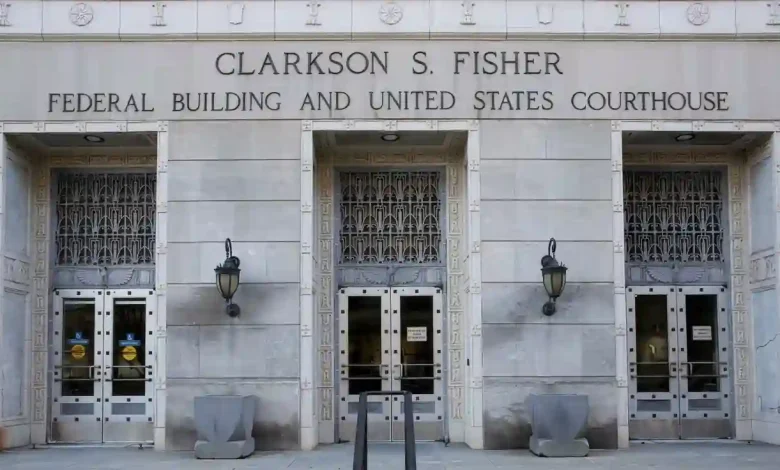
Table of Contents
New Jersey is at the center of a monumental legal battle that could redefine the intersection of corporate responsibility, state healthcare funding, and federal preemption. A powerful coalition of business groups sued the state in federal court on Thursday, seeking to block the enforcement of a highly controversial new law. This legislation imposes substantial annual fees on employers with at least 50 workers whose employees or dependents receive Medicaid healthcare benefits. Characterized by state supporters as a necessary “fair share” measure to offset public spending, the law has provoked fierce resistance from major business associations. They argue that the policy amounts to an unconstitutional penalty, a violation of federal privacy laws, and a severe administrative burden that will stifle hiring. This high-profile dispute is shaping the broader debate over state-level government policy child healthcare programs and how public safety nets are financed across the country.
The High-Stakes Battle Over New Jersey’s Employer Medicaid Fee
The state-level health policy landscape has shifted dramatically with the enactment of New Jersey’s new employer assessment. Under the law signed by Governor Mikie Sherrill, the state intends to claw back funds from businesses whose workforces utilize NJ FamilyCare, the state’s Medicaid program. Proponents of the legislation argue that massive, highly profitable corporations are shifting their labor costs onto taxpayers by failing to offer affordable employer-sponsored healthcare, forcing lower-wage workers to turn to public assistance. However, business leaders view the fee as a targeted tax on job creation that directly undermines the economic recovery of retail, hospitality, and service-oriented sectors. The ongoing legal battle will determine whether individual states possess the authority to levy financial penalties based on worker participation in federal-state entitlement programs.
Inside the Lawsuit: Who is Suing and Why?
On Thursday, August 20, 2026, the legal challenge was officially filed in the United States District Court for the District of New Jersey in Trenton. The plaintiffs represent a broad alliance of industries that are among the state’s largest employers. These organizations contend that their member companies already contribute billions of dollars annually to employee health benefits and comply fully with the federal Affordable Care Act (ACA). The lawsuit targets New Jersey State Treasurer Aaron Binder and Kevin Jarvis, the acting commissioner of the Department of Labor and Workforce Development, seeking a permanent injunction to prevent the state from implementing or enforcing the assessment.
The Coalition of Plaintiffs
The lawsuit was filed by four major national and state trade organizations representing thousands of business owners:
- The National Retail Federation (NRF): Representing the retail sector, which is the nation’s largest private-sector employer.
- The American Hotel & Lodging Association (AHLA): Representing the hospitality industry, which is highly dependent on flexible and seasonal labor.
- The International Franchise Association (IFA): Representing franchise owners who often operate local businesses under regional or global brands.
- The Restaurant Law Center: Representing the food service and restaurant industry, which typically operates on narrow profit margins.
These groups argue that the law is not a benign fiscal measure but a discriminatory penalty targeted at businesses that provide vital entry-level employment and career advancement opportunities.
The Trenton Federal Court Filing
The choice of the Trenton federal court as the venue for this lawsuit reflects the plaintiffs’ intent to seek a rapid federal injunction. By challenging the state officials directly in federal court, the coalition aims to establish that the New Jersey law is preempted by federal statutes. The legal complaint emphasizes that the state cannot bypass federal standards to impose arbitrary financial mandates on private-sector employee benefit programs.
The Financial Mechanics of the “Fair Share” Fee
The law establishes a tiered, annual fee system assessed against employers based on the number of their employees and dependents enrolled in Medicaid. When assessing the true health benefit cost of employing low-wage or part-time workers, these state-imposed fees could significantly alter corporate balance sheets and operating expenses. The fees are structured to scale with the volume of public program beneficiaries associated with a single employer:
| Number of Medicaid Beneficiaries | Annual Fee Per Beneficiary | Impacted Employer Scale | Estimated State Revenue Target |
|---|---|---|---|
| 50 to 249 beneficiaries | $325 | Mid-sized to Large employers | Part of $145 Million Annual Pool |
| 250 to 499 beneficiaries | $525 | Large-scale regional employers | Part of $145 Million Annual Pool |
| 500 or more beneficiaries | $725 | Enterprise-level / National employers | Part of $145 Million Annual Pool |
The state budget plan counts on raising $145 million annually from this program to support the general fund and shore up NJ FamilyCare. However, business groups emphasize that because the fee is triggered not just by employees, but also by their dependents, a business could face escalating fees for a single worker who has a large family enrolled in Medicaid.
The Core Legal Arguments: ERISA, Privacy, and Due Process
The legal challenge brought by the business coalition is built upon three primary pillars, each addressing a critical constitutional or statutory violation allegedly committed by the state legislature and the executive branch.
The Argument for ERISA Preemption
The primary argument in the lawsuit is that New Jersey’s law is preempted by the Employee Retirement Income Security Act of 1974 (ERISA). ERISA was enacted by Congress to establish a uniform, national framework governing employer-sponsored health and retirement plans. Section 514(a) of ERISA explicitly states that federal law preempts “any and all State laws insofar as they may now or hereafter relate to any employee benefit plan.” The business coalition argues that by penalizing employers based on whether their workers are enrolled in public Medicaid rather than private employer-sponsored plans, New Jersey is indirectly regulating and coercing employer healthcare decisions. This conflict mirrors international legal disputes where domestic policies collide with overarching federal legislative standards. Legal experts point to historical precedents where courts have struck down state-level employer health mandates on identical ERISA preemption grounds to protect national uniformity.
Privacy Violations and Lack of Due Process
Beyond ERISA, the lawsuit alleges that the law creates severe privacy and constitutional due process violations. For the state to assess the fee, it must identify which specific employees are receiving Medicaid benefits. If the state requires employers to self-report this information, companies would be forced to inquire into the personal, financial, and family medical histories of their employees, which violates federal and state privacy statutes. This requirement creates severe security challenges, demanding robust technical compliance frameworks similar to those designed to safeguard private digital environments from unauthorized data access. Additionally, the plaintiffs argue that the law fails to provide an adequate administrative process for employers to dispute the state’s calculations, violating constitutional guarantees of due process by imposing massive financial penalties without a fair opportunity for a hearing.
Economic and Labor Policy Consequences for Businesses
The commercial consequences of the Medicaid fee could be severe for New Jersey’s economy, particularly for sectors with low profit margins. Many retail and hospitality businesses operate on profit margins of just 2% to 3%. Adding hundreds of thousands of dollars in annual health fees could disrupt operational stability, forcing businesses to reduce employee hours, freeze hiring, or raise consumer prices. Businesses must navigate these financial pressures as they strive to secure long-term small business success in an increasingly regulated environment. The challenges are reminiscent of how traditional hospitality businesses such as padua cafes struggle under rising operational and regulatory overheads.
Furthermore, policy analysts have warned of severe unintended social consequences. If employers face steep financial penalties for hiring workers who qualify for Medicaid, they may be implicitly discouraged from hiring low-income individuals, single parents, or members of larger families. Although the law contains explicit provisions banning discrimination based on Medicaid eligibility, proving such bias in hiring decisions is incredibly difficult. Unlike workplace environmental safety rules where measuring lung cancer risk is scientifically standardized, proving discriminatory intent in subjective hiring practices is highly complex and hard to regulate.
The State’s Perspective: Mitigating Taxpayer Burden
New Jersey’s progressive lawmakers and Governor Mikie Sherrill defend the law as a critical fiscal corrective. During her March 2026 budget address, Governor Sherrill highlighted that New Jersey taxpayers spend hundreds of millions of dollars annually to cover the medical costs of workers employed by multi-billion-dollar corporations. Proponents argue that the law encourages large corporations to pay livable wages and provide comprehensive health benefits. They view the $145 million in projected annual revenue as a vital funding stream to support NJ FamilyCare, particularly in light of potential federal funding cuts and shifts that threaten the state’s healthcare safety net. Proponents assert that raising revenue for healthcare is just as critical as other state investments, compared to other public initiatives like funding healthy school lunches for lower-income families.
Future Outlook: What This Means for National Healthcare Policy
The resolution of this federal lawsuit in Trenton will have far-reaching national implications. If the court rules in favor of New Jersey, other states—such as California, which has considered similar measures—may feel empowered to pass similar “fair share” taxes. However, if the business coalition succeeds in striking down the law, it will reaffirm the strength of ERISA preemption, demonstrating that states cannot impose indirect financial penalties to regulate employer-sponsored healthcare. This legal battle is a critical test case that will shape the future of healthcare policy, corporate responsibility, and state fiscal strategy for years to come.
References
- National Retail Federation – Wikipedia
- <a href=”https://www.dol.gov/agencies/ebsa/laws-and-regulations/laws/erisa” target=”_blank