Iran Sanctions: Scott Bessent Vows Toughest Measures in History 2026

Table of Contents
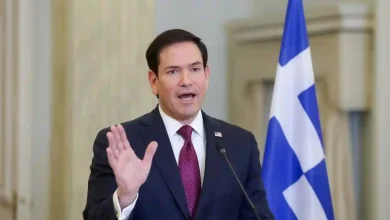
Iran will face what Treasury Secretary Scott Bessent has declared as the “toughest sanctions in history” as the Trump administration shifts its strategy toward absolute financial isolation to avoid major kinetic military operations. Bessent’s announcement on Thursday signals a dramatic escalation in U.S. foreign policy, following President Donald Trump’s warning of “Economic Warfare” a day earlier. The administration has explicitly warned of severe economic consequences against any nation or entity that provides “any type of lifeline to Iran,” drawing a hard line in the sand for international allies and adversaries alike.
This unprecedented pressure campaign aims to completely collapse the Iranian regime’s economy, reducing its capacity to project power in the Middle East and fund regional proxies. By coordinating what Bessent called “the greatest coordinated economic isolation in the history of the world,” the U.S. Treasury intends to bring Tehran to its knees without relying on a full-scale military conflict. However, the move has already sent shockwaves through global energy markets, raising questions about whether this economic offensive will achieve peace or trigger a deeper, more volatile international crisis.
The Genesis of a Historic Embargo
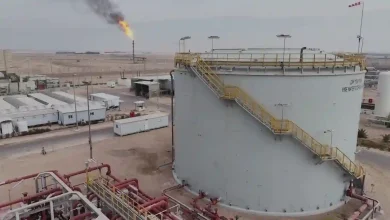
To understand the sheer scale of the current measures, one must look back at the origins of this multi-month crisis. The regional conflict, which began nearly six months ago, has severely disrupted global trade and energy security. The critical chokepoint of the Strait of Hormuz, which historically carried about 20 percent of the world’s traded oil, became a zone of extreme tension as military exchanges escalated. In response, the U.S. administration initiated a policy of massive retaliation. This strategy forms the bedrock of Trump’s economic war on Iran, focusing on systemic financial exclusion rather than relying solely on kinetic military interventions.
Attempts at diplomatic resolution have repeatedly faltered. Ceasefire frameworks negotiated in April and June briefly offered hope for restoring the free flow of shipping, but they crumbled quickly due to disagreements over maritime security guarantees. As negotiations broke down, Tehran rejects U.S. demands, choosing instead to bolster its defensive stance. This stubborn diplomatic impasse convinced Washington that only the total collapse of Iran’s financial architecture would force the regime’s compliance, leading to the “one-two punch” strategy announced by Bessent.
Bessent’s “One-Two Punch” Strategy Explained
The core of the Treasury’s plan rests on what Bessent terms a “one-two punch”: the combination of a strict naval blockade with the most aggressive financial sanctions ever devised. The naval blockade, which was originally imposed in April and temporarily paused in June, has been fully reinstated. This blockade aims to physically intercept clandestine oil shipments, while the newly announced sanctions will target the financial institutions, shadow banks, and front companies that allow Iran to bypass international trade restrictions.
By targeting these two critical areas, the Treasury Department intends to trigger a rapid financial breakdown within Iran. U.S. officials anticipate that this double-barreled approach will starve the regime of foreign exchange, leading to a catastrophic collapse of the Iranian rial. A similar pressure campaign in early 2026 demonstrated the vulnerability of Tehran’s financial system, causing a major bank failure, a severe shortage of physical dollars, and forcing the Iranian central bank to print currency at unsustainable rates. The current measures are designed to amplify these systemic vulnerabilities to a breaking point.
Squeezing the Financial Arteries through Dubai
A crucial battleground in this economic conflict is the city of Dubai in the United Arab Emirates. As the Middle East’s primary financial hub, Dubai has historically served as a critical valve for Iran to skirt international restrictions. Clandestine financial networks utilize Dubai-based exchange houses and trading firms to convert funds generated from oil sales into accessible foreign currencies. According to former U.S. Treasury official Miad Maleki, approximately 80 percent of Iran’s foreign currency exchange is routed through Dubai, making the UAE’s cooperation vital for the success of the U.S. campaign.
To plug this massive loophole, the Treasury Department is preparing to impose strict secondary sanctions on any UAE-based entity or financial institution that facilitates transactions for Iranian interests. The goal is to force the Emirati government to crack down on these shadowy transactions, effectively freezing Iran’s access to its remaining foreign reserves. By closing the Dubai corridor, the U.S. hopes to ensure that the regime’s financial isolation is total and irreversible.
The Dynamics of President Trump’s “Economic Warfare”
The rhetorical and policy framework of this campaign was set by President Trump, who declared that the U.S. is launching “the most crushing economic operation ever taken against any country.” Trump’s explicit warning of severe consequences for any nation offering a “lifeline” to Tehran has redefined the boundaries of international diplomacy. This uncompromising approach has created a stark binary choice for the global community: countries must decide whether they stand with the United States or are willing to face total exclusion from the U.S. financial system.
This aggressive posture is a direct response to the escalating costs of traditional military engagements. The administration argues that a physical conflict would result in immense financial and human losses, whereas economic statecraft can achieve similar geopolitical objectives at a fraction of the cost. However, the strategy relies heavily on the willingness of other major global powers to comply with Washington’s unilateral mandates, a factor that remains highly uncertain as geopolitical tensions rise.
Warnings to Beijing and Third-Party Lifelines
The primary target of Trump’s warning is China, which remains Iran’s largest economic partner and the purchaser of over 80 percent of its shipped oil. For years, Beijing has provided a critical economic lifeline to Tehran, utilizing obscure payment channels and “dark fleet” tankers to import Iranian crude despite U.S. pressure. Bessent has publicly urged China to cooperate with Washington, noting that because the Chinese economy relies on the Persian Gulf for 50 percent of its energy, reopening the Strait of Hormuz is in Beijing’s own interest.
However, Beijing has reacted with defiance. The Chinese Foreign Ministry has flatly rejected the U.S. approach, stating that unilateral sanctions and pressure will not resolve the conflict and calling instead for diplomatic negotiations. The Treasury Department has hinted that while many discussions are best kept private, the U.S. is prepared to deploy secondary sanctions against Chinese banks and state-owned enterprises if they continue to facilitate the illicit flow of Iranian oil, setting the stage for a potential trade confrontation between the world’s two largest economies.
Oil Markets and the Paradox of Rising Crude Prices
Following the announcements from Washington, crude oil prices surged to a three-week high, closing above $93 per barrel. This sharp increase reflects the market’s deep anxiety over potential supply disruptions in the Persian Gulf and the enforcement of secondary sanctions on global shipping networks. Investors fear that a successful blockade and strict sanctions will strand millions of barrels of Middle Eastern oil, exacerbating global energy shortages.
Treasury Secretary Bessent, however, argues that the oil markets are fundamentally misinterpreting the U.S. strategy. According to Bessent, the application of maximum economic pressure actually reduces the risk of a major physical conflict. In his view, a successful financial blockade lessens the need for a large-scale military escalation, which should ultimately stabilize the region and allow energy prices to cool. Despite Bessent’s optimism, analysts warn that the transition period could be highly volatile, with the potential to drive domestic inflation higher if gasoline prices climb significantly in the coming weeks.
The Military Calculus: Sanctions over War
The preference for economic measures over direct military force is a calculated strategic decision by the Trump administration. The immense war with Iran costs—both in terms of military expenditures and the potential devastation of global trade—have made a conventional conflict highly undesirable. A full-scale war in the Persian Gulf could disrupt global supply chains, destroy vital infrastructure, and pull several regional powers into a protracted and bloody confrontation.
By prioritizing financial warfare, the administration seeks to achieve its strategic goals—such as dismantling Iran’s nuclear ambitions and curtailing its regional influence—without firing a single shot. This approach, often referred to as “economic statecraft,” leverages the global dominance of the U.S. dollar to coerce political outcomes. While this strategy is less visible than military strikes, U.S. officials argue that its impact is equally devastating, as it systematically hollows out the target nation’s economy from within.
Shifting Away from Large-Scale Kinetic Restarts
Bessent’s comments explicitly highlight the goal of avoiding a “large-scale kinetic restart.” The U.S. has previously engaged in limited military exchanges with Iranian forces, launching targeted strikes against assets within Iran. These actions were met with a dangerous Iranian retaliation plan, which saw strikes against U.S. military assets in neighboring Arab nations, including Jordan, Kuwait, and Bahrain. This dangerous cycle of escalation brought the two nations to the brink of open warfare.
The transition to historic sanctions represents an attempt to break this cycle of violence. Rather than engaging in a series of escalatory military strikes, the U.S. is focusing its efforts on financial choke points. However, this strategy depends on the assumption that Tehran will not respond to economic strangulation with asymmetric military operations of its own, such as cyberattacks or renewed disruptions in the Strait of Hormuz. The ongoing Iran-US conflict remains a highly unpredictable standoff where economic pressure and military deterrence are deeply intertwined.
Tehran’s Defiance and the Humanitarian Concerns
In Tehran, the reaction to the new U.S. strategy has been a mix of defiance and severe condemnation. Iranian Foreign Minister Abbas Araghchi dismissed the threat of “Economic D-Day,” characterizing the U.S. pressure campaign as a sign of weakness and a diversion from America’s own financial troubles, including rising debt and interest costs. Araghchi warned that doubling down on failed policies would only bring further defeat for Washington, insisting that Iran has the resilience to withstand these measures.
At the same time, the Iranian government has accused the United States of practicing “economic terrorism.” Officials argue that the sanctions do not merely target the ruling regime but inflict severe suffering on ordinary civilians by causing hyperinflation, food shortages, and restricting access to critical medicines. This humanitarian aspect has drawn concern from international observers and humanitarian organizations, who warn that the deliberate collapse of a nation’s economy can have devastating consequences for its civilian population, regardless of the political objectives involved.
The situation on the ground remains highly critical as the Iran war at day 163 continues to reshape the geopolitical landscape of the Middle East. Let’s look at the major dimensions of this conflict in the table below.
Summary of the New U.S. Sanctions Strategy
| Sanction Dimension | Strategic Mechanism | Anticipated Impact on Tehran |
|---|---|---|
| Financial Blockade | Choking central bank dollar access and targeting Dubai clearing houses | Hyperinflation, currency collapse, and banking system failure |
| Third-Party Warnings | Sanctioning countries and entities offering a lifeline (e.g., China) | Interruption of critical crude oil export flows and loss of revenue |
| Naval Interdiction | Reimposing a direct naval blockade in international waters | Halting clandestine sea-borne petroleum transfers and smuggling |
| Proxy Funding Cuts | Secondary blacklisting of illicit cash-smuggling networks | Inability to fund Hezbollah, Houthi rebels, and regional militants |
This comprehensive strategy represents a major gamble for the Trump administration, as it seeks to achieve total regime change or a massive policy shift in Tehran without resorting to full-scale war. The success of this approach will depend on the administration’s ability to maintain international solidarity, enforce secondary sanctions on powerful actors like China, and manage the domestic economic fallout from rising oil prices.
The Path Forward: What to Expect Next
The international community is now waiting for the next step in this high-stakes economic battle. Treasury Secretary Scott Bessent has promised to hold a press conference on Monday to reveal the precise structural details of the upcoming sanctions. This announcement is expected to outline the specific financial institutions, maritime shippers, and corporate entities that will be targeted under the new rules. It will also clarify the grace periods, if any, that will be granted to third-party countries to wind down their trade with Iran.
As the conflict enters this new phase, the potential for rapid escalation remains high. If the sanctions successfully cripple Iran’s economy, the regime may feel compelled to retaliate through asymmetric means, potentially reigniting military tensions in the Persian Gulf. Conversely, if the sanctions fail to isolate Tehran due to non-compliance from countries like China and India, the U.S. may be forced to choose between backing down or executing the very military options it is currently trying to avoid. The coming weeks will be critical in determining whether this historic economic offensive will lead to a diplomatic resolution or a wider, more dangerous confrontation.