Strategic dead end in Iran 2026: Why the US Faces a Critical Impasse

Table of Contents
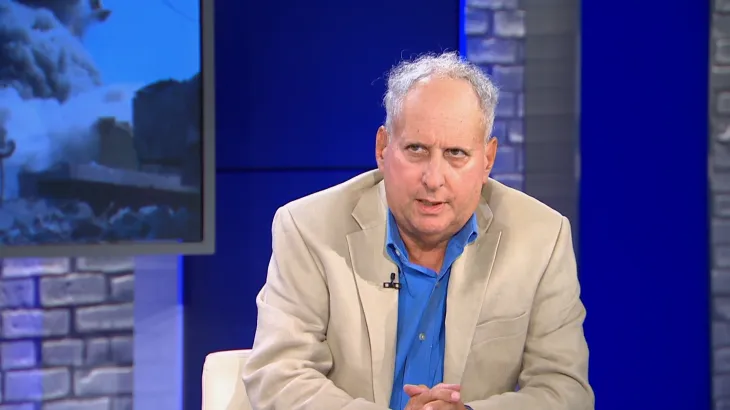
Strategic dead end in Iran is the alarming conclusion reached by seasoned defense analysts as the United States’ military and diplomatic strategies in the Persian Gulf grind to a halt. According to Kenneth Katzman, a prominent fellow at The Soufan Center and former senior analyst for the US Congress, Washington has arrived at a critical strategic stalemate with Tehran. This impasse presents the administration with an agonizing, binary choice: either launch a massive, highly risky military escalation to push Iran back, or yield to geopolitical reality and accept that the US cannot stop Iran from asserting hegemony over the Strait of Hormuz. This assessment comes at a time when the broader conflict, which has raged for months, threatens to spill over into a permanent regional conflagration with no clear path to victory.
The Anatomy of a Strategic Impasse
The concept of a “no war, no peace” status quo has come to define the modern Persian Gulf. Despite months of intensive naval deployments and surgical strikes, the US has failed to establish credible deterrence against the Islamic Revolutionary Guard Corps (IRGC) and its regional proxies. During periods when the iran war conflict pauses, regional mediators have attempted to broker temporary agreements, but these efforts have consistently fallen short. The fundamental problem is a mismatch in strategic objectives and asymmetric capabilities. While Washington relies on conventional naval power and defensive interceptors, Tehran utilizes cost-effective drone swarms, ballistic missiles, and fast-attack craft that neutralize traditional military advantages.
Asymmetric Warfare and the Breakdown of Traditional Deterrence
To understand the current impasse, one must analyze the stark contrast in military philosophy between the two combatants. The United States military operates on a doctrine of overwhelming conventional superiority, designed to deter rational state actors through the threat of catastrophic retaliatory strikes. However, this model breaks down when applied to Iran’s defense doctrine. Tehran has spent decades perfecting a strategy of proxy integration and low-cost technological deployment. By utilizing explosive unmanned aerial vehicles (UAVs) and smart sea mines, Iran can inflict significant tactical damage at a fraction of the cost of American interceptor missiles. For instance, launching a single attack drone may cost Iran less than twenty thousand dollars, while the US Navy must employ multi-million-dollar missiles to neutralize the threat. This economic imbalance represents a critical vulnerability in the American defense posture, ensuring that even a successful defense of shipping lanes ultimately drains US military resources at an unsustainable rate.
Who is Kenneth Katzman and Why His Warning Matters
Kenneth Katzman’s analysis carries immense weight in defense circles. Having spent decades advising the United States Congress on Middle Eastern affairs, his pragmatism and deep understanding of Iranian power structures make his warnings highly credible. Katzman notes that the current paradigm of “managed escalation” is no longer viable. The US cannot accomplish its core geopolitical goals in the region with any level of force that either Congress or the skeptical American public is willing to accept. This assessment has ignited fierce debate within the Pentagon and Capitol Hill, where policymakers are beginning to realize that the current military campaign has yielded diminishing returns while exposing American forces to constant danger.
The Two Stark Choices Before Washington
Washington has arrived at a structural crossroads where continuing the status quo is no longer an option. The administration is confronted with two diametrically opposed paths, each carrying profound consequences for the global order.
Option 1: Intense Military Escalation
Choosing the path of intense military escalation would require Washington to move beyond defensive containment and launch direct, sustained strikes on the Iranian mainland. This would involve targeting IRGC command-and-control centers, domestic air defense networks, and naval infrastructure in Bandar Abbas. Proponents of this approach argue that only a devastating blow can restore deterrence and break Tehran’s resolve. However, the risks are astronomical. A direct assault on Iranian soil would almost certainly trigger a full-scale regional war. The threat is not merely theoretical; each time Washington attempts to apply deterrence, iran strikes us assets or commercial vessels utilizing high-precision drone technology, signaling that Tehran is prepared to absorb significant damage while dealing retaliatory blows to American bases in Iraq, Syria, and the wider Gulf.
Option 2: Concession and Accepting Iranian Hegemony
The alternative option is equally unpalatable for American planners: accepting that the United States cannot prevent Iran from exercising dominant control over the Strait of Hormuz. This concession would represent a historic shift in global maritime security, effectively ending the Carter Doctrine, which declared that the US would use military force to defend its national interests in the Persian Gulf. Under this scenario, commercial shipping would have to navigate the waterway under rules dictated by Tehran, including mandatory coordination with Iranian maritime authorities. Accepting this reality would severely damage US credibility among its traditional regional allies, particularly Saudi Arabia and Israel, and would signal a profound retreat of American hegemony from one of the world’s most critical choke points.
Why the June Memorandum of Understanding Failed
The roots of the current deadlock lie in the failure of the June 2026 Memorandum of Understanding (MOU). Formulated to establish a stable ceasefire, the MOU ultimately proved to be a fragile document built on vague compromises. It failed to reconcile the fundamentally opposing strategic demands of both sides. Washington demanded a strict, twenty-year freeze on Iran’s nuclear advancements and an immediate end to maritime harassment. Conversely, Tehran sought comprehensive sanctions relief and explicit recognition of its sovereign security role in the Gulf. Because these rival objectives were swept under the rug, the agreement collapsed almost immediately. The core issue remains that the June MOU did not reconcile the primary security objectives of either nation, leaving both the iran us stuck in a repetitive cycle of strike and counter-strike.
The Battle for the Strait of Hormuz
The Strait of Hormuz has evolved from a vital economic highway into an active combat zone. Iranian Foreign Minister Abbas Araghchi has publicly asserted that any ship transiting the strait must adhere to Tehran’s designated routes, warning that deviations will face decisive military responses. To institutionalize this control, Iran is reportedly working with Oman to establish a joint traffic management mechanism. This development bypasses traditional international maritime frameworks and consolidates Tehran’s leverage. This reality was starkly demonstrated in late July when a strait of hormuz tanker attacked as us airstrikes continued to escalate the maritime crisis, proving that even heavy US naval patrols cannot guarantee the safety of commercial transit through the waterway.
The Role of the Houthis and the Bab al-Mandab Front
The strategic deadlock is further compounded by the multi-front nature of the conflict. In Yemen, the Houthi movement has effectively established a parallel blockade in the Red Sea, threatening vessels transiting the Bab al-Mandab Strait. While the Houthis have officially denied plans to levy illegal transit fees on commercial ships, their continued military presence acts as a powerful lever of intimidation. By coordinating their operations with Tehran, the Houthis ensure that any pressure applied by the US in the Persian Gulf triggers a corresponding crisis in the Red Sea. This dual-blockade strategy forces the US and its allies to divide their naval assets across two massive, geographically separate maritime theaters, diluting their operational efficacy and making a decisive victory virtually impossible. Regional allies, including Saudi Arabia, have welcomed ceasefire drafts and stabilization plans, hoping to decouple themselves from the cascading crisis.
Financial and Political Tolls on the United States
As the war drags on, the economic and political costs for the United States are reaching unsustainable levels. The deployment of multiple carrier strike groups, continuous combat air patrols, and the expenditure of expensive air-defense interceptors have drained Pentagon coffers. These massive financial commitments have already seen the us-iran war costs soar to 37.5bn, placing severe pressure on President Donald Trump’s defense cabinet. Politically, the administration faces a growing domestic backlash. A recent Associated Press-NORC poll revealed that approximately two-thirds of American adults believe the war with Iran has not been worthwhile. This widespread public fatigue, combined with congressional resistance to funding an open-ended conflict, severely limits Washington’s ability to sustain or expand its military footprint in the region.
Comparing Washington’s Dilemmas: Escalation vs. Concession
To better grasp the profound geopolitical trade-offs that the United States faces, the following table details the key metrics of both potential strategic pathways:
| Strategic Dimension | Option 1: Military Escalation | Option 2: Strategic Concession (Yielding Strait) |
|---|---|---|
| Military Risk | Extremely high; potential for full-scale regional war with Iran. | Low immediate conflict risk, but high long-term regional instability. |
| Financial Cost | Massive; likely exceeding hundreds of billions of dollars. | Minimal direct military cost; high long-term economic friction. |
| Global Energy Markets | Severe oil price spikes due to active combat in shipping lanes. | High structural risk premium; permanent Iranian leverage on oil. |
| US Domestic Politics | Significant backlash; highly unpopular with voters (AP-NORC poll). | Criticism of weakness; loss of deterrence narrative. |
| Allies’ Position | Strongly supported by Israel; mixed reaction from Gulf States. | Severe blow to alliance credibility; potential security realignment. |
Regional Implications and the Mediation Trap
This dynamic was on full display during the height of the iran war day 148 strait of hormuz crisis, where commercial traffic came to a near-complete standstill, driving global energy prices and shipping insurance premiums to record highs. Regional mediators, particularly Qatar and Kuwait, are working frantically to find a compromise that might recommit both sides to a diplomatic track. However, these efforts are continuously undermined by the hardline factions in Tehran who believe they hold the upper hand. By holding the global energy supply hostage, Iranian hardliners argue that they possess greater strategic leverage than any economic benefits Washington could offer in a peace deal.
Conclusion: A War with No Easy Way Out
By the time the conflict reached Iran war day 153, neither side had established clear dominance, further reinforcing Katzman’s thesis of a strategic stalemate. Even when active airstrikes paused temporarily to assess diplomatic channels, the fundamental core of the dispute remained completely untouched. The US military commands remain caught in a loop of reactive defense, intercepting drones and missiles but unable to dismantle the infrastructure that launches them. Without a major policy shift, the war is poised to continue indefinitely, draining American resources while allowing Iran to slowly normalize its control over regional shipping lanes. Ultimately, Washington is discovering that conventional military dominance has its limits in the face of persistent, asymmetric resistance, marking a definitive strategic dead end.