Sardar Mohebi: Strait of Hormuz Reopening Conditional on US Terms
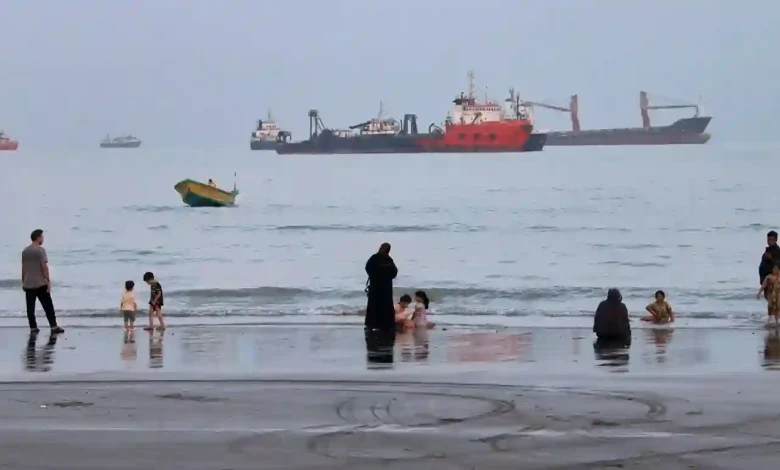
Table of Contents
Strait of Hormuz: Introduction: The Geopolitical Standoff Over the Strait of Hormuz
Sardar Mohebi, spokesperson for Iran’s Islamic Revolutionary Guard Corps (IRGC), has issued a definitive and uncompromising declaration that fundamentally reshapes the ongoing diplomatic efforts in the Persian Gulf. In a direct and formal statement, Mohebi made it clear that the eventual reopening of the Strait of Hormuz is completely separate from any bilateral negotiations or tentative arrangements currently being facilitated by the Sultanate of Oman. Instead, the IRGC spokesperson asserted that restoring the flow of international maritime traffic through the critical chokepoint remains strictly conditional on the United States “fully accepting Iran’s conditions” and ceasing its interference in regional affairs. This rigid stance has added a new layer of complexity to the ongoing crisis, as international observers have closely watched Muscat’s mediation attempts. While the spokesperson of the National Security and Foreign Policy Committee of Iran’s parliament has indicated that a general framework of understanding has been reached with Oman—pending high-level approval from Tehran’s top leadership—the IRGC’s statements signal a profound divergence between diplomatic rhetoric and military enforcement on the ground. By separating Oman’s technical mediation from the broader geopolitical standoff with Washington, Iran is effectively utilizing a two-pronged strategy: engaging in diplomatic dialogue to manage regional friction while using its military leverage over the global economy as a primary tool of deterrence.
Strait of Hormuz: The Strategic Weight of the Waterway and the Energy Crisis
The strategic weight of the Strait of Hormuz cannot be overstated, as it remains the single most critical transit point for global energy security. Roughly one-fifth of the world’s petroleum consumption passes through this narrow channel, linking the oil-rich states of the Middle East with key international markets in Europe, North America, and Asia. The recent escalation of tensions and the subsequent maritime blockades have introduced unprecedented volatility into the global energy supply chain. The resulting shipping bottlenecks and heightened security risks have driven Brent crude oil prices to historic highs, raising alarms among major importing nations and global financial institutions. A prolonged closure or restricted navigation through the strait threatens to trigger a cascading economic crisis, increasing inflation and disrupting supply chains across the globe. For decades, the international community has operated under the assumption that the freedom of navigation through Hormuz is a non-negotiable global norm. However, the IRGC’s recent actions have fundamentally challenged this consensus, demonstrating that Tehran is willing to utilize its geographical position to counter international pressure, even at the cost of global market stability.
Strait of Hormuz: Sardar Mohebi’s Mandate: Maritime Sovereignty as Strategic Power
Analyzing Sardar Mohebi’s mandate reveals a calculated military doctrine that prioritizes regional hegemony and deterrence over economic utility. Mohebi explicitly stated that the Strait of Hormuz is not merely an economic waterway for Iran, but rather an essential component of its geographical and strategic power. This distinction is crucial, as it indicates that the IRGC does not view the closure of the strait as a temporary tactical maneuver, but as an assertion of permanent sovereign control. According to Mohebi, the waterway will only be reopened once the United States demonstrates complete compliance with Iran’s strategic demands. This uncompromising position places the IRGC at the center of the ongoing conflict between Washington and Tehran, which has escalated to a dangerous peak. By asserting that the opening of the waterway is contingent on U.S. behavior, Mohebi is leveraging the global economy’s reliance on the strait to force a retreat of Western naval forces from the Persian Gulf. This approach serves as a warning to foreign powers that any attempt to bypass or ignore Iran’s established protocols will result in a rapid escalation of force.
Strait of Hormuz: The Role of Oman and the General Framework of Understanding
Despite the military’s rigid public pronouncements, the diplomatic track has continued to function, primarily through the facilitation of the Sultanate of Oman. Oman has historically served as a critical diplomatic bridge between Iran and Western nations, often hosting backchannel talks during times of intense regional crisis. The spokesperson for the National Security and Foreign Policy Committee of Iran’s parliament recently indicated that a general framework of understanding had indeed been reached during bilateral discussions with Muscat. This framework is aimed at establishing a structured, predictable regime for maritime transit in the Gulf of Oman, seeking to prevent accidental military clashes and restore some degree of commercial predictability. These negotiations have centered on the potential execution of a Strait of Hormuz deal that would outline technical passage protocols and safety inspections. However, the IRGC’s clear separation of these talks from the actual lifting of the blockade indicates that while a framework with Oman may be diplomatically useful, it cannot bypass the core geopolitical demands that Iran has presented to the United States. For Tehran, Oman’s mediation is a tool to define the logistics of a potential resolution, but the political decision to reopen the chokepoint remains entirely tied to the concessions made by Washington.
The Collapse of Prior Understandings and the Islamabad MOU
The current deadlock is further exacerbated by a deep-seated lack of trust between the primary actors, fueled by what Tehran views as a pattern of broken agreements. Iranian Foreign Minister Abbas Araghchi recently articulated this perspective, accusing the United States of directly violating previous understandings that had been established under the Islamabad Memorandum of Understanding (MOU). The Islamabad MOU was designed to serve as a stabilizing mechanism, providing a phased roadmap for de-escalation and the gradual restoration of maritime traffic. Araghchi noted that Iran had acted in good faith by initiating several de-escalation steps, which resulted in a temporary improvement in shipping safety. However, Iran claims that the U.S. military violated the core principles of the agreement by attempting to establish unilateral naval corridors and deploying additional warships to escort commercial vessels. The IRGC views these maneuvers as a direct threat to its territorial security and an attempt to circumvent the joint protocols established in the region. Consequently, the breakdown of the Islamabad MOU has led to a return to maximum military readiness on both sides, with the IRGC asserting that it will no longer honor temporary pauses unless the U.S. completely ceases its provocative naval deployments.
The Blockade: IRGC’s Enforcement of Maritime Checkpoints
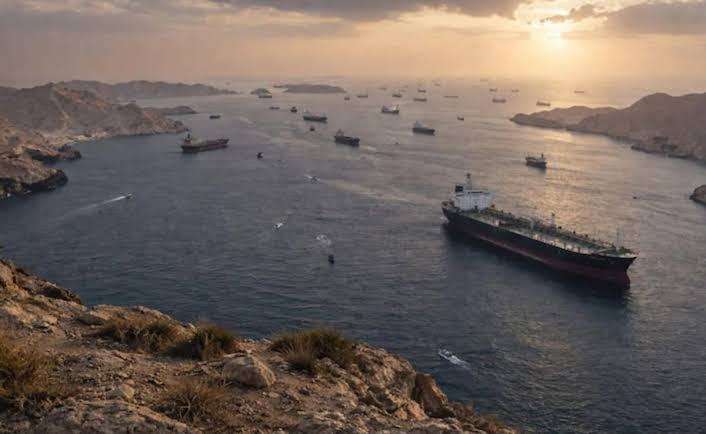
On the water, the IRGC has actively enforced its authority by implementing a highly structured maritime control regime. The Revolutionary Guard recently published an updated navigational map detailing specific areas in the Strait of Hormuz that are now under the direct supervision of its naval forces. This newly defined zone extends from the western tip of Qeshm Island to the United Arab Emirates, creating a highly regulated corridor. Under these new protocols, the IRGC has established maritime checkpoints, requiring all passing commercial vessels to submit passage permits and coordinate their movements with the Persian Gulf Authority. Sardar Mohebi warned that any ship failing to comply with these rules or deviating from the designated shipping lanes will be stopped with the use of force. This strict enforcement has created a de facto blockade in the Strait of Hormuz, severely restricting commercial transit. While vessels from countries deemed friendly by Tehran, such as China and India, continue to navigate the strait with minimal disruption, Western-linked vessels and those carrying cargo for hostile nations face severe delays, interrogation, and potential seizure. This selective maritime regime has effectively weaponized the strait, turning a global common waterway into a highly politicized security zone.
Tehran’s Rejection of Western Sanctions and Pressure
The aggressive stance maintained by the IRGC represents Tehran’s refusal to capitulate to the Trump administration’s heavy-handed pressure campaign. The United States has consistently asserted that the free flow of commerce through international straits is a fundamental right under international maritime law, and has deployed naval task forces to safeguard merchant vessels. However, Iran rejects this framework, arguing that the presence of foreign naval fleets is the root cause of regional instability. From Tehran’s perspective, the U.S. pressure campaign is an existential threat designed to cripple the Iranian economy and force unilateral political concessions. By maintaining the blockade and demanding complete U.S. compliance before any reopening, the IRGC is attempting to invert the leverage. Tehran’s strategic calculus is based on the belief that the global economy is far more vulnerable to a prolonged energy crisis than Iran is to continued economic isolation. By raising the cost of confrontation, the IRGC hopes to force Western policymakers to reconsider their reliance on sanctions and military deterrence.
Geopolitical Positions and Maritime Demands
To better understand the core dynamics of this standoff, it is essential to compare the strategic objectives and positions of the major actors involved. The conflict is not merely a localized maritime dispute, but a clash of competing visions for regional security and global trade governance. The following comparative analysis highlights the primary objectives, positions, and diplomatic approaches of the key parties currently shaping the crisis in the Persian Gulf:
| Actor | Key Strategic Objective | Strait of Hormuz Position | Diplomatic Approach |
|---|---|---|---|
| Iran (IRGC) | Establish absolute regional sovereignty and deter Western naval forces. | Reopening is strictly conditional on the US accepting Iran’s demands; independent of Oman. | Uncompromising military enforcement coupled with selective bilateral talks. |
| United States | Ensure absolute freedom of navigation and secure global energy flows. | Reopening must be immediate and unconditional; opposes transit fees and blockades. | Military escorts, strategic deterrence, and enforcement of international maritime law. |
| Sultanate of Oman | De-escalate regional tensions and restore stable trade pathways. | Proposes a structured, mutually acceptable framework for civilian transit. | Active mediation, drafting technical protocols, and facilitating backchannels. |
Backchannel Diplomacy and the Quest for a Sustainable Resolution
While the public rhetoric remains highly confrontational, the necessity of avoiding a catastrophic regional war has kept the doors open for quiet backchannel diplomacy. Diplomats from several European and regional nations are actively working behind the scenes to establish an off-ramp that would allow both sides to de-escalate without losing face. These efforts are focused on drafting a modified security framework that addresses Iran’s demands for regional recognition while guaranteeing basic safety for commercial shipping. Oman remains at the center of these efforts, utilizing its unique position to convey technical proposals between the IRGC and Western officials. Some analysts suggest that a phased implementation of the parliamentary framework could serve as a stepping stone toward a more comprehensive agreement over the crucial waterway. However, such an agreement will remain out of reach as long as the IRGC views the blockade as its ultimate geopolitical shield and the United States refuses to alter its regional security posture. Until a fundamental shift in diplomatic strategy occurs, the Strait of Hormuz will remain a highly militarized flashpoint, where a single miscalculation could trigger a wider conflict with global consequences.