Iran War: Trump Orders Fresh Military Attacks on Regime 2026
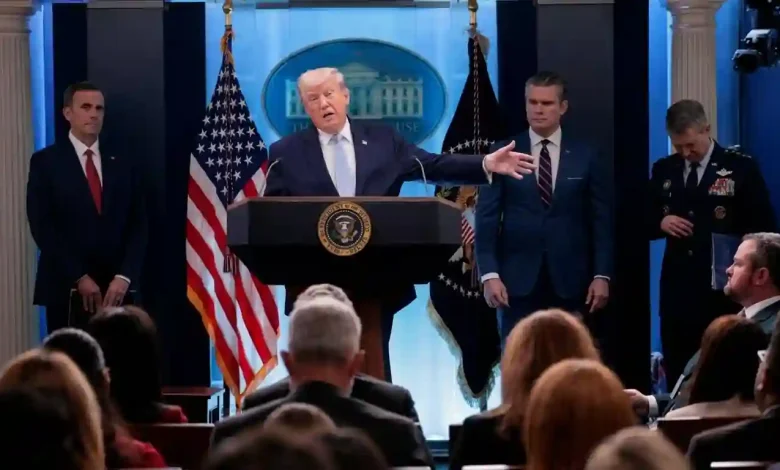
Table of Contents
Iran stands at the center of a rapidly escalating military confrontation as U.S. President Donald Trump orders the American military to prepare a fresh round of targeted attacks against the Islamic Republic. On Iran war Day 154, administration officials confirmed that these incoming operations are poised to begin as soon as this weekend. The planned offensive, which is projected to last several days, targets critical energy facilities and key military infrastructure within the country. President Trump made it clear to reporters that his objective is to exert maximum physical and economic pressure to force Tehran’s leadership back to the negotiating table in a vulnerable position. In a bold strategic prediction, the president asserted that under sustained, heavy military pressure, the hard-line regime’s ability to resist and retaliate would eventually “peter out” and collapse under its own weight.
The “Peter Out” Doctrine and the Camp David Mandate
The presidential directive was finalized during a high-stakes, televised Camp David cabinet meeting at the presidential retreat in Maryland. Surrounded by Defense Secretary Pete Hegseth and Treasury Secretary Scott Bessent, President Trump outlined a dual-track strategy combining devastating military strikes with severe international financial restrictions. Rather than seeking a prolonged full-scale occupation, the administration is focusing its current mandate on targeted destruction. Defense Secretary Hegseth praised the president’s resolve, citing previous decisive operations like “Midnight Hammer” as proof of the administration’s willingness to cross traditional red lines to ensure regional security.
The strategic theory driving this escalation is what some analysts are calling the “peter out” doctrine. Under this framework, the U.S. military intends to systematically dismantle Iran’s economic and logistical backbone. By targeting domestic oil refineries, electrical distribution centers, and command nodes, Washington hopes to render the Iranian military incapable of sustaining high-intensity conflict. President Trump explained that while the regime might experience brief surges of retaliatory strength, the lack of resources and structural damage would ultimately guarantee their capitulation. “They get weaker. They get a little stronger, maybe now, but they’ll get weaker, and then they’ll peter out,” Trump predicted, signaling that the U.S. will not pause its campaign until its terms are fully met.
A Collapse of Diplomatic Trust
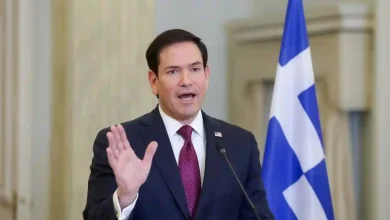
This aggressive pivot to heavy military strikes marks a dramatic breakdown in diplomatic efforts. For months, back-channel talks had been facilitated by high-profile negotiators, including Steve Witkoff, Jared Kushner, Vice President JD Vance, and Secretary of State Marco Rubio. These negotiators worked to draft a framework that would halt hostilities and address the long-term status of Iran’s nuclear program. However, President Trump publicly expressed his deep frustration with the diplomatic track, accusing Tehran of bad-faith negotiating tactics and persistent misrepresentation. He emphasized that his administration is losing whatever trust remained, complaining that the regime “always wants to talk, but they break their words so often.”
The fragile diplomatic landscape shattered completely as a brief truce collapses as Trump warns that the time for polite dialogue has passed. According to White House sources, the administration believes the Iranian leadership was merely using the negotiations to buy time, rebuild its local supply networks, and consolidate regional defensive positions. With talks effectively stalled, the U.S. has concluded that the only language the regime respects is overwhelming military force. The upcoming strikes are thus designed not only as a punishment for recent provocations but as a non-negotiable demand for complete capitulation on the nuclear and regional security files.
Escalating Border Conflicts and Regional Proxy Actions
The physical battlefield has witnessed a sharp escalation in hostile encounters, further convincing U.S. military planners that a major counter-offensive is necessary. While diplomatic conversations were supposedly underway, five tactical ballistic missiles were launched at a U.S. military outpost in Jordan. Although U.S. Central Command (CENTCOM) confirmed that its air defenses successfully intercepted the incoming threats without casualties, the attack was viewed by Washington as an unacceptable provocation. Simultaneously, regional security has been threatened by a wave of Iranian drones targeting key civilian and government infrastructure across the Persian Gulf, forcing neighboring states like Kuwait and Bahrain to activate their missile defense networks.
These asymmetrical proxy operations have severely complicated the strategic calculations for U.S. forces in the region. Military commanders warn that Iran’s proxy network—ranging from militias in Iraq and Syria to the Houthis in Yemen—remains highly active and capable of launching coordinated strikes on short notice. By hitting U.S. bases and allied infrastructure, Tehran seeks to impose a heavy cost on Washington’s military presence, hoping to wear down American public support for the war. However, rather than forcing a U.S. withdrawal, these actions have only hardened the White House’s resolve to bypass the proxies and strike directly at the heart of the regime’s command structure in Tehran.
The Strait of Hormuz and Global Energy Crisis
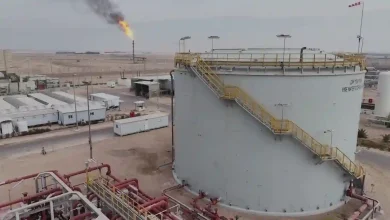
A primary driver of the ongoing conflict is the highly contested Strait of Hormuz, a maritime chokepoint of immense global importance. Since the initial outbreak of the air war on February 28, the Iranian Revolutionary Guard Corps (IRGC) has aggressively restricted shipping traffic, laying sea mines and boarding commercial vessels. In response, a robust U.S. blockade on Iran was established to halt all outbound energy exports from the country. This maritime standoff has effectively reduced shipping traffic through the strait to near zero, stranding thousands of mariners and triggering a massive supply disruption on a global scale.
The economic fallout of this maritime blockade has been swift and severe. Financial analysts are increasingly alarmed by the systemic threats to international commerce, warning of a severe global depression risk if the energy supply chain remains broken for an extended period. With seaborne trade route disruptions ongoing, oil prices projected to reach historic highs have fueled domestic inflation in the United States and Europe. While President Trump has acknowledged the heavy financial toll of the war on Western consumers, he maintains that the long-term risk of a nuclear-armed Iran far outweighs the temporary economic pain. He insists that the economic blockade must remain absolute until Tehran completely relinquishes its regional ambitions.
Strategic Responses and Counter-Measures
As the U.S. military readies its assets for the upcoming strike, defense analysts are evaluating Iran’s potential response. The Islamic Republic has spent decades hardening its vital infrastructure against foreign aerial bombardment. The country’s electricity grid is highly decentralized, featuring over 150 power plants scattered across a vast geography, making a complete nationwide blackout from an aerial assault highly improbable. Furthermore, Iranian military officials have warned that any strike on their soil will meet with a rapid, asymmetric response designed to inflict maximum pain on U.S. forces and their regional partners.
The IRGC’s defensive doctrine relies heavily on its ballistic missile stockpile and proxy alliances to strike U.S. interests. Historically, whenever tensions peak, Iran attacks U.S. bases in Jordan, Iraq, and Syria with rockets and loitering munitions. This regional strike capability serves as a powerful deterrent, forcing Washington to balance its offensive plans against the potential for high casualties among its deployed personnel. The Pentagon, however, has reinforced its air defense systems across the Middle East, placing Patriot batteries and naval destroyers on high alert to neutralize any retaliatory barrages launched during or after the weekend offensive.
Comparative Overview of Regional Stances and Strategic Stances
To better understand the complex geopolitical dynamics shaping the 2026 conflict, the following table outlines the positions, primary actions, and strategic objectives of the key regional and international actors involved:
| Actor | Primary Position | Key Strategic Actions | Ultimate Objective |
|---|---|---|---|
| United States | Maximum pressure & deterrence | Aerial strikes, economic blockade, port bans | Prevent nuclear armaments, force negotiations |
| Iran | Asymmetric resistance | Strait of Hormuz closure, proxy drone attacks | Lift blockades, preserve sovereign nuclear program |
| Saudi Arabia | Caution & de-escalation | Joint defensive patrols, back-channel diplomacy | Protect domestic infrastructure & stability |
| Israel | Uncompromising pressure | Joint military planning, defensive retaliations | Neutralize regional threat, dismantle nuclear sites |
Divided Allied Council: Saudi Arabia vs. Israel
The impending military strike has exposed significant divisions among Washington’s closest allies in the Middle East. Saudi Crown Prince Mohammed bin Salman recently initiated a phone call with President Trump to express deep concerns over the proposed energy-target strikes, urging the White House to prioritize de-escalation over further military actions. Riyadh is highly sensitive to the threat of retaliatory strikes on its own oil facilities, which could derail its ambitious domestic economic plans. The Saudi leadership views a prolonged regional war as a major threat to global financial stability and its own state security.
In contrast, Israeli Prime Minister Benjamin Netanyahu has aggressively pushed for stronger military action, expressing complete skepticism that diplomacy will ever succeed with the current regime in Tehran. During a recent visit to the Oval Office, Netanyahu and Trump discussed a wide range of joint military options, agreeing that only a sustained campaign of extreme pressure can neutralize the nuclear threat. Trump is thus caught between the conflicting demands of his closest regional allies, forced to weigh Saudi Arabia’s pleas for economic stability against Israel’s demands for a decisive, neutralizing military blow.
Assessing the Long-Term Outlook
As the weekend begins, the entire Middle East remains on a knife-edge. The success of President Trump’s “peter out” doctrine relies on the assumption that Iran’s leadership will eventually capitulate under the sheer weight of military devastation and economic deprivation. If the upcoming strikes successfully damage the regime’s refinery capacity and defense command structure, it may indeed force them to return to negotiations on Washington’s terms. However, history suggests that high-pressure tactics can also breed deep-seated defiance, potentially driving Tehran to accelerate its clandestine nuclear projects and double down on asymmetric warfare.
The global consequences of this ongoing conflict are already immense, affecting everything from international shipping routes to domestic energy prices. If the conflict escalates further, the risk of a broader, uncontrollable regional war will increase dramatically. Whether this weekend’s military strikes will pave the way for a lasting peace agreement or plunge the global community into a deeper economic crisis remains to be seen. The coming days will prove decisive for the future of Middle Eastern security and the global economy alike.