Starshield Restrictions Hit Ukraine Military Operations and Drones 2026
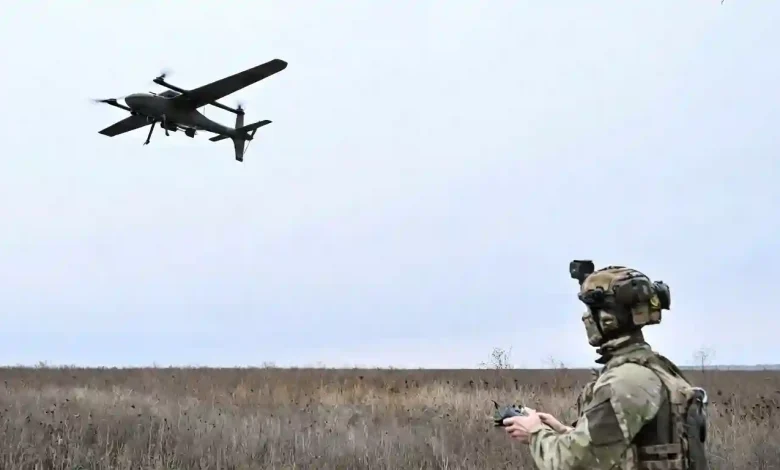
Table of Contents
Starshield satellite communication terminal caps have introduced profound tactical friction across the Ukrainian battlespace, severely degrading the operational capability of unmanned aerial systems and mobile command units. The military-adapted iteration of SpaceX’s commercial Starlink megaconstellation—specifically engineered to handle secured governmental and defense operations—has reportedly experienced strict velocity threshold locks. These restrictions automatically terminate high-bandwidth, low-latency telemetry transmission whenever a ground terminal moves at speeds typical of aerial drones or strike assets. The resulting disruption has imperiled interceptor sorties, critical reconnaissance patrols, and long-range situational awareness networks that Kyiv relies upon to counter sustained aerial offensives.
Operational Paralysis: How Restrictions Paralyze Ukrainian Air Defense
Starshield has operated as an indispensable command-and-control backbone for the Armed Forces of Ukraine throughout intense multi-domain defense engagements. By embedding low Earth orbit transceiver hardware onto tactical arrays, field commanders maintained high-resilience uplinks capable of piercing through intense radio-frequency jamming. However, the sudden enforcement of terminal velocity ceilings effectively severed live control video feeds the moment aerial assets accelerated toward their mission envelopes.
Multiple Ukrainian defense officials and military sources confirmed that these firmware-level locks prevent airborne interceptor crafts from guiding themselves toward hostile threats. Without reliable high-speed data transfer, terminal guidance fails, causing multimillion-dollar drone frames to either lose link synchronization or trigger automated fail-safe abort sequences. This functional barrier emerged precisely as aerial threats expanded, reminiscent of how tactical maneuvers shifted during the Togliatti drone attack across industrial production facilities.
Technical Mechanics of the Starshield Velocity Cutoff
Satellite communications architectures designed for low Earth orbit tracking rely heavily on Doppler shift compensation and antenna beamsteering. Commercial-grade Starlink dishes incorporate geofencing alongside motion-sensing inertial measurement units to comply with export control regulations, including the International Traffic in Arms Regulations (ITAR) and missile technology control agreements. Historically, these systems contained hardcoded limits designed to prevent commercial civilian transceivers from functioning as guidance kits for ballistic munitions or cruise missiles.
When Starshield was rolled out to government defense clients, expectations were high that these velocity locks would be customized or lifted entirely for approved combat vehicles, fast-moving naval patrol craft, and tactical drones. The current malfunction or intentional throttling appears tied to an algorithmic geofence and speed check: once a terminal exceeds predetermined knots, software governance routines cease phased-array radio transmission. As autonomous defense programs develop globally, from rapid drone platforms to specialized systems like the drone interceptor architectures seen in contested skies, sovereign reliance on vendor-managed firmware introduces unacceptable points of single-tier failure.
Diplomatic Crossfire: Trump, Musk, and Conflicting Statements
The situation escalated into high-stakes diplomatic theater when US President Donald Trump announced that SpaceX CEO Elon Musk had resolved the Starshield velocity issue and fully restored services for Ukrainian operations. However, the announcement quickly unraveled into ambiguity. Almost immediately, contradictory accounts surfaced regarding direct coordination; reports clarified that no direct bilateral phone discussion had transpired between Trump and Musk regarding the specific technical status of Ukraine’s terminals. More critically, field personnel deploying Starshield hardware along contested eastern battlefields told reporters that speed constraints remained solidly active.
The policy volatility surrounding private satellite hardware underscores a deepening dilemma in modern warfare: private corporate governance over sovereign military communications. Even as diplomatic circles debate international agreements and defense funding initiatives, illustrated by shifts in the Ukraine defense deal frameworks, frontline combat operators face real-time operational risks. Technologists and military planners point out that privatized constellation operators possess unilateral authority to activate operational geofences or modify telemetry parameters without extensive multilateral review.
Comparative Analysis: Tactical Comms in Contemporary Warfare
Modern combat requires high throughput, robust counter-jamming resistance, and unrestricted operational velocity. The ongoing crisis highlights how Starshield compares against alternative tactical network topologies currently utilized across Eastern European battlefields:
| Communications Network | Throughput / Latency | Velocity Flexibility | Anti-Jamming Resilience | Operational Dependency |
|---|---|---|---|---|
| Starshield (SpaceX) | High (~150 Mbps) / Low (<35 ms) | Restricted (Speed capped on fast aerial assets) | High (Dynamic beamforming) | High (Single private contractor control) |
| Standard Starlink Commercial | Medium (~100 Mbps) / Low (<45 ms) | Strict ITAR/FAA Speed Locks Active | Moderate (Vulnerable to local jammers) | High (Commercial terms of service) |
| Tactical Mesh Radios (MANET) | Low to Moderate (~10 Mbps) / Variable | Unrestricted (Operates at Mach speeds) | Moderate (Depends on frequency-hopping) | Low (Locally owned military hardware) |
| Military SATCOM (Milstar/UHF) | Very Low (<1 Mbps) / High (>500 ms) | Unrestricted (Global strategic tracking) | Extreme (Hardened against EMP/Interference) | State-Operated (Restricted access) |
Russian Electronic Warfare and the Vulnerability of Commercial Tech
The throttling of Starshield units coincides with a concerted escalation in Russian electronic warfare tactics. Opposing forces have deployed sophisticated jamming complexes, including the Krasukha-4, Tirada-2S, and Tobol satellite-disruption networks. These systems attempt to inject noise into uplink channels and spoof global navigation satellite system signals. When Starshield terminals suddenly drop link due to internal velocity tripwires, ground controllers have virtually zero recourse to recover the aircraft, leaving systems exposed to electronic drift or kinetic interception.
This dynamic has forced Ukrainian forces to experiment with indigenous communication bridges, including multi-node tactical radio networks and directional fiber-optic links for short-range combat drones. However, replacing the continental reach and high throughput of a dedicated low Earth orbit constellation is nearly impossible on short notice. When critical infrastructure and forward defenses suffer from communications blackouts, combat vulnerability surges, creating cascading effects on defense economics similar to broader geopolitical financial strains observed during periods of global bond selloff cycles.
Broader Defense Ramifications for Autonomous Warfare
The Starshield speed cap saga carries strategic lessons far beyond the immediate front lines of Ukraine. Western defense planners have monitored the conflict as a proving ground for commercial-off-the-shelf integration into high-intensity warfare. When commercial aerospace conglomerates control the vital command links of national armed forces, operational autonomy becomes conditional. This friction parallels previous concerns seen in dual-use technologies, including advanced computational infrastructure like orbital computing payloads deployed in space defense initiatives.
The reliance on remote constellations also intersects with evolving regulatory frameworks and private-public defense contracting. Autonomous interception platforms, such as the autonomous interceptor mechanisms engineered for rapid border defense, demand ironclad guarantees that telemetry channels will not be arbitrarily throttled mid-mission. When strategic parameters are shifted unilaterally, sovereign nations face sudden strategic vulnerabilities that adversaries can quickly exploit.
Kyiv’s Technological Contingency Strategies and Alternative Networks
In response to persistent Starshield instability, Ukrainian defense laboratories have accelerated the deployment of redundant communications protocols. Tactical teams are integrating low-bandwidth satellite links through alternative European constellation providers, alongside short-range line-of-sight data repeaters mounted on tethered aerostats and high-altitude relays. While these alternative networks fail to match the multi-gigabit throughput offered by SpaceX’s orbital shell, they provide deterministic, unjammable pathways that lack corporate speed throttles.
Furthermore, military engineers are deploying onboard artificial intelligence edge processors capable of terminal guidance without continuous satellite connection. By allowing visual odometry and optical target recognition algorithms to steer drones through the terminal phase of flight, Ukrainian operators hope to decouple precision strikes from external data uplinks. Similar initiatives have emerged across defense technology hubs worldwide, where localized processing mitigates risks akin to global tech disruptions seen in the ai supply chain us china security nexus. Strategic stability requires that physical autonomous vehicles do not fail simply because cloud-based software flags an unapproved velocity vector.
Strategic Takeaways for Modern Multi-Domain Defense
The ongoing impasse over Starshield speed restrictions reveals foundational fault lines in modern coalition warfare. The fusion of private commercial innovation with national defense operations provides unparalleled speed of deployment, but introduces acute vulnerabilities when operational authority remains fractured. As long as velocity thresholds remain active, Ukrainian long-range interception operations and high-speed unmanned defense missions will continue operating under severe technological handicaps.
National defense establishments globally must reassess the contractual and architectural frameworks governing military-commercial hybrid infrastructure. Without legally binding service-level agreements guaranteeing unrestricted operational parameters during wartime, reliance on outsourced space architecture leaves frontline forces vulnerable to technical locks, geopolitical shifts, and political misalignment. As tactical landscapes demand increasing speed, autonomy, and data resilience, the ability to control communications hardware directly may prove to be the ultimate prerequisite for sovereign defense.