Iran accuses US of escalation in West Asia as Trump threatens strikes 2026
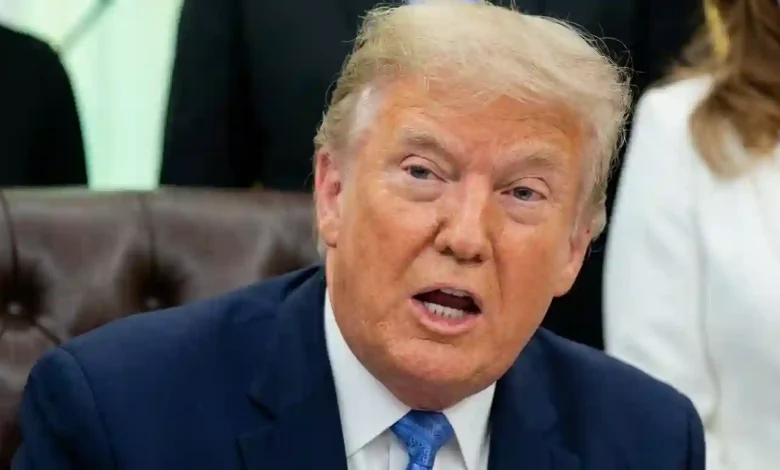
Table of Contents
Iran accuses US of escalation in West Asia as regional dynamics reach a critical boiling point on August 1, 2026. The Iranian military’s central command issued a severe, highly public warning against cooperating with Washington during the ongoing Middle East security crisis. Following intense rhetoric from U.S. President Donald Trump, who recently reiterated his direct threats to strike the Islamic Republic “very hard,” Tehran warned that any nation offering defensive assistance to the U.S. forces would face immediate and devastating military retribution. This development highlights the growing risk of global confrontation, as both nations continue to navigate the precarious geopolitical tightrope on the unfolding dynamics on Iran war day 154.
The strategic fallout from this escalation is being felt across global markets and maritime routes. Tehran’s statement accused Washington of undermining a fragile security architecture that has governed the Persian Gulf for decades. The White House, conversely, has maintained that the military build-up in the region is a necessary move to counter Iranian state-sponsored aggression and preserve freedom of navigation. With both sides heavily armed and politically dug in, observers fear that the cycle of threat and counter-threat could trigger an uncontrollable chain reaction.
Iran Accuses US of Escalation in West Asia
The official statement from the General Staff of the Armed Forces of the Islamic Republic of Iran, broadcast via state media, represents one of the most aggressive diplomatic salvos since the outbreak of hostilities earlier this year. Senior military leaders claimed that the United States is actively trying to dismantle regional sovereignty by deploying advanced carrier strike groups and land-based bomber wings to bases scattered across neighboring Gulf states.
According to Ali Abdollahi, the head of Iran’s military central command, Washington’s actions are not intended for deterrence, but rather represent a direct, offensive preparation for conflict. Abdollahi pointed to the deployment of American anti-missile batteries and strategic assets as clear indicators of hostile intent. The Iranian high command specifically singled out neighboring Arab nations, declaring that hosting US forces or cooperating in “defensive shields” would be treated as an act of co-belligerency. For nations in the Gulf Cooperation Council (GCC), this warning has introduced a terrifying dilemma: how to balance their long-standing security relationships with Washington without inviting direct Iranian missile attacks on their critical economic zones.
Trump Administration Foreign Policy and Tactical Brinkmanship
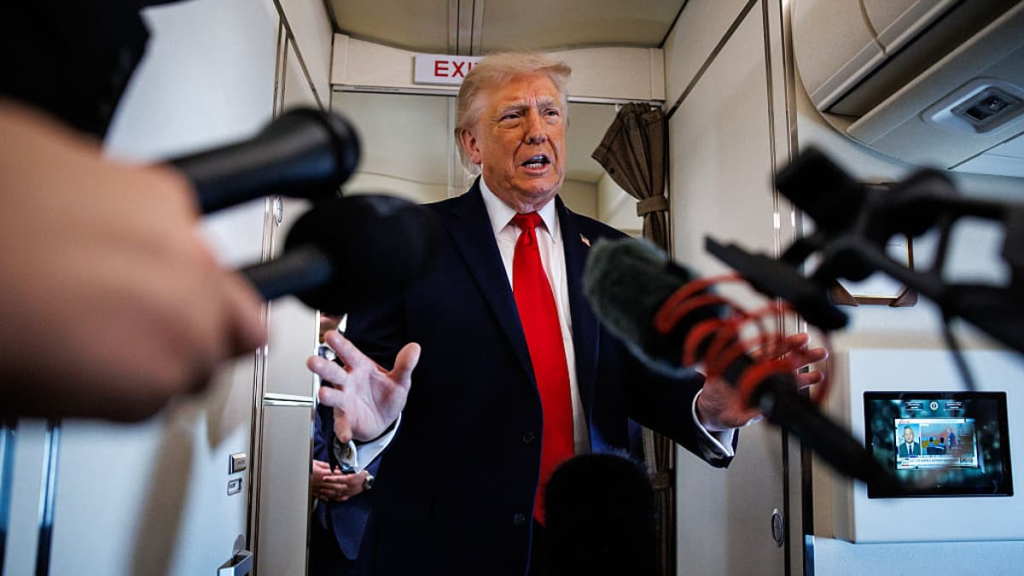
On the other side of the Atlantic, the White House has shown little interest in softening its stance. U.S. President Donald Trump has adopted a policy of extreme pressure, utilizing both military deployment and volatile social media messaging to keep Tehran off balance. Over the weekend of August 1, 2026, Trump declared that the United States is “locked and loaded” and ready to strike Iranian assets at levels of strength not seen in decades. This aggressive positioning has been a staple of the Trump administration foreign policy, which prioritizes overt displays of power to force adversaries to the negotiating table.
However, this style of tactical brinkmanship has divided defense experts and political analysts in Washington. Critics argue that issuing heavy rhetorical threats without a clear, sustainable diplomatic pathway risks dragging the U.S. military into a protracted regional quagmire. Indeed, instead of resolving the core disputes, the current strategy has frequently looked like a falling into a strategic dead end that provides no realistic exit ramp for either Washington or Tehran. Supporters of the president’s policy, however, contend that only the credible threat of overwhelming military force will compel Iran to make meaningful concessions on regional security and maritime transit.
Regional Deterrence: Warning to US Allies in the Gulf
The threat landscape in West Asia is not merely a bilateral issue between the United States and Iran; it represents a comprehensive Middle East security crisis. Smaller Gulf nations, historically reliant on the U.S. security umbrella, now find themselves in the direct line of fire. Iranian military officials have been explicit: if a conflict begins, any nation that allows its airspace, territorial waters, or military installations to be used for offensive or defensive operations against Iran will be targeted immediately.
This aggressive regional deterrence strategy is designed to fracture the U.S.-led coalition. By raising the cost of security cooperation, Tehran hopes to force nations like Kuwait, Bahrain, and the United Arab Emirates to deny operational access to American forces. Iran’s actions demonstrate a calculated attempt to execute its elaborated on a detailed Iran retaliation plan, which aims to deter Gulf states from permitting U.S. bombers to operate from their soil. This complex diplomatic and military calculation has created deep anxiety within regional capitals, which are desperate to avoid becoming the collateral damage of a superpower clash.
The Warning of Flame: Avoiding the Defenses of Washington
The rhetoric employed by Iran’s central command was notably visceral. The warning that any country serving as a defensive shield for the United States would be “engulfed by the flames of war” is a direct reference to the region’s integrated air defense networks. Washington has spent years encouraging GCC partners to link their radar systems and missile interceptors, creating a unified shield to protect against Iranian ballistic missiles and loitering drones.
Tehran views this integrated network as a direct threat to its strike capabilities and, consequently, its overall deterrent power. By threatening to incinerate the infrastructure of any country participating in this collective defense, the Iranian military is trying to force individual states to opt-out of the regional network. This strategy leverages the geography of the Gulf, where distance is minimal and warning times are measured in minutes, making civilian population centers and oil extraction facilities highly vulnerable to asymmetric warfare.
Strait of Hormuz and Gulf Waterway Blockade Dynamics
At the heart of the current confrontation is the control over global energy transit routes. The strategic standoff is highly concentrated around the ongoing blockade in the Strait of Hormuz tanker routes, which has choked off a quarter of the world’s seaborne energy supply. The blockade, initiated by the Iranian Revolutionary Guard Corps (IRGC) following the outbreak of hostilities earlier this year, has effectively halted commercial shipping through the world’s most vital maritime choke point.
To understand the catastrophic scale of this blockade, it is useful to examine the operational metrics that define the Strait of Hormuz. The current state of shipping and economic impact is detailed in the analytical breakdown below:
| Dimension | Pre-War Status (Pre-Feb 2026) | Conflict Phase Status (August 2026) | Global Consequences |
|---|---|---|---|
| Seaborne Oil Trade Flow | ~25% of global oil transit | Near zero tanker traffic through blocked zones | Massive pressure on international crude benchmarks |
| Liquified Natural Gas (LNG) | ~20% of global supply | Blocked transit for allied destinations | High European and Asian gas market volatility |
| Stranded Vessels & Mariners | Regular transit (~2,000/mo) | Over 2,000 ships & 20,000 mariners stranded | Commercial shipping gridlock in Persian Gulf |
| Insurance & Freight Costs | Standard baseline rates | Historic high premiums & war-risk surcharges | Ship routing altered around Africa and other pathways |
The presence of sea mines, drone attacks, and the boarding of merchant vessels by IRGC forces have turned the strait into a highly hazardous zone. Shipping companies have suspended operations, and insurers have raised war-risk premiums to prohibitive levels. For the United States, reopening this waterway is an absolute priority, not just for the global economy, but to demonstrate that Washington can still guarantee maritime security on the high seas.
Maritime Security and Global Oil Supply Disruption
The economic consequences of a prolonged blockade in the Gulf are immense. With the world’s most critical maritime chokepoints restricted, financial analysts have raised alarms, with global oil prices projected to spike to levels that threaten the stability of Western manufacturing economies. The energy markets, which operate on tight, just-in-time supply chains, are highly sensitive to even minor disruptions in shipping volumes. A total shutdown of the Strait of Hormuz for an extended period could trigger a global inflationary spiral, undermining years of economic growth.
Furthermore, the instability in the Persian Gulf has quickly mirrored vulnerabilities at the Bab el-Mandeb gateway, where Houthi forces have targeted shipping, creating an interconnected choke on global trade. This double-choke scenario means that both major maritime gateways leading from Asia to Europe are heavily compromised. Maritime security experts warn that without a unified international response, shipping routes will remain unsafe, forcing vessels to detour around the entire African continent, adding weeks to transit times and billions to operating costs. These compounding maritime shocks have led to a potential global depression risk as supply chains shatter, proving that a localized conflict in West Asia has the power to destabilize the global financial ecosystem.
The Collapsed Truce: Why the Peace Framework Failed
The rapid escalation of tensions on August 1 follows the spectacular collapse of a short-lived truce agreement negotiated only last month. In July 2026, diplomatic channels mediated by third-party nations had managed to secure a tentative ceasefire. Under the terms of that agreement, Iran was supposed to gradually ease restrictions in the Strait of Hormuz, while the United States agreed to scale back its offensive patrol operations and offer minor sanctions relief.
However, the peace framework was plagued by mutual distrust from the very beginning. The United States accused Tehran of failing to remove sea mines and using commercial vessels to covertly transport military hardware. Meanwhile, Iran accused the United States of violating the terms by conducting low-altitude reconnaissance flights over sovereign Iranian military facilities. When Trump escalated rhetoric regarding Trump’s threats to hit Iranian soil, it completely shattered whatever diplomatic goodwill remained from the short-lived summer agreement. Within days, both sides resumed active combat operations, showing how fragile peace agreements are when not backed by robust verification mechanisms.
Geopolitical Fallout: Diplomatic Outreach and Strategic Shifts
Recognizing the imminent danger of a massive, multi-front war, regional players have engaged in a frantic flurry of diplomatic outreach. Iran’s Foreign Ministry has launched an intense diplomatic campaign, sending senior envoys and initiating high-level telephone calls with neighboring states. The goal is twofold: first, to signal that Iran is prepared to defend itself decisively, and second, to warn neighbors of the extreme consequences of supporting American military operations.
Iran’s newly appointed Foreign Minister, Abbas Araghchi, conducted urgent discussions with Turkish, Pakistani, and Saudi officials. During these conversations, Tehran emphasized that it does not seek an expansion of the war, but will not hesitate to retaliate if its energy infrastructure is targeted. This diplomatic offensive is designed to build a regional consensus against any unilateral American military action, presenting Iran as a defender of regional sovereignty against external, neo-imperialist intervention.
The Saudi Call to Trump: Riyadh Seeks De-Escalation
The most dramatic evidence of regional anxiety came over the weekend, when Saudi Crown Prince Mohammed bin Salman initiated a direct phone call with U.S. President Donald Trump. According to diplomatic sources, the Crown Prince urged Trump to show restraint and refrain from launching massive, retaliatory strikes on Iranian infrastructure. The Saudi leadership is acutely aware that any attack on Iran’s oil and gas facilities would almost certainly result in retaliatory Iranian drone and missile strikes against Saudi Arabia’s own critical energy nodes, such as the Abqaiq processing facilities.
Riyadh’s intervention highlights the changing security dynamics in the Middle East. While Saudi Arabia has historically viewed Iran as its primary security threat, the kingdom is currently pursuing a policy of economic transformation that requires regional stability. A devastating regional war would destroy Saudi Arabia’s ambitious infrastructure projects and derail its long-term development plans. Therefore, the Crown Prince’s call to Trump was a pragmatic attempt to safeguard Saudi economic interests, signaling to Washington that regional partners are no longer willing to write blank checks for military adventures.
Iran’s Acting Defense Minister Asserts High Readiness
As the diplomatic maneuvering continues, the Iranian military remains on high alert. State media reported that the acting Defense Minister, Majid Ibn al-Reza, emphasized that Iran views every threat from Washington and its allies as “real and credible”. Ibn al-Reza made it clear that Iran’s defense doctrine is based on the assumption that an attack could happen at any moment, and the military has used the recent threats to further enhance its asymmetric capabilities.
Iran’s military readiness includes the deployment of mobile ballistic missile launchers, underground silo networks, and thousands of loitering drones along its southern coastline. The defense minister warned that any hostile entry into Iranian airspace or territorial waters would be met with an immediate, overwhelming response. By maintaining a posture of total readiness, Tehran hopes to convince American planners that the cost of an invasion or a sustained bombing campaign would be unacceptably high, thereby preserving a fragile, terror-based peace through deterrence.