Iran Hormuz Deal Advances Amid US Munitions Supply Shortages 2026
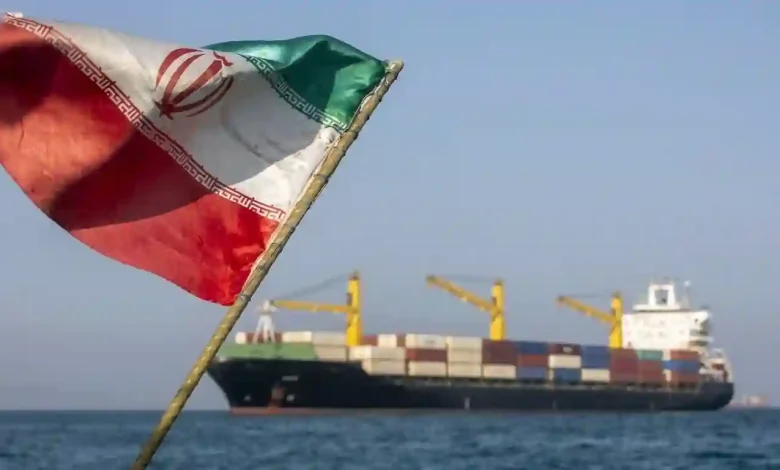
Table of Contents
Iran Hormuz Deal developments have taken center stage as a highly anticipated draft agreement between Tehran and Muscat inches closer to finalization, promising to partially de-escalate the volatile maritime crisis in the Persian Gulf. However, this diplomatic breakthrough emerges against a backdrop of deep strategic concern in Washington, where emerging intelligence and internal political leaks point to a potential crisis in the United States military logistics system. As the international community eagerly awaits an official announcement—which regional diplomats suggest could come as early as Thursday—military planners are grappling with the reality that five months of intensive naval operations and missile defense missions have severely strained America’s precision-guided munitions stockpiles.
The convergence of these two narratives underscores a critical inflection point in the modern Middle Eastern security architecture. While regional mediators, led primarily by the Sultanate of Oman, scramble to negotiate alternative shipping corridors and secure commercial transit, the hardware that underpins American deterrence in the region is facing unprecedented replenishment delays. This detailed investigation explores the complex parameters of the pending maritime agreement, the logistics constraints currently limiting U.S. military flexibility, and the broader geopolitical ramifications of a potentially transformed Persian Gulf.
Details of the Proposed Iran-Oman Shipping Framework
The proposed accord represents the most significant diplomatic breakthrough since the eruption of active hostilities earlier this year. According to sources close to the Omani Foreign Ministry, the core of the deal is a temporary, 60-day operational framework designed to restore commercial transit through the region’s most vital economic artery. This framework has been heavily scrutinized by the Iranian Supreme National Security Council, which is expected to grant its final authorization imminently.
Crucially, the agreement is structured around a compromise that respects Tehran’s security demands while offering international shippers a degree of predictability. For months, global maritime organizations have warned about the ongoing threats to commercial tankers transiting the region, prompting skyrocketing insurance premiums and forced detours around the southern tip of Africa. The draft agreement seeks to reverse this economic disruption by establishing a highly coordinated, dual-lane system jointly managed by Muscat and Tehran.
Visualizing the Inbound and Outbound Navigation Lanes
Unlike previous maritime arrangements that relied on internationally recognized open-water transit pathways, the proposed 60-day trial introduces a highly specific geographical corridor. Under the agreed-upon coordinates, inbound commercial vessels heading into the Persian Gulf will be routed through a northern lane that lies directly within Iranian territorial waters. This setup grants Iranian naval forces direct oversight and inspection rights over incoming cargo.
Conversely, outbound ships exiting the Gulf toward the Arabian Sea will transit through a southern lane managed and monitored by the Sultanate of Oman. This dual-lane system is designed to reassure Western allies and commercial operators that outbound vessels—especially those carrying vital crude oil and liquefied natural gas (LNG)—can exit the region under a neutral, internationally respected security umbrella. Despite these efforts, the heavily built-up U.S. military presence near the waterway remains a major point of friction, with Tehran demanding a complete cessation of what it terms “threatening and aggressive” naval patrols as a precondition for long-term stability.
De-mining and Security Assurances
A crucial component of the draft agreement is the allocation of a 30-day window during which Iranian naval forces will undertake the delicate task of clearing defensive mines from the median lane of the waterway. The presence of underwater mines has been one of the primary physical deterrents preventing commercial fleets from risking passage. Once this de-mining phase is successfully completed, the median lane is slated to open for two-way commercial traffic under a permanent, jointly negotiated Oman-Iran framework.
Furthermore, the deal specifies that during the initial 60-day trial period, commercial shipping vessels will not be subjected to arbitrary transit tolls or transit tariffs. This concession is designed to encourage international shipping lines to return to the route, which remains one of the world’s premier strategic choke points like the Strait of Hormuz. However, the exclusion of U.S. and Israeli-flagged vessels remains a highly contentious draft clause, with hardliners in the Iranian parliament advancing parallel legislative measures to codify bans and steep fines on “hostile” ships.
The Munitions Shortage Controversy in Washington
While the diplomatic machinery in Muscat is working at a fever pitch, a political storm has erupted in Washington over the logistical sustainability of America’s defense posture in the Middle East. Reports have surfaced indicating that the relentless pace of military operations has triggered severe depletion across several critical weapon classes, prompting sharp internal debates and raising questions about the long-term impact of skyrocketing military expenditures.
The Camp David Confrontation
The controversy spilled into the public sphere following leaks from a high-level Cabinet meeting held last week at the Camp David presidential retreat. According to reporting by The Washington Post and other national outlets, President Donald Trump directly confronted Defense Secretary Pete Hegseth over the state of the nation’s missile defense and long-range strike inventories. The President reportedly expressed frustration that a problem he believed had been fully resolved was now actively constraining U.S. strategic options.
During the exchange, Secretary Hegseth reportedly defended the Pentagon’s response but shifted part of the operational blame to his deputy, Stephen Feinberg, suggesting that communications regarding manufacturing bottlenecks had not been adequately prioritized. In public statements, President Trump has vehemently denied any munitions shortfall, taking to social media to claim the U.S. possesses “massive amounts” of weaponry and threatening “leakers” of this classified logistical data with severe federal prosecution and long-term prison sentences. Despite the official denials, several military analysts and congressional defense committees have quietly confirmed that interceptor inventories are at historically low levels.
Quantifying the Stockpile Drain
Defense logistics experts point to several specific weapon systems that have borne the brunt of the five-month naval campaign. The primary concern center on surface-to-air interceptors used by Navy destroyers and land-based missile defense batteries to shield regional assets and allied shipping from incoming drone and ballistic missile attacks.
According to data compiled by independent defense research institutions, the U.S. has fired approximately 1,200 Patriot interceptors out of its global active inventory of 2,330. Even more concerning is the deployment of Terminal High Altitude Area Defense (THAAD) missiles, where an estimated 190 to 290 interceptors have been expended out of a total national stockpile of only 300. These figures suggest that the U.S. has consumed a massive portion of its high-end defensive capabilities, leaving its domestic industrial base struggling to keep pace.
This severe operational drain explains why President Trump reportedly chose to pause additional military strikes against Iranian coastal defense systems and energy facilities. By allowing the Omani diplomatic track to progress, Washington gains a critical window to replenish its exhausted forward-deployed stockpiles and address severe bottleneck challenges in domestic defense manufacturing plants.

Comparative Analysis of Strategic Capabilities
The operational realities of the conflict have exposed a stark disparity between rapid-fire deployment rates and long-term industrial capacity. The table below outlines the estimated pre-war inventories, reported expenditures during the five-month conflict, and the remaining strategic reserve status for key U.S. munitions classes:
| Munition / Asset Class | Estimated Pre-War Stockpile | Reported Expenditure (Middle East) | Remaining Stockpile Security Status |
|---|---|---|---|
| Patriot Missile Interceptors | 2,330 units | ~1,200 units | Strained; domestic manufacturing bottlenecked |
| Tomahawk Cruise Missiles | 3,000 units | ~1,000+ units | Highly depleted; multi-year production lag |
| THAAD Interceptors | ~300 units | 190 – 290 units | Dangerously low; leaves East Asia command vulnerable |
| JASSM (Standoff Missiles) | 4,400 units | ~1,100 units | Moderate reserves; reallocation restricted |
This quantitative breakdown highlights the immense pressure under which the Pentagon is currently operating. The rapid depletion of THAAD and Patriot assets is of particular concern to regional partners in the Persian Gulf, who rely heavily on American air defense umbrellas to shield their domestic critical infrastructure. These constraints have directly influenced Tehran’s calibrated regional strategy, as Iranian planners recognize that a prolonged war of attrition could eventually exhaust America’s precision-guided defensive shield.
Geopolitical Impacts on Global Energy Markets
The immediate consequence of the advancing Omani-mediated deal was felt in the global oil markets, where Brent crude futures experienced a notable downward correction. For months, the effective closure of the Strait of Hormuz had choked off nearly 20% of the world’s daily petroleum supply, causing severe inflationary pressures across major European and Asian economies. The prospect of a finalized shipping corridor has introduced a wave of cautious optimism among energy traders.
However, energy analysts caution that the market’s recovery will remain fragile until the de-mining phase is completed and shipping lanes are fully cleared. Furthermore, the threat of localized flare-ups remains high. For example, recent attacks by Yemen-based Houthi rebels on Saudi-flagged tankers in the Red Sea serve as a stark reminder that even if the Strait of Hormuz is temporarily stabilized, adjacent maritime choke points remain highly vulnerable to proxy interference.
The Role of Third-Party Mediators and Regional Allies
The delicate negotiations in Muscat have highlighted the critical role of third-party mediation in preventing a total regional conflagration. Oman’s traditional diplomatic neutrality has once again proven invaluable, allowing it to act as a reliable conduit of information between two adversaries that are otherwise refusing to engage in direct negotiations.
Other regional heavyweight nations are also adjusting their security postures in response to the ongoing conflict. In a significant development, Saudi Arabia, Turkey, and Pakistan are reportedly finalizing a trilateral joint defense agreement in Jeddah. This move reflects a growing consensus among regional powers that they must diversify their security dependencies, especially as domestic U.S. political battles and munitions constraints raise questions about the long-term reliability of Washington’s security guarantees. Islamabad, in particular, has expressed hope that a successful resolution to the Hormuz shipping crisis could pave the way for a broader diplomatic reset between the United States and Iran under a memorandum of understanding it previously helped broker.
Future Outlook: Can the Deal Hold?
As the Thursday deadline approaches, the international community remains divided on whether the proposed shipping agreement will serve as a permanent bridge to peace or merely a temporary operational pause. The primary challenge lies in the deep-seated lack of trust between the key actors. While the U.S. official stance is that any lifting of its naval blockade is strictly contingent on Iran’s adherence to its maritime commitments, Tehran views the blockade itself as an illegal act of aggression that must be terminated unconditionally.
Additionally, the exclusion of U.S. and Israeli-flagged commercial vessels from the joint-managed lanes remains a potential flashpoint. Should Iranian forces attempt to seize or turn back vessels with indirect Western ownership ties, it could trigger immediate retaliatory strikes from U.S. naval assets patrolling the Gulf of Oman, nullifying weeks of diplomatic progress.
Ultimately, the pending Strait of Hormuz agreement is a high-stakes geopolitical experiment. For Iran, it offers a crucial economic lifeline and a chance to assert partial operational control over a global shipping corridor. For the United States, it provides a much-needed operational window to address mounting ammunition deficits and reassess its long-term military commitment in the Middle East. Whether this temporary arrangement can be converted into a sustainable maritime security framework remains to be seen, but for now, the eyes of the global economy remain fixed on the quiet diplomatic corridors of Muscat.