Iran-US conflict escalates as Senate rejects war powers limit 2026
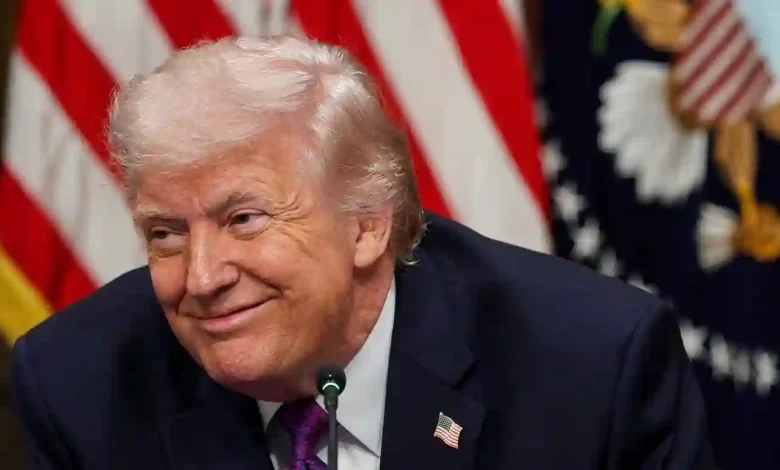
Table of Contents
Iran-US conflict dynamics took a dangerous turn on Thursday as Tehran confirmed that American airstrikes killed three of its soldiers, marking a perilous escalation that threatens to engulf multiple nations across the Middle East. The casualties occurred during intense aerial exchanges, which the United States has characterized as defensive maneuvers aimed at neutralizing hostile regional threats. However, Iran’s military leadership has vowed swift retribution, signaling that the confrontation is rapidly moving past localized skirmishes and into a broader regional military theater. This direct loss of Iranian military personnel raises the stakes dramatically, leaving little room for diplomatic off-ramps as both nations reinforce their forward positions. Observers fear that this immediate flashpoint could serve as the catalyst for an uncontainable multi-front war, as diplomatic corridors remain completely frozen and military posturing reaches unprecedented levels.
Escalation Reaches a Critical Threshold
The theater of operations has broadened to encompass crucial logistics corridors and major infrastructure assets across the region. With the deaths of three Iranian service members, the political narrative within Tehran has shifted from strategic patience to active defense and deterrence. Military analysts point out that direct engagements between U.S. forces and Iranian regular military personnel represent a qualitative escalation from previous proxy skirmishes. The ideological and strategic weight of these losses forces Tehran’s high command to formulate an explicit military response. This escalatory loop makes the prospect of localized de-escalation highly unlikely, as both leaderships are locked in politically binding commitments to project strength.
Furthermore, intelligence reports suggest that the strikes targeted command nodes and integrated air defense networks, indicating a deliberate U.S. campaign to degrade Iran’s defensive capabilities. The geographic scope of these strikes shows a systematic targeting methodology that extends deep into sensitive defensive sectors, leaving regional partners highly vulnerable to the inevitable blowback. As military assets are deployed further forward, the strategic margin for error is virtually non-existent, and a single tactical misjudgment could trigger a rapid descent into open warfare.
Senate Rejects Curb on Presidential War Powers
In Washington, the domestic political battle over the direction of the conflict has reached a fever pitch. The Senate on Thursday again narrowly rejected a critical legislative effort to limit President Trump’s military authority. The resolution, brought forward by New York Democrat Kirsten Gillibrand, sought to constrain executive actions and require congressional authorization for sustained military engagements. In a razor-thin 49-50 vote, the measure failed to pass, highlighting the deep partisan divide over foreign policy and the scope of executive war powers. Notably, three Republicans broke ranks to vote in favor of the resolution, reflecting growing concerns within some conservative circles regarding the unchecked nature of the intervention.
This legislative defeat effectively clears the way for continued executive military actions, intensifying the debate surrounding the ongoing operations. Opponents of the administration argue that bypassing Congress increases the likelihood of an uncontrolled escalatory spiral. They point to escalating budgets, arguing that the true war with Iran costs are mounting rapidly both in terms of national defense spending and geopolitical instability. Military strategists are concerned that without legislative checks, Trumps war in Iran could develop into an open-ended campaign without a defined endgame, leaving American forces in the region highly vulnerable to coordinated retaliation. The executive branch maintains that agility and decisive force are paramount to deterring state-sponsored aggression, rendering legislative restrictions counterproductive to national security interests during a fast-moving crisis.
Jordan and Kuwait Face Direct Impacts
The geographical footprint of the hostilities expanded dramatically on Thursday as neighboring states were dragged directly into the crossfire. Jordan announced that its air defense systems successfully intercepted Iranian missiles for a second consecutive day. Jordanian officials emphasized that these defensive measures were necessary to protect the kingdom’s sovereign airspace from being used as a transit corridor for hostile projectiles. The kingdom’s proactive stance highlights the extreme distress felt by regional partners who find themselves physically positioned between the primary combatants. For Amman, the risk of falling debris and accidental strikes on its own population is a primary national security threat.
Meanwhile, Kuwait experienced its own tragic spillover when a strike killed one person on its territory. The incident has sent shockwaves through the Gulf state, prompting military alerts and emergency diplomatic consultations. The vulnerability of these regional partners has forced Western nations to reassess their troop security posture. In response to the growing chaos, several US embassies issue urgent security warnings, advising American citizens to maintain high vigilance and restrict non-essential travel. Regional intelligence agencies suggest that these defensive interceptions and local casualties are tied to a broader, highly coordinated Iran retaliation plan designed to pressure Washington’s regional allies and complicate U.S. operational logistics.
Egypt Targeted as Drones Strike Damietta Port
In an unexpected expansion of the conflict zone, maritime security took a severe hit on Wednesday when drone strikes targeted Egypt’s Mediterranean port of Damietta. The attacks sparked major fires on two natural gas vessels, representing the first time Egypt has been directly targeted since the outbreak of current hostilities. While the exact origin of the drones remains unconfirmed, international investigators are focusing on Iran’s regional allies. The Houthi movement in Yemen, which has repeatedly targeted commercial shipping in the Red Sea, is widely suspected of possessing the capabilities and intent to launch such long-range strikes. This incident at Damietta is a watershed moment, demonstrating that maritime threats are no longer confined to the Bab el-Mandeb Strait or the Persian Gulf.
By striking deep into the Mediterranean, the attackers have signaled their ability to disrupt global LNG distribution networks far beyond traditional conflict zones. This development follows a pattern of high-risk maritime operations, including a recent incident where a Strait of Hormuz tanker was intercepted, raising fears of a total blockade of critical shipping chokepoints. For Egypt, the economic and security implications are profound, as the Suez Canal and associated maritime infrastructure represent a primary source of national revenue. A direct threat to Egyptian ports threatens to destabilize one of the region’s most populous and strategically vital nations, adding a dangerous new variable to an already complex geopolitical equation.
Geopolitical Realignments and Coalition Dynamics
The rapid expansion of the battlefront has forced Middle Eastern nations to re-evaluate their strategic alignments. Governments that previously sought to maintain neutrality are finding it increasingly difficult to avoid taking sides. Jordan’s active interception of missiles represents a significant security commitment, aligning its defense infrastructure with Western interests. Conversely, Iran is seeking to test the limits of Western resolve through a decentralized proxy strategy. Analysts note that Iran bets on calibrated escalation, calculating that limited strikes will deter a full-scale U.S. invasion while maintaining pressure on regional trade networks.

However, this high-stakes game has strict boundaries. Many diplomats argue that this period represents Irans last chance under Trump to secure a negotiated settlement before hostilities reach a point of no return. The refusal of either side to back down has created a fragile security environment where a single miscalculation could trigger a comprehensive, multi-theater war. The failure of regional organizations to mediate the dispute reflects the deep polarization that now characterizes Middle Eastern diplomacy, leaving hard military power as the primary mechanism for resolving strategic disputes.
Economic Fallout and Global Energy Disruption
The economic ramifications of the conflict are reverberating through global energy markets, raising the specter of a prolonged inflationary shock. Damietta Port is a crucial hub for liquefied natural gas (LNG) exports to Europe, and the targeting of gas vessels there has sent European gas futures surging. Combined with the ongoing insecurity in the Persian Gulf and Red Sea, shipping lanes are becoming increasingly hazardous. Maritime insurance premiums have skyrocketed, forcing shipping conglomerates to reroute vessels around the Cape of Good Hope, adding significant time and cost to global supply chains.
According to a Reuters Middle East coverage report, the cost of securing bulk transport vessels has nearly doubled in recent weeks. The threat to global energy security is no longer theoretical. If key channels remain contested, the resulting supply shocks could trigger severe economic disruptions worldwide. Economists warn that the current trajectory poses a direct world war 3 threat from Iran if major global powers are drawn in to protect their vital economic interests and secure free navigation. This economic disruption comes at a time when global markets are highly sensitive to supply chain bottlenecks, exacerbating fears of systemic stagflation.
Strategic Outlook and the Risk of Miscalculation
As the conflict intensifies, the lack of credible diplomatic channels increases the probability of a systemic breakdown. The razor-thin Senate vote in Washington demonstrates that the domestic political consensus is fragile, yet the executive branch remains determined to project overwhelming force. Tehran, meanwhile, faces mounting internal and external pressures, pushing its leadership toward asymmetric options that carry high escalatory risks. The involvement of regional states like Jordan, Kuwait, and Egypt underscores that the crisis cannot be contained within the borders of the primary combatants.
The coming weeks will be critical in determining whether international intermediaries can establish a functional pause or if the region will slide into an irreversible conflict. Without a clear mechanism for de-escalation, each subsequent tactical engagement increases the likelihood of a major regional conflagration. Strategic deterrence is a delicate balancing act, and when diplomatic communication breaks down entirely, the margin of safety disappears. Global leaders must act decisively to construct communication channels before the momentum of military operations overrides all political control.
| Country / Region | Key Event Reported | Casualties / Damage | Political / Military Stance |
|---|---|---|---|
| Iran | U.S. airstrikes strike military targets | Three soldiers killed | Tehran vows retaliation and rejects U.S. terms |
| Jordan | Iranian missiles intercepted in national airspace | None reported (successful defense) | Vows to defend sovereignty against all incursions |
| Kuwait | Hostile strike hits territory | One person killed | Placed military on high alert, diplomatic protests |
| Egypt | Drone strike on Damietta Port | Fires on two natural gas vessels | Investigating origins, maritime security tightened |
| United States | Senate votes on Kirsten Gillibrand resolution | None (legislative battle) | Resolution rejected 49-50; executive war powers preserved |