FBI Officials Charged Over Alleged False Testimony in Hunter Probe 2026
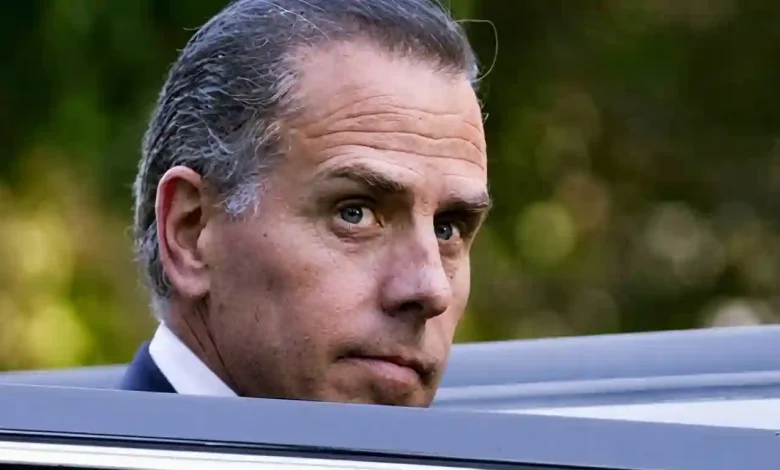
Table of Contents
FBI officials charged in federal court on Friday represent an extraordinary legal turn in the contentious scrutiny surrounding federal investigations into Hunter Biden. According to criminal complaint documents unsealed in the U.S. District Court for the District of Columbia, federal prosecutors have formally accused Nikki Floris, 46, and Bradley Benavides, 56—both former senior figures within the Federal Bureau of Investigation’s counterintelligence hierarchy—of knowingly misleading lawmakers during closed-door testimony before a congressional panel. The criminal charges assert that the two former officials offered false, fictitious, and fraudulent statements under oath regarding their knowledge of actions taken by the Bureau’s Foreign Influence Task Force (FITF).
This aggressive legal prosecution arrives amidst a deeply polarized political climate, in which federal law enforcement procedures and congressional oversight protocols have repeatedly collided. The indictment highlights ongoing battles over administrative accountability, echoing earlier national security debates like the FISA Section 702 oversight disputes that have fractured Capitol Hill along ideological lines. By targeting former career national security officials, the Justice Department has signaled a rigorous standard of penalizing perceived administrative obfuscation before Congress.
Overview of the Indictments Against Former Bureau Leaders
The criminal complaint filed in Washington outlines specific felony counts under 18 U.S.C. § 1001, which criminalizes false statements made within any matter under the jurisdiction of the executive, legislative, or judicial branch of the United States government. The filings assert that both Floris and Benavides deliberately minimized and misrepresented the extent to which the FBI’s dedicated task force tracked, analyzed, and responded to intelligence leads involving the business dealings of Hunter Biden in Ukraine and other foreign jurisdictions.
Court records detail that congressional investigators from the House Judiciary Committee and its Select Subcommittee on the Weaponization of the Federal Government had sought meticulous clarity regarding whether counterintelligence analysts influenced broader investigatory decisions. Rather than providing candid assessments, the government alleges that both defendants gave coordinated, evasive answers designed to conceal internal deliberations. The proceedings mirror wider institutional reviews seen across federal agencies, reminiscent of the tensions examined in House Republican oversight findings touching on inter-agency communications.
Profiles: Nikki Floris and Bradley Benavides
Prior to their retirement and subsequent indictment, Nikki Floris and Bradley Benavides were highly decorated civil servants with decades of combined service within federal intelligence circles. Floris served as the Intelligence Analyst in Charge and later held executive leadership appointments within the FBI’s Counterintelligence Division, steering strategic priorities during a period marked by significant foreign disinformation campaigns.
Bradley Benavides previously served as the Deputy Assistant Director of the Counterintelligence Division, overseeing operations aimed at identifying, evaluating, and disrupting foreign covert actions operating inside the domestic United States. Because both individuals were regularly called upon to present classified briefings to congressional committees and executive branch leadership, their institutional credibility remained undisputed until congressional committees conducted granular audits of internal communications and email archives.
The Disputed House Panel Testimony
The core of the criminal complaint rests upon transcripts generated during closed-door depositions conducted before the House Judiciary Committee. Investigators pressed both Floris and Benavides regarding their awareness of internal memoranda, briefings provided to external social media platforms, and discussions between the FBI and the Department of Justice regarding overseas communications.
Prosecutors assert that when asked pointedly whether the Foreign Influence Task Force took specific actions to verify or evaluate tips connected to Hunter Biden’s commercial ties, both officials made categorical denials under oath. However, contemporary electronic mail traffic, secure instant messages, and calendar entries recovered by federal investigators allegedly demonstrate that both officials received direct briefings, reviewed task force memoranda, and participated in planning meetings specifically designated around these sensitive investigative tracks.
The legal vulnerability of providing disputed testimony before congressional committees is well established, frequently surfacing during high-stakes reviews of political and administrative conduct, as documented during the Senate Intelligence Committee hearings where truthfulness under oath is relentlessly scrutinized by lawmakers and federal watchdogs alike.
The Role of the Foreign Influence Task Force (FITF)
Established in the aftermath of the 2016 election cycle to safeguard democratic processes against foreign state-sponsored espionage and influence activities, the Foreign Influence Task Force operates at the nexus of the FBI’s Counterintelligence, Cyber, and Counterterrorism divisions. The unit routinely shares tactical indicators with commercial entities, social media networks, and global intelligence allies.
In the lead-up to the 2020 presidential election, the FITF played a central role in categorizing domestic and international tips regarding illicit influence operations. Congressional critics have long argued that the unit overstepped its mandate by preemptively discrediting authentic reporting under the guise of combating disinformation. The indictment charges that the defendant officials sought to protect the operational reputation of the FITF by fabricating a false narrative of task force detachment from the Hunter Biden case.
The public skepticism generated by covert task force activities echoes broader governance disputes regarding civil liberties and law enforcement transparency, such as debates surrounding sweeping law enforcement access and surveillance authorities currently being weighed across federal courts.
Justice Department Legal Framework and Charges
Federal prosecutors have crafted a prosecution grounded entirely in document-backed perjury and false-statement doctrines. By juxtaposing transcribed sworn congressional testimony against contemporary agency documents, the government hopes to construct an open-and-shut evidentiary record for a jury in Washington, D.C.
Under 18 U.S.C. § 1001, prosecutors are required to establish beyond a reasonable doubt that the statements made were materially false, that the defendants acted willfully and knowingly, and that the representations pertained to a matter within the legislative jurisdiction of the committee. To establish materiality, prosecutors argue that the false assertions directly impeded the House panel’s statutory duty to exercise constitutional oversight and craft necessary legislative reforms. This aggressive judicial enforcement parallels historic executive actions, including controversies surrounding the Anti-Weaponization oversight debates that have gripped federal legal institutions.
Key Case Elements and Timeline Comparison
To contextualize the complex series of events leading to these criminal charges, the following table summarizes the legal milestones, relevant agencies, and disputed claims:
| Defendant | Former FBI Role | Primary Allegation | Statutory Basis | Potential Penalty |
|---|---|---|---|---|
| Nikki Floris | Intelligence Analyst / Counterintelligence Leader | False denial of knowledge regarding FITF memos on Hunter Biden | 18 U.S.C. § 1001 | Up to 5 years imprisonment, fines |
| Bradley Benavides | Deputy Assistant Director, Counterintelligence | Misrepresenting executive awareness of task force briefings | 18 U.S.C. § 1001 | Up to 5 years imprisonment, fines |
| FITF Mandate | Multi-division inter-agency unit | Accused of preemptive information suppression | Administrative Directive | Internal restructuring & audits |
| House Judiciary | Congressional Oversight Committee | Subpoenaed internal documents proving perjury | Article I, U.S. Constitution | Legislative remedies & referrals |
Political Reactions Across Capitol Hill
Reaction from Capitol Hill was immediate and bitterly divided along party lines. House Judiciary Committee Chairman and leading conservative lawmakers released public statements framing the indictments as long-overdue validation of their assertions that career intelligence bureaucrats acted with partisan bias to insulate the Biden family from criminal scrutiny. They hailed the charges as proof that administrative officials cannot deceive the American public with impunity.
Conversely, defense representatives and prominent Democratic committee members voiced concern that these charges represent the politicization of the Justice Department, designed to punish career intelligence officers whose analytical judgments conflicted with congressional political narratives. Legal observers note that politically sensitive prosecutions often create turbulence across multiple sectors, similar to the intense fallout observed when former FBI leadership faced intense scrutiny during prior administrative clashes.
Furthermore, broader political maneuvering across congressional committees continues to complicate national narratives, much like ongoing scrutiny into alleged administrative weaponization in past investigations, creating an environment where every regulatory or enforcement action is interpreted through an adversarial lens.
Institutional Ramifications for the FBI and Intelligence Oversight
The indictment of Floris and Benavides delivers a profound institutional blow to the FBI at a moment when public trust in federal law enforcement agencies remains fragile. Current leadership at the J. Edgar Hoover Building faces the delicate challenge of maintaining field morale while cooperating with ongoing prosecutorial inquiries.
Intelligence analysts express profound worry that indicting senior leaders over ambiguous or nuanced statements made during rigorous congressional interrogations could create a chilling effect. Career intelligence officers may become hesitant to testify or accept high-profile counterintelligence assignments if normal differences in recollection or bureaucratic framing risk federal indictment. The situation mirrors widespread unease seen in other specialized sectors, such as broad federal personnel restructuring at ODNI, where institutional stability has been disrupted by structural upheavals.
Moreover, the case underscores the immense power wielded by congressional oversight panels when armed with statutory subpoena power and comprehensive document access, signaling that executive-branch privilege claims will face higher skepticism from federal grand juries moving forward.
Anticipated Defense Motions and Judicial Next Steps
Both defendants are scheduled to make their initial appearances in federal court in Washington next week, where they will enter their formal pleas before a federal magistrate judge. Criminal defense attorneys representing Floris and Benavides have already indicated their intent to mount a vigorous legal defense, challenging the government’s evidence on the grounds of lack of intent and linguistic ambiguity.
Expected legal strategies will focus on whether the questions posed by congressional interrogators were fundamentally ambiguous or compound, a common legal defense in perjury and false-statement trials under the Bronston doctrine. The defense will likely argue that both officials answered according to their genuine recollections during rapid-fire questioning spanning several hours without access to their complete archival files. Until a trial date is set, the legal proceedings will capture intense scrutiny from legal analysts, civil libertarians, and policymakers alike.