Over the last 47 years: US-Iran relations face total collapse
Table of Contents
Over the last 47 years, the geopolitical landscape of the Middle East has been structurally defined by the persistent hostility between Washington and Tehran. What began as a local revolutionary shift in 1979 has, in 2026, transformed into an unprecedented regional war. With the recent dramatic escalation, including the targeted assassination of Iran’s supreme leader and the subsequent naval blockades, the conflict is no longer a cold war fought through proxy networks. It has transitioned into direct, kinetic confrontation that threatens the global energy supply chain and challenges the foundational assumptions of international diplomacy.
The year 2026 marks a terrifying peak in this long-running conflict. Following the launch of ‘Operation Epic Fury’ by joint U.S. and Israeli forces on February 28, 2026, the region has been engulfed in relentless warfare. As the international community monitors the devastating aftermath of these operations, the ongoing strikes against Iran have decimated strategic nuclear facilities, air defense grids, and conventional military installations across major Iranian cities. This intense military campaign has forced both nations into a corner, where backing down carries immense domestic and geopolitical costs.
As the conflict enters its sixth month, political analysts and military strategists are grappling with how to de-escalate a war that has outpaced all diplomatic channels. In Washington, policy divisions have deepened between hardline military planners seeking total regime capitulation and diplomatic officials warning of a bottomless geopolitical quagmire. These internal fractures became apparent as the White House debates escalation parameters, balanced against the risk of driving Tehran into a deeper, irreversible alliance with rival Eastern superpowers.
The Historical Context of US-Iran Hostility
To comprehend the sheer scale of the 2026 war, one must look back to the seeds planted nearly five decades ago. The transition of Iran from a pivotal Western-aligned gendarme in the Persian Gulf to an ideological adversary of the United States remains one of the most significant shifts in modern diplomatic history. Prior to 1979, the Pahlavi dynasty served as a key pillar of U.S. foreign policy in West Asia. However, the deep-seated grievances of the Iranian public, rooted in the foreign-orchestrated 1953 coup that overthrew the democratically elected Prime Minister Mohammad Mosaddegh, created a boiling undercurrent of anti-imperialist sentiment that eventually exploded.
From the 1979 Revolution to Today’s Confrontation
The establishment of the Islamic Republic in February 1979 marked the official collapse of formal diplomatic relations. The subsequent 444-day hostage crisis at the U.S. Embassy in Tehran solidified a mutual doctrine of suspicion and non-recognition. Throughout the 1980s, during the grueling Iran-Iraq War, Washington’s overt tilt toward Baghdad further entrenched Tehran’s siege mentality, pushing the newly formed clerical regime to develop a robust asymmetric military strategy. This strategy focused heavily on proxy warfare, ballistic missile development, and eventually, a highly controversial nuclear program designed to deter direct foreign intervention.
For decades, this asymmetric stand-off operated within calculated boundaries. The Joint Comprehensive Plan of Action (JCPOA) signed in 2015 briefly offered a diplomatic exit ramp, but its subsequent abandonment by the United States re-ignited the cycle of maximum pressure and retaliatory enrichment. The current 2026 war represents the final, explosive breakdown of that fragile containment policy. Today, efforts to establish a functional Strait of Hormuz deal are hampered by decades of broken agreements and deep psychological mistrust that prevent any meaningful diplomatic progress.
The 2026 Military Escalation and the Trump Strategy
The current phase of direct military engagement is structurally different from any previous crisis in the region. When U.S. and Israeli stealth assets penetrated Iranian airspace in late February 2026, they targeted not only military infrastructure but also the clerical leadership itself. The death of Supreme Leader Ayatollah Ali Khamenei in his compound shook the core of the Islamic Republic’s command structure. Rather than forcing a swift surrender, however, this high-stakes gamble decapitated the moderate factions within Tehran and handed total authority to the hardline elements of the Islamic Revolutionary Guard Corps (IRGC).
Under the direct influence of ultra-conservative commanders, Iran’s military apparatus immediately pivoted to a regional retaliatory offensive. Utilizing its vast arsenal of precision-guided ballistic missiles and swarming attack drones, Tehran targeted regional states hosting U.S. forces, effectively widening the conflict’s geography. Tensions have reached a fever pitch as Iran warns Saudi Arabia and other Gulf Cooperation Council members that any complicity in the U.S.-led blockade will result in direct strikes on their critical oil infrastructure. This aggressive posture has placed regional kingdoms in an excruciating diplomatic bind, forcing them to balance their security dependencies with Washington against the threat of direct Iranian destruction.
The execution of this conflict from Washington has been deeply tied to domestic political calculations. Seeking to fulfill a long-held objective of neutralizing the Iranian threat once and for all, the Trump administration’s military campaign has combined overwhelming kinetic strikes with an airtight naval blockade. The strategic goal remains clear: to starve the Iranian economy of oil revenue and force the regime to permanently dismantle its nuclear program, destroy its missile stockpile, and abandon its regional allies. However, this maximalist approach has instead solidified the resolve of the IRGC, who view the war as an existential struggle for national survival.
Kinetic Engagements and Strategic Calculations
The military engagements of the past five months have revealed the limits of purely conventional superiority in a complex geographic theater. While U.S. naval assets have effectively blocked major Iranian maritime routes, they remain highly vulnerable to Tehran’s asymmetric coast-defense capabilities. The terrain of southern Iran, characterized by rugged, mountainous coastlines and narrow maritime channels, provides the perfect environment for hidden anti-ship missile batteries and fast-attack missile boats. This geographic reality has prevented a clean U.S. victory and turned the Persian Gulf into a high-risk combat zone.
Despite suffering massive losses to its conventional navy, Tehran has continuously adapted its tactics. Drawing from pre-arranged contingency options, Iran’s strategic retaliation plan relies on decentralized commands capable of launching localized operations without direct orders from Tehran. This ensures that even if the central government’s communications are severed by electronic warfare, regional cells can still execute devastating strikes on commercial shipping and naval targets, maintaining a constant level of deterrence.
The Battle for Global Chokepoints: The Strait of Hormuz
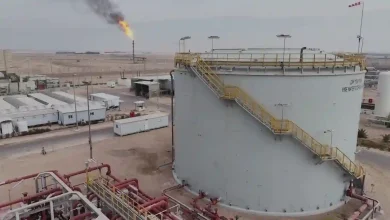
At the center of this global crisis is the Strait of Hormuz, a narrow waterway through which more than twenty percent of the world’s petroleum liquids pass daily. The ongoing blockade has effectively choked off this vital trade artery, causing global oil prices to skyrocket and triggering severe inflationary shocks across international markets. The diplomatic stand-off over the strait has reached a critical bottleneck, with both sides refusing to budge on their core security demands.
In recent days, the war of words has intensified alongside physical engagements. Following reports of progress in Oman-mediated backchannel talks, the IRGC has made it clear that a diplomatic resolution is far from guaranteed. Highlighting the regime’s uncompromising stance, Sardar Mohebi’s warnings have reiterated that the reopening of the strait is entirely conditional on the United States halting its aggressive behavior and permanently lifting the naval blockade. Without these concessions, the waterway will remain a militarized zone closed to international commerce.
Regional Alliances and the Shift in Middle Eastern Dynamics
The U.S.-led campaign has also severely tested regional alliances. While European nations have offered mixed reactions to the direct strikes on Iranian soil, the Gulf states find themselves on the front lines of potential devastation. Decades of efforts to build a unified regional defense architecture are being tested by the immediate threat of Iranian retaliation. Many regional leaders are realizing that their reliance on Western security guarantees may not fully protect them from the asymmetrical threats of drone swarms and precision missile strikes launched from just across the Persian Gulf.
Riyadh’s Dilemma and Proxy Network Alignments
For Saudi Arabia, the war represents a terrifying security dilemma. While Riyadh has long sought the containment of Iranian regional influence, a direct conflict threatens the kingdom’s ambitious economic modernization plans. Major development projects are highly vulnerable to localized missile and drone strikes. Furthermore, the active participation of Iran-aligned groups, such as the Houthi forces in Yemen and various Shia militias in Iraq, means that any escalation could instantly transform into a multi-front war, dragging the entire Arabian Peninsula into chaos.
Logistical Crises and the Threat of Prolonged Conflict
As the conflict drags into its second half-year, the physical limits of prolonged high-intensity warfare are becoming apparent for both sides. The sheer volume of precision munitions expended in the opening months has strained military supply chains. For Washington, maintaining a continuous naval presence and executing daily strikes has depleted stocks of specialized weaponry, prompting urgent calls for increased domestic defense production.
This resource strain is not unique to the regional players. Pentagon officials have raised alarms over critical munitions shortages that could impair the U.S. military’s readiness in other global theaters, such as the Indo-Pacific. This logistical reality has added pressure on Washington to seek a swift resolution, even as the political leadership remains committed to achieving its maximalist objectives against Tehran.
Diplomatic Deadlocks and the Future of Regional Security
The current impasse demonstrates that the foundational issues dividing the two nations cannot be resolved by military force alone. Decades of distrust, compounded by the dramatic events of 2026, have created a diplomatic deadlock that will shape the Middle East for generations. Any future settlement will require a fundamental reassessment of security guarantees, regional trade routes, and nuclear non-proliferation frameworks.
| Historical Dimension | The 1979 Turning Point | The 2026 Conflict Peak |
|---|---|---|
| Conflict Nature | Asymmetrical diplomatic severing and proxy warfare foundations. | Direct kinetic strikes, high-level leadership decapitation, and naval blockades. |
| Key Weaponry | Conventional Cold War assets, early-stage unguided artillery. | Precision stealth bombers, ballistic drone swarms, and electronic warfare. |
| Geopolitical Stance | Containment and isolation of the newly established Islamic Republic. | U.S. maximum pressure versus Iranian demands for complete blockade removal. |
| Economic Impact | Oil shocks of 1979; localized regional trade adjustments. | Severe shipping disruptions in the Strait of Hormuz, global energy crisis. |