Iran retaliation plan finalized as US-Israeli strike threat grows 2026
Table of Contents
Iran retaliation plan has been officially finalized by the country’s armed forces, according to state-aligned media reports in Tehran. This defensive and counter-offensive posture comes in response to reports from major Western intelligence sources indicating that a US-Israeli alliance might be preparing imminent airstrikes against the Islamic Republic’s critical civilian and energy infrastructure. As the ongoing war with Iran drags on, the potential for a catastrophic regional conflict has reached its highest level in decades, sparking urgent security meetings across the Middle East.
Tehran Sounds the Alarm: A Strategic Retaliation Framework
The Iranian Supreme National Security Council, in coordination with the Islamic Revolutionary Guard Corps (IRGC) and the regular armed forces, has reportedly approved a comprehensive strategy designed to respond to any kinetic action. Senior military officials in Tehran have made it clear that their defensive doctrine is no longer purely reactive. Instead, they have pre-authorized specific counterstrikes that would target regional adversaries immediately following any breach of Iranian sovereignty.
According to political analysts, this public posturing is a calculated deterrence mechanism. By publicizing the existence of a highly detailed response framework, Iran hopes to signal to both Washington and Jerusalem that the costs of a preemptive strike would far outweigh any strategic benefits. While the White House debates escalation parameters and weighs the geopolitical fallout, military planners in Tehran are actively preparing their missile battalions and naval assets for a multi-front engagement.
The Threat of Imminent US-Israeli Strikes on Critical Infrastructure
The escalation of rhetoric follows several leaks from Western defense circles suggesting that Israeli intelligence, with potential logistical support from United States forces, has updated its target list within Iran. Unlike previous operations that focused primarily on covert sabotage or localized cyberattacks, the current leaks suggest a shift toward conventional, overt military strikes. The proposed targets reportedly include uranium enrichment sites, air defense command centers, and civilian power grids.
For Israel, the primary objective remains the degradation of Iran’s nuclear capabilities and its regional command structure. However, the inclusion of civilian infrastructure has introduced a highly volatile element to the equation. International law experts warn that targeting dual-use civilian facilities, such as electrical grids and water treatment plants, could lead to a severe humanitarian crisis, further polarizing global opinion on the Middle East escalation.
Targeted Assets: Energy Infrastructure and National Security
Of particular concern to Iranian planners is the vulnerability of the country’s extensive energy sector. Iran possesses some of the world’s largest proven oil and natural gas reserves, and its economy remains heavily reliant on energy exports. Key facilities, such as the Kharg Island oil terminal and the South Pars gas field, are prime targets for any campaign designed to cripple Tehran’s financial lifelines.
In response to these specific threats, Iran’s oil ministry has reportedly coordinated with military commanders to reinforce air defense systems around key refineries. Tehran has warned that any attempt to disable its energy production will be met with reciprocal strikes against energy infrastructure throughout the Persian Gulf. This means that oil facilities in neighboring allied nations could find themselves in the crosshairs of Iranian missiles in the event of an outbreak of open hostilities.
| Threat Vector | Key Target / Area | Iranian Defensive Response | Potential Global Impact |
|---|---|---|---|
| Air Strikes | Nuclear & Energy Facilities | Air defense reinforcement & missile counterstrikes | Surge in crude oil prices, localized destruction |
| Maritime Blockade | Strait of Hormuz | Naval mining, fast-attack craft deployment | Severe disruption of global maritime commerce |
| Asymmetric Warfare | Regional US Bases | Proxy militia coordination & drone strikes | Widespread geopolitical instability |
Escalation in the Strait of Hormuz and Global Energy Markets
Central to Iran’s defensive calculus is its geographical advantage over the Strait of Hormuz. Roughly one-fifth of the world’s total petroleum consumption passes through this narrow waterway daily, making it the single most critical transit chokepoint in the global economy. Analysts warn that as the Strait of Hormuz conflict escalates, the international community must brace for unprecedented economic shockwaves.
Iran’s navy has historically utilized asymmetric naval tactics, including the deployment of sea mines, anti-ship cruise missiles, and swarm attacks by armed speedboats. In a direct military confrontation, Tehran could easily restrict or entirely halt commercial shipping through the strait. Even a temporary closure would trigger panic buying in the energy sector, driving crude oil prices to historic highs and severely impacting Western economies that are already grappling with inflationary pressures.
The Economic Implications of Regional Maritime Disruptions
The shipping industry is already preparing for worst-case scenarios. Marine insurance underwriters have significantly raised premiums for vessels operating in the Persian Gulf and the Gulf of Oman. Any further escalations would likely cause major shipping conglomerates to reroute their fleets around the Cape of Good Hope, adding weeks to transit times and dramatically increasing shipping costs.
Furthermore, persistent disruptions to tanker traffic would disrupt the supply chains of East Asian economies that rely heavily on Middle Eastern crude, such as Japan, South Korea, and China. Recognizing this vulnerability, international diplomatic missions are working tirelessly behind the scenes to urge restraint, though their efforts have so far yielded minimal concrete results as both sides remain locked in a cycle of escalatory maneuvers.
Military Capabilities and Defensive Preparedness
Over the past decade, Iran has invested heavily in domestic military production to offset the impact of international sanctions. The country boasts one of the largest ballistic missile arsenals in the Middle East, alongside an advanced drone manufacturing ecosystem that has proven highly effective in various regional proxy conflicts. These technological advancements form the backbone of the newly announced retaliation framework.
The threat is not merely theoretical; the region is already witnessing active hostilities. Recent weeks have seen a sharp increase in attacks on American bases across Iraq and Syria, which Western intelligence attributes to Iranian-aligned militias. Conversely, retaliatory coalition operations have launched targeted strikes on US assets and regional Iranian positions, illustrating the fragile nature of the current security paradigm.
Missile Arsenals and Regional Proxy Networks
A key element of Iran’s defense strategy is its network of regional proxies, often referred to as the Axis of Resistance. This network includes Hezbollah in Lebanon, various Shiite militias in Iraq and Syria, and the Houthi movement in Yemen. In the event of a US-Israeli strike on Iranian soil, these groups are expected to launch coordinated attacks, overwhelming regional air defense systems like Israel’s Iron Dome and Arrow systems.
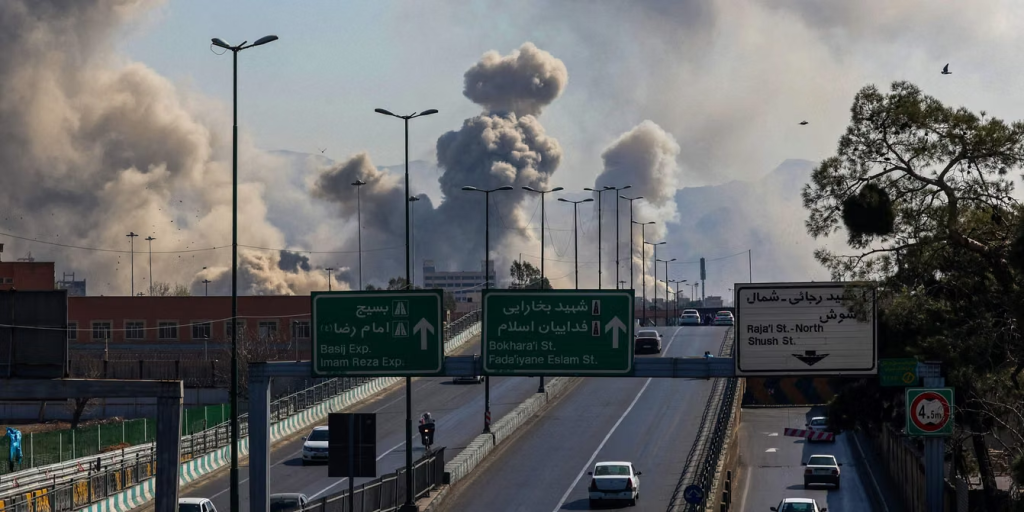
Hezbollah, in particular, possesses tens of thousands of precision-guided rockets capable of reaching deep into Israeli territory. Meanwhile, the Houthis have demonstrated their ability to disrupt shipping in the Red Sea and strike targets deep within Saudi Arabia and Israel. This decentralized, multi-directional threat environment makes a localized conflict highly unlikely, as any spark in Iran is bound to ignite active combat zones across multiple sovereign borders.
Diplomatic Maneuvers and the Role of Backchannel Negotiations
While the drums of war beat louder, quiet diplomatic channels remain active. Neutral intermediaries, such as Oman, Qatar, and Switzerland, are actively conveying messages between Washington and Tehran. The primary goal of these exchanges is to establish clear red lines to prevent an accidental escalation that could lead to an all-out regional war.
Some regional experts remain hopeful that active backchannel diplomacy can defuse the immediate crisis before military forces engage in direct combat. However, the political space for compromise is rapidly shrinking. Hardliners on both sides are utilizing the crisis to bolster domestic support, making public concessions politically costly for leadership in both Washington and Tehran. The staggering economic cost of the conflict has also raised concerns among fiscal policymakers in Washington, with military expenditures climbing into the tens of billions of dollars.
Regional Perspectives and the Path Forward
As tensions peak, neighboring Arab states find themselves in an incredibly delicate position. Countries like Saudi Arabia, the United Arab Emirates, and Jordan are desperate to avoid being dragged into a wider conflagration. While many of these nations view Iran’s regional influence with suspicion, they also recognize that a full-scale war would devastate regional stability and disrupt their own economic diversification initiatives.
Consequently, Gulf cooperation partners have adopted a policy of strict neutrality, refusing to allow their airspace or military bases to be used for offensive operations against Iran. Ultimately, the path forward remains highly uncertain. The coming days will be critical in determining whether deterrence will hold, or if the Middle East is on the verge of an unprecedented escalation that will reshape the geopolitical landscape for generations to come.
References & Authority Citations: