Iran Warns Saudi Arabia on Flawed NATO-Like Pact Security 2026
Table of Contents
Iran has officially issued a critical warning to Riyadh, asserting that Saudi Arabia’s newly signed mutual defense pact with Turkey and Pakistan will do little to secure its borders or deter regional adversaries. Amidst the ongoing regional hostilities on Iran war day 159, the geopolitical landscape of the Middle East has fractured further as Saudi Arabia seeks robust external guarantees. The tripartite agreement, modeled closely after NATO’s collective defense framework, dictates that an attack against any one of the signatory nations shall be treated as an attack against all three. However, Tehran has dismissed this security architecture as a strategic illusion, arguing that reliance on non-regional or distant regional actors cannot substitute for direct bilateral understanding. Simultaneously, the security situation on the ground has deteriorated rapidly. A senior member of the Yemen-based, Iran-backed Houthi militia group stated that they do not require directives from Tehran to scale up their military engagements. To back up this declaration, Houthi forces launched targeted attacks on a Saudi military base in Yemen and the border province of Najran, demonstrating the limits of defensive pacts.
The Collective Security Dilemma of the Tripartite Pact
The signing of the mutual defense pact between Saudi Arabia, Turkey, and Pakistan marks a watershed moment in Middle Eastern geopolitics. Described by analysts as a Sunni-majority NATO-style alliance, the agreement establishes a collective deterrence mechanism designed to offset the growing influence of Iran and its regional network of proxy forces. Under the terms of this defense treaty, the three nations pledge to treat any military aggression against one as a hostile act against all, committing their respective armed forces to a collective response. This arrangement represents a massive shift in Islamabad’s traditional neutral posture, bringing nuclear-capable Pakistan directly into the volatile Gulf security orbit. The integration of Turkish military technology and Pakistani conventional troops is intended to form an impenetrable shield around Riyadh. However, this strategic shift, exemplified by historical shifts such as the Islamabad MOU, has raised serious concerns in Tehran. Critics of the alliance argue that importing external military power does not address the underlying domestic and regional grievances that drive the ongoing proxy conflicts. Instead of fostering stability, the pact is seen as an escalation that could polarize the Islamic world along sectarian and geopolitical lines.
Tehran’s Posture and the Limits of Mutual Defense
Iran’s foreign ministry was quick to condemn the tripartite defense agreement, calling it an artificial security umbrella that will ultimately fail to protect Saudi Arabia. According to Iranian strategic thinkers, the fundamental flaw of the pact is its reliance on distant nations—specifically Turkey and Pakistan—that have their own complex domestic crises and geopolitical priorities. Tehran argues that neither Ankara nor Islamabad would be willing to risk a direct, devastating confrontation with Iran over localized border skirmishes or proxy conflicts. Furthermore, Iranian officials have indicated that they have developed a comprehensive Iran retaliation plan capable of bypassing conventional state-on-state defense structures. As Iran is betting it can withstand economic isolation and pressure, its military doctrine relies heavily on asymmetric warfare, cyber operations, and decentralized non-state actors. Under this doctrine, traditional military treaties are rendered largely ineffective, as there are no clear conventional targets for Turkey or Pakistan to strike in response to a localized, non-attributable attack. This asymmetrical dynamic ensures that Riyadh remains vulnerable despite its high-profile international alliances.
Houthi Autonomy and Tactical Realities on the Ground
The practical limitations of the Saudi-Turkey-Pakistan defense pact were laid bare almost immediately by developments in Yemen and the southern Saudi border. In a striking statement delivered to a CNN report on Friday night, a senior Houthi militia leader asserted that the group operates with absolute tactical independence. The official clarified that the Houthis do not need to wait for orders from Tehran to launch operations or escalate their long-standing conflict with Saudi Arabia. This declaration highlights the decentralized nature of the Axis of Resistance, where local proxies maintain substantial operational autonomy while aligning with Iran’s broader strategic goals. Almost immediately following this statement, Houthi forces launched coordinated offensives targeting a key Saudi military base in Yemen and the neighboring Saudi border province of Najran. These attacks underscore the immediate threat Riyadh faces, illustrating that defense pacts cannot easily deter a highly motivated, localized insurgent force equipped with advanced drone and missile technology.
Impact on Regional Shipping Lanes
The escalation of Houthi military actions poses a direct threat to global trade and maritime stability. By demonstrating their ability to act independently of Tehran, the Houthis have signaled that they can disrupt critical trade routes at will. The continuous threat to strategic choke points like the Bab-el-Mandeb gateway has forced commercial shipping vessels to take longer, more expensive routes around Africa. This disruption has ripple effects throughout the global supply chain, driving up shipping insurance rates and causing delays in the delivery of essential goods. The inability of conventional naval coalitions to completely secure these waters demonstrates the asymmetric advantage held by the Houthis and the limits of state-backed security pacts in protecting international maritime corridors.
The Najran Border Clashes
The localized nature of the strikes in Najran highlights the strategic vulnerability of Saudi Arabia’s southern border. Najran, a region with deep historical and tribal connections to northern Yemen, has long been a target for Houthi cross-border incursions and artillery fire. Because Najran is located within Saudi sovereign territory, any sustained attack on the region theoretically triggers the mutual defense clause of the tripartite pact. However, deploying Turkish or Pakistani troops to patrol the rugged mountainous terrain of Najran presents immense logistical and political challenges. Ankara and Islamabad must weigh the domestic backlash of putting their own soldiers in harm’s way for a localized border dispute, revealing the fragile assumptions underpinning the alliance’s collective deterrence model.
Economic Fallout and the Global Oil Markets
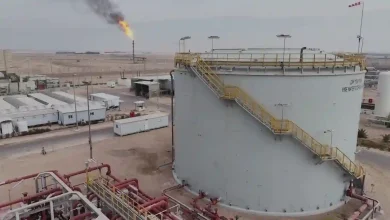
The renewed outbreaks of violence on the Saudi-Yemeni border have sent shockwaves through international financial and energy markets. Because Saudi Arabia is the linchpin of global oil production, any instability near its major processing hubs or southern borders immediately translates into premium pricing on global energy exchanges. Following the strikes on Najran and the Saudi base in Yemen, energy analysts noted severe volatility in crude prices where oil hits 100 dollars per barrel. This sharp increase in energy costs threatens to stall global economic recovery, feeding into inflationary pressures across North America and Europe. The economic fallout underscores a critical reality: even if the tripartite pact successfully deters a full-scale ground invasion of Saudi Arabia, it cannot insulate the global economy from the devastating financial shocks of localized, low-cost drone strikes on vital energy infrastructure.
The Geopolitical Calculations of Turkey and Pakistan
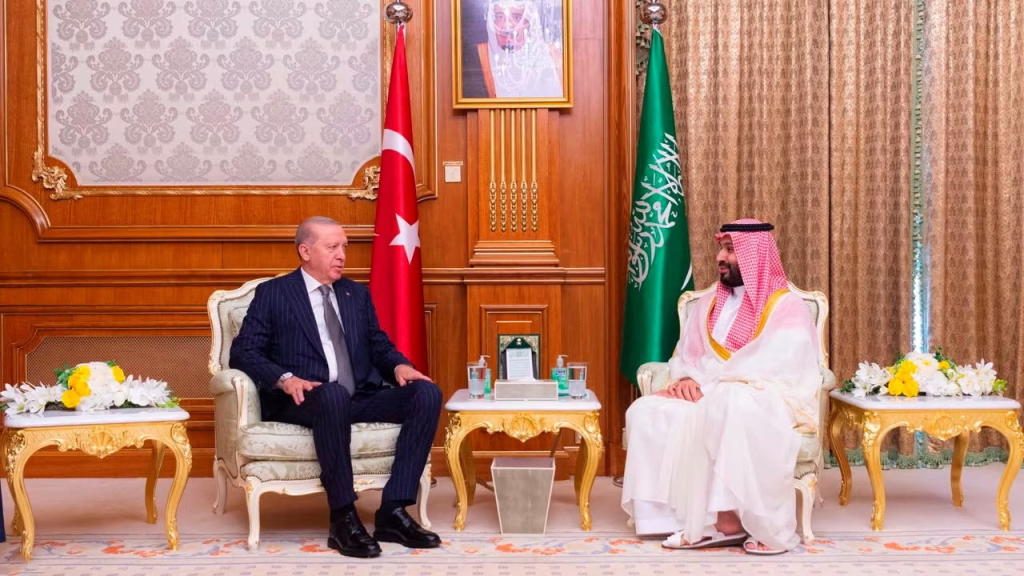
For Turkey and Pakistan, entering into a collective defense agreement with Saudi Arabia is a calculated risk fraught with significant diplomatic dangers. Turkey, under its current administration, seeks to expand its footprint as a dominant security provider in the Islamic world and secure lucrative defense contracts for its defense manufacturing sector. Pakistan, on the other hand, is heavily dependent on Saudi financial assistance and oil credits to stabilize its fragile domestic economy. However, both Ankara and Islamabad share active borders and complex bilateral relations with Iran. A direct military clash with Tehran would destabilize Pakistan’s western Balochistan province and disrupt Turkey’s delicate trade and energy agreements with its eastern neighbor. Therefore, while the pact’s rhetoric is absolute, the practical implementation of the “attack on one is an attack on all” clause remains highly questionable, as both partners will likely seek to avoid a direct confrontation with Iran at all costs.
Regional Alignment Comparison and Strategic Assets
To understand the shifting balance of power in the region, it is essential to compare the military capabilities, primary motivations, and systemic vulnerabilities of the newly formed tripartite alliance against the Iranian-led Axis of Resistance. The following table provides a detailed analysis of these competing blocs:
| Security Alliance | Primary Members | Strategic Focus | Key Military Assets | Core Vulnerabilities |
|---|---|---|---|---|
| Tripartite Defense Pact | Saudi Arabia, Turkey, Pakistan | Conventional deterrence, protection of energy infrastructure, containment of Iranian influence | Advanced air defense systems, Turkish drone technology, Pakistani conventional forces & nuclear deterrent | Geographical distance, complex domestic economic challenges, reluctance to engage in direct conflict with Iran |
| Axis of Resistance | Iran, Houthi Militia, Hezbollah, Syrian Government, Iraqi PMF | Asymmetric warfare, maritime disruption, regional influence expansion | Precision ballistic missiles, loitering munitions, decentralized proxy networks, strategic maritime access | Economic sanctions, conventional military inferiority, reliance on non-state actors with independent agendas |
Escalation Risks and the Path to Dialogue
The polarization of the Middle East into competing, heavily armed blocs significantly increases the danger of a miscalculation that could trigger a wider confrontation. Security experts warn that the combination of formal defense treaties and autonomous proxy forces creates a highly volatile environment. Should a Houthi strike cause significant casualties inside Saudi Arabia, Riyadh may face immense pressure to invoke the tripartite pact, potentially dragging Turkish and Pakistani forces into a direct conflict. Such an escalation would amplify the looming World War 3 threat, drawing in global superpowers like the United States, Russia, and China, all of whom have vital strategic interests in the stability of the Persian Gulf. To prevent such a catastrophic outcome, international observers emphasize the urgent need for diplomatic efforts and backchannel negotiations with Iran. Real, lasting security for Saudi Arabia and the wider region cannot be bought through defensive pacts alone; it requires a comprehensive security architecture that includes dialogue, direct communication lines, and mutual non-aggression treaties among the regional powers themselves.