Iran war day 148: Strait of Hormuz Crisis and New Strikes
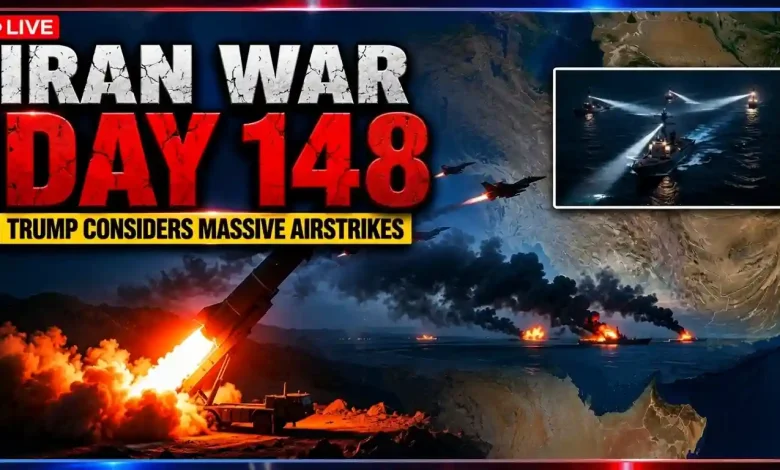
Table of Contents
Iran war day 148 marks a critical, highly strategic pause in the direct military exchanges between the United States and the Islamic Republic of Iran, representing the first major lull after nearly two weeks of sustained aerial bombardments. Since hostilities erupted on February 28, 2026, under the U.S.-led Operation Epic Fury, the region has been trapped in an escalatory cycle that has fundamentally transformed global shipping, energy markets, and alliances. The decision by U.S. Central Command (CENTCOM) to halt operational strikes for a second consecutive night has surprised many military analysts, who note that this is the first formal cessation of hostilities since intense combat resumed earlier in July. This temporary cessation comes just days after the intense activities on iran conflict day 145 us strikes crude spikes forced oil markets to prepare for a prolonged siege.
The pause has triggered widespread speculation about the internal motivations of both Washington and Tehran. Observers are asking whether this lull represents a genuine opening for diplomatic negotiations or simply a tactical breathing space for forces to regroup, resupply, and recalibrate before launching even larger military campaigns. While the White House remains verbally aggressive, the shift in tone on iran war day 147 trump considers massive strikes indicated a willingness to use the threat of devastating kinetic actions as leverage in backchannel communications. Meanwhile, regional actors are frantically navigating these shifts, conscious that the stability of the entire global economy hangs on the outcome of these highly delicate negotiations.
The Military Pause on Day 148: A Tactical Calculus
According to defense officials from the Pentagon, the current pause in military operations is a conscious decision designed to allow diplomatic space for Omani-mediated talks in Tehran. For thirteen consecutive nights, coalition forces carried out relentless strikes on military targets, air defense installations, and missile warehouses across southern Iran. The current pause is a sharp contrast to the aggressive posturing seen when strikes on iran u s forces conduct 12th night of consecutive aerial bombardments to systematically dismantle air defense systems. Pentagon sources noted that while coalition forces remain “locked and loaded,” they are closely monitoring Tehran’s willingness to make meaningful concessions on the maritime shipping embargo. Some analysts argue that the pause is also driven by logistical realities, including the rapid expenditure of precision-guided munitions and interceptors by regional coalition partners.
The intense pace of Operation Epic Fury has tested the production capacities and logistics chains of the U.S. military, emphasizing the limits of sustained high-intensity combat in a geographically expansive theater. Consequently, many intelligence analysts warn that this pause might be the final diplomatic window before a complete regional meltdown, reflecting a recurrent pattern where any tentative us iran ceasefire on the verge of collapse leads to more severe violence. This reality has intensified pressure on the United States and its allies to balance military deterrence with sustainable geopolitical outcomes.
Strait of Hormuz: The Crucial Geopolitical Chokepoint
Historically responsible for the transit of approximately one-quarter of the world’s seaborne crude oil, the Strait of Hormuz remains the absolute geographic focal point of this conflict. Since the outbreak of the war, the Iranian Revolutionary Guard Corps (IRGC) has maintained a severe transit embargo, effectively choking off trade and reducing traffic through the waterway by over 94%. To fully grasp the current geopolitical architecture, one must analyze how the 2026 iran war how us israel coalition reshaped traditional security dynamics in the Middle East.
The blockade has paralyzed Gulf shipping, leaving thousands of merchant mariners stranded and forcing global logistics giants to reroute vessels around the Cape of Good Hope, adding immense transit times and shipping costs. These negotiations are occurring against the backdrop of earlier, complex regional friction points, such as the controversial strait of hormuz iran oman transit fee proposal, which had already introduced profound regulatory disputes over territorial waters and transit fees. Tehran’s insistence on controlling shipping lanes has unified the U.S.-led coalition, which insists on the absolute restoration of the free flow of goods through international waters. Conversely, Iran views its stranglehold on Hormuz as its ultimate defensive asset, leveraging it to counteract the overwhelming kinetic superiority of the Western alliance. Any long-term solution must address the legal, military, and economic sovereignty over this vital shipping corridor, making it the central topic of active diplomatic discussions.
Houthi Retaliation Against Saudi Aramco Infrastructure
Even as direct strikes on the Iranian mainland ceased, regional proxy actions flared with devastating intensity. Over the weekend, Yemen’s Houthi rebels claimed responsibility for massive missile and drone strikes against Saudi Aramco facilities in Jizan and Yanbu. Social media footage verified significant blazes at these energy installations, indicating that despite heavy coalition air strikes, the Houthis retain substantial operational capability.
The group declared these attacks were in direct retaliation for recent Saudi and coalition air strikes against military positions on Kamaran Island and the strategic port city of Hodeidah. In a video statement, Houthi leaders declared a policy of “escalation for escalation” and “blockade for blockade,” threatening to continue their operations until maritime embargoes on Yemeni ports are lifted. This retaliatory action underscores the complex nature of the war, where Iranian-aligned groups continue to coordinate actions to spread coalition resources thin. Saudi Arabia immediately responded with retaliatory airstrikes on Houthi bases, demonstrating that despite the temporary pause in direct strikes against Iran, the regional proxy war remains extremely active and lethal.
Economic Fallouts: Crude Oil Dynamics and Global Supply Shocks
The economic shockwaves of the ongoing maritime blockade and energy sector strikes are cascading through global financial markets. On Friday, Brent Crude oil closed at approximately $98.38 per barrel, but analysts anticipate rapid surges if the diplomatic talks in Tehran break down. The blockade has created an artificial supply deficit of millions of barrels per day, driving transportation costs, insurance premiums, and retail gasoline prices upward.
This economic devastation mirrors the warnings issued when u s economic shockwaves oil hits 100 as new structural price floors disrupted international markets. Domestic gasoline prices in the United States have crossed the $4.10 per gallon threshold, fueling intense political debates in Washington over the long-term sustainability of the war effort. Economists warn that a prolonged blockade of the Strait of Hormuz could trigger a severe global recession, as rising energy costs drive broader inflationary pressures across industrial manufacturing, agriculture, and shipping networks. Consumer confidence is rapidly eroding, prompting calls from both domestic and international assemblies for an immediate resolution to the geopolitical crisis.
Milestones of the 2026 Conflict
To put the progress of the conflict in perspective, the following table summarizes key milestones and economic indicators recorded across different phases of the war:
| Phase / Milestone | Day of War | Operational Focus | Strait of Hormuz Traffic | Brent Crude Price (per barrel) |
|---|---|---|---|---|
| Opening Salvo (Operation Epic Fury) | Day 1 | Airstrikes on IRGC installations and nuclear facilities | Closed / Restricted | $86.00 |
| Intense Air Campaign | Day 12 | Precision strikes on air defenses & supply centers | 90% drop in civilian transits | $95.00 |
| Deepening Crisis | Day 145 | Strikes on strategic southern ports and logistics hubs | 92% drop in civilian transits | $100.00 |
| Operational Pause | Day 148 | Diplomatic outreach in Tehran; Houthi proxy strikes | 94% drop in civilian transits | $98.38 (closing) |
The Geopolitical Coalition: Reshaping Middle East Security
The conflict has forced a profound realignment of regional partnerships, drawing traditional rivals into a coordinated front. The coalition consisting of the United States, Israel, Saudi Arabia, the UAE, and Bahrain has worked to intercept Iranian projectiles and counter maritime harassment. However, this alignment has tested domestic politics in several Arab states, where public sentiments remain deeply divided. The potential for a wider regional conflagration was foreshadowed during the early stages when us strikes on iran trump threatens total escalation unless the Islamic Revolutionary Guard Corps backed down.
Concurrently, nations like Oman and Qatar are striving to maintain neutrality, positioning themselves as vital diplomatic bridges. Meanwhile, Russia and China have maintained a highly critical stance toward the U.S.-led operations, with Moscow reportedly sharing satellite imagery and intelligence with Tehran to assist in monitoring coalition movements. This multi-layered alignment has turned the 2026 war into a proxy theater for broader global power competition, leaving little room for error as both blocs balance aggressive deterrents with the fear of an uncontrolled global conflict.
Diplomatic Interventions: Oman’s High-Stakes Negotiations
The focus of Day 148 has shifted heavily to Muscat and Tehran, where an Omani diplomatic delegation is leading negotiations to restore maritime shipping. Oman has traditionally acted as a vital intermediary in Middle Eastern conflicts, capitalizing on its balanced relations with both Western powers and the Islamic Republic. Sources close to the talks indicate that Muscat is proposing a phased de-escalation plan.
Under this proposal, Iran would agree to partially lift its transit restrictions on commercial ships in exchange for a formalized suspension of coalition airstrikes and the partial easing of maritime blockades on Iranian ports. However, the diplomatic path remains highly complex. While the Iranian Foreign Minister, Abbas Araghchi, has expressed openness to regional solutions, he has firmly asserted that Iran will not bow to Western pressure or threats. Concurrently, the domestic political landscape in Washington is increasingly restive, with members of Congress pushing for legislative measures to restrict further military expenditures, emphasizing the domestic exhaustion with long-running conflicts.
The Munitions Reality and the Threat of Total War
Beyond the diplomatic posturing, cold military logistics are playing a critical role in the current operational pause. Experts point out that both sides are facing acute resource limitations. The coalition’s heavy reliance on highly sophisticated air defense interceptors has depleted reserves at a time when the threat of multi-theater ballistic missile salvos remains high.
Similarly, Iran’s domestic manufacturing bases for drones and precision missiles have sustained severe damage from consecutive waves of coalition bombings. These logistical bottlenecks raise the specter of a dangerous choice: either both parties transition toward a negotiated settlement, or they face the pressure of escalating to “total war” strategies. A total war scenario would likely involve targeting critical national infrastructure—such as power grids, oil refineries, and water desalination plants—across the Gulf region. Such an escalation would have catastrophic humanitarian and environmental consequences, which is precisely why mediators are working tirelessly to secure a breakthrough before the current pause in military operations expires.
Conclusion: The Uncertain Road to a Sustainable Ceasefire
In conclusion, the 148th day of the Iran war demonstrates that while military containment remains active, a sustainable diplomatic resolution is still a distant and fragile hope. The dynamic interactions between tactical military halts, proxy regional retaliations, and intense diplomatic negotiations highlight the high-stakes nature of the crisis. Without structural guarantees of maritime security and mutually acceptable terms for de-escalation, the current operational pause is likely to be a brief intermission in an otherwise expanding theater of war. High-level mediators must act with urgency, for any failure in the current Omani negotiations could trigger an unprecedented regional conflict, bringing devastating consequences to the international economy and global peace.