Trump’s war in Iran 2026: Why Allies Fear a Strategic Defeat
Table of Contents
Trump’s war in Iran, now entering its sixth month, has sparked intense anxiety among America’s closest global allies, who increasingly view the conflict as headed for a devastating strategic defeat. For months, Washington has deployed overwhelming force to the Persian Gulf, yet this raw military superiority has failed to translate into a sustainable political solution. Instead of forcing a regime change or securing a new diplomatic framework, the campaign has highlighted structural vulnerabilities that rival superpowers are eager to exploit. Geopolitical observers warn that the failure to establish lasting deterrence in the region sends a dangerous signal of Western exhaustion to Moscow and Beijing.
As the conflict grinds on past Iran war day 153, the disconnect between initial tactical optimism and the current grinding reality has become impossible to ignore. Strategic partners in Europe and the Middle East argue that the United States is burning through its precious military capital while achieving none of its core objectives. Rather than backing down under pressure, the Islamic Republic has shown remarkable resilience under a highly consolidated, hardline administration. The conflict has essentially reached a stalemate, but one in which the strategic momentum is rapidly shifting away from the coalition led by the United States and Israel.
The Sixth Month of Conflict: A Grim Milieu
Entering the sixth month of active hostilities, the theater of war remains highly volatile. What was once envisioned as a swift, high-tech intervention to dismantle Iran’s nuclear infrastructure has morphed into a complex, asymmetric war of attrition. The US Navy and Air Force have launched waves of precision airstrikes, but they have discovered that destroying fixed military installations is far easier than neutralizing decentralized proxy networks and deeply buried underground assets. Each wave of Western strikes is met with localized retaliation, dragging both nations into a dangerous spiral of counter-attacks.
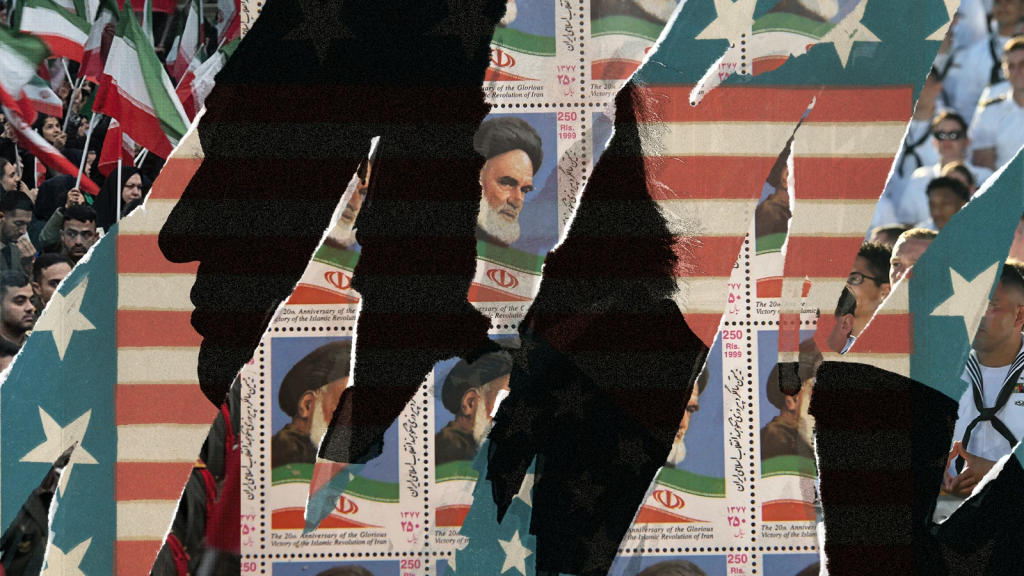
For global onlookers, the long-term viability of the campaign is deeply in doubt. Allied intelligence services have shared increasingly pessimistic assessments with their respective governments, noting that the political objectives of the war remain entirely unmet. Rather than inciting domestic collapse, the foreign intervention has allowed the Iranian regime to suppress internal dissent and unite the population against an external threat. This rallying effect has created a far more unified and defiant adversary than Washington anticipated at the outset of the campaign.
The Strategic Chasm: Domination vs. Political Reality
At the heart of the crisis is a profound strategic chasm: the inability of the United States to convert its undisputed tactical dominance into a sustainably changed Iran. For decades, Western military planning has operated under the assumption that overwhelming firepower could compel adversaries to yield. However, the current campaign has demonstrated the limits of this doctrine when facing a highly motivated defender willing to endure immense economic and physical pain. While US forces have won every direct engagement, these localized victories have not translated into broader strategic leverage.
This persistent deadlock has displayed a vulnerability that Russia and China will undoubtedly welcome. Moscow and Beijing are closely analyzing the war, noting how a medium-sized power can effectively tie down and exhaust the world’s preeminent military superpower. Analysts warn that this perceived American weakness could embolden China in the Indo-Pacific and reinforce Russia’s long-term strategy in Eastern Europe. The ongoing intense tactical skirmishes have exposed the reality that US resources are finite, and its political will is highly vulnerable to prolonged economic disruption.
The Munitions Bottleneck and Global Operational Overstretch
Perhaps the most alarming development for America’s global allies is the rapid depletion of key US armaments. The high-intensity aerial bombardment and the constant need to intercept incoming threats have severely drained Western stockpiles of precision-guided munitions, cruise missiles, and air defense interceptors. The domestic defense industrial base in the United States, already strained by years of supplying global security partners, is simply unable to replenish these advanced systems at the rate they are being expended.
This bottleneck severely compromises America’s global reach. With critical assets diverted to the Middle East, Washington is left with fewer resources to deter concurrent threats in Asia or Europe. Meanwhile, Iran continues to field cheap, mass-produced weaponry, including highly maneuverable and advanced Iranian drones that require expensive Western interceptors to neutralize. This asymmetry in cost and production capability has turned the war into an unsustainable economic equation for the United States, much to the dismay of its strategic allies.
Resolute Defiance: Iran’s Domestic Consolidation
Domestically, Iran has proven far more resolute than Western planners predicted. The conflict has empowered a more radical, hardline faction within Tehran, sidelining moderates who previously advocated for diplomatic engagement. This radicalized government has successfully framed the war as an existential struggle for national survival, using state media to cultivate a siege mentality. Consequently, domestic opposition has been effectively neutralized, and the state’s security apparatus has tightened its grip on all aspects of society.
Furthermore, Iran’s core strategic capabilities remain highly potent. While several nuclear research facilities and ballistic missile assembly sites have been degraded by US airstrikes, they have not been completely destroyed. Much of Iran’s technological and military infrastructure is housed in deeply fortified underground bunkers, carved into rugged mountain ranges that are virtually impervious to conventional bunker-buster munitions. As a result, Iran retains the capability to produce advanced missiles and enrich fissile material, leaving the primary objectives of the US campaign largely unfulfilled.
The Strait of Hormuz: A Closed Chokepoint and its Economic Ripples
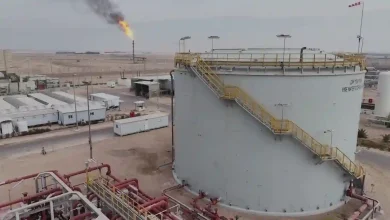
The economic frontline of the war is centered on the Strait of Hormuz, which is now effectively under Iranian control. Through a combination of naval mines, anti-ship missiles, and drone swarms, Iran has made transit through this vital maritime corridor exceptionally dangerous. The resulting Strait of Hormuz tanker crisis has brought commercial shipping to a virtual standstill, forcing global energy markets to adapt to a highly restricted supply chain.
The closure of this primary chokepoint has sent shockwaves through the global economy. Energy analysts have raised alarms over projected oil price spikes that threaten to trigger a prolonged global recession. Standard shipping routes must now bypass the region entirely, adding significant transit times and insurance premiums to global trade. The economic fallout is felt most acutely by US allies in Europe and East Asia, who rely heavily on Persian Gulf crude and now face mounting inflationary pressures at home.
| Strategic Parameter | Pre-Conflict Baseline | Current Six-Month Status | Allied Impact & Risk Level |
|---|---|---|---|
| Strait of Hormuz Traffic | ~20.5 million barrels/day | Effectively closed to Western shipping | Critical; severe shipping rerouting required |
| US Precision Munitions Stocks | Optimal / High Reserves | Critically depleted in key categories | High; limits global deterrence capability |
| Global Energy Prices | Stable ($70–$80 per barrel) | Extremely volatile with major upward spikes | Severe; driving inflationary pressures |
| Allied Cohesion | Cohesive (NATO / GCC coordination) | High friction; mutual blame-shifting | Medium-High; undermining long-term trust |
The United States and Israel: A Fracturing Alliance
As the strategic landscape deteriorates, the alliance between the United States and Israel has begun to show visible fractures. Both nations find themselves in weaker security positions than they were six months ago, leading to an unproductive blame game. Israeli officials privately complain that the White House has shown a lack of decisive resolve, opting for limited airstrikes rather than a comprehensive campaign to remove the threat permanently. Conversely, American policymakers express deep frustration that they were dragged into a conflict based on overly optimistic Israeli intelligence regarding the ease of degrading Iran’s defenses.
These mutual recriminations have spilled over into high-level discussions, including highly tense Camp David cabinet meetings. The lack of a unified, long-term strategy has paralyzed the joint war effort, with each side accusing the other of political posturing. While Israel remains vulnerable to rocket attacks from regional proxies, the United States faces the daunting prospect of a prolonged military presence that drains its treasury and distracts from pressing domestic priorities.
The White House Dilemma: Escalation vs. Diplomatic Exit
Within the Trump administration, the ongoing deadlock has created a deep policy rift. Hardliners continue to push for a dramatic expansion of the conflict, arguing that only a massive ground campaign or a catastrophic air assault can break Iran’s resolve. On several occasions, the White House debated major escalation, only to retreat when faced with the sheer logistical scale and potential human cost of a full-scale invasion. The military leadership has repeatedly cautioned that a ground war in Iran would dwarf the difficulties encountered in previous Middle Eastern campaigns.
On the other hand, pragmatic advisers are searching for viable diplomatic exit ramps. However, finding a face-saving solution has proven incredibly difficult, as Iran has rejected any negotiations while under active bombardment. Brief diplomatic de-escalation windows have opened occasionally, but they have quickly slammed shut due to localized provocations or rigid political positioning on both sides. The administration is trapped in a political paradox: it cannot afford to stay in an endless war, yet it cannot withdraw without admitting a highly embarrassing strategic failure.
Geopolitical Consequences: The New Eurasian Reality
The broader geopolitical consequences of this conflict extend far beyond the Middle East, reshaping the global balance of power. By demonstrating that US military superiority can be effectively countered through asymmetric endurance, the war has accelerated the formation of a tightly integrated Eurasian axis. Iran has deepened its economic and military ties with Russia and China, securing critical diplomatic backing and advanced defensive technologies in exchange for cheap energy bypasses.
For traditional US allies, this realignment is deeply concerning. The security guarantees that once defined the post-Cold War era are now viewed with skepticism. Non-aligned nations in the Global South are increasingly looking to Beijing and Moscow as viable alternative security partners, sensing that the Western security architecture is no longer capable of enforcing its will. The war has effectively shattered the illusion of American omnipotence, ushering in a multipolar era where Western deterrence is heavily contested.
Conclusion: The Cost of Unpredictable Policy
Ultimately, the sixth month of the conflict has demonstrated that military power alone cannot solve complex geopolitical equations. The failure to transform tactical superiority into a sustainably changed Iran has left the United States and its allies in a significantly weaker position. As resources dwindle and the Strait of Hormuz remains closed, the risk of a long-term strategic defeat grows more pronounced. Unless Washington can find a coherent, realistic path forward, the legacy of this conflict may well be the permanent erosion of American credibility on the global stage.