Iran airstrikes Enter 12th Night as House Approves $95B War Package
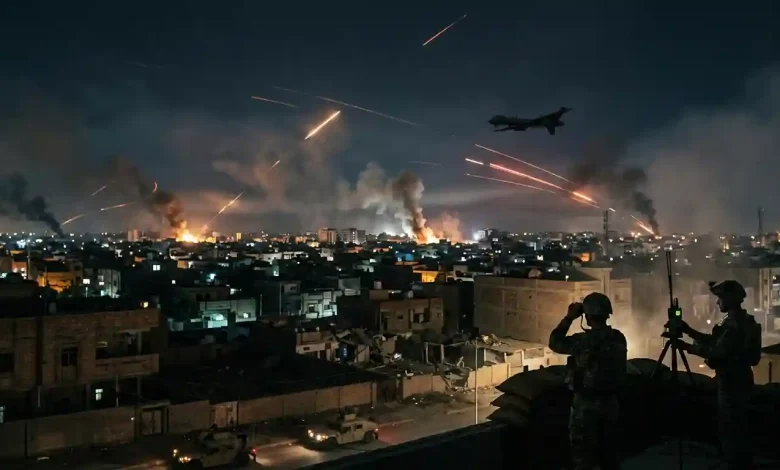
Table of Contents
Iran airstrikes have entered their twelfth consecutive night of intense, relentless bombardment, marking one of the most significant military escalations in the Persian Gulf in recent decades. As precision-guided munitions continue to rain down on tactical targets throughout Iran, President Donald Trump is reportedly weighing options to expand the military campaign. Just hours before the latest wave of strikes commenced, the United States House of Representatives approved a massive $95 billion budget resolution designated primarily for war funding, signaling Washington’s readiness to sustain a long-term campaign against Tehran. Al Jazeera’s Kimberly Halkett reported from Washington that the bipartisan consensus on defense legislation has buckled under intense political polarization, yet the momentum to secure emergency military funding remains unchecked.
Iran Airstrikes Campaign Reaches Twelfth Night
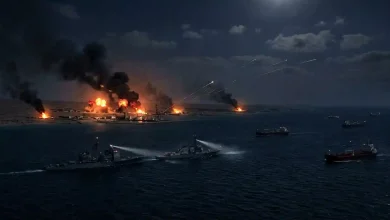
The continuous bombardment represents a highly calculated effort to eliminate Iran’s offensive air and sea defense systems. According to military officials, the twelfth night of strikes saw heavy deployment of precision-guided weapons, B-2 Spirit stealth bombers, and sea-launched Tomahawk land-attack missiles. The intensity of the bombardment indicates a shift from localized defensive responses to a sustained tactical air campaign designed to establish outright dominance in the skies above key strategic coordinates. This campaign represents a historic high in regional tensions, drawing international condemnation and concern from global observers who fear a runaway conflict.
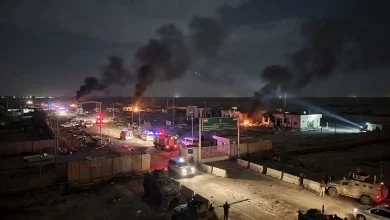
As reports of localized explosions filter out from Western and Southern Iran, defense experts suggest that the persistent nature of these nightly operations has severely degraded the command and control architecture of the Islamic Revolutionary Guard Corps (IRGC). Despite the extensive bombardment, Iranian state media reports that local defensive units remain active, utilizing mobile air-defense systems in an attempt to intercept incoming coalition cruise missiles. This unprecedented show of force underscores a significant transformation in the geopolitical landscape, placing the region on a knife-edge as diplomatic channels remain largely silent.
The Legislative Breakthrough: House Approves $95B War Funding
In a razor-thin legislative victory, the House of Representatives approved a critical $95 billion budget resolution aimed at providing the necessary financial backbone for the ongoing military campaign. The measure passed with a narrow margin of 216-214, overcoming a complex coalition of progressive Democrats and fiscally conservative Republicans who protested the lack of offsetting cuts. According to reports by the Associated Press, the passage of this budget framework represents a direct effort by the Republican leadership to underwrite what critics are increasingly calling the Trump war machine. While the budget allocation is heavily focused on defensive operations, it also includes various domestic measures, such as funding for state-level voter-identification initiatives and emergency agricultural aid designed to build legislative consensus.
Prior to the budget vote, the House also cleared the National Defense Authorization Act (NDAA) for Fiscal Year 2027, authorizing a record-shattering $1.15 trillion in broader defense spending. Sponsored by Representative Mike Rogers of Alabama, the policy bill provides a massive 7 percent pay raise for active-duty troops and seeks to rapidly replenish depleted US ammunition stockpiles. The dual legislative successes indicate a strategic posture in Congress to prepare the nation’s industrial base for a protracted conflict, despite mounting criticisms regarding the long-term impact on the federal deficit and social spending programs.
Strategic Targets and Central Command’s Tactical Overview
The execution of these precise airstrikes falls under the direct purview of the US military’s operational leadership. These operations, spearheaded by operations led by US Central Command (CENTCOM), are designed to neutralize Iran’s ability to threaten international shipping lanes and coalition military bases. Intelligence reports suggest that the primary targets during the twelfth night of bombing included mobile anti-ship missile batteries, subterranean drone storage depots, radar installations, and coastal defense installations along the Persian Gulf. By targeting these assets, CENTCOM hopes to permanently degrade Iran’s asymmetric warfare capabilities.
Military analysts note that the continuous bombardment has systematically peeled back Iran’s multi-layered air defense grid, allowing coalition forces to operate with a high degree of freedom. However, the IRGC has reportedly relocated several of its key asset complexes deep within heavily fortified, mountainous regions, making total destruction a difficult operational challenge. CENTCOM commanders have stressed that the focus remains entirely on defensive neutralization, aiming to prevent further preemptive strikes against allied targets in neighboring countries and international waters.
Chronology of the Military Escalation: From Coastal Defenses to Regional Interceptions
This newest campaign is the latest peak in a multi-stage military faceoff that escalated rapidly after a brief diplomatic window dissolved. Indeed, early phases of the campaign included the sixth night of intensive airstrikes that devastated radar installations along the Iranian coastline. Tensions continued to worsen, leading up to the ninth day of consecutive bombardment. On that same ninth consecutive day of strikes, President Trump warned that the United States would not tolerate any further aggression against coalition naval vessels or strategic shipping lanes.
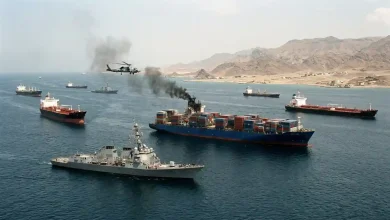
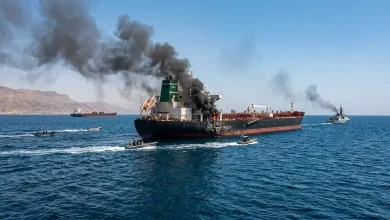
This current phase was heavily driven by the ongoing Strait of Hormuz crisis, where international commercial tankers face persistent harassment from Iranian naval fast-attack craft and Houthi-aligned drone squads. This flare-up follows previous incidents in mid-2026, when the temporary ceasefire collapsed and forced both nations back to the brink of full-scale war. In addition to direct missile engagements, economic warfare has defined this conflict, specifically via the blockade in the Persian Gulf. By systematically reimposing sweeping port bans, Washington has sought to starve the Iranian regime of its crucial hydrocarbon export revenue, intensifying the pressure on Tehran to capitulate.
Economic Shockwaves and Maritime Implications

The economic ramifications of the ongoing US-Iran conflict are reverberating through global financial markets and maritime supply chains. The Strait of Hormuz, through which roughly one-fifth of the world’s petroleum passes daily, has become a high-risk combat zone. Consequently, international shipping firms have been forced to reroute vessels around the Cape of Good Hope, adding thousands of miles and significant transit delays to shipments between Asia and Europe. This operational shift has triggered a sharp spike in maritime insurance premiums, driving up the retail cost of energy and raw materials worldwide.
Sustained conflict in the Persian Gulf has also heightened fears of a broader inflationary spike, reminiscent of the energy crises of the late 20th century. Energy analysts warn that if the airspace over the Gulf remains closed and maritime traffic continues to experience disruptions, crude oil prices could surge beyond historical benchmarks. This threat has prompted emergency meetings among European Union and East Asian leaders, who remain highly dependent on stable energy imports from the region. The potential for long-term economic instability is driving international pressure on both Washington and Tehran to find an exit ramp, although neither side shows signs of backing down.
House Political Cleavages and Congressional Voting Breakdown
Back in Washington, the vote on the $95 billion war funding package has highlighted deep ideological rifts within the United States Congress. The narrow 216-214 vote reveals a legislature fundamentally divided over the scope and scale of American military interventions. Progressive Democrats voiced strong opposition, arguing that the funding redirects critical resources away from domestic social programs, veteran care, and infrastructure projects. House Democratic Leader Hakeem Jeffries criticized the package, asserting that the legislative priorities of the Republican majority align too closely with expanding the war machine at the expense of ordinary citizens.
Meanwhile, fiscal conservatives within the Republican party also expressed serious reservations. Representatives Thomas Massie and Warren Davidson voted against the bill, citing the absence of direct spending offsets and the danger of expanding the national debt. Despite these objections, the house leadership successfully whipped enough votes by bundling the war package with popular provisions, such as emergency financial aid for farmers and resources for state election integrity. This tactical maneuver reflects the complex legislative bargaining required to pass highly contentious defense appropriations in a polarized Congress.
Future Projections and Potential Expansion of Attacks
With the 12th night of strikes concluding, attention is shifting to what lies ahead. Defense analysts believe that the passage of the $95 billion budget gives the administration the necessary financial runway to expand the target list. Military strategists are reportedly drafting plans to hit inland industrial facilities, missile production hubs, and hardened cyberwarfare centers. If President Trump decides to authorize these expanded strikes, it would signify a major departure from the current maritime-focused campaign, risking a direct, conventional war that could engulf the entire Middle East.
The threat of regional escalation remains the primary concern for international diplomats. Iran’s network of regional allies—including Hezbollah in Lebanon, various Shiite militias in Iraq, and Houthi forces in Yemen—possess the capability to open secondary fronts against US forces and allied nations. A multi-front escalation would severely test the regional defense infrastructure and could lead to widespread humanitarian displacement and economic devastation. The coming days will be critical as military planners evaluate the effectiveness of the twelfth night of strikes and prepare for the next operational phase.
Key Financial and Operational Indicators of the Conflict
To understand the massive scale of the ongoing military campaign and its legislative backing, it is helpful to examine the financial allocations and strategic goals authorized by Congress. The following data table outlines the core components of the current legislative and military packages designed to sustain the US operations in the Persian Gulf.
| Spending Package Component | Authorized Amount (USD) | Primary Objective / Target Area | Legislative Vote Margin |
|---|---|---|---|
| Iran War Emergency Operations | $95 Billion | Neutralizing IRGC maritime assets, drone bases, and missile systems | 216 – 214 (House Budget Resolution) |
| National Defense Authorization Act (NDAA FY2027) | $1.15 Trillion | Providing troop pay raises (7%) and rebuilding conventional armaments | 216 – 212 (House Policy Bill) |
| State Voter-ID Incentives & Reforms | $10 Billion | Implementing voting administrative updates as part of the broader package | Bundled in Budget Resolution |
| Emergency Agricultural & Farm Aid | Variable | Mitigating trade disruptions for domestic farmers during the conflict | Bundled in Budget Resolution |
As the table indicates, the scale of military spending is immense, highlighting the high stakes of the current geopolitical standoff. The combination of immediate war funding and long-term defense policy bills demonstrates a comprehensive effort by the United States to secure its strategic interests in the region, regardless of the domestic political or international economic cost.