Iran naval blockade 2026: U.S. Reimposes Port Bans and Airstrikes
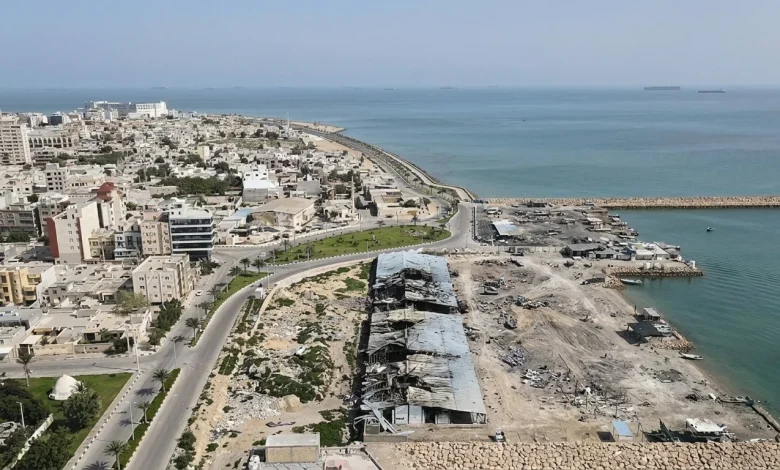
Table of Contents
Introduction to the Blockade
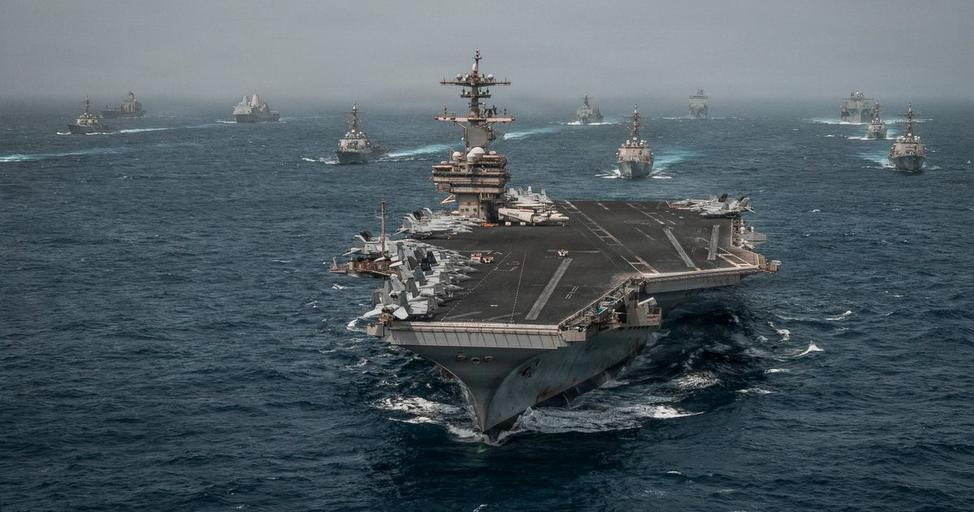
Iran naval blockade enforcement has officially resumed as the United States military launched a sweeping campaign of retaliatory airstrikes across multiple territories. This major escalation occurred early Wednesday, following weeks of mounting friction and targeted attacks on international merchant shipping transiting the Strait of Hormuz. By reestablishing the strict port blockade, President Donald Trump has abandoned the brief, fragile diplomacy of last month’s interim agreement, plunging the Persian Gulf back into a state of acute military confrontation. The sudden pivot to armed enforcement comes at a time when volatile energy prices threaten US economic stability due to global shipping bottlenecks. This action underscores the volatile nature of the geopolitical environment, recalling previous instances where warnings delivered to Iranian negotiators went unheeded during secret back-channel diplomacy in regional capitals.
The strategic decision to deploy warships and reinforce maritime exclusion zones represents a substantial gamble for the current administration, which has also been a focal point of defensive AI integration discussed during discussions at elite technology summits in Washington. As the United States Navy begins intercepting commercial vessels destined for Iranian terminals, global observers are closely monitoring how the international community responds, drawing comparisons to other complex sovereign crises, including international legal disputes and political detentions in Eastern Europe.
U.S. Airstrikes and Casualties inside Iran
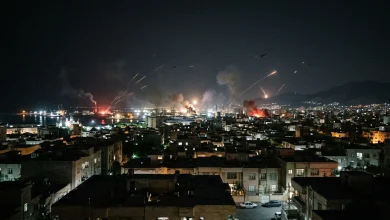
The scale of the latest military operations represents one of the largest single-day air campaigns in the region in recent history. According to U.S. Central Command (CENTCOM), a coordinated seven-hour wave of precision airstrikes hit dozens of military installations near the Strait of Hormuz and along Iran’s extensive coastline. These strikes targeted sophisticated anti-ship missile sites, drone launch facilities, coastal radar installations, and naval assets of the Islamic Revolutionary Guard Corps (IRGC).
While the Pentagon balances these international deployments amidst a summer of extreme weather and domestic disruptions across the United States, the focus remains firmly on suppressing Tehran’s offensive capabilities. The political fallout in Washington continues to mirror deep divisions, similar to how protests impacting military personnel have previously sparked congressional debates. The sheer intensity of the overnight strikes, involving advanced fighter jets, long-range bombers, and unmanned combat aerial vehicles, has severely impacted Iran’s coastal defenses, raising concerns over leadership continuity within the defense sector, reminiscent of recent intelligence agency workforce updates that altered security protocols.
Executing such a multi-faceted campaign over a condensed seven-hour window required a level of logistical planning that parallels the highly structured organizational frameworks of European entities, such as the strategic administration seen on the France national football team path to international prominence. Under the direction of Admiral Samuel Paparo and Defense Secretary Pete Hegseth, the collaborative naval and aerial operations successfully completed their objective of degrading Iran’s immediate capabilities to strike merchant vessels.
The Barracks Strike in Sistan and Baluchestan
Among the dozens of sites targeted during the overnight barrage, a direct missile strike on an Iranian military barracks close to the southeastern city of Iranshahr has generated significant controversy. Situated in the Sistan and Baluchestan province, the barracks housed regular army personnel. Iranian military officials confirmed that the compound suffered near-total destruction, rendering several key installations unusable and highlighting the expansive nature of the American targeting list, which goes far beyond coastal defenses.
Casualties and Injured Count Spikes
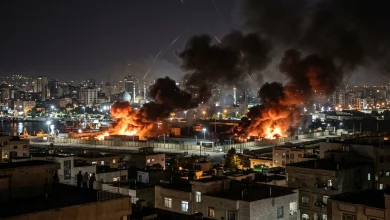
The human cost of Wednesday’s strikes has escalated rapidly. Iranian Army spokespersons confirmed that at least seven military personnel were killed in the Iranshahr barracks strike alone. Meanwhile, Hossein Kermanpour, a prominent spokesperson for the Iranian Health Ministry, reported that the latest round of overnight strikes injured more than 260 people nationwide. This represents the highest single-day casualty and injury toll reported in recent confrontations, signaling a transition from localized deterrent skirmishes to high-intensity, destructive warfare. Furthermore, government spokesperson Fatemeh Mohajerani stated that cumulative airstrikes in recent days have claimed the lives of more than 30 people across the nation.
Iranian Retaliation and the Closing of the Strait of Hormuz
Tehran’s response to the reimposition of the blockade was swift and multi-pronged, designed to inflict maximum economic and geopolitical pain on the United States and its regional allies. Rather than containing the conflict, the IRGC quickly mobilized its missile and drone units to execute counterstrikes and completely closed off the world’s most critical maritime energy bottleneck.
Missile and Drone Salvos in Bahrain, Kuwait, and Jordan
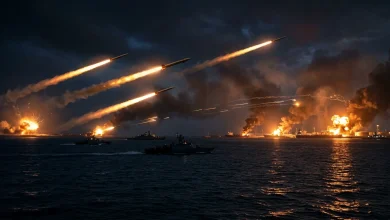
In the early hours of Wednesday, sirens wailed across several Persian Gulf states. The IRGC launched coordinated salvos of ballistic missiles and attack drones targeting military bases hosting American forces. In Bahrain, home to the U.S. Navy’s Fifth Fleet, defense systems successfully intercepted several inbound targets. Kuwait’s military reported neutralizing multiple drones but confirmed that emergency crews were battling a significant fire caused by debris at a local facility. Meanwhile, Jordan’s army announced it had shot down three Iranian ballistic missiles traversing its airspace, demonstrating the wide geographical footprint of the retaliatory exchange.
The IRGC’s Threat to Mideast Energy Exports
Beyond physical military retaliations, the geopolitical fallout reached a zenith when the IRGC officially declared the complete closure of the Strait of Hormuz. In a televised address, military commanders threatened a total halt to all Middle East energy exports, proclaiming that regional energy resources would be “either shared by all or denied to all.” During peacetime, approximately one-fifth of the world’s liquefied natural gas and crude oil supply flows through this narrow waterway. The total closure threatens to induce severe global energy shocks.
Trump Shifts Tactics: Toll Dropped for Militaristic Posture
The reimposition of the blockade represents a hardening of the White House’s strategy, which has swung between mercantilist threats and direct military action. Over the past 48 hours, the administration adjusted its economic demands, opting to pursue harsher military outcomes instead.
Shelving the 20% Strait Toll
President Donald Trump formally backtracked on his highly controversial proposal to levy a mandatory 20 percent fee on all commercial cargo transiting the Strait of Hormuz. The proposed tariff had faced immense backlash from global shipping conglomerates, international lawyers, and allied nations, who argued that taxing international waters directly violated the United Nations Convention on the Law of the Sea. In place of the toll, the White House announced it would seek “massive” trade and investment agreements with loyal Gulf cooperation partners, choosing to rely on military dominance to dictate the terms of maritime flow.
Promises of Broad Infrastructure Strikes
While dropping the cargo toll, President Trump issued severe warnings regarding the next phase of the campaign. In a radio interview, he asserted that U.S. forces would continue to strike Iranian assets relentlessly. He declared that if Iranian leadership fails to return to the negotiating table next week to finalize a comprehensive nuclear and security treaty, the U.S. military will expand its target list to include critical civilian-use infrastructure, such as major bridges, transportation networks, and electrical power plants across Iran.
Comparative Breakdown of the Conflict’s Phases
The conflict in 2026 has progressed through several distinct phases. The table below outlines the transition from the initial spring blockade to the short-lived summer truce, culminating in the current high-stakes military standoff.
| Phase | Approximate Date Range | Primary U.S. Objective | Key Military Actions | Impact on Global Shipping |
|---|---|---|---|---|
| First Naval Blockade | April 13 – June 18, 2026 | Force Iran to halt nuclear enrichment and stop asymmetric attacks. | U.S. Navy intercepted 23 vessels; restricted access to Iranian ports. | Crude prices spiked; commercial vessels bypassed blockade lines via alternative routes. |
| Interim Negotiation Period | June 18 – July 14, 2026 | Establish a 60-day diplomatic window to negotiate a permanent treaty. | Blockade lifted; bilateral airstrikes paused temporarily. | Shipping traffic briefly normalized, though tension remained high. |
| Second Blockade & Escapes | July 14, 2026 – Present | Retaliate for renewed shipping attacks; degrade coastal defenses. | 7-hour massive airstrikes; Iranshahr barracks hit; blockade fully restored. | Strait of Hormuz closed by IRGC; Brent crude prices surge past $85 per barrel. |
Economic Implications and Energy Markets Under Duress
The swift collapse of the interim deal has sent shockwaves through international financial centers. Following the news of the renewed blockade and subsequent airstrikes, Brent crude oil futures climbed past $85 per barrel, marking a prominent one-month high. Economists warn that prolonged disruption inside the Strait of Hormuz could lead to persistent energy price spikes, threatening to fuel global inflation and undermine central bank efforts to stabilize domestic interest rates.
Maritime security analysts warn that clearing the waterway will prove exceptionally difficult. As noted by defense scholar Jason H. Campbell, Iran has spent decades preparing for asymmetric warfare in the Persian Gulf. Even under a heavy naval blockade, Iran maintains the ability to launch low-cost, GPS-guided drones and anti-ship cruise missiles from mobile launchers concealed in rugged coastal terrain. Securing the passage of commercial vessels will require a massive, prolonged coalition presence, raising the risk of drawing global powers into a wider war of attrition.
Future Outlook: Negotiations Stalled and All-Out War Looms
Diplomatic efforts to salvage the situation appear entirely exhausted. The 60-day negotiating window established under the June interim agreement has effectively been shredded by the resumption of hostilities. Discussions over Iran’s nuclear enrichment and regional influence have completely stalled, with both Washington and Tehran accusing each other of violating the terms of the memorandum of understanding.
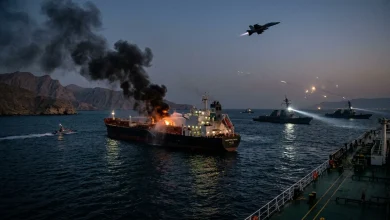
The international community has reacted with profound alarm. Countries heavily reliant on Persian Gulf energy imports, such as India and New Zealand, have summoned senior Iranian diplomats to protest the escalation, especially following reports of merchant crew casualties. The confirmed death of an Indian national aboard the commercial vessel GFS Galaxy, which was struck off the coast of Oman, highlights the immediate, deadly consequences for civilian seafarers caught in the crossfire. With neither side showing a willingness to back down, the risk of the conflict spilling over into a full-scale regional war remains at its highest level in decades.