U.S. blockade on Iran 2026: Strikes Escalate in the Gulf
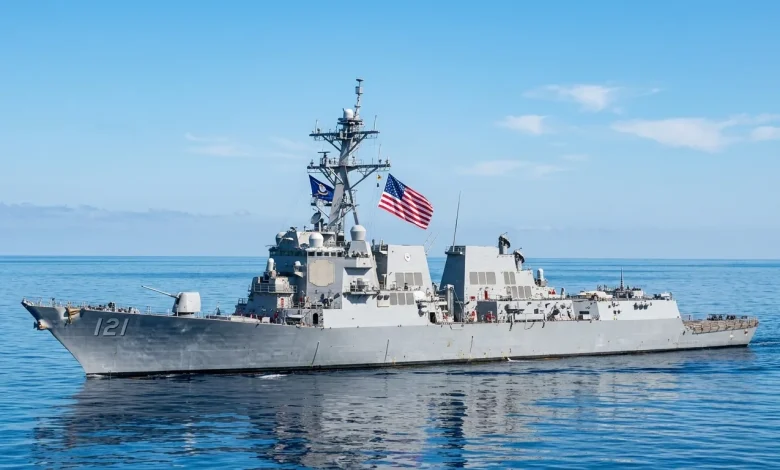
Table of Contents
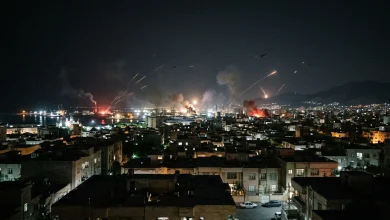
U.S. blockade on Iran has entered an aggressive and unpredictable phase, sending shockwaves through global energy markets and rewriting the rules of engagement in the Persian Gulf. Following a dramatic escalation in rhetoric and military posture, Washington officialdom confirmed that the maritime cordon of southern Iranian ports has been fully reinstated. Simultaneously, naval and air forces launched dozens of additional strikes on strategic targets inside Iranian territory, marking the fourth consecutive night of intense offensive operations. The resurgence of hostilities highlights the volatile security architecture of the Middle East, capturing the immediate attention of defense planners worldwide.
As the international community watches this rapidly evolving crisis, similarities are being drawn to other high-stakes regional confrontations. While global attention has frequently been fixed on Eastern Europe, where recently Kyiv was placed under massive Russian attack, the sudden escalation in the Middle East represents an entirely different class of threat to global economic stability. By targeting the maritime choke points that feed the world’s industrial engines, the current confrontation risks turning a localized defense campaign into an unmitigated global logistics catastrophe.
Escalation of the Maritime Blockade and Airstrikes
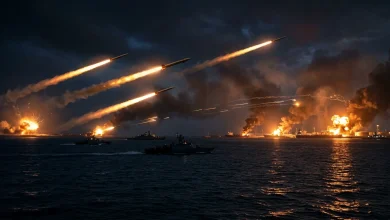
The decision to restart the naval blockade on Tuesday afternoon represents a sharp pivot in Washington’s strategic calculus. Operating under direct executive authorization, U.S. Navy warships, supported by regional coalition partners, moved into position to intercept commercial vessels attempting to enter or exit primary Iranian shipping hubs. This tactical maneuvering was immediately accompanied by a fourth consecutive night of airstrikes. Defense officials reported that these strikes specifically targeted air defense systems, coastal radar arrays, and drone launch facilities operated by the Islamic Revolutionary Guard Corps (IRGC).
This aggressive, unilateral posturing recalls previous diplomatic arenas where Trump clashes with allies at the NATO summit, demonstrating a preference for direct leverage over multilateral consensus. The Pentagon has asserted that these aerial operations are designed to degrade Iran’s offensive capabilities, making it impossible for Tehran to project naval power against commercial shipping lanes. However, critics argue that the sheer volume of ordinance dropped over four nights increases the risk of a broader regional war that could pull in neighboring states.
Trump’s Ultimatum: Impending Infrastructure Targets
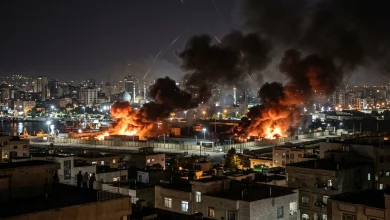
In a blunt warning delivered from the White House, President Donald Trump made it clear that the current level of military intervention is only a prelude. Trump stated unequivocally that the situation would get “really bad” next week if Iranian leadership does not agree to return to the negotiating table to hammer out a comprehensive trade and security deal. According to senior administration officials, the next phase of the military campaign will expand beyond military targets to include critical civilian-military infrastructure, such as major bridges, key transportation corridors, and municipal power plants.
The financial strain of conducting intensive operations in multiple theaters simultaneously remains a concern for Washington, particularly amid reports of the Defense Department running out of cash amid prolonged global deployment cycles. Despite these budgetary headwinds, the executive branch appears fully committed to utilizing military coercion to force a diplomatic breakthrough. The threat to destroy power grids and transportation bridges represents a massive escalation in the rules of engagement, moving from counter-force strikes to strategic infrastructure degradation.
Pivoting from Cargo Fees to Gulf State Investment Deals
One of the most complex aspects of the administration’s maritime strategy has been the debate over financing the security operations in the Gulf. Originally, the White House proposed a controversial 20% cargo fee on all commercial vessels transiting the Strait of Hormuz. This proposal, however, met with immediate and fierce resistance from maritime logistics consortia, international insurers, and sovereign allies who warned it would paralyze global trade. Shipping industry experts balked at the fee, prompting a swift policy reassessment.
This top-down decision-making echoes Trump’s domestic executive style, as seen in sudden federal personnel shifts, including when U.S. Attorney Roger Rogoff was fired by Trump without traditional warning. Recognizing the commercial blowback, the President announced he had “decided to replace” the planned 20% fee with direct bilateral trade and investment deals from wealthy Gulf states, including Saudi Arabia and the United Arab Emirates. Under this new arrangement, these regional allies will inject capital into Western projects and security funds in exchange for the continued presence of the U.S. Navy protecting their oil export lanes.
Iranian Countermeasures and the Strait of Hormuz Threat
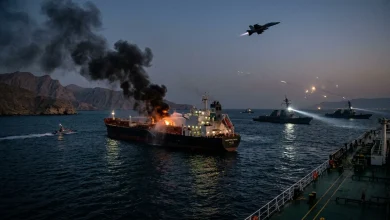
Tehran’s response to the renewed blockade has been both defiant and asymmetrical. Rather than engaging the U.S. Navy in a conventional fleet action, Iran has leveraged its geographic advantage over the Strait of Hormuz. Iranian officials have declared that they have not ruled out charging their own transit tolls for any vessel utilizing the waterway. Furthermore, Tehran has explicitly threatened to target, seize, or neutralize any commercial ship that sails through the strait without explicit Iranian authorization.
In previous months, there were brief windows of diplomatic engagement, such as when Iran releases detained American Dena Karari. However, those gestures of goodwill have now been entirely eclipsed by raw military confrontation. Iranian fast-attack craft and armed drones have already begun harassing merchant vessels, escalating the threat environment for global shipping networks to levels not seen since the Tanker War of the 1980s.
Global Oil Markets React: Crude Prices Spike
The immediate consequence of the renewed blockade and subsequent airstrikes has been felt in global commodity exchanges. The price of crude oil has shot up dramatically over the last two days as the market pricing models absorb the reality of active combat in the world’s most critical energy corridor. Analysts warn that if the Strait of Hormuz is partially or fully closed, the loss of transit capacity could send crude prices into the triple digits, sparking a localized energy shock with deep inflationary consequences.
The intelligence tracking these threats is highly classified, occasionally sparking domestic legal battles, reminiscent of when the New York Times quashed DOJ subpoenas to protect confidential sources. Regardless of the underlying intel, the economic reality is plain to see: marine insurance premiums have quadrupled overnight, and shipping conglomerates are actively debating whether to bypass the Persian Gulf entirely, a move that would add weeks to global supply transit times.

Analysis of the Economic and Shipping Disruption
The maritime logistics sector is highly sensitive to changes in geopolitical risk profiles. For detailed tracking of daily oil flows through the strait, analysts point to the U.S. Energy Information Administration (EIA), which highlights that over a fifth of the world’s petroleum consumption transits this narrow bottleneck. With Iran threatening cargo ships and the U.S. executing blockades, global trade is facing a dual-threat environment. Standard operating protocols for commercial shipping are being replaced by high-risk naval escorts and emergency routing plans.
The coordination of these strikes relies heavily on a unified intelligence apparatus, which itself has faced administrative upheavals, such as recent rulings that intelligence officers fired over DEI must be reinstated. Despite internal friction within the defense establishment, the execution of the naval blockade has proceeded with clinical efficiency, forcing international commercial entities to adapt or suffer severe financial penalties.
Geopolitical Fallout and International Diplomatic Standoffs
The diplomatic fallout from this crisis extends far beyond the borders of the Middle East. European and Asian nations, heavily reliant on Middle Eastern crude, have urged both Washington and Tehran to show restraint. However, the U.S. administration’s resolve appears unwavering, viewing the blockade as the ultimate tool of economic coercion to secure a permanent halt to Iran’s regional military programs and nuclear enrichment activities.
Domestic political polarization in the United States continues to simmer alongside these foreign engagements; recently, an impeachment protest leads to Air Force Major’s disciplinary review, reflecting how deeply military actions and domestic politics are intertwined. As the administration faces domestic scrutiny, the pressure to deliver a quick, decisive victory in the Gulf increases, potentially prompting even riskier military maneuvers as the “next week” deadline approaches.
Comparative Analysis of Maritime Conflict Dynamics
To understand the high stakes of this confrontation, it is helpful to contrast the strategic tools, geopolitical goals, and direct economic impacts of both the United States and Iran in this escalating standoff.
| Strategic Action / Metric | United States & Allies Position | Iranian Counter-Strategy & Position |
|---|---|---|
| Military Operations | Maritime blockade of southern ports; repeated waves of aerial strikes on military targets. | Asymmetric drone/missile strikes on commercial cargo ships; threatening unauthorized transit. |
| Strait of Hormuz Tolls | Canceled proposed 20% cargo fee; substituting with direct Gulf state investment deals. | Refuses to rule out unilateral tolls; claims historic sovereign authority over the waterway. |
| Economic Consequences | Mitigating inflation spikes; seeking diplomatic energy pledges from Saudi Arabia & UAE. | Relying on black-market exports; imposing costs on international shipping via risk premiums. |
| Target Thresholds | Threatening critical energy grid infrastructure, power plants, and bridges next week. | Targeting commercial container vessels and tankers to force a cessation of the blockade. |
Conclusion
The ongoing military confrontation in the Persian Gulf represents a dangerous escalatory spiral. With the U.S. blockade on Iran firmly re-established and the threat of catastrophic attacks on civilian infrastructure looming for next week, the margin for error is razor-thin. If diplomatic backchannels fail to produce a breakthrough, the global economy could face an unprecedented energy crisis, driven by a complete shutdown of the Strait of Hormuz. The coming days will determine whether this conflict can be contained or if it will spill over into a devastating regional war with global consequences.