Widening Conflict 2026: Houthis Strike Saudi Tankers in Red Sea
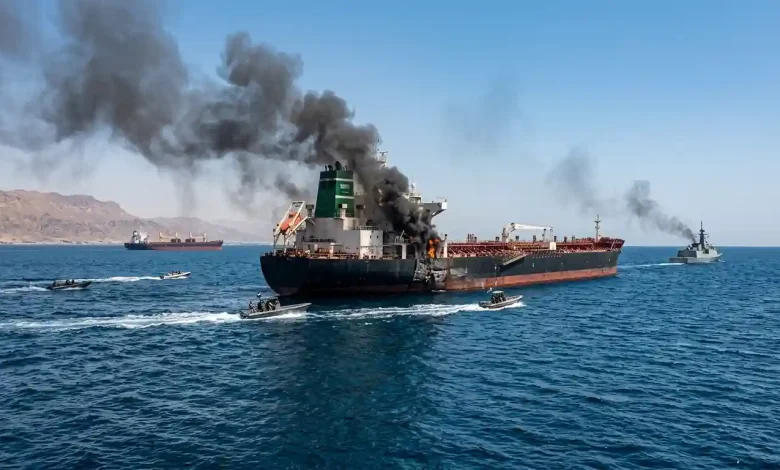
Table of Contents
Widening :Widening Conflict: An Introduction to the Escalating Middle East Crisis
Widening conflict in the Middle East has reached an unprecedented flashpoint as Yemen’s Iran-backed Houthi militants claimed responsibility for striking two Saudi Arabian oil tankers in the Red Sea on Thursday. This attack follows the group’s Monday announcement of a strict Houthi naval blockade on Saudi vessels. The maritime strike threatens to choke off essential global shipping channels and has intensified the direct confrontation between Washington and Tehran. With the escalating Strait of Hormuz crisis continuing to disrupt energy corridors, this fresh escalation in the Bab el-Mandeb region creates a double-chokepoint crisis that could destabilize global markets for months to come. Meanwhile, the U.S. military has continued its relentless response, conducting a twelfth consecutive night of strikes targeting key installations across western and central Iran, as authorized by the White House. This explosive environment has elevated geopolitical risks to a level not seen in decades, raising fears of a broader war involving multiple regional powers and international coalitions.
Widening :Houthi Attacks in the Red Sea: The Encelia and Layla Struck
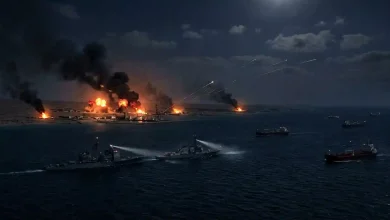
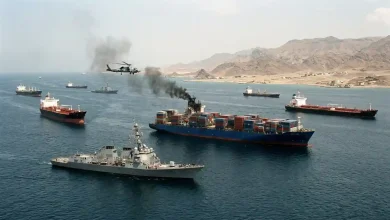
According to statements released by the Houthi military command, their forces utilized a sophisticated mix of anti-ship ballistic missiles, cruise missiles, and suicide drones to target two major Saudi-flagged tankers: the Encelia and the Layla. Maritime security agencies confirmed that the Encelia transmitted an urgent distress call via VHF radio late on Wednesday, reporting that it had been struck by a missile near the outer port limits of Jizan in the southern Red Sea. The Saudi state-run news agency (SPA) later verified that a strike occurred, resulting in a fire on the vessel’s bow, though all crew members were reported safe. While the status of the Layla remains unverified by independent maritime monitors, the bold offensive represents a major step up in the Houthi embargo targeting Saudi vessels. This coordinated effort appears designed to force Saudi Arabia and its Western allies into a defensive posture, compounding the security challenges in the Red Sea. The use of advanced precision-guided weaponry suggests that the rebels continue to receive critical intelligence and technical support from their sponsors in Tehran, making naval operations in these waters increasingly hazardous.
Widening :The Strategic Impasse: Two Chokepoints Under Siege
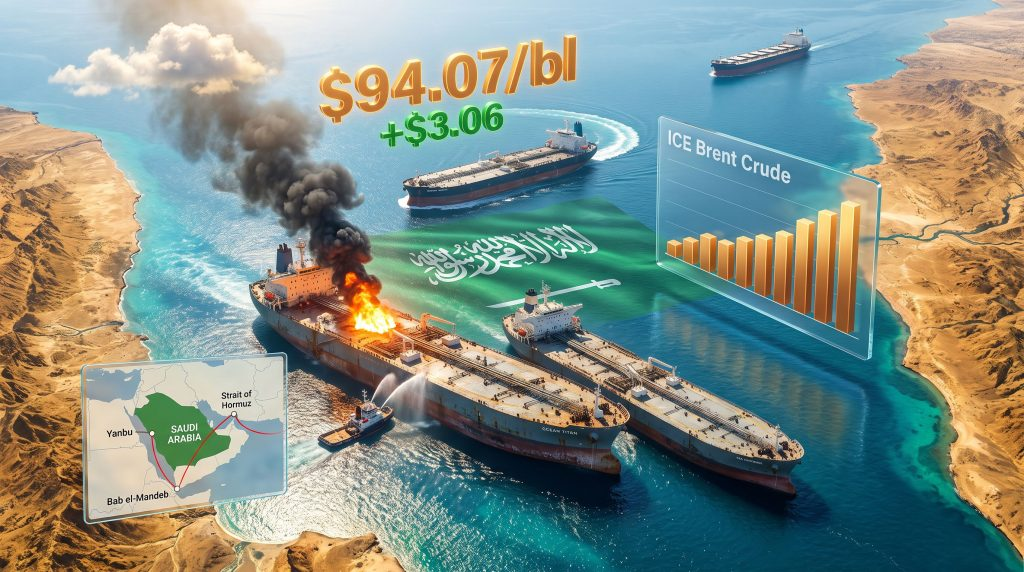
The geography of the Arabian Peninsula has historically dictated global trade flows, with the Strait of Hormuz in the east and the Bab el-Mandeb Strait in the west acting as vital arteries for crude oil and liquified natural gas (LNG). Under normal circumstances, millions of barrels of Saudi oil are routed to the kingdom’s Red Sea port of Yanbu to bypass the volatile Persian Gulf. However, the latest Houthi offensive effectively closes off this alternative route. The combination of Iran’s near-total blockade of the Strait of Hormuz and the Houthis’ blockade in the Red Sea places the global energy supply in an existential squeeze. With the unfolding naval blockade in the Persian Gulf already raising shipping insurance premiums to record levels, maritime operators have begun rerouting ships. On Wednesday alone, five large crude carriers altered their courses to avoid the Bab el-Mandeb Strait completely, while several tankers bound for Asian markets performed immediate U-turns. This logistical nightmare highlights the leverage that Tehran and its regional proxies have managed to secure, demonstrating how asymmetric naval warfare can disrupt highly integrated Western economies without relying on conventional military parity.
Widening :Trump’s Deterrence Strategy and Threats of Retaliation
U.S. President Donald Trump has adopted a highly aggressive stance, warning Tehran that any interference with maritime commerce will be met with overwhelming, asymmetric military retaliation. Speaking to reporters, Trump declared that the United States will “bomb and destroy” an Iranian bridge or power plant every time an allied ship is targeted in the Strait of Hormuz. This “tit-for-tat” doctrine was put to the test on Thursday when Iran’s Revolutionary Guards claimed that an oil tanker caught fire following an explosion in the Strait of Hormuz, according to a report by Reuters. In response, the U.S. military has intensified its campaign, executing consecutive nights of heavy bombings. These U.S. airstrikes against Iranian positions are aimed at degrading the military capabilities of the Islamic Revolutionary Guard Corps (IRGC). Additionally, the Trump administration has sought to isolate Tehran internationally by imposing maritime restrictions and port bans designed to cripple Iran’s remaining illicit oil exports. Analysts fear that this aggressive deterrence posture, while designed to project strength, may instead leave both sides with fewer diplomatic off-ramps, increasing the likelihood of an accidental drift into full-scale war.
Widening :Explaining Pickaxe Mountain: Iran’s Underground Nuclear Stronghold
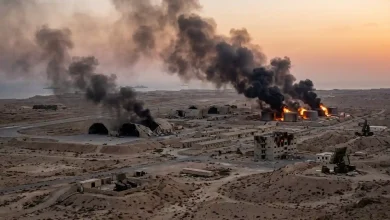
At the center of this escalating war of words is a secretive, heavily fortified underground nuclear facility known as ‘Pickaxe Mountain’—referred to in Iran as Kuh-e Kolang Gaz La. Located approximately 220 kilometers south of Tehran, adjacent to the Natanz nuclear complex, the site is buried deep beneath solid rock to withstand aerial bombardments, including heavy U.S. ‘bunker buster’ munitions. President Trump recently signaled that the U.S. military is preparing to launch a highly destructive strike on this facility, claiming that American intelligence suggests Iran may have transferred thousands of uranium-enrichment centrifuges into the mountain tunnels. Critics and military analysts argue that an attack on Pickaxe Mountain could have catastrophic environmental and geopolitical consequences, potentially releasing radioactive materials and drawing the entire region into an uncontrollable conflict. While the White House insists that ‘all options are on the table’ to prevent Iran from acquiring a nuclear weapon, the military operations led by U.S. Central Command continue to focus on immediate naval and radar targets in the coastal regions, leaving the status of Pickaxe Mountain as a looming shadow over the region. The sheer depth of the facility means that conventional strikes might fail to destroy the centrifuges completely, meaning any attempt to neutralize Pickaxe Mountain would require an unprecedented quantity of specialized ordnance, pushing the boundaries of non-nuclear warfare.
Widening :Iran’s Domestic Response and Regional Blowback
In Tehran, government officials and military commanders have reacted with defiance to the U.S. threats. Iranian Parliament Speaker Mohammad Bagher Qalibaf brushed off Trump’s warnings, asserting that Iran remains prepared to defend its territorial waters and critical infrastructure at any cost. Hardline media outlets in Iran have gone further, calling on the military to publish a detailed list of vital economic infrastructure across the United Arab Emirates and Saudi Arabia to be targeted if Pickaxe Mountain is attacked. Meanwhile, domestic political analysts note that the collapse of the short-lived ceasefire agreement earlier this year has erased any hope of a diplomatic resolution, pushing both nations toward a prolonged war of attrition. The Iranian public is bearing the brunt of this escalation as hyperinflation, fuel shortages, and currency devaluation grip the nation under the weight of U.S.-led economic blockades. Despite these internal hardships, the political leadership in Tehran appears committed to using its proxy network to project power abroad, banking on the assumption that Western democracies will eventually blink under the pressure of prolonged economic disruptions and skyrocketing oil prices.
Widening :Economic and Geopolitical Impact: Shipping Lanes and Crude Oil Spikes
The economic consequences of this widening conflict are reverberating through global financial centers. Brent crude prices surged past key resistance levels on Thursday, reflecting the market’s anxiety over a sustained disruption to Middle Eastern oil flows. Shipping conglomerates are facing a dual crisis: they must either navigate highly dangerous waters where they risk missile strikes or opt for the far longer, more expensive route around Africa’s Cape of Good Hope. The added travel time of 10 to 14 days is already translating into higher freight rates, increased fuel consumption, and delayed supply chains for essential commodities. Security experts emphasize that the Houthi rebels, by coordinating their actions with Iran’s maritime maneuvers, are successfully executing a low-cost, high-impact strategy that exposes the vulnerabilities of the modern globalized economy. As supply chains remain stressed, global central banks are monitoring the situation closely, fearing that a protracted energy crisis could reignite inflation and derail economic growth in major industrial nations.
Widening :Summary of Key Military and Strategic Developments
To understand the multi-front nature of this conflict, we can look at the primary points of tension, the actors involved, and the immediate strategic implications of recent events. The following table provides a comprehensive overview of the crisis:
| Region / Key Site | Key Actor Involved | Nature of Conflict / Recent Action | Strategic & Economic Impact |
|---|---|---|---|
| Red Sea / Bab el-Mandeb | Yemen’s Houthi Rebels | Missile & drone strikes on Saudi tankers (Encelia, Layla); naval blockade. | Severely disrupts oil transit to Europe; spikes shipping insurance premiums. |
| Strait of Hormuz | Iran (IRGC) & US Navy | Tanker fires and explosions; U.S. warnings of tit-for-tat attacks on infrastructure. | Threatens 20% of global petroleum transit; drives global crude oil prices upward. |
| Pickaxe Mountain (Kuh-e Kolang Gaz La) | US Military vs. Iranian Nuclear Program | US threats of heavy bombardment; suspected relocation of centrifuges deep underground. | Risks regional escalations; potential withdrawal of Iran from Non-Proliferation Treaty. |
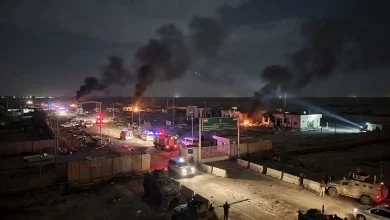
| Western & Central Iran | U.S. Central Command | Twelfth consecutive night of intensive U.S. airstrikes on Iranian facilities. | Degrades Iranian command networks; tests the limits of Iranian air defenses. |
Conclusion: A Region on the Brink of Full-Scale War
The escalating hostilities across the Red Sea and the Persian Gulf underscore a dangerous reality: the Middle East is closer to a full-scale regional war than it has been in decades. The combination of Houthi tactical strikes and the uncompromising stance of the Trump administration has left little room for backchannel diplomacy. As shipping lanes freeze and energy prices climb, the international community faces the daunting task of navigating a crisis where the rules of engagement are being rewritten on a daily basis. Whether deterrence will eventually succeed or if a strike on Pickaxe Mountain will ignite a wider global conflagration remains the central, high-stakes question of our time. The world watches with bated breath as the shadow of war threatens to reshape the global geopolitical landscape permanently.