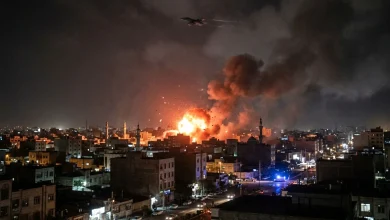
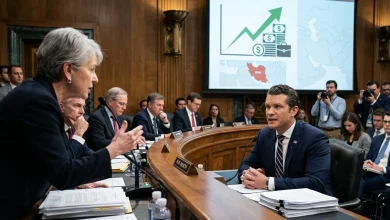
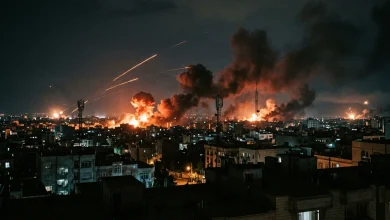
U.S. airstrikes against Iran Enter Ninth Day of Conflict 2026
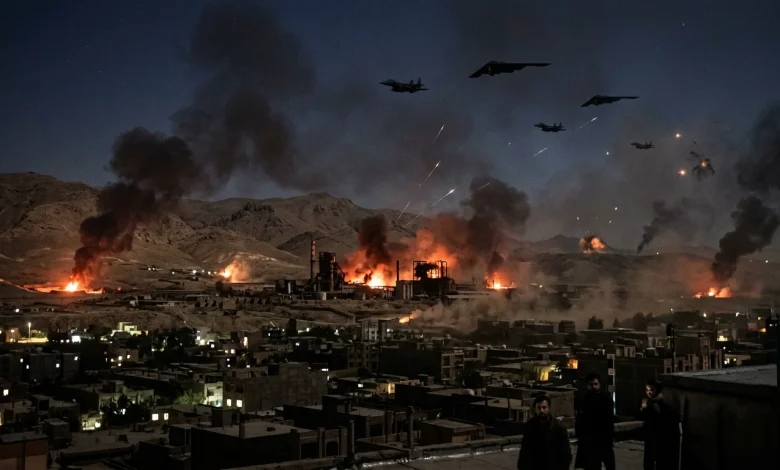
U.S. airstrikes against Iran have entered their ninth consecutive day of sustained bombardment as regional stability in the Middle East deteriorates. These military operations, coordinated by U.S. Central Command (CENTCOM), mark the most intense kinetic campaign since the war began on February 28, 2026. The shift from diplomacy to open warfare came as a devastating shock to international observers who had hoped the Islamabad Memorandum of Understanding (MoU) would provide a path to peace. As the situation escalates, we examine the critical factors driving this military standoff and the global economic fallout.
Table of Contents
- Introduction to the Conflict and the Ninth Day of Bombing
- The Strait of Hormuz Dispute: Why the Peace Talks Collapsed
- The Failed Memorandum of Understanding
- Strategic Importance of the Oil Shipping Waterway
- Breakdown of Recent Casualties and CENTCOM Reports
- Tragic Incident in the Kurdistan Region of Iraq
- Unidentified Remains Recovered from Jordan Base
- Regional Escalation and Global Oil Market Impacts
- Diplomatic Deadlocks and the Path Forward
Iran :Introduction to the Conflict and the Ninth Day of Bombing
The current phase of active operations represents a significant escalation in geopolitical tension. As airstrikes against Iran enter ninth day, the geopolitical landscape has transformed into a dangerous war zone. What began as localized defensive operations has now expanded into a multi-theater campaign targeting key Iranian military infrastructure, command hubs, and drone storage assets across the region. The U.S. administration has defended the strikes as necessary defensive measures in response to persistent aggression from Iranian-backed militias and direct strikes on American outposts. However, the scale of the bombardment indicates a broader strategic objective to permanently degrade Iran’s regional power projection. This kinetic campaign shows no signs of slowing down, with both nations digging in for a protracted conflict that could have catastrophic consequences for the entire global security framework.
Iran :The Strait of Hormuz Dispute: Why the Peace Talks Collapsed
The core of the diplomatic breakdown lies in the unresolved status of the Strait of Hormuz, which remains the single most critical maritime chokepoint for the global energy supply. Earlier in June 2026, diplomats from both countries remote-signed the Islamabad MoU, which was intended to establish a sixty-day negotiating window to formalize a permanent ceasefire. However, when negotiators met to hammer out the details of the agreement, the talks quickly collapsed over the precise sovereign administration of the strait. Tehran demanded exclusive authority to regulate, tax, and inspect all commercial vessels transiting through the channel, while Washington insisted on unimpeded freedom of navigation as guaranteed under international law. This fundamental disagreement triggered the severe Strait of Hormuz crisis that eventually brought an end to the ceasefire. Despite mediation efforts by regional actors, neither side was willing to compromise on their primary strategic red lines, leading to a complete deadlock. The dispute over the waterway is not merely a legal disagreement; it represents a deep-seated geopolitical struggle for control over the primary economic artery of the Persian Gulf, where any disruption can trigger a worldwide economic shock.
Iran :The Failed Memorandum of Understanding
The Islamabad Memorandum of Understanding was initially hailed as a landmark diplomatic achievement that would bring a formal end to the war. It proposed a comprehensive framework under which the United States would terminate primary sanctions and provide billions of dollars in economic aid in exchange for Iranian commitments to halt its nuclear program and guarantee freedom of navigation. However, the lack of specific enforcement mechanisms and conflicting interpretations of the text ultimately doomed the agreement from the start. Iran viewed the MoU as an immediate license to resume unrestricted oil exports, while the U.S. maintained that sanctions relief would only occur after verifiable compliance with international maritime and nuclear standards. As these internal contradictions became clear, the fragile agreement dissolved, and the Iran-U.S. conflict escalates to levels not seen since the outbreak of hostilities. This failure highlights the severe challenges of negotiating in good faith when trust between the two nations has completely eroded after years of economic warfare, covert cyber operations, and direct military clashes.
Strategic Importance of the Oil Shipping Waterway
To understand the high stakes of this conflict, one must look at the immense economic weight of the Strait of Hormuz. According to data from the Strait of Hormuz Wikipedia page, approximately one-fifth of the world’s total petroleum liquid consumption passes through this narrow maritime corridor daily. This makes the strait an existential asset for both energy-importing nations and regional oil-producing states. When the peace talks collapsed, maritime traffic through the strait plummeted by nearly ninety percent as shipowners feared immediate kinetic attacks. Insurance premiums for tankers transiting the Gulf soared to prohibitive levels, causing many logistics firms to halt operations entirely. The table below outlines the timeline of major military events and their strategic consequences over the past several days of the conflict.
| Timeline Event | Location of Event | Military Action / Tactical Event | Impact & Strategic Implications |
|---|---|---|---|
| July 17, 2026 | Muwaffaq Salti Air Base, Jordan | Iranian missile and drone strike on U.S. outpost | Two U.S. service members killed; one listed as missing (remains found). |
| July 18, 2026 | Kurdistan Region, Iraq (Erbil) | Controlled detonation of downed Iranian attack drone | One U.S. service member killed; another wounded during disposal. |
| July 19-20, 2026 | Persian Gulf / Strait of Hormuz | 9th consecutive day of U.S. airstrikes against Iran | Destruction of IRGC coastal radar, drone storage sites, and missile launchers. |
Breakdown of Recent Casualties and CENTCOM Reports
The human cost of this military escalation has begun to mount rapidly, complicating any future diplomatic efforts. U.S. Central Command recently announced several high-profile casualties that have sent shockwaves through the military community. On July 17, a devastating Iranian missile and drone attack targeted the Muwaffaq Salti Air Base in Jordan, a key logistics hub for U.S. forces in the region. The Department of Defense identified the deceased as twenty-five-year-old First Lieutenant Tyler James Feehan and nineteen-year-old Private Isabella Gonzales. Additionally, another service member was reported missing in action immediately following the blast. The news of the U.S. troops killed in Jordan has added immense political pressure on Washington to execute a decisive response, with the administration stating that the current wave of airstrikes was launched in direct honor of those who made the ultimate sacrifice. The escalating death toll, which now stands at seventeen American service members, has effectively eliminated any political appetite in Washington for returning to the negotiating table without significant Iranian concessions.
Tragic Incident in the Kurdistan Region of Iraq
In addition to the casualties in Jordan, the dangers of unexploded ordnance were highlighted by a tragic incident in northern Iraq. On Saturday, July 18, a U.S. service member was killed in action in the Kurdistan Region of Iraq during a controlled detonation of unexploded ordnance from an intercepted Iranian one-way attack drone. According to CENTCOM, a second service member was wounded in the same incident but continues to receive medical treatment for minor injuries. This loss highlights the persistent threats faced by military personnel operating in areas where drone warfare has become a daily reality. The Kurdistan Region, which has largely sought to remain a noncombatant in the broader conflict, has increasingly found itself targeted by Iranian drone strikes aimed at U.S. facilities. The proliferation of cheap, lethal drone technology has created a highly volatile environment where even downed or malfunctioning systems remain deadly threats to explosive ordnance disposal teams and local civilians alike.
Unidentified Remains Recovered from Jordan Base
In a grim update, CENTCOM also confirmed that search teams operating at the Jordan base recovered unidentified human remains near the site of Friday’s attack. The military command stated that a comprehensive forensic and DNA examination process is currently underway to verify the identity of the deceased. It did not confirm whether the remains belong to the service member who was listed as missing in action following the strike. This sensitive situation has added to the tense atmosphere as military families await official notification. The recovery of these remains has further galvanized public and military resolve, with top command officials promising that every resource will be deployed to secure the region and prevent further losses. As the verification process continues, the ongoing U.S. strikes on Iran represent a physical manifestation of Washington’s determination to exact a heavy price for any attack on American personnel.
Regional Escalation and Global Oil Market Impacts
The economic ramifications of this conflict have reverberated far beyond the borders of the Middle East, threatening to spark a global recession. As the Strait of Hormuz remains highly volatile, global oil markets have reacted with extreme panic, causing Brent crude oil prices to surge toward historic highs. Analysts warn that if the conflict continues to disrupt maritime traffic, prices could easily breach previous records, placing an immense burden on global manufacturing and transport sectors. This energy crisis is further compounded by allied militia activities in the Red Sea, where the Bab-el-Mandeb gateway threatened by anti-ship missile strikes has forced shipping companies to reroute vessels around the southern tip of Africa. These massive logistical detours have dramatically increased shipping times and transit costs, adding to global inflationary pressures. For consumers in Western countries, the consequences are immediate and visible, as domestic gasoline prices climb to unprecedented levels, triggering widespread political dissatisfaction and demands for a swift diplomatic resolution.
Diplomatic Deadlocks and the Path Forward
Despite the severe economic and military costs, a diplomatic breakthrough remains highly unlikely in the near term. The fundamental disagreement over sovereign rights and sanctions relief has created an intractable diplomatic deadlock that neither side seems willing to break. Washington remains committed to its campaign of maximum military and economic pressure, while Tehran continues to rely on asymmetric warfare and regional proxies to assert its influence. International mediators from Oman, Qatar, and European nations have attempted to establish communication channels, but their efforts have been repeatedly stymied by the ongoing violence. As both nations continue to exchange heavy blows, the window for a peaceful resolution is rapidly closing. The failure of the Islamabad MoU serves as a stark reminder of the limitations of diplomacy when not backed by verifiable trust and mutual strategic concessions. Without a fundamental shift in political will from both leaderships, the region remains on a trajectory toward a devastating and prolonged war that could reshape the geopolitics of the Middle East for generations to come.