Strikes on Iran: U.S. Forces Conduct 12th Consecutive Night of Attacks
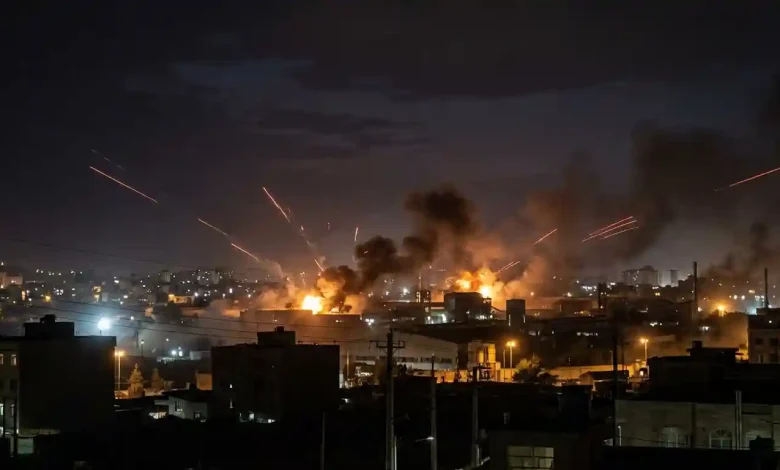
Table of Contents
Strikes on Iran carried out by the United States military have entered their 12th consecutive night of intensive operations, representing a major regional escalation with severe global economic repercussions. On Wednesday, July 22, 2026, U.S. Central Command (CENTCOM) confirmed the completion of another round of precision aerial strikes aimed at dismantling military installations across southwestern and southern Iran. These continuous operations, directed by President Donald Trump, are part of an aggressive military campaign designed to degrade Tehran’s capability to disrupt international shipping and threaten maritime transit in the region. As the latest strikes on Iran by US Central Command seek to degrade the Islamic Revolutionary Guard Corps’ (IRGC) offensive assets, the broader geopolitics of the Middle East have been pushed to a critical breaking point.
The Pentagon continues to maintain that the Strait of Hormuz remains open to commercial maritime traffic, but shipping companies and regional analysts paint a far more precarious picture. Following weeks of renewed Iranian harassment, mine-laying, and direct attacks on civilian vessels, traffic through this vital global waterway has slowed to a crawl. The growing reluctance of maritime insurers to cover ships passing through the gulf has resulted in significant shipping delays, which has instantly reflected in international commodity markets. Brent crude prices surged on Thursday to over $93 a barrel, climbing from a stable baseline of $72 earlier this month. As the overall Strait of Hormuz crisis deepens, the threat of a full maritime shutdown looms, threatening a massive inflationary shock to the global economy.
Tactical Breakdown of CENTCOM’s 12th Night Operations
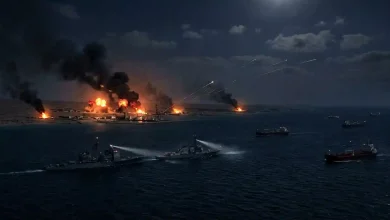
According to a formal statement released by U.S. Central Command, a command structure within the U.S. Department of Defense, American forces completed the 12th consecutive night of military strikes at approximately 10:30 p.m. ET on Wednesday, July 22, 2026. The latest wave of aerial bombardments engaged a wide array of military targets, focusing heavily on coastal defense installations and IRGC logistical nodes. Specifically, CENTCOM stated that the strikes successfully targeted maritime capabilities, missile and drone storage facilities, coastal surveillance sites, and advanced air defense assets. This intensive campaign is a continuation of the high-tempo air operations that have dominated the region, which gained momentum after the airstrikes against Iran hit key logistical networks mid-month.
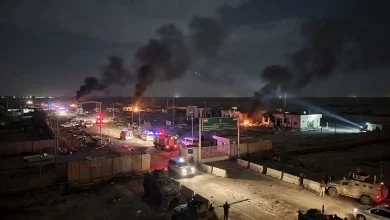
Explosions were widely reported by local Iranian media across the southern provinces of Hormozgan and Bushehr, where several military sites and radar stations are located. Iranian state media noted that a power station situated near the Bushehr nuclear facility was hit, causing widespread electrical failures in the surrounding district. Additionally, regional reports indicated that a U.S. strike hit near the Shalamcheh border crossing between Iran and Iraq, resulting in at least two casualties and several injuries. While the U.S. military maintains that its operations are strictly designed to degrade offensive military capacity, the expanding list of targets highlights a growing willingness to strike dual-use infrastructure that supports the IRGC’s command networks. This level of sustained intensity has not been seen since the sixth night of U.S. attacks, which established the operational template for these nocturnal waves.
The Strait of Hormuz Chokepoint and Global Oil Markets
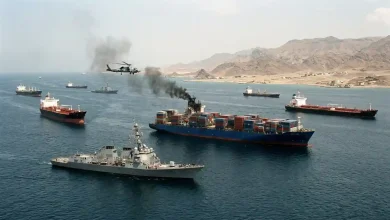
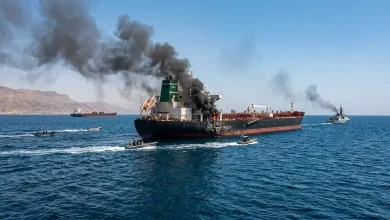
The Strait of Hormuz is widely recognized as the single most critical maritime chokepoint for the global oil trade, carrying roughly 20 percent of the world’s petroleum liquids consumption. While the Pentagon insists that the waterway remains open for navigation, the reality of active hostilities has drastically reduced commercial transit volumes. Shipping companies have begun rerouting their vessels or delaying transits entirely due to the extreme risk of mine strikes and drone attacks. The IRGC’s navy has aggressively asserted its control over the strait, with reports indicating that Iranian forces stopped three oil tankers on Thursday morning local time, forcing them to turn back after one vessel reportedly struck a mine and caught fire.
This disruption has triggered immediate volatility in global energy markets. Investors are increasingly pricing in the risk of a prolonged blockade, which has pushed oil prices up by more than 30 percent in a matter of weeks. The economic disruption is hitting at a particularly sensitive time, with energy costs already a central issue for international trade. To understand the strategic scale of this crisis, it is helpful to compare the two main maritime chokepoints currently under threat in the region: the Strait of Hormuz and the Bab al-Mandab Strait.
| Feature/Metric | Strait of Hormuz | Bab al-Mandab Strait |
|---|---|---|
| Primary Geography | Between Oman, Iran, and the Persian Gulf | Between Yemen, Djibouti, and Eritrea |
| Daily Oil Transit Volume | ~20.5 million barrels per day (bpd) | ~6.2 to 8.8 million barrels per day (bpd) |
| Primary Threat Actors | Islamic Revolutionary Guard Corps (IRGC) Navy | Iran-backed Houthi Rebel Group (Ansar Allah) |
| Current Maritime Status | Severely slowed, active military engagement | Contested, partial blockade declared |
| Economic Risk Profile | Global oil price shock and energy supply failure | Disruption of Suez Canal route and global container trade |
President Trump’s “Bridge for a Ship” Threat: A Strategic Escalation
In a series of highly direct social media statements published on Wednesday, President Donald Trump escalated his rhetoric to a level that has alarmed both diplomats and legal scholars. Trump announced a new, highly retaliatory doctrine aimed at deterring Iranian maritime aggression: for every single attack carried out by Iran on a commercial or military ship in the Strait of Hormuz, the United States will respond by targeting and destroying a major Iranian civilian infrastructure asset, such as a bridge or a power plant. Writing on his Truth Social platform, Trump stated: “From this point forward, any time the Islamic Republic of Iran shoots at a ship in the Strait of Hormuz, whether it be by Missile, Rocket, Drone, or any other device or weapon, the United States will bomb and destroy ONE BRIDGE OR POWER PLANT.”
Trump explicitly specified that these potential targets are not confined to remote coastal regions but include major infrastructural assets “located next to, or in, the Capital City of Tehran.” The statement represents a massive shift in the administration’s stated rules of engagement, moving from proportional military responses to direct deterrence through the targeting of critical civilian infrastructure. It also comes at a time when the administration is trying to force Tehran back to the negotiating table. Secretary of State Marco Rubio defended the President’s tough stance, noting that while the U.S. remains open to a diplomatic resolution, it will not tolerate continued attacks on global maritime commerce.
Legal and Diplomatic Implications under International Law
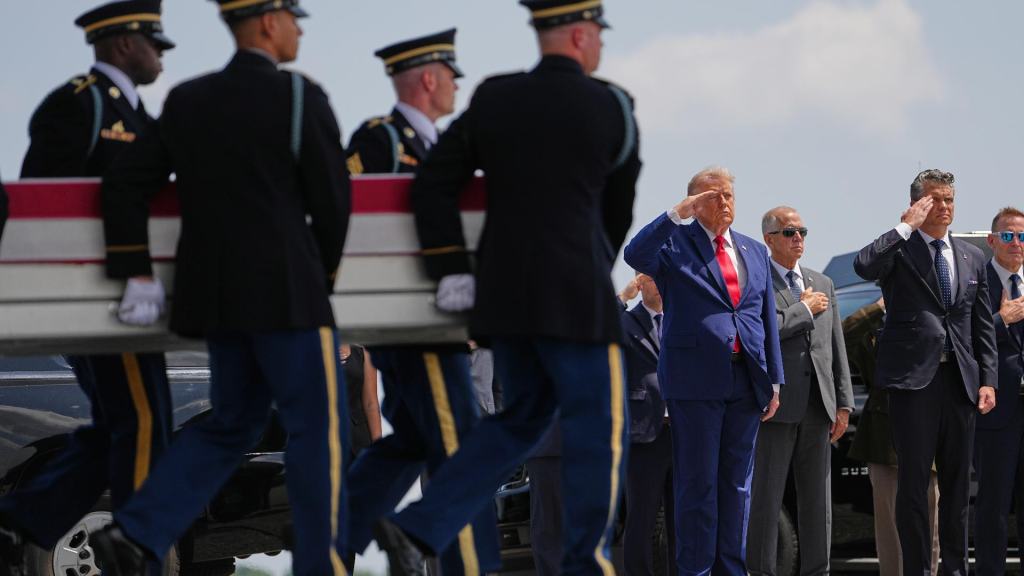
The threat to target civilian infrastructure like electrical grids, power stations, and municipal bridges has sparked fierce debate among international law experts. Under the Geneva Conventions and established customary international law, civilian objects are strictly protected from military attack unless they are being used directly for military purposes. Critics argue that a policy of systematically destroying non-military bridges and power plants as a form of retaliation could constitute war crimes. Conversely, proponents of the administration’s policy argue that these infrastructure assets are vital to the IRGC’s domestic logistics and command networks, making them legitimate military objectives in a state of active conflict. This rhetorical escalation occurred on the same day President Trump traveled to Dover Air Force Base to receive the remains of four American service members killed in recent regional skirmishes, underscoring the deep human toll of this widening conflict.
The Houthi Blockade in the Red Sea: Opening a Second Maritime Front
Adding a dangerous new dimension to the conflict, Yemen’s Iran-backed Houthi rebel group announced on Wednesday that they had successfully targeted two oil tankers in the Red Sea. The group claimed responsibility for launching a series of ballistic missiles, cruise missiles, and explosive drones at the Saudi-flagged tankers Encelia and Layla. According to Saudi state media, the attack on the Encelia resulted in a significant fire on the vessel’s bow, though the crew managed to escape without casualties, and regional environmental protection measures were immediately activated. The Houthis stated that these attacks were carried out to enforce their newly declared naval blockade against Saudi Arabia, which they initiated in response to the ongoing U.S. military operations against Iran.
This development fulfills a persistent threat that could snarl the Bab al-Mandab Strait, the crucial southern gateway to the Red Sea and the Suez Canal. By expanding their targeting to Saudi maritime assets, the Houthis are attempting to cut off alternative shipping routes that bypass the Strait of Hormuz. For global trade, this represents a worst-case scenario: a simultaneous disruption of both the Persian Gulf and the Red Sea corridors. The shipping industry is now faced with the prospect of having to bypass the entire Middle East, routing cargo around the Cape of Good Hope at the southern tip of Africa, which adds weeks to transit times and dramatically increases shipping costs.
Regional Responses and the Collapse of Diplomatic Frameworks
The current round of hostilities has effectively shattered the fragile diplomatic progress that had been achieved earlier in the year. The rapid exchange of military strikes has continued unabated despite a Pakistan-brokered framework agreement signed by both Washington and Tehran in June, which was intended to establish a durable ceasefire and prevent a wider war. Since the U.S.-Iran ceasefire collapses, both nations have abandoned diplomatic caution in favor of unyielding military posture.
In response to President Trump’s warnings, Iranian Foreign Minister Abbas Araghchi declared that Tehran would adopt an “eye for an eye” defense doctrine. Araghchi warned that any American strikes on Iranian civilian infrastructure would be met with immediate, powerful, and decisive retaliation targeting regional energy networks. The Khatam al-Anbiya Central Headquarters, which coordinates Iran’s joint military operations, warned that if the U.S. strikes Iran’s power or oil facilities, the Iranian armed forces will block all regional energy exports, ensuring that “not a single drop of oil” leaves the Persian Gulf.
The effects of this escalatory spiral are already spreading to neighboring countries. In Kuwait, air defense forces were activated to intercept hostile drone threats believed to be linked to Iranian retaliation against regional states hosting American forces. This regional spillover is exactly what diplomats had hoped to avoid when the U.S. reimposes port bans and naval blockades earlier this month to squeeze Iran’s primary sources of revenue. Neighboring gulf states, including Saudi Arabia and Bahrain, remain on high alert as they find themselves caught in the middle of a conflict that has ceased to be a localized dispute. Especially after the Houthis blockade Saudi ships in the Red Sea, the entire Arabian Peninsula is now a highly active combat zone. The aggressive Houthi embargo targets Saudi shipping with direct military action, demonstrating how quickly local rebel groups can execute sophisticated operations to pressure international alliances.
The Escalating Financial Cost of the Middle East War
Beyond the geopolitical and human toll, the conflict is imposing a staggering financial burden on the United States. In a fiery congressional hearing on Tuesday, Secretary of Defense Pete Hegseth estimated that the U.S. military has already spent approximately $37.5 billion on operations in the region since the outbreak of hostilities. Hegseth testified that the Pentagon requires an immediate, additional $67 billion in emergency funding to restock critical munitions, replace depleted air defense missiles, and maintain the massive naval presence required to patrol the contested shipping lanes. This massive spending request has met with considerable pushback from lawmakers, who are questioning the long-term strategic objective of an open-ended naval blockade and air campaign that has so far failed to stop Iranian maritime harassment.
Strategic Outlook: Is All-Out War Inevitable?
With diplomatic channels currently frozen and both sides doubling down on their respective strategies, the risk of a full-scale regional war has never been higher. The U.S. military’s continuous strikes are intended to wear down the IRGC’s capabilities, but Tehran has shown a remarkable ability to adapt, utilizing asymmetric tactics, mobile drone launchers, and sea mines to bypass conventional air defenses. President Trump’s threat to target Iranian bridges and power plants could easily trigger a symmetric response from Iran, which has threatened to target major oil fields, desalination plants, and military bases across the Gulf.
As global markets brace for further volatility, the international community is watching with growing concern. The combination of U.S. airstrikes, Iranian counter-attacks, and Houthi blockades has created a complex, multi-front crisis with no clear diplomatic exit ramp. Unless backchannel negotiations can be revived to establish a new, verifiable security framework, the conflict appears headed toward an even more destructive phase that could reshape the geopolitics of the Middle East and the global economy for years to come.