US airstrikes on Iran hit Shalamcheh border on 12th straight night
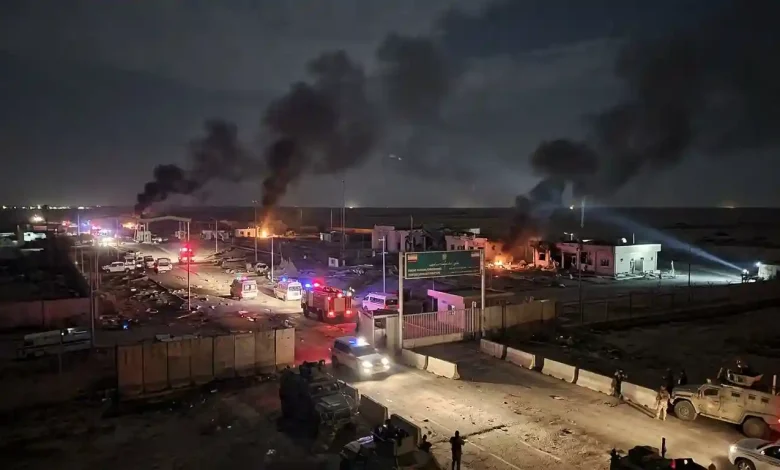
Table of Contents
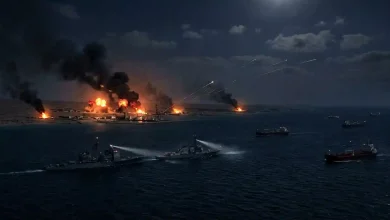
US airstrikes on Iran have entered their twelfth consecutive night, representing a massive escalation in the regional conflict that has engulfed the Middle East since early 2026. The continuous campaign by the United States military, aimed at degrading the military capabilities of the Islamic Revolutionary Guard Corps (IRGC) and allied militias, has expanded rapidly across southern and western Iran. This prolonged aerial offensive underscores how severely the security architecture of the Persian Gulf has fragmented. These actions indicate that hostilities escalate U.S. Iran ceasefire collapses to a degree not seen since the outbreak of full-scale combat operations in February. As both Washington and Tehran ditch diplomatic channels, the entire region is descending into a war of attrition with critical shipping lanes and vital border terminals caught in the crosshairs.
The immediate catalyst for the latest escalation is a cycle of retaliatory actions that has undermined any remaining international mediation. Despite a June framework brokered by Pakistan, designed to pave the way for a lasting peace agreement, neither side has demonstrated a willingness to de-escalate. President Donald Trump has committed to a policy of severe deterrence, warning that the United States will eliminate key Iranian infrastructure for every maritime target struck. This highly confrontational stance has drawn fierce resistance from Tehran. Domestically, the Trump administration faces mounting pressure as high energy costs threaten to impact the upcoming congressional elections in November, making the rapid resolution of the Strait of Hormuz blockade a paramount, yet elusive, objective.
US Airstrikes Enter 12th Consecutive Night of Escalation
The sustained aerial campaign represents one of the most intense bombing operations in the region in decades. Pentagon officials have defended the daily sorties as necessary defensive actions to disrupt Iran’s supply chains, command nodes, and drone launch facilities. However, local reports paint a picture of widening targets, with bombs falling closer to civilian centers and critical infrastructure. The psychological toll on the population is mounting, and the physical destruction of logistics hubs is beginning to paralyze the domestic economy of western Iran.
The Shalamcheh Border Strike: Casualties and Tactical Shifts
On the ground in southwestern Iran, the physical consequences of this confrontation are becoming increasingly tragic. Early on Thursday morning, a devastating precision strike was reported at the strategic Shalamcheh border crossing, marking a major geographic shift in the targeting envelope of the coalition forces. While previous operations prioritized remote storage facilities and radar sites, this direct hit near a major passenger terminal marks a terrifying phase of the conflict for civilian travelers and border personnel alike.
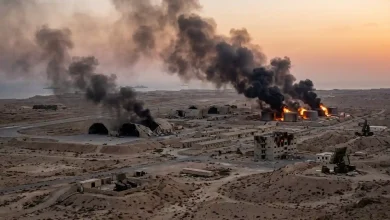
The Shalamcheh border crossing, which serves as a major passenger and trade transit route between southern Iraq and Iran’s Khuzestan province, was engulfed in chaos after a US missile hit the area around the passenger terminal. Valiollah Hayati, the deputy governor for security and law enforcement in Khuzestan, confirmed that the attack killed at least two people and wounded 11 others. This latest strike occurred on the heels of another set of operations where airstrikes against Iran enter ninth day of sustained aerial bombardments targeting strategic command centers. In addition, Hayati stated that separate strikes targeted Andimeshk, while state media reported that the US twice targeted military assets in the Bushehr region, near Iran’s only commercial nuclear power reactor. The proximity of these strikes to critical civilian and nuclear infrastructure demonstrates that the campaign is intensifying rapidly, echoing previous periods when the U.S. airstrikes against Iran enter ninth day of active operations without any sign of pause from the Pentagon.
Strait of Hormuz Crisis: IRGC Reports Oil Tanker Ablaze
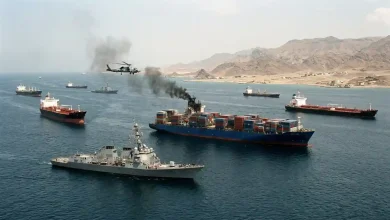
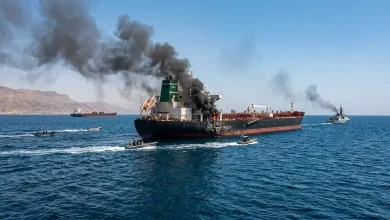
Simultaneously, the maritime domain has erupted into a theater of severe confrontation. In the strategic Strait of Hormuz, the IRGC has reinforced its near-total blockade, declaring the vital shipping corridor completely closed to any vessels operating without explicit Iranian coordination. The IRGC claimed that three commercial tankers attempted to transit a southern route through the strait early Thursday, a course reportedly encouraged by the US military to bypass heavily mined sectors. According to Iranian state reports, this maneuver ended in disaster when one tanker was struck by an explosion and caught fire, forcing the other two vessels to turn back in a desperate bid for safety.
This maritime crisis mirrors the aftermath of previous engagements where the US military strikes Iran Strait of Hormuz crisis and disrupted local patrol activities. The IRGC’s rigid enforcement of the blockade represents a direct challenge to the US-led naval coalition, which has struggled to secure safe passage for international tankers. The closure of the Strait of Hormuz, which traditionally facilitates the passage of approximately 20% of the global crude supply, has sent shockwaves through the global economy. By choking off this vital artery, Tehran is seeking to leverage its geographical dominance to force a cessation of the ongoing airstrikes, even as the US military vows to continue operations until Iran’s ability to threaten maritime commerce is completely degraded.
Red Sea Warfare: Houthis Target Saudi Tankers Encelia and Layla
To compound the pressure on global energy networks, Yemen’s Houthi rebels have opened a coordinated secondary front in the Red Sea. Late Wednesday, the Houthi military command claimed responsibility for launching a series of cruise missiles and drone strikes targeting two Saudi Arabian oil tankers, the Encelia and the Layla. This aggressive action follows a formal declaration by the Houthis on July 20, imposing a strict naval blockade on all Saudi maritime navigation in the Red Sea.
The latest missile launch shows how the Houthi embargo targets Saudi shipping as tanker operators scramble to seek safer navigation alternatives. The Saudi-flagged tanker Encelia transmitted an emergency distress call via VHF radio after being hit by an unknown projectile approximately 70 nautical miles southwest of Saudi Arabia’s Al Shuqaiq, near the port of Jizan. Saudi Arabia’s official news agency, SPA, later confirmed that a fire had broken out on the bow of the vessel, though the crew managed to safely contain the blaze. Indeed, as the Houthis blockade Saudi ships as US-Iran war expands, Riyadh’s vulnerability in bypassing the Strait of Hormuz is laid bare. Saudi Arabia had previously attempted to bypass the closed Hormuz strait by routing its crude exports through the Red Sea port of Yanbu, but the Houthi blockade has effectively closed this alternative corridor, placing a double-chokehold on global oil transit.
Assessing Iran’s Retaliatory Capabilities and Regional Targets
The capability of Iranian-aligned forces to sustain these sophisticated operations is a major concern for Western military planners. Despite triumphant announcements from Washington regarding the success of the aerial campaign, Iran and its regional proxies have demonstrated a highly resilient inventory of precision-guided munitions and long-range drones. In addition to the maritime blockades, Tehran has conducted successful retaliatory strikes targeting crucial water desalination plants and energy facilities in Kuwait, alongside direct attacks on US military assets stationed there. Regional allies of the United States, including Bahrain and Jordan, have also experienced drone strikes, showing that the battlefield is expanding far beyond the borders of Iran.
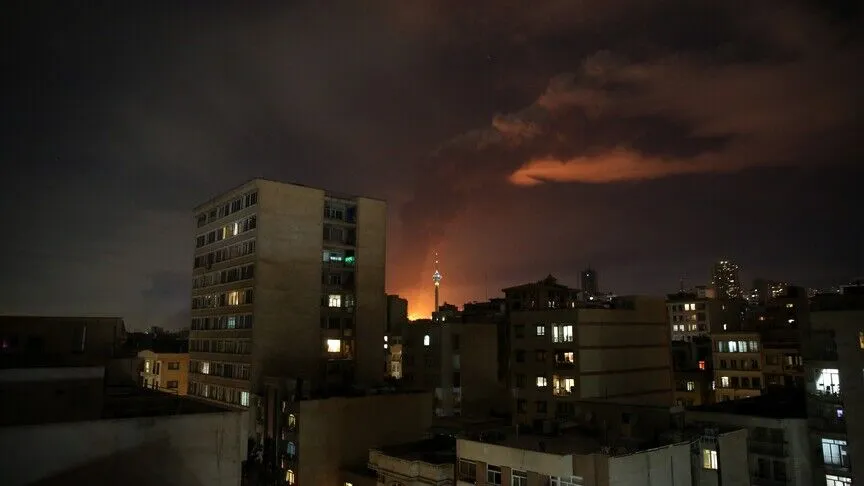
As observed during the airstrikes against Iran sixth night of US attacks, US strategy remains focused on destroying weapons depots and coastal radar installations, but the decentralized nature of the IRGC’s command structure makes total neutralization nearly impossible. The deployment of heavy B-1 strategic bombers has succeeded in degrading fixed sites, yet mobile launch platforms continue to operate with high efficiency from subterranean bases and hidden coastal locations.
A Diplomatic Vacuum: UK Staff Withdrawal and Regional Realignment
This worsening security environment has triggered immediate diplomatic withdrawals and severe advisory warnings. The United Kingdom’s Foreign, Commonwealth & Development Office (FCDO) officially announced the temporary evacuation of all remaining diplomatic staff from Iran. The FCDO has strongly advised against all travel to the country, warning British and dual-national citizens of a significant risk of arbitrary arrest, detention, and interrogation.
This diplomatic evacuation mirrors the preemptive measures taken in February, just before the initial outbreak of US-Israeli military operations. With embassy staff operating remotely from neighboring nations, the complete absence of a direct communication channel increases the risk of a miscalculation that could trigger a wider global conflict. The lack of diplomatic avenues has left regional states to navigate the fallout of the war independently, with many fearing that their own infrastructure could become targets in the crossfire between the two major adversaries.
Summary of Key Conflict Incidents and Regional Impact
The following table details the most critical military and maritime developments reported over the last forty-eight hours, highlighting the multi-front nature of this escalation.
| Incident Location | Key Targets / Assets Involved | Reported Casualties & Damages | Strategic Implications |
|---|---|---|---|
| Shalamcheh Border Crossing | Passenger terminal & trade logistics area | At least 2 killed, 11 wounded | Expands the target zone to critical border corridors connecting Iran & Iraq. |
| Strait of Hormuz | Commercial tankers on southern transit path | One tanker ablaze; two forced to turn back | Enforces Iran’s complete blockade on the world’s most vital energy corridor. |
| Red Sea (Al Shuqaiq/Jizan) | Saudi tankers Encelia and Layla | Fire on Encelia bow; crew declared safe | Closes Saudi Arabia’s primary alternative export pipeline through Yanbu. |
| Bushehr Region | Military installations near nuclear facility | No immediate casualties reported | Signals US willingness to strike near highly sensitive nuclear infrastructure. |
Geopolitical Fallout: Energy Markets and Global Instability
The economic fallout of this dual-chokehold on the world’s most critical energy routes is already becoming apparent in global financial markets. Brent crude futures surged past $94 per barrel immediately following the reports of the ablaze tankers in both the Red Sea and the Strait of Hormuz. Analysts warn that if these blockades remain in effect for an extended period, the global economy could experience an inflationary shock reminiscent of the major energy crises of the 20th century. This comes directly after previous confrontations where the U.S. blockade on Iran strikes escalate in the Gulf region, creating an incredibly hostile transit network. If international shipping companies continue to route their vessels around the Cape of Good Hope to avoid the Red Sea and the Gulf, transit times and shipping costs will continue to skyrocket, further depressing global trade and raising consumer prices worldwide.
Ultimately, the military strategies of both the United States and Iran appear locked in an escalatory loop with no viable exit ramp. The destruction at the Shalamcheh border crossing, combined with the naval blockades in the Red Sea and the Strait of Hormuz, indicates that the conflict is no longer confined to low-level proxy skirmishes. As civilian casualties rise and energy corridors close, the international community faces the very real prospect of a prolonged, full-scale regional war with devastating global consequences. Without a concerted diplomatic intervention to revive a workable ceasefire, the coming days are likely to bring even greater destruction across the Middle East.