Brent crude oil prices defied $150 spikes in 2026 war

Table of Contents
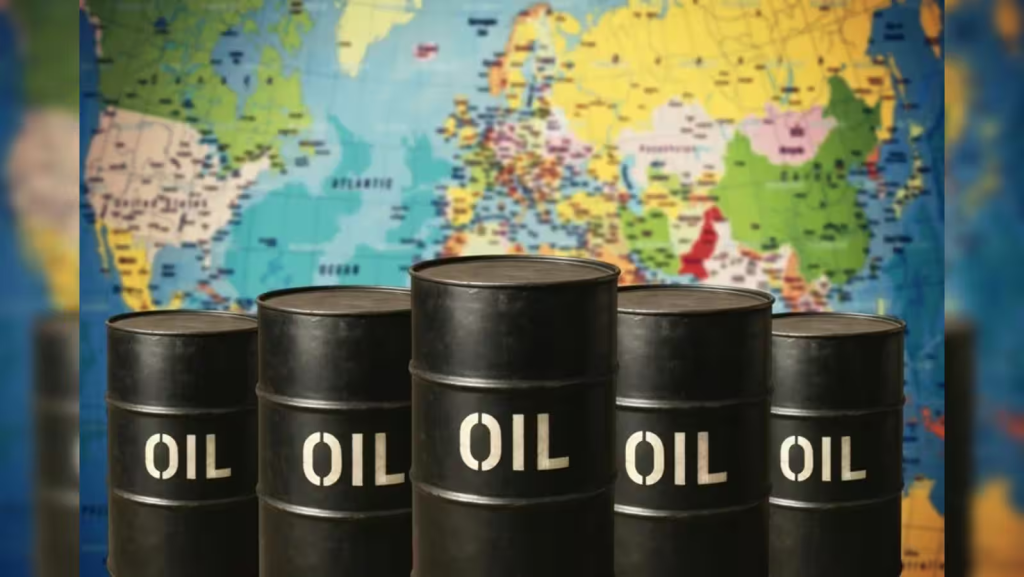
Brent crude oil prices during the intense geopolitical standoff of 2026 did not behave as history or financial analysts had predicted. When the United States and Israel entered a high-stakes military conflict with Iran in late February 2026, energy economists globally warned that a total blockade of the Strait of Hormuz would paralyze global energy security. With roughly 20 percent of the world’s liquid petroleum transiting through this vital maritime artery, several major financial institutions estimated that crude oil could hit $150 a barrel, or even rise as far as $200 a barrel. Yet, despite the outbreak of active hostilities, Brent crude futures peaked at just $126 a barrel—comfortably below the all-time nominal high of $147.50 reached during the financial crisis of 2008. Over the duration of the intense military campaign, which lasted until early summer, prices averaged a manageable $101 a barrel before rapidly retreating to pre-war baselines of approximately $70 a barrel. This comprehensive analysis details the structural economic changes, strategic oil reserve maneuvers, and shifting global demand dynamics that prevented a devastating global energy crisis during the 2026 conflict.
Oil Prices:The Geopolitical Catalyst of the 2026 Conflict
To understand the resilience of global energy markets, we must examine the sequence of events that defined the 2026 Iran war. The sudden ignition of hostilities caught many off guard, prompting immediate comparisons to historical oil shocks. Analysts immediately anticipated a worst-case scenario where Iranian retaliatory measures would permanently shut down transit through regional chokepoints. This anxiety escalated during the initial days of the conflict when the Strait of Hormuz crisis became the focal point of military operations. Market speculation reached a fever pitch, with various financial institutions predicting that the interruption of Middle Eastern supply would inevitably trigger a global economic depression. However, the anticipated multi-year blockade did not manifest in the destructive manner projected by commodity traders.
The Outbreak of War and Initial Market Panic
When hostilities formally commenced on February 28, oil futures spiked instantly, climbing from $74 to over $110 in a matter of hours. The fear of widespread infrastructure destruction across the Persian Gulf dominated headlines. Traders priced in an extreme risk premium, bracing for a scenario where regional oil fields, refineries, and export terminals would be reduced to rubble. This panic was exacerbated by reports of a truce collapses as Trump warns of devastating aerial campaigns. For several days, the threat of unmitigated escalation dominated Wall Street, pushing Brent crude to its eventual wartime peak of $126. Yet, the price momentum stalled at this ceiling, revealing that physical supply realities differed substantially from speculative panic.
Why Brent Crude Resisted the $150 Skyrocket
Several critical structural factors insulated the global economy from the feared $150–$200 price spikes. First and foremost was the unprecedented volume of non-OPEC crude oil production, particularly from the Western Hemisphere. Over the preceding five years, the United States, Brazil, and Guyana had aggressively expanded their drilling capacity. By early 2026, domestic U.S. crude production was hovering at a record-breaking 14.2 million barrels per day, creating a powerful buffer against overseas supply interruptions. Furthermore, the enforceability of the maritime blockade on Iran prevented regional disruption from spilling over into non-belligerent exporting states like Saudi Arabia and the United Arab Emirates, ensuring that their vast spare production capacities remained intact and accessible.
The Role of Algorithmic Trading and Hedging
Modern oil markets are heavily influenced by algorithmic trading systems and systematic commodity pool operators. During previous energy crises, manual speculative buying could drive prices far beyond fundamental values. In 2026, however, sophisticated machine-learning models quickly calculated that the physical deficit was temporary. Large-scale institutional investors used the initial spike to execute massive short positions, betting that high prices would trigger immediate demand destruction. This institutional hedging acted as a stabilizer, preventing the retail-driven speculative feedback loops that historically propelled prices toward record levels.
Shaping the Demand Side: Global Economic Headwinds
While supply-side dynamics were highly resilient, the demand side of the global energy equation played an equally significant role in keeping prices grounded. The global economy in early 2026 was already grappling with high interest rates and monetary tightening implemented by major central banks. This macro-environmental slowdown was heavily magnified by China’s economic slowdown, which capped global consumption. As the world’s largest importer of crude oil, China’s cooling manufacturing sector and transition toward alternative energy vehicles meant that its incremental demand growth was nearly flat. Consequently, the sudden reduction in Middle Eastern supply did not chase a scarce, rapidly expanding pool of global demand; instead, it met a market that was already structurally oversupplied.
The Strait of Hormuz Crisis and Fleet Re-routing
A central component of the conflict’s geography was the maritime battleground. While the Iranian military attempted to block commercial shipping, the actual disruption was heavily mitigated by advanced naval escort operations and alternative transport routes. The US-Israel coalition deployed state-of-the-art maritime defense systems to protect commercial tankers, ensuring that friendly Gulf exporters could still move a significant portion of their volume. Additionally, major exporters utilized overland pipelines—such as the East-West Pipeline in Saudi Arabia and the Habshan-Fujairah pipeline in the UAE—to bypass the Strait of Hormuz entirely, sending millions of barrels directly to ports on the Red Sea and the Gulf of Oman, bypassing the danger zone.
Strategic Reserves and Coordinated Market Interventions
Government intervention was swift and highly coordinated. Upon the outbreak of the conflict, the International Energy Agency (IEA) coordinated a massive release of Strategic Petroleum Reserves (SPR) among its member nations. The United States led this initiative, releasing over 1 million barrels of crude oil per day from its underground caverns. This aggressive injection of physical supply onto the market directly countered the loss of Iranian barrels. Even during tense periods when a ceasefire on the verge of collapse threatened to prolong the war, the continuous flow of strategic reserves reassured physical buyers that they would not run out of feedstock. This confidence was critical in preventing the panic hoarding that typically leads to vertical price spikes.
The Impact of Military Infrastructure Protection
A major concern for energy markets was the potential for Iranian missile strikes to disable Saudi and Emirati energy infrastructure, similar to the Abqaiq attacks of 2019. However, coalition air defenses proved highly effective. Even following a highly publicized, tragic fatal strike on US forces early in the campaign, defensive systems around critical energy nodes remained completely impenetrable. This operational success prevented a catastrophic physical deficit and kept global markets convinced that the conflict would remain geographically contained.
Statistical Comparison of Projected vs. Actual Oil Market Performance
To fully grasp the disparity between wartime expectations and the eventual market reality, the following table outlines key performance indicators, highlighting the gap between speculative forecasts and actual transactional data during the active phase of the conflict.
| Metric / Indicator | Analyst Projection (Pre-War) | Actual Realization (Wartime) | Variance / Key Driver |
|---|---|---|---|
| Peak Brent Crude Price | $150 – $200 / barrel | $126 / barrel | Overestimated blockade efficacy; robust coalition naval defense |
| Wartime Average Price | $135 / barrel | $101 / barrel (Feb 28 – June 11) | China slowdown; continuous Strategic Petroleum Reserve releases |
| Strait of Hormuz Disruption | 100% closure (20M bpd cut) | Partial disruption (~25% bypassed) | Utilization of Saudi East-West and UAE Habshan pipelines |
| US Crude Oil Production | 13.0 million bpd | 14.2 million bpd | Aggressive non-OPEC shale expansion and drilling |
| Post-Conflict Price (July 2026) | $95 / barrel | $70 / barrel | Immediate unwinding of geopolitical premium post-ceasefire |
Post-War Collapse and the Return to Baseline
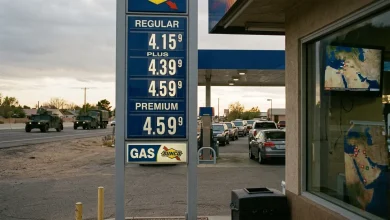
The rapid decline of oil prices in the summer of 2026 demonstrated just how temporary the geopolitical premium truly was. On June 11, 2026, President Donald Trump officially announced the suspension of offensive military operations against Iranian targets. This diplomatic pivot immediately triggered a massive sell-off in energy futures. Within three weeks, the geopolitical risk premium dissolved entirely. By early July, Brent crude was trading back at its pre-war baseline of $70 a barrel. Financial institutions that had positioned themselves for a prolonged, multi-year energy crisis faced severe losses, while consumer markets experienced immediate relief at the pump as retail fuel prices normalized globally.
Future Outlook: Re-evaluating Geopolitical Risk Premiums
The 2026 conflict has fundamentally altered how commodity traders assess geopolitical risk in the Middle East. Historically, any major military engagement in the Persian Gulf was assumed to be an automatic catalyst for triple-digit oil prices. The resilience of the market in 2026 proved that global diversification, technological pipeline bypasses, and coordinated strategic reserve releases have significantly diminished the leverage of regional actors over global energy security. Moving forward, the structural shifts in global demand—specifically the accelerating adoption of electric transport and localized renewable energy sources—will continue to act as a permanent ceiling on commodity price shocks, redefining the relationship between geopolitics and global trade.