US-Iran ceasefire on the verge of collapse as tensions flare 2026
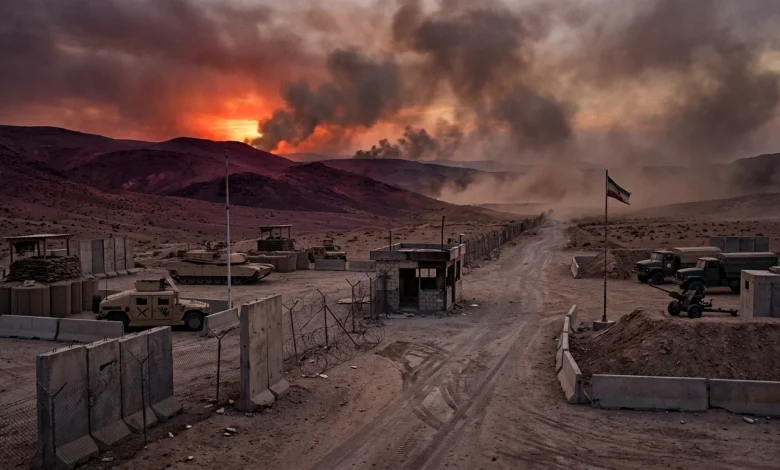
Table of Contents
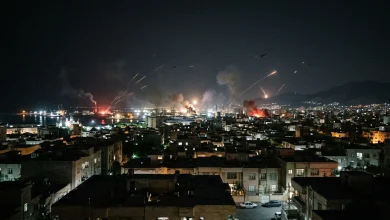
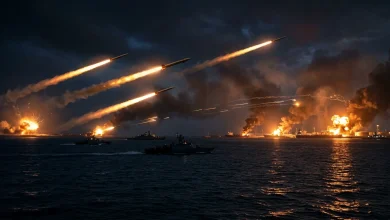
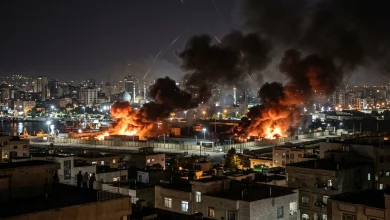
US-Iran ceasefire commitments are rapidly disintegrating as both Washington and Tehran trade retaliatory military strikes over severe truce violations. The interim memorandum of understanding, which was heralded as a historic breakthrough to end the devastating war in the Middle East, is now on the verge of a catastrophic collapse. This breakdown follows a highly volatile period where a U.S. blockade on Iran was actively enforced, causing severe economic distress and escalating regional military friction. Despite intense diplomatic efforts to preserve the fragile arrangement, the peace framework has been severely compromised by a cycle of aggressive brinkmanship and cross-border assaults.
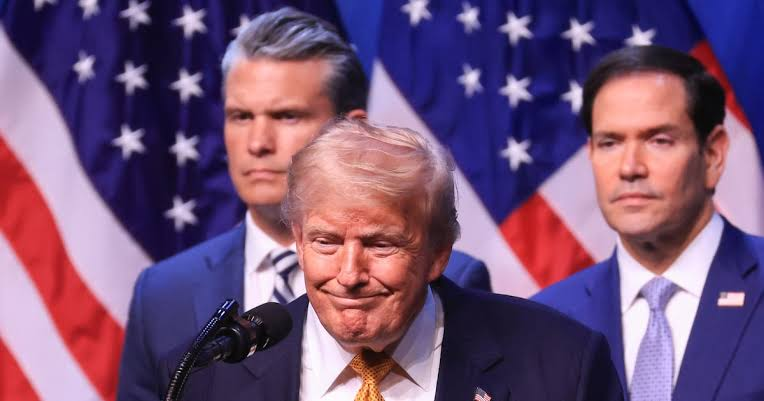
While attending the prestigious NATO summit in Washington, D.C. on July 8, 2026, President Donald Trump delivered a searing address that effectively pronounced the truce dead. Trump stated unequivocally that he believed the interim truce had ended, citing persistent, documented violations by Tehran and its regional proxies. The President went further to threaten devastating military strikes and suggested that the U.S. Navy could soon reinstate its comprehensive blockade of Iranian ports, a move designed to completely choke off Tehran’s oil exports and maritime supply lines. While diplomatic channels briefly opened when Tehran released detained American Dena Karari in a goodwill gesture, those breakthroughs have been utterly eclipsed by recent clashes.
The Fragile Truce and Trump’s NATO Ultimatum
The memorandum of understanding signed earlier this year was meant to establish a cooling-off period, allowing international mediators to negotiate a durable solution to the geopolitical gridlock. However, the ground reality has proven far more volatile. Accusations of bad faith have flown from both capitals. Washington points to continued drone deployments and ballistic missile transfers to proxy forces, while Tehran maintains that the United States has failed to lift the paralyzing economic sanctions as informally promised under the interim framework. The escalating rhetoric reached a boiling point on July 8, 2026, when President Trump used the global stage of the NATO summit to signal a complete pivot back to military deterrence.
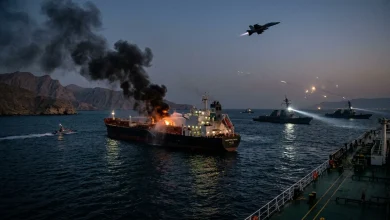
Trump’s declaration that the ceasefire has ceased to exist effectively removes the diplomatic guardrails that have prevented a full-scale war. By threatening to reinstate a strict naval containment policy, the administration is preparing for a scenario where diplomatic negotiations are fully abandoned. Military analysts suggest that a new naval blockade would go beyond previous sanctions enforcement, potentially involving the active interception of oil tankers and commercial shipping fleets operating within Iranian territorial waters.
The Return of Maritime Confrontation
The physical battlespace remains hot. Only months prior, military operations had intensified, leading to a sixth night of U.S. strikes targeting Islamic Revolutionary Guard Corps (IRGC) assets. As retaliation from regional proxies mounted, Tehran reports multiple deaths among high-ranking commanders, fuel to an already burning fire. With the Strait of Hormuz conflict reigniting, global energy markets are preparing for unprecedented volatility. Tensions further spiked when a strategic merchant tanker seized in Gulf of Aden by regional forces was directly linked back to Iranian supply lines.
This regional proxy warfare has global ramifications, especially after an Iranian-backed proxy banned by the UK faced stringent international crackdowns. Even as the Iranian public turned their attention to international sports, celebrating Iran’s World Cup run, the underlying domestic discontent and economic isolation continue to grow. The current breakdown highlights a recurring pattern of behavior: whenever diplomatic pressure reaches a critical threshold, maritime chokepoints become the primary arena for asymmetric warfare.
The Long Shadows of History: Iran’s Nuclear Program Since 1957
To fully comprehend the depth of the current impasse, one must trace the history of Iran’s nuclear ambitions. The program did not begin as a revolutionary or anti-Western project; rather, it was initiated in 1957 under the pro-Western monarchy of Shah Mohammad Reza Pahlavi. Supported directly by the United States under President Dwight D. Eisenhower’s “Atoms for Peace” initiative, the civil nuclear program was designed to introduce nuclear technology to developing allies. The U.S. supplied Iran with its first research reactor—the Tehran Research Reactor (TRR)—alongside low-enriched uranium fuel, establishing a foundation of nuclear expertise that would outlast the monarchy itself.
Following the 1979 Islamic Revolution, the nuclear program experienced a sudden and dramatic interruption. The new revolutionary regime, led by Ayatollah Ruhollah Khomeini, initially viewed nuclear technology with profound suspicion, casting it as a westernized, decadent relic of the Shah’s regime. Many contracts with Western European engineering firms, including Germany’s Kraftwerk Union which was constructing the Bushehr Nuclear Power Plant, were summarily canceled. Nuclear scientists fled the country, and the program lay largely dormant during the immediate aftermath of the monarchy’s fall.
The Catalyst of War: The Shift to Weaponization in the 1980s
The geopolitical calculus shifted drastically with the outbreak of the devastating Iran-Iraq War (1980–1988). Facing a brutal, conventional war of attrition and chemical weapons attacks from Saddam Hussein’s Iraqi forces, the clerical leadership in Tehran realized their conventional military vulnerabilities. Faced with international isolation and an arms embargo, the regime’s survival was pushed to the absolute brink.
It is widely believed by Western intelligence services and historical consensus that this existential threat spurred the Iranian leadership to make a strategic decision: as early as the mid-1980s, Tehran covertly decided to pursue a parallel nuclear weapons program. The acquisition of a nuclear deterrent was no longer seen as a luxury, but as the ultimate guarantee against external aggression and regime change. The reconstruction of the damaged Bushehr plant and the search for undeclared enrichment technology began in earnest under a veil of strict military secrecy.
The Strategic Partnerships of the 1990s: Sino-Russian Cooperation
Throughout the 1990s, unable to source advanced technology from the West, Iran pursued secretive, bilateral agreements with China and Russia to advance its nuclear program. Russia agreed to resume the construction of the Bushehr light-water reactor, providing crucial engineering expertise, material, and training for Iranian nuclear technicians. Meanwhile, Chinese entities supplied chemical conversion technologies and analytical equipment that, while ostensibly for peaceful purposes, could easily be repurposed for dual-use military applications.
These international agreements allowed Iran to develop a highly sophisticated, indigenous nuclear fuel cycle. While the United States repeatedly raised concerns regarding the dual-use nature of these acquisitions, both Moscow and Beijing defended their partnerships, asserting that Iran was a signatory to the Treaty on the Non-Proliferation of Nuclear Weapons (NPT) and had a sovereign right to peaceful nuclear energy. Underneath this diplomatic cover, however, Iran was constructing a vast network of subterranean facilities shielded from the prying eyes of foreign satellite reconnaissance.
The 2002 Exposure: NCRI Unmasks Natanz and Arak
The strategic ambiguity surrounding Iran’s nuclear activities was shattered in the summer of 2002. The National Council of Resistance of Iran (NCRI), an umbrella organization of dissident groups, held a landmark press conference in Washington, D.C. They exposed the existence of two massive, covert nuclear facilities that had been hidden from the International Atomic Energy Agency (IAEA):
- Natanz: A massive, underground uranium enrichment facility designed to house tens of thousands of gas centrifuges.
- Arak: A heavy-water production plant capable of producing plutonium-bearing spent fuel, offering an alternative pathway to a nuclear bomb.
The revelation forced the IAEA to demand immediate access, sparking a decades-long standoff. The discovery of these undeclared sites proved that Iran had bypassed its NPT safeguards obligations, triggering international condemnation, United Nations Security Council resolutions, and the implementation of a devastating global sanctions regime.
The International Stand-off and the IAEA Safeguards
The 2002 revelations inaugurated an era of intense international diplomacy and covert sabotage. For over two decades, the international community has attempted to curb Iran’s nuclear progress through various frameworks, most notably the 2015 Joint Comprehensive Plan of Action (JCPOA). However, the systemic distrust sown by the 2002 disclosures has never truly faded. The IAEA has repeatedly flagged unresolved questions regarding trace uranium particles found at undeclared sites, suggesting that Iran’s historic concealment efforts continue to plague current monitoring protocols.
This deep-seated historical suspicion is a major structural driver of the 2026 ceasefire collapse. Because Washington views Tehran’s current nuclear concessions as inherently untrustworthy, any minor compliance deviation is interpreted as a precursor to a renewed weaponization drive. Conversely, Iran views U.S. economic pressure as an existential campaign aimed at regime collapse, reinforcing their belief that a nuclear deterrent is their only absolute defense.
Comparing Historical Nuclear Milestones and Modern Escalations
The relationship between historical nuclear developments and modern maritime conflicts illustrates how past strategic choices shape the current crisis. The following table highlights the critical milestones from the program’s inception to the high-stakes brinkmanship of 2026.
| Year / Era | Nuclear / Geopolitical Event | Strategic Consequence & Context |
|---|---|---|
| 1957 | Atoms for Peace Agreement | The U.S. establishes Iran’s civilian nuclear foundation under the Shah. |
| Mid-1980s | Covert Weaponization Decision | Existential dread from the Iran-Iraq War triggers pursuit of military nuclear capabilities. |
| 1990s | Sino-Russian Tech Transfers | Tehran secures bilateral partnerships to construct dual-use nuclear infrastructure. |
| August 2002 | NCRI Exposes Secret Sites | Natanz and Arak are revealed, initiating the modern IAEA monitoring crisis. |
| 2025–2026 | Reciprocal Gulf Strikes & MoU | A fragile regional ceasefire is tested by proxy attacks, culminating in a near-total collapse. |
| July 8, 2026 | Trump’s NATO Summit Address | The U.S. President declares the truce dead and threatens a reinstated naval blockade. |
Modern Ramifications and the Diplomatic Deadlock
The impending collapse of the 2026 ceasefire threatens to plunge the entire Middle East back into a state of open warfare. With diplomatic channels rapidly closing, the threat of a reinstated naval blockade could force a desperate response from Tehran. Historically, whenever Iran’s maritime trade is threatened, it leverages its asymmetric capabilities to disrupt the global flow of oil, raising the specter of a broader war that could drag in regional and global powers.
The tragedy of the current deadlock is that both sides are trapped by the ghosts of their shared history. The lessons of the 1957 Atoms for Peace program, the trauma of the 1980s war with Iraq, and the shocking revelations of 2002 have created an environment where compromise is viewed as a strategic vulnerability. As long as this historical baggage dictates contemporary policy, the prospects for a lasting peace remain exceedingly dim.