Strikes against Iran 2026: US Completes 10th Night of Attacks
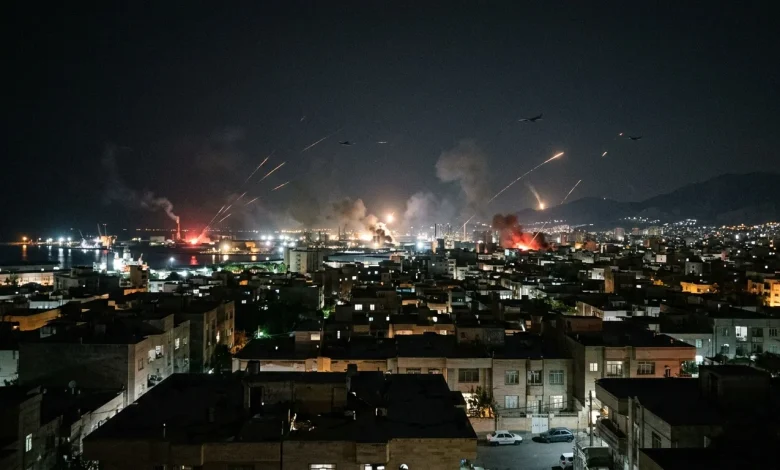
Table of Contents
Strikes against Iran escalated into a critical new phase as the United States military completed its tenth consecutive night of intense aerial bombardments against military targets inside the Islamic Republic. This sudden escalation comes shortly after the strikes against Iran enter ninth night, signaling that neither Washington nor Tehran is willing to back down from the brink of a broader conflict. Over the last 24 hours, US Navy assets and coalition combat aircraft launched precision-guided munitions at multiple sites, focusing on coastal defenses, missile launch infrastructure, and command-and-control hubs. These strikes represent one of the most sustained air campaigns in the region in decades, aimed specifically at restoring freedom of navigation through the vital Strait of Hormuz.
Overview of the Tenth Night of Military Operations
The geopolitical landscape of the Persian Gulf has been drastically altered by this prolonged military campaign. US Central Command (CENTCOM) confirmed that the tenth night of operations was highly coordinated, utilizing a combination of carrier-based strike fighters, strategic bombers, and Tomahawk land-attack missiles launched from destroyers in the Arabian Sea. The primary objective remains the degradation of the Islamic Revolutionary Guard Corps (IRGC) capabilities, which have been used to harass, seize, and attack commercial vessels. According to defense analysts, the operation expanded exponentially after centcom strikes on Iran enter ninth consecutive cycle of bombardments, showcasing the relentless tempo of the air wing.
The White House has reiterated that these actions are defensive, prompted directly by a previous fatal strike on US forces that resulted in American casualties and drew a sharp warning from the administration. The persistent threat to international shipping has forced the US and its allies to maintain an aggressive stance, despite the severe risk of igniting a full-scale regional war. Military officials argue that allowing Iran to close the Strait of Hormuz is economically unacceptable, as the channel historically handles a significant percentage of global energy transits.
Details of the US Air and Missile Attacks
On this tenth night, the strikes were characterized by high precision and overwhelming force. Coalition forces targeted specific geographic coordinates in western and southern Iran where mobile missile launchers had been detected. Intelligence, surveillance, and reconnaissance (ISR) platforms had tracked these assets over several days, waiting for the optimal window to strike to minimize civilian casualties while maximizing tactical impact. The Pentagon reported that air defense batteries, which had actively locked onto coalition aircraft in preceding nights, were also targeted and neutralized during the initial waves of the attack.
This severe escalation of the broader Iran-US conflict has put the international community on high alert. Prior to this, the intense airstrikes against Iran eighth night laid the groundwork by taking out early-warning radar arrays along the coast, leaving Iranian defenses vulnerable to the latest round of incursions. Commanders on the ground emphasize that each wave of attacks is designed to systematically dismantle the IRGC’s anti-access/area-denial (A2/AD) capabilities, making it increasingly difficult for Tehran to project hostile power over the shipping lanes.
Key Targets Neutralized in Western Iran
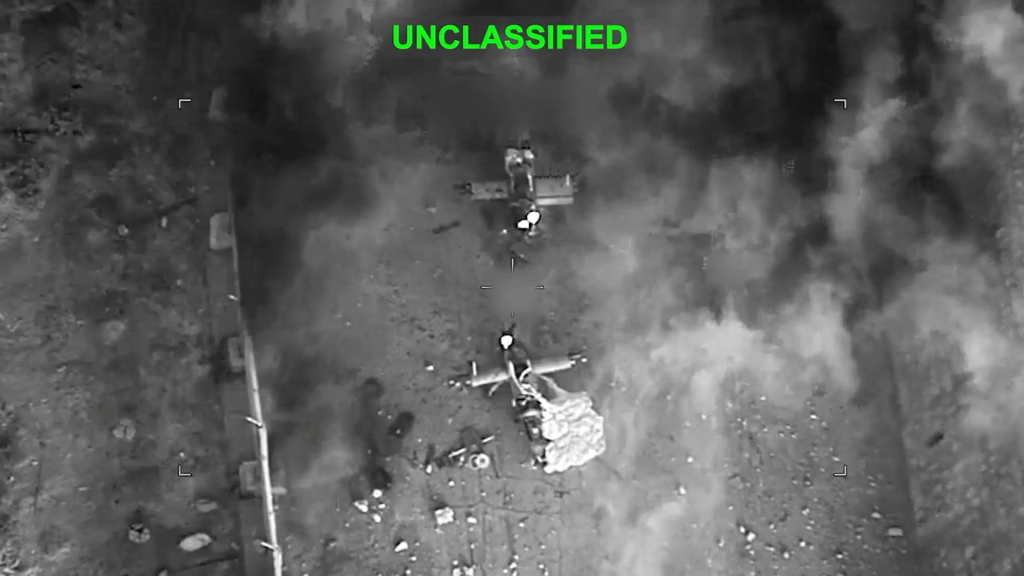
Among the critical assets hit on Monday night were underground missile storage facilities near Bandar Abbas and mobile drone launch pads in the Khuzestan province. Military records indicate that since the US launches 7th night of airstrikes, the focus has shifted from tactical deterrents to systematic degradation of the Revolutionary Guard’s core assets. Additionally, several drone fabrication workshops and assembly plants were targeted. These facilities have been responsible for producing the low-cost, explosive-laden loitering munitions that have plagued both civilian merchant vessels and US regional bases alike. Damage assessment photos released by the Pentagon show extensive structural destruction at these sites, suggesting that Iran’s immediate drone launch capabilities have been heavily degraded.
Tehran’s Multi-Pronged Retaliatory Strategy
Tehran responded to the tenth night of strikes with a series of coordinated retaliatory attacks, demonstrating that its defensive and offensive doctrines remain functional despite the damage sustained. The IRGC launched salvos of ballistic missiles and explosive drones at US-allied nations hosting American military assets. Air defense sirens blared across Bahrain, home to the US Navy’s Fifth Fleet, as interceptors engaged incoming targets. Kuwaiti and Jordanian air defenses were also active, with Jordan’s military confirming they shot down several missiles and drones that breached their airspace. These counterstrikes illustrate Iran’s strategic determination to impose a high cost on any regional nation facilitating the American-led air campaign.
Local human rights monitors state that as multiple deaths in six nights of consecutive urban and coastal bombardment were verified, domestic pressure on Tehran has reached a boiling point. The government is under intense domestic strain to show strength, leading to more aggressive retaliatory measures. This has raised fears that the conflict could spill over into neighboring states, transforming a bilateral engagement into a massive multilateral crisis that could drag the entire Middle East into instability.
The Cyber and Infrastructure Front: Attacks on Amazon
In a surprising twist, the IRGC announced that its cyber and electronic warfare divisions had successfully targeted Western digital infrastructure, specifically claiming strikes on Amazon-associated logistics and data infrastructure. While Amazon has not confirmed any major service disruptions, cyber security agencies in the United States and Europe issued urgent warnings regarding heightened state-sponsored cyber threats. Security experts suggest that Tehran is increasingly turning to asymmetric cyber-warfare to strike at the commercial heart of the West, targeting multinational corporations that provide critical digital services and cloud infrastructure. This digital front represents a highly volatile dimension of the conflict, where virtual strikes can have physical economic consequences globally.
Escalation in the Strait of Hormuz: Tankers Ablaze
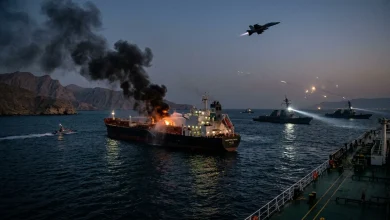
The maritime arena remains the most critical flashpoint of this confrontation. Following the US airstrikes, the Strait of Hormuz became a scene of chaos. The United Kingdom Maritime Trade Operations (UKMTO) reported that an oil tanker transiting the southern route of the strait was struck by an unidentified projectile, causing a major fire in its engine room. Shortly after, a Greek shipping company announced that two of its vessels had also been hit in the vicinity. The Malta-flagged tanker Kavomaleas and the Kuwaiti tanker Kaifan were both reported to be on fire, forcing crews to abandon ship and board lifeboats in Omani waters. These maritime security crises demonstrate how geopolitical flashpoints can paralyze logistics, echoing how the Houthi movement’s blockade targets Saudi shipping as tanker transit rates in the Red Sea plummet.
The IRGC claimed responsibility for intercepting “non-compliant” tankers, framing their actions as a legitimate enforcement of maritime safety within their territorial waters. However, international maritime bodies have condemned these actions as piracy and a direct violation of international law. The sight of burning tankers in one of the world’s most critical maritime chokepoints has sent shockwaves through the shipping industry, with many companies temporarily suspending all transits through the Gulf.
Impact on Global Energy Markets and Maritime Security
The economic fallout of the burning tankers was felt immediately. Brent crude prices surged toward $90 a barrel, reflecting deep anxiety over potential supply disruptions. In the United States, retail gasoline prices climbed to an average of $4 a gallon, adding pressure to an already fragile global economy. The Strait of Hormuz, which connects the Persian Gulf with the Gulf of Oman, is a primary artery for oil and natural gas. The suspension of commercial shipping through this strait has forced companies to consider longer, more expensive routes around Africa, driving up shipping costs and insurance premiums. The US military’s efforts to escort commercial vessels have intensified, but the sheer volume of threats makes complete protection an elusive goal.
Diplomatic Maneuvers: The 10-Day Ceasefire Proposal
As the military conflict intensifies, frantic diplomatic efforts are underway behind the scenes to prevent a catastrophic escalation. Mediators have reportedly presented Iran with a comprehensive proposal for a 10-day ceasefire. This proposal is intended to act as a “cool-down” period, allowing both Washington and Tehran to pull back their forces and revive the fragile interim peace agreement that was signed last month but quickly collapsed. The proposed deal would require the US to halt its nightly airstrikes in exchange for Iran stopping its attacks on commercial shipping and US bases. However, both sides remain highly skeptical, with each accusing the other of violating previous commitments and negotiating in bad faith.
Pakistan’s Mediation Role and the Regional Diplomatic Outlook
Pakistan has emerged as a key mediator in this crisis, utilizing its diplomatic relations with both Washington and Tehran to bridge the gap. Iran’s Interior Minister, Eskandar Momeni, arrived in Islamabad for two days of intensive talks with Pakistan’s Prime Minister and senior military leadership. Pakistan’s diplomatic intervention is seen as a crucial lifeline for the peace process. The Pakistani government has warned that a full-scale war between the US and Iran would have devastating consequences for the entire region, particularly for neighboring countries. While the outcome of these talks remains highly uncertain, the fact that diplomatic channels remain open offers a glimmer of hope amidst the smoke and explosions of the Persian Gulf.
For more details on maritime security alerts, you can check the official tracking reports provided by the UK Maritime Trade Operations, which continues to monitor the ongoing crisis in real-time.
Summary of the Current Crisis Status
| Conflict Dimension | Key Events (Night 10) | Primary Impact | Diplomatic Status |
|---|---|---|---|
| US Military Action | Completed 10th consecutive night of precision strikes on Iranian bases. | Degraded IRGC drone sites and air defenses in western Iran. | Skeptical of truce; demanding complete cessation of maritime attacks. |
| Iranian Retaliation | Launched missiles/drones at Bahrain, Jordan, and Kuwait; cyber strikes on Western infrastructure. | Triggered regional air defense engagements; highlighted asymmetric cyber threats. | Demanding immediate halt to US incursions before implementing any agreement. |
| Maritime Escalation | Tankers Kavomaleas and Kaifan struck near the Strait of Hormuz; crews evacuated. | Strait of Hormuz transit stalled; oil prices rose near $90 per barrel. | Under discussion through intermediaries; shipping lanes remain highly dangerous. |
| Mediation Efforts | Iranian Interior Minister Eskandar Momeni arrived in Pakistan for emergency talks. | Proposed a 10-day ceasefire to revive the previous month’s interim peace deal. | Talks ongoing in Islamabad; draft proposals currently under review by both sides. |
The coming days will be critical in determining whether the Middle East will slide into an all-out regional war or if diplomacy, mediated by regional players like Pakistan, can pull both superpowers and regional actors back from the precipice. As tankers continue to smolder in the Strait of Hormuz and US bombers remain on standby, the stakes have never been higher for global stability.