Iran airstrikes enter 10th night as regional conflict escalates
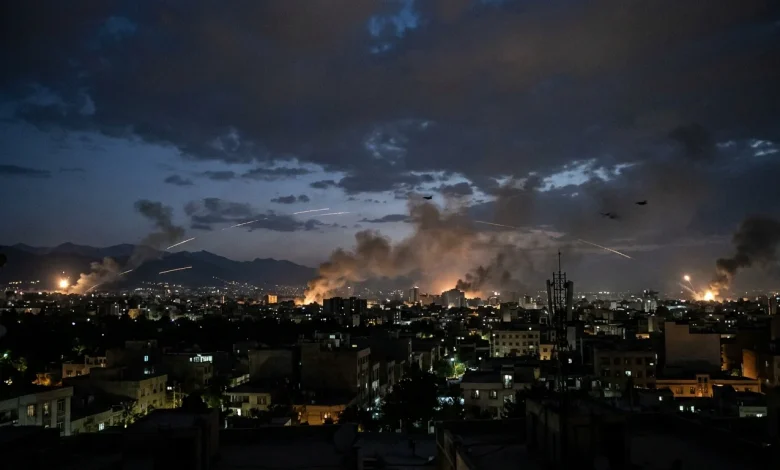
Table of Contents
Iran airstrikes entered their tenth consecutive night as the United States military intensified its extensive bombing campaign across strategic Iranian territory, showing no signs of de-escalation. The White House has firmly stated that these unilateral operations will continue unabated until President Donald Trump decides otherwise, signaling a hardline stance designed to break Tehran’s control over critical maritime passages. The relentless nature of this confrontation marks a dramatic turning point in the wider West Asia war, following the previous seventh consecutive night of bombings that took place last week and set the stage for this week’s rapid regional spillover. President Trump warned through official channels that Iran would pay ‘many times over’ for the deaths of American service members, underscoring that the current administration is prepared to sustain high-intensity offensive sorties until its strategic maritime objectives are completely realized.
Mapping the Strike Zone: Southern Iran Under Fire
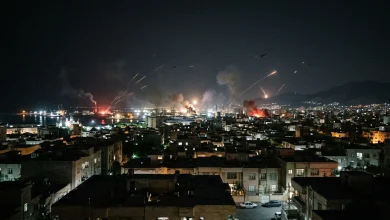
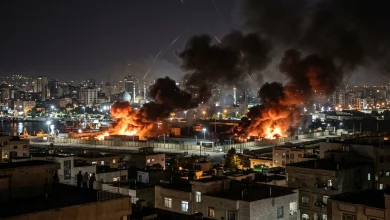
The geography of the tenth night of strikes illustrates a concerted effort by U.S. Central Command (CENTCOM) to dismantle Iran’s defensive coastal networks and offensive missile assets. Heavy explosions reverberated throughout southern Iran, lighting up the night sky across major economic and military hubs. Security analysts suggest that the coordinated wave of attacks targeted precise coordinates associated with the Islamic Revolutionary Guard Corps (IRGC) Navy, including coastal command hubs, early warning radar stations, and drone storage bunkers. This systematic campaign has been building momentum over the past week, as the initial rounds of U.S. airstrikes against Iran began showing their long-term toll on Tehran’s tactical responsiveness.
Coastal Fortresses and Strategic Islands Targeted
Specific detonations were documented on Qeshm Island, a critical geographical outpost positioned in the narrowest neck of the Strait of Hormuz. Qeshm Island acts as a primary launch site for fast-attack craft and anti-ship cruise missiles. Simultaneously, vital logistics nodes and defensive infrastructure in Bandar Abbas, Sirik, Chabahar, and Konarak were subjected to sustained bombardment. These southern ports serve as the backbone of Iran’s maritime projection and maritime surveillance. The current level of destruction dwarfs the impacts observed during the eighth night of intense operations targeting similar strongholds. By neutralizing these launch pads, the coalition aims to establish an unassailable maritime security corridor, expanding on the strategic locations disabled during that previous eighth night of campaigns.
The Air Defense Responses and Escalation in Bushehr
While the focal point of the strikes was concentrated in the southeastern coastal strip, regional monitoring services reported that air defense batteries were activated near the Bushehr nuclear power plant. The activation of defensive counter-measures indicates that Iranian military leaders feared a broader offensive targeting central infrastructure. Local state media outlets reported that multiple incoming projectiles were successfully intercepted, even as other attacks hit critical coastal locations like Bushehr during earlier phases of the escalation. The heightened state of alert across all domestic air defense sectors confirms that Iran’s command structure is operating under the assumption that a decapitation or infrastructure-focused offensive is actively underway.
Kuwait Under Fire: HIMARS Systems and Air Defense Activations
The conflict has aggressively spilled across international borders, drawing in neighboring Gulf states that host significant U.S. military installations. Kuwait, long considered a key strategic partner for Western defense operations, found itself directly in the crosshairs during this tenth night of hostilities. This regional expansion has significantly heightened tensions among members of the Gulf Cooperation Council (GCC), who fear being permanently dragged into a devastating, multi-front confrontation between Washington and Tehran.
Iran’s Ground Force Claims Strike on Camp Arifjan
In a dramatic declaration, the Iranian Army’s public relations office announced that its Ground Forces had executed a targeted strike against U.S. assets stationed inside Kuwait. According to official reports from Tehran, ground-to-ground ballistic missiles were launched at U.S. Army High Mobility Artillery Rocket Systems (HIMARS) located at Camp Arifjan. Camp Arifjan, situated south of Kuwait City, serves as a primary forward logistics base hosting elements of the U.S. Army, Air Force, Navy, and Marine Corps. Iranian military spokespersons stated that the strike—carried out as part of the 18th phase of Operation Saegheh—was a direct retaliatory response to ongoing U.S. operations. The IRGC claims that targeting the HIMARS platforms successfully degraded the offensive capabilities of what they labeled the ‘U.S. terrorist army’ in the region, although independent verification of the damage remains pending.
Kuwait’s Air Defenses Stand Guard
Simultaneously, the Kuwaiti Ministry of Defense confirmed that its national air defense networks were fully activated to counter incoming hostile drones and ballistic missiles. Air raid sirens echoed across northern and central Kuwait as military commanders scrambled interceptor batteries to protect military and civilian airspace. The activation of Kuwaiti Patriot and defensive assets represents a critical step-up in local defense postures. It underscores the failure of regional diplomacy to insulate neutral neighbors from direct kinetic spillover, proving that the geographical containment of the hostilities is no longer feasible.
Crisis in the Strait of Hormuz: Tanker Abandoned Near Oman
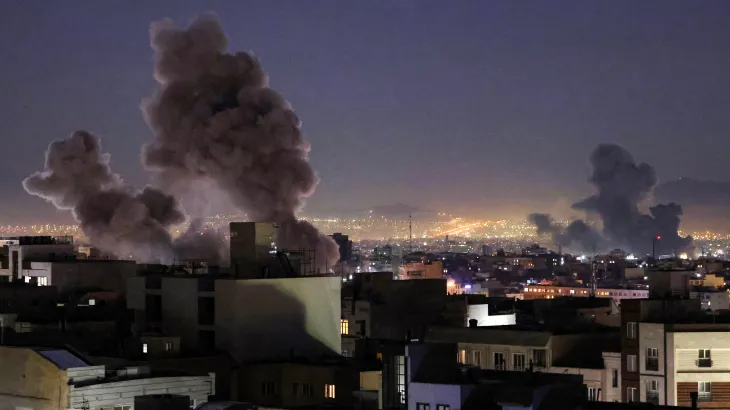
The maritime domain remains the primary center of gravity for this rapidly expanding conflict. Shipping lanes that previously handled over twenty percent of the global energy supply have transformed into active combat zones. Commercial vessel operators face unprecedented risks, with insurance premiums skyrocketing and shipping routes being forced into lengthy detours. This direct shipping crisis has effectively halted routine commercial transits through the region, causing severe disruption and triggering the deep-seated Strait of Hormuz conflict escalations that are now choking global energy markets.
UKMTO Reports and the Crew Evacuation Off Limah
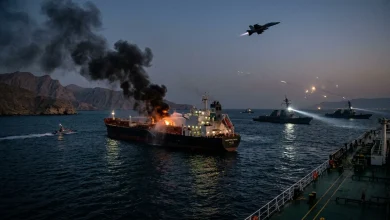
In a stark reminder of the extreme dangers facing merchant sailors, the United Kingdom Maritime Trade Operations (UKMTO) agency reported a serious incident in the southern corridor of the Strait of Hormuz. According to multiple reports broadcast over VHF emergency channels, a commercial oil tanker was struck by an unidentified projectile. The attack occurred approximately 8 nautical miles (15 kilometers) northeast of Limah, Oman. Following the impact, a severe fire broke out on board, forcing the company’s Security Officer to issue an order to abandon ship. The entire crew successfully evacuated the burning vessel and sought safety aboard lifeboats. This incident follows a similar attack on a Greek-managed Dynacom vessel just a day prior, highlighting a deliberate and systematic campaign against commercial shipping transiting the waterway.
Yemen’s Houthis Declare Maritime Blockade on Saudi Arabia
Adding to the geopolitical complexity, Yemen’s Houthi rebels have officially entered the fray with an aggressive maritime declaration targeting Saudi Arabia. The move represents a significant escalation, as the Houthis look to leverage their strategic position near the Bab al-Mandeb Strait to impose severe economic costs on regional players associated with the Western coalition. This direct military engagement marks a definitive collapse of diplomatic ceasefires that had briefly offered hope for a negotiated settlement in the Arabian Peninsula.
‘An Eye for an Eye’ Policy Targets Saudi Red Sea Ports
In a televised address, Houthi military spokesman Yahya Saree announced the immediate imposition of a total naval blockade against Saudi Arabia. Saree declared that the embargo is based on the strategic principle of ‘an eye for an eye’, citing recent military strikes on Sanaa International Airport and what the group characterizes as an ongoing siege of Yemen. The Houthis warned that they have mobilized advanced anti-ship cruise missiles, ballistic platforms, and long-range suicide drones to target any vessel operating in support of Saudi commercial interest. The blockade specifically threatens Saudi Arabia’s crucial Red Sea export terminals, such as the port of Yanbu, which Riyadh has historically used as a backup route to bypass the volatile Strait of Hormuz.
Saudi Arabia Rejects Accusations and Pledges Maritime Security
Riyadh responded swiftly and with stern condemnation, flatly rejecting Houthi allegations that the Kingdom has been besieging Yemen. The Saudi Ministry of Foreign Affairs issued a formal statement denouncing the Houthi blockade as a reckless attempt to destabilize international shipping and blackmail the international community. Saudi officials emphasized that they would take all necessary unilateral and multilateral measures under international law, including the UN Convention on the Law of the Sea, to guarantee the safety of Saudi-flagged vessels and secure its territorial waters. The Kingdom’s military forces remain on high alert, indicating that any attempt by the Houthis to enforce their embargo will be met with overwhelming defensive and offensive force.
Summary Table of Regional Military Developments
| Location / Actor | Key Military Event / Action | Strategic Operational Impact |
|---|---|---|
| United States Military / White House | Executed 10th consecutive night of airstrikes on Iranian coastal and inland sites. | Sustained degradation of IRGC maritime monitoring and missile capabilities. |
| Southern Iran (Qeshm, Bandar Abbas, etc.) | Faced heavy bombardment and activated air defenses near Bushehr. | Disrupted local command centers, fast-attack docks, and missile launch sites. |
| Kuwait / Camp Arifjan | Activated air defenses; Iranian army claimed HIMARS strikes inside Camp Arifjan. | Direct territorial spillover; threat to forward coalition logistics in the Gulf. |
| Strait of Hormuz (Oman Coast) | Tanker hit by unknown projectile 8nm northeast of Limah, Oman; crew evacuated. | Total commercial shipping paralysis; dramatic surge in maritime insurance rates. |
| Yemen’s Houthis | Declared immediate maritime blockade against Saudi Arabian ports. | Targeted Saudi Red Sea export pipelines and threatened Bab al-Mandeb transit routes. |
| Saudi Arabia | Condemned Houthi blockade; reasserted right to secure national shipping. | Heightened naval readiness; risk of active resumption of the Saudi-Yemeni conflict. |
Geopolitical Ramifications and Global Economic Outlook
The simultaneous escalation across multiple critical choke points—namely the Strait of Hormuz and the Bab al-Mandeb Strait—presents a severe threat to the international order. Energy analysts warn that if these crucial routes remain contested or closed, global energy supplies will face unprecedented shortages. Crude oil prices have already experienced a massive upward surge, reflecting the extreme volatility of the security landscape. This maritime paralysis has triggered widespread anxiety, with financial experts reminding markets how easily shipping choke points present a threat of a global economic depression if oil prices remain spiked for an extended duration. As diplomatic attempts mediated by Qatar and Pakistan hang in the balance, the international community remains on a knife-edge, watching whether these military maneuvers will culminate in a broader, irreversible global conflict.