China’s economy slows to 4.3% in Q2 despite export boom
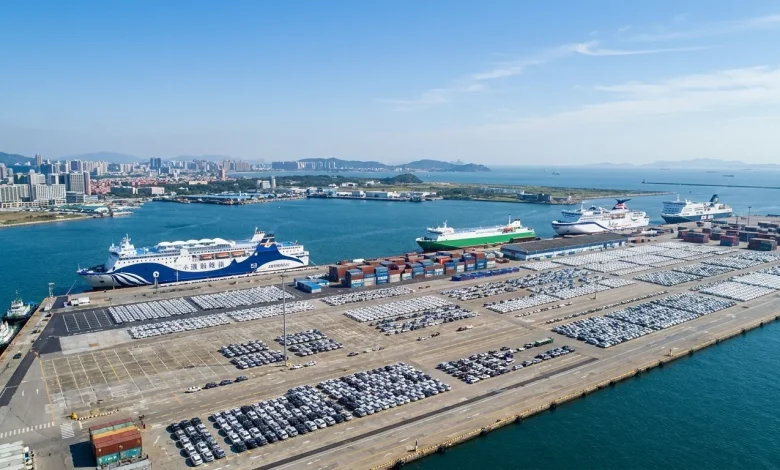
Table of Contents
China’s economy slowed sharply to a 4.3% annualized pace of growth in the April-June quarter, the government said Wednesday, signaling the weakest economic expansion the country has experienced in over three years. The official figures released by the National Bureau of Statistics (NBS) fell short of market forecasts, which had anticipated a softer but more resilient landing around 4.5%. This decelerating trajectory stands in stark contrast to the robust 5.0% pace recorded during the January-March quarter, raising concerns among global investors, domestic policymakers, and trade partners alike.
Geopolitically, the country’s strategic posturing has been put to the test amidst rising tensions surrounding the Iran war, which has threatened trade lanes and altered the regional diplomatic equilibrium. Yet, despite these international tremors, China’s industrial apparatus has remained remarkably functional. The real drag on the gross domestic product (GDP) does not stem from a collapse in external demand; rather, it is rooted deeply in an asymmetrical domestic market where consumer confidence has dried up, and a multi-year property crisis continues to erase household wealth.
Introduction: The Dual-Track Economy
The latest quarterly data paints a picture of a dual-track economy operating at two wildly different speeds. On one side, China is boasting world-class, state-backed manufacturing sectors that are dominating global supply chains in green technology and high-tech hardware. On the other hand, the average Chinese family is tightening its belt, reluctant to spend on real estate, retail, or travel due to stagnating wages and job insecurity.
This divergence raises critical questions about the sustainability of Beijing’s current economic model. For years, the ruling Communist Party has prioritized high-tech manufacturing as the primary engine to transition China into a high-income status. However, as domestic consumption continues to flounder, the limits of relying solely on an export-led growth engine in an increasingly protectionist global environment are becoming clear. This structural imbalance lies at the heart of the Q2 deceleration, overshadowing any marginal gains made in high-tech industrial parks.
Dissecting the 4.3% GDP Growth Rate
The annualized 4.3% growth rate for the second quarter marks the slowest quarterly expansion since the lockdown-impacted final quarter of 2022. While a 4.3% growth rate would be the envy of most advanced western economies, for China, it represents a significant underperformance. Beijing has set a target of 4.5% to 5.0% for the entirety of 2026—a goal that now looks increasingly difficult to achieve without aggressive government intervention in the second half of the year.
Quarterly GDP Breakdown
According to the official data, the transition from Q1’s 5.0% growth to Q2’s 4.3% was swift. Economists point to a sharp drop in infrastructure investment and real estate development as the primary culprits. While the government attempted to front-load fiscal spending early in the year, local governments, burdened by mountains of hidden debt, have struggled to maintain momentum. This municipal fiscal strain has halted public works, further depressing local economies and reducing the demand for raw industrial materials.
The Paradox of Soaring High-Tech Exports
The most fascinating aspect of China’s current economic situation is the sheer volume of its exports. If one were to look solely at trade ledger books, China would appear to be in the midst of a historic boom. Customs data shows that overall exports rose by 17.6% in the first half of the year compared to 2025, culminating in a jaw-dropping 27% year-on-year surge in June alone. This resilience persists even as the global market experiences skyrocketing inflation driven by volatile energy prices that have disrupted traditional western supply lines.
The Role of Artificial Intelligence and Chips
At the heart of the export performance is the domestic technology sector’s rapid pivot to state-of-the-art AI computing power and cutting-edge server architectures. Despite strict international export controls, Chinese firms have successfully advanced their semiconductor manufacturing capabilities, supplying regional and global markets with computer chips, robotics, and smart sensors. While the consumer-facing entertainment applications, such as generative artificial intelligence systems, capture headlines, the real economic driver in China is the industrial integration of these technologies into factories, enhancing automated assembly lines and lowering export manufacturing costs.
Electric Vehicles and Global Market Penetration
Alongside AI hardware, electric vehicles (EVs) have become the crown jewel of China’s export portfolio. Chinese automakers have aggressively expanded their footprints in Europe, Southeast Asia, and Latin America, undercutting Western competitors with highly advanced, cost-effective models. The industrial powerhouse is not merely focusing on digital services; it has long prioritised the engineering of heavy machinery, including high-efficiency heavy-duty industrial engines designed for transport and infrastructure. However, this massive export surge has triggered a wave of anti-subsidy investigations and tariffs from the United States and the European Union, suggesting that this external avenue of growth may soon face severe political bottlenecks.
Shrugging Off the Iran War and Global Inflation
One of the most notable achievements of the Chinese manufacturing sector has been its ability to isolate itself from geopolitical shocks. The ongoing conflict in the Middle East has disrupted shipping lanes through the Red Sea and pushed global energy prices upward. While Western nations grapple with sticky consumer price index (CPI) prints and high interest rates, China has largely shrugged off these direct impacts, utilizing alternative land-based trade routes and securing discounted energy contracts.
Energy Markets and Oil Import Dynamics
China has managed to keep its domestic inflation low—sometimes hovering near deflation—by diversifying its energy supply. By importing crude oil and natural gas through pipelines from Russia and Central Asia, and expanding its domestic renewable energy production, China has avoided the worst of the global fossil fuel spikes. This structural investment matches other state-backed achievements, mimicking how superpowers manage high-stakes industrial achievements, much like Western nations securing expensive high-tech space development contracts to spur domestic innovation. Consequently, Chinese factories have enjoyed stable utility costs, giving them a distinct competitive edge in international trade.
The Root of the Slowdown: Lagging Domestic Demand
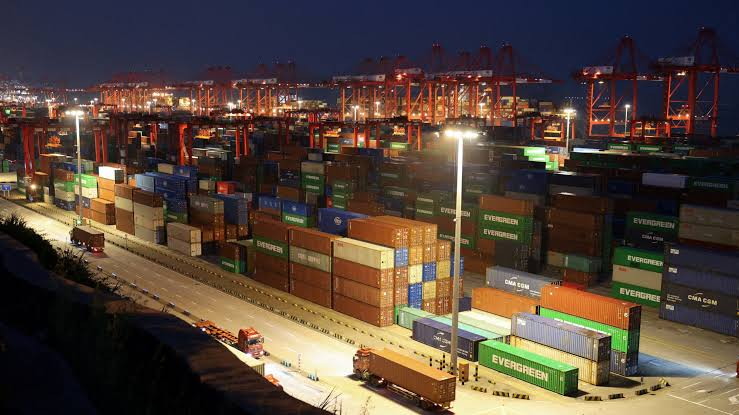
Despite these monumental export figures, the domestic market remains a glaring vulnerability. The primary reason China’s GDP slowed to 4.3% is that the export sector, which accounts for roughly 20% of GDP, cannot single-handedly carry the remaining 80% of the economy. Domestic consumption and private investment have remained chronically sluggish, failing to capture the momentum of the high-tech export engine.
The Property Market Slump and Wealth Effect
The ongoing collapse of the real estate market is the single biggest drag on Chinese consumer confidence. Historically, middle-class Chinese families stored up to 70% of their household wealth in property. With housing prices in major cities like Beijing, Shanghai, and Shenzhen continuing to slide, families feel significantly poorer—a psychological phenomenon known as the negative wealth effect. Additionally, extreme global weather patterns have introduced unique microeconomic shocks, with record-breaking summers overburdening regional energy grids and temporarily pausing production across heavy industrial parks, adding to local uncertainties.
Unbalanced Growth and Employment Jitters
The government’s heavy focus on high-tech manufacturing has also created an unbalanced labor market. Advanced industries like automated robotics, chip design, and EV manufacturing are highly capital-intensive but relatively light on labor. Meanwhile, low-value manufacturing and service-oriented sectors—which traditionally employ the vast majority of the urban working class and fresh university graduates—are languishing. As a result, youth unemployment remains high, forcing families to prioritize precautionary savings over discretionary spending.
Comparative Economic Metrics: A Statistical View
To better understand the structural shifts occurring within the world’s second-largest economy, it is helpful to look at the hard data. The table below outlines key performance indicators comparing the first two quarters of 2026, highlighting the severe contrast between surging external trade and stagnating domestic metrics.
| Economic Indicator | Q1 2026 (Jan-Mar) | Q2 2026 (Apr-Jun) | Year-on-Year Trend / Impact |
|---|---|---|---|
| Annualized GDP Growth Rate | 5.0% | 4.3% | Slowest quarterly expansion in over three years; below targets. |
| Overall Export Growth | 11.4% | 17.6% (H1 Average) | Driven by robust global demand for AI components and electric vehicles. |
| June Export Surge | N/A | 27.0% | Massive single-month leap, indicating strong foreign demand. |
| Domestic Retail Sales Growth | 4.1% | 2.8% | Reflects deep consumer hesitation and negative wealth effects. |
| Property Investment Index | -9.2% | -10.8% | Continued contraction in real estate development and home sales. |
| Consumer Price Index (CPI) | 0.3% | 0.1% | On the verge of deflation, indicating weak domestic purchasing power. |
Policy Dilemma: Stimulus vs. Structural Reform
The deceleration to 4.3% places Chinese leaders in a difficult policy bind. Traditional economic playbooks would dictate a massive wave of monetary easing, interest rate cuts, and direct state-funded infrastructure projects. However, the People’s Bank of China (PBOC) is limited in its ability to slash interest rates due to the risk of triggering capital flight and putting downward pressure on the Yuan, which has already weakened against a strong US Dollar.
Furthermore, Beijing is hesitant to pump more credit into the property sector, fearing a return to the debt-fueled bubble dynamics of the past decade. President Xi Jinping has repeatedly emphasized the goal of “high-quality development,” which prioritizes technological self-reliance over raw GDP growth. Yet, without targeted fiscal transfers directly to consumers—such as consumption vouchers or enhanced social safety nets—reversing the domestic slowdown will remain an uphill battle.
Projections and Future Outlook
Looking ahead, the International Monetary Fund (IMF) recently adjusted its annual growth forecast for China upward to 4.6% for 2026, citing the strong manufacturing and export numbers. However, the IMF warned that without addressing the systemic issues in the property sector, China’s growth could slide to 4.1% by 2027.
Ultimately, the 4.3% growth print in the second quarter serves as a warning sign. While China’s factories remain highly competitive and capable of outputting cutting-edge tech that the rest of the world wants, the lack of a strong domestic engine limits the nation’s economic resilience. As geopolitical friction increases and tariffs on Chinese goods mount, Beijing may soon be forced to confront the reality that true economic security cannot be manufactured on assembly lines alone—it must also be nurtured in the wallets of its citizens.