Iran-US conflict 2026: Truce Collapses as Trump Warns of Port Blockade
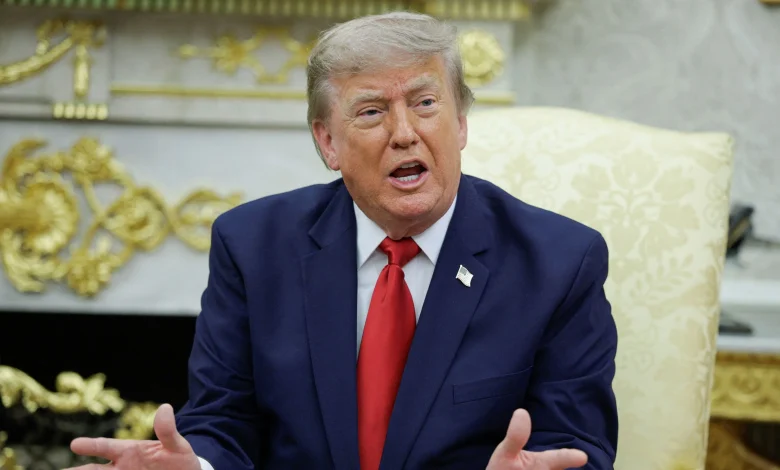
Table of Contents
Iran-US conflict dynamics have taken a severe turn for the worse as the fragile peace brokered in June 2026 dissolves into an active military confrontation. Although the United States and Iran had recently reached a memorandum of understanding to end the war in the Middle East, the ceasefire appears on the verge of collapse as both sides trade heavy strikes over alleged violations. The situation remains fluid, as the Iran-US conflict escalates with Trump warning of further devastating airstrikes. What was once heralded as a historic breakthrough for regional stability has devolved into a cycle of aggression, leaving diplomats and global markets scrambling to assess the fallout of a potential full-scale war. The sudden transition from diplomacy to combat underscores the systemic instability of the region, where a single localized clash can dismantle months of rigorous negotiations in a matter of hours.
Anatomy of the Collapsed June Ceasefire
The memorandum of understanding signed in June 2026 was designed as a temporary, confidence-building framework to de-escalate years of intense friction. Under the terms of this fragile agreement, Washington had granted temporary sanctions waivers allowing Tehran to resume limited international oil exports. In return, the Iranian government committed to halting fast-attack naval maneuvers in the critical waters of the Persian Gulf and suspending proxy-led drone operations targeting regional maritime commerce. However, the truce was structurally fragile from its inception. Both nations operated under intense mutual suspicion, with hardline factions in Tehran opposing any deal with the West, and defense hawks in Washington cautioning against trusting Iranian diplomatic promises.
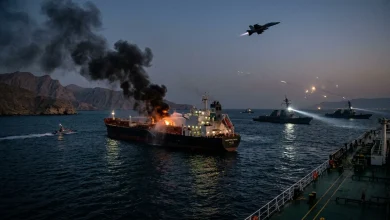
The critical flashpoint occurred in early July 2026, when three commercial vessels navigating the Strait of Hormuz were struck by maritime mines and drone attacks. While Washington immediately laid the blame on the Islamic Revolutionary Guard Corps (IRGC), Tehran fiercely denied the allegations, accusing the United States of fabricating pretextual incidents to justify a return to economic strangulation. The immediate U.S. response was swift: President Donald Trump revoked the temporary oil waivers, effectively shutting down Iranian crude exports, and authorized a wave of punishing military strikes. This rapid cycle of action and reaction exposed the lack of any robust conflict-resolution mechanism within the memorandum, paving the way for the total collapse of the interim truce.
Trump’s Bombshell Ankara Declaration
During this high-stakes diplomatic period, President Trump was attending the NATO summit in Ankara, Turkey, on July 8, 2026. Sitting alongside the newly appointed NATO Secretary General, Mark Rutte, Trump delivered a fiery broadside, declaring that he believed the interim truce had ended. He labeled the Iranian leadership ‘scum’ and ‘vicious, violent people,’ while threatening to reinstate a comprehensive naval blockade. These sweeping moves come amidst a backdrop of intense domestic policies, including ongoing debates surrounding Temporary Protected Status rulings in federal courts.
Hard-Line Rhetoric and the Rutte Meeting
Trump’s direct, unvarnished rhetoric in Turkey sent shockwaves through the diplomatic corps. Speaking to reporters during a press event with Rutte, the President did not mince words. ‘I think it’s over,’ Trump stated flatly when asked about the status of the June agreement. ‘I don’t want to deal with them anymore. They’re scum… They’re led by sick people, and they’re vicious, violent people.’ His public condemnation signaling a definitive end to negotiation efforts was coupled with a warning that any nuclear ambitions harbored by Tehran would be met with overwhelming force. Analysts noted that Trump’s performative toughness at the summit was designed not just for international deterrence, but also to project strength to his domestic political base, demonstrating an unwillingness to accommodate adversaries.
Strategic Context of the NATO Summit
The NATO summit in Ankara was originally intended to project alliance unity and address shifting security dynamics across Europe and the Middle East. Instead, Trump’s explosive rhetoric and unilateral military decisions dominated the agenda. European leaders expressed deep concern over the lack of prior consultation, fearing that an uncontrolled escalation with Iran would drag Western allies into another complex conflict. Despite these misgivings, NATO Chief Mark Rutte publicly stated that the robust U.S. military response was ‘absolutely necessary’ given the threat to international freedom of navigation. The divergence in tone between Washington and its European counterparts highlights the growing tension within the alliance regarding unilateral military actions in vital economic corridors.
The Theater of Engagement: Escalation in the Strait of Hormuz
Technological superiority remains at the core of the Pentagon’s defensive strategy. Even as the tech industry gathers in Washington for elite events like the Washington AI Honors Gala to celebrate cutting-edge innovations, the U.S. military is actively deploying advanced AI-driven monitoring networks across the Persian Gulf. These systems detected Iranian attacks on three commercial vessels in early July, which served as the primary catalyst for the renewed fighting. The integration of real-time satellite telemetry, automated threat detection, and unmanned surveillance assets has allowed CENTCOM to operate with unprecedented precision, mapping out Iranian defensive positions and preparing for highly coordinated strikes.
Air Strikes and Target Profiles
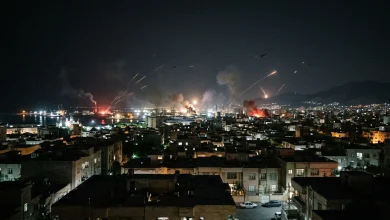
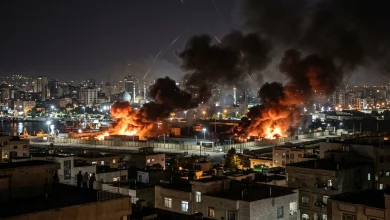
Immediately following the collapse of the truce, the U.S. military initiated a series of coordinated, multi-wave airstrikes. Over a 48-hour period, American forces targeted over 80 distinct military installations within Iranian territory. According to Pentagon briefings, these ‘shaping operations’ focused heavily on degrading Iran’s offensive maritime capabilities. Specific target profiles included mobile anti-ship missile batteries, radar installations overlooking the Strait of Hormuz, fast-attack naval bases, and IRGC command-and-control facilities. By targeting these assets, the U.S. military aimed to neutralize Tehran’s ability to interdict international commercial shipping, ensuring that any attempt to close the strait would carry an unsustainable military cost for the Iranian regime.
Retaliatory Drone and Missile Offensives
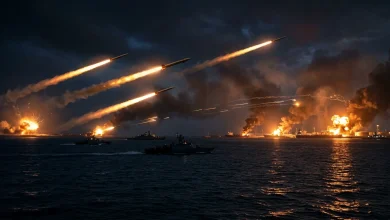
Tehran was quick to respond, demonstrating its capacity for asymmetrical warfare. The IRGC launched a barrage of attack drones and ballistic missiles targeting U.S. military installations across the region, most notably in Bahrain and Kuwait. Base defense systems, including Patriot missile batteries, were forced into active combat to intercept the incoming threats. Despite high interception rates, the strikes highlighted the persistent vulnerability of forward-deployed American assets. In Iran, the state-run media portrayed the retaliatory strikes as a massive success, organizing rallies in major cities to build domestic solidarity amid the return of active conflict. This cyclical exchange of ordnance has fueled fears of a regional conflagration that could draw in neighboring nations.
Reinstating the Naval Blockade: A High-Stakes Maritime Strategy
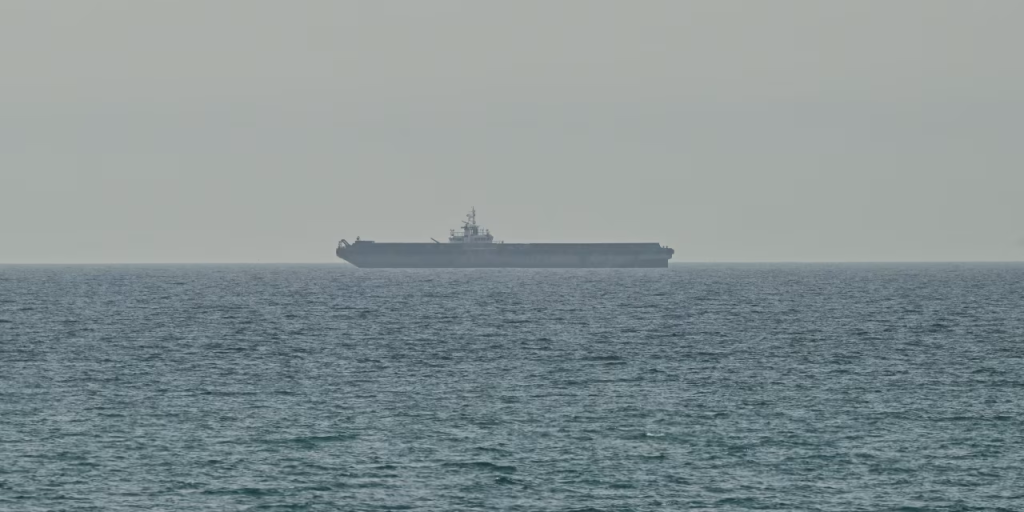
On Tuesday, July 14, 2026, the escalation reached a new zenith as the United States formally reinstated a comprehensive naval blockade of Iranian ports. Under international law, a blockade is considered an act of war, representing a dramatic departure from passive containment. The U.S. Navy’s Fifth Fleet deployed warships to strategic choke points, effectively halting commercial maritime traffic entering and leaving Iranian shipping hubs. While Trump initially proposed a controversial 20% toll or fee on all commercial cargo transiting the Strait of Hormuz, shipping industry experts and international partners heavily resisted the measure. In response, Trump opted to substitute the fee with newly negotiated trade and investment deals with allied Gulf states, ensuring regional financial backing for the ongoing military operations.
While public attention in the United States is frequently divided between local crises—such as the active wildfire threat across the Southwest—and global trade wars, the sudden shift back to active combat has forced a reassessment of national security priorities. The blockade is designed to systematically starve the Iranian economy of vital imports and completely halt its remaining black-market oil exports. However, enforceability remains a severe challenge. The Strait of Hormuz is a narrow waterway, and any prolonged naval standoff risks accidental collisions, miscalculations, and direct confrontations with third-party merchant vessels, including those belonging to major global powers like China.
Chronology of the Truce Collapse
To understand the rapid deterioration of relations, it is helpful to examine the timeline of key developments over the last several months. The transition from peace talks to open military hostilities occurred in a compressed timeframe, as summarized in the detailed chronicle below.
| Date / Period | Key Diplomatic or Military Event | United States Action & Response | Iranian Action & Strategy |
|---|---|---|---|
| June 2026 | Signing of the Memorandum of Understanding (MoU) | Granted temporary oil export waivers to Tehran | Agreed to temporarily halt attacks on shipping |
| Early July 2026 | Attacks on commercial vessels in Strait of Hormuz | Revoked sanctions waivers; blamed IRGC for the attacks | Denied responsibility; accused U.S. of creating pretext |
| July 8, 2026 | NATO Summit in Ankara, Turkey | President Trump declares truce ‘over’; orders 80+ airstrikes | IRGC launches retaliatory drone/missile strikes at U.S. bases |
| July 14, 2026 | Reinstatement of Port Blockade | Fifth Fleet enforces blockade; secures Gulf financial backing | Threatens to charge tolls; warns of severe military retaliation |
| Mid-July 2026 | Ongoing military exchanges | Sustained airstrikes targeting key Iranian infrastructure | Asymmetrical attacks on shipping and regional energy hubs |
Economic Shockwaves: Global Energy and Supply Chain Vulnerabilities
The sudden resumption of hostilities has triggered immediate shockwaves throughout the global economy. Crude oil prices spiked to a two-week high within hours of Trump’s Ankara speech, with market analysts warning of potential long-term energy shortages if the blockade persists. The Strait of Hormuz is widely regarded as the world’s most critical transit point for oil, with approximately 20% of the world’s petroleum liquids passing through its narrow channels daily. The threat of a prolonged disruption has forced energy-dependent nations in Europe and Asia to tap into their strategic petroleum reserves, a short-term palliative that cannot offset a sustained maritime closure.
Trump’s aggressive posture on the world stage mirrors his unconventional approach to governance and wealth. Observers have closely tracked his personal financial ventures, with reports highlighting how President Donald Trump’s crypto holdings have continued to grow, even as he directs complex maritime interdictions in the Persian Gulf. His economic warfare against Tehran represents a return to his ‘maximum pressure’ policy. This policy leverages the absolute supremacy of the U.S. financial system, combined with physical naval dominance, to isolate adversaries. However, the modern global economy is far more interconnected than during Trump’s first term, and a sustained conflict risks triggering widespread inflationary pressures that could destabilize fragile post-pandemic recoveries worldwide.
Domestic and Geopolitical Reactions
The rapid escalation has elicited diverse reactions both domestically and internationally. In Washington, the administration’s military moves have reignited intense partisan debates over executive war powers and the budget. Congressional backing remains critical for Trump’s sustained military campaign. While some prominent legislators are managing personal disruptions, including Senator Chris Coons recovering from a multi-car collision, the broader legislative body is currently debating defense appropriations. Trump has urged Congress to pass a reconciliation bill that pairs defense funding with election security legislation, hoping to capitalize on the wartime atmosphere to push through key legislative priorities.
As the United States prepares to mark its major historical milestones, including ongoing planning for the national America 250 initiatives, the sudden outbreak of war threatens to overshadow domestic achievements. The administration must now prove that its aggressive naval policy can secure the Strait of Hormuz without plunging the country into a protracted global conflict. Meanwhile, international players are desperately seeking a diplomatic off-ramp. Regional mediators, including Qatar and Iraq, have issued urgent appeals for both Washington and Tehran to honor the original June memorandum and return to the negotiating table. European allies, caught between their dependence on Middle Eastern stability and their commitment to the NATO alliance, continue to advocate for restraint, warning that a prolonged blockade could trigger a catastrophic humanitarian crisis in Iran and broader regional instability.
The volatility in the Middle East has also triggered security concerns in adjacent regions. The global war against militant proxies remains highly active, as seen in neighboring zones where regional forces, such as Pakistani security forces combatting extremism, continue to launch heavy counter-terrorism campaigns. The risk of proxy activation by Tehran could turn a localized maritime dispute into a multi-theater conflict. If Iran decides to mobilize its regional proxy networks across Iraq, Syria, and Yemen, the United States could find itself fighting an asymmetric war on multiple fronts, severely testing its military capabilities and global alliances.
Geopolitical Ramifications and Future Outlook
The collapse of the interim truce and the reinstatement of the port blockade represent a critical juncture in modern geopolitics. The transition from peaceful coexistence back to active military engagement demonstrates that temporary memorandums of understanding are insufficient without deep-rooted institutional trust and verifiable compliance. For Iran, the blockade represents an existential threat to its already fragile economy, forcing its leadership to choose between humiliating diplomatic capitulation or a highly risky military escalation. For the United States, the campaign is a test of its ability to project decisive naval power and enforce global trade norms in an increasingly multipolar world.
As both nations brace for potential further escalation, the ultimate resolution remains highly uncertain. The White House’s current strategy of combining overwhelming military force with economic strangulation aims to force Tehran back to the negotiating table on highly unfavorable terms. However, history suggests that such pressure campaigns can often backfire, driving adversaries to take increasingly desperate and aggressive measures. With the global economy hanging in the balance and the risk of a broader regional war mounting daily, the international community remains on high alert, watching to see if diplomacy can somehow be revived, or if the region is destined for a dark and destructive new chapter.