CENTCOM Confirms Fatal Strike on US Forces in Jordan 2026
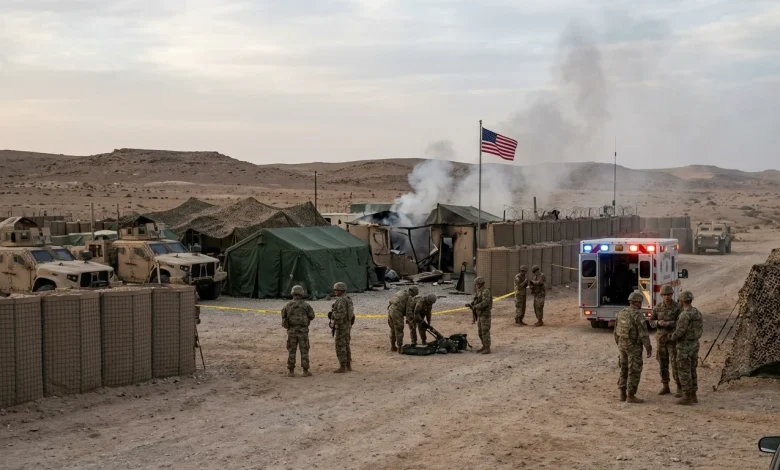
Table of Contents
CENTCOM officials have confirmed that two United States service members were killed and another remains missing following a highly coordinated Iranian ballistic missile and drone attack in Jordan. The strike, which took place on Friday, July 17, 2026, represents one of the most serious direct military confrontations between the United States and Iran in recent history. According to a statement issued by US Central Command on Saturday, July 18, 2026, the defensive battle involved forces and their regional partner forces attempting to intercept a swarm of complex aerial threats launched toward their positions.
The official statement from the command shed light on the initial casualty details and the ongoing operational efforts: “On July 17, two service members in Jordan were killed in action as Central Command (CENTCOM) and partner forces defended against Iranian ballistic missile and drone attacks. Additionally, one service member is currently missing in action.” The statement further detailed that four other American service members who sustained injuries were medically evacuated to Jordanian hospitals, where they were treated and subsequently discharged. Other military personnel who were evaluated for minor injuries have since returned to active duty. As the broader bilateral ceasefire on the verge of collapsing has now given way to open warfare, this strike marks a significant escalation in the regional theater.
The July 17 Strike in Jordan
The attack occurred during a period of peak geopolitical tensions in the Middle East. Multiple reports suggest that the primary target was a key tactical installation, widely assumed by experts to be the Muwaffaq Salti Air Base in al-Azraq, which houses personnel and serves as a launching pad for regional aerial reconnaissance and support missions. This installation has long been strategic in countering hostile proxy activities and safeguarding friendly transit corridors across the Levant.
While US and allied partner forces managed to engage several of the incoming targets, the sheer volume of the incoming barrage proved difficult to saturate completely. The incident marks the first combat fatalities suffered by the US military from direct Iranian fire in several months, indicating a transition from asymmetric proxy skirmishes to direct state-on-state kinetic actions. Officials in Washington and Amman have condemned the attack, noting that the unilateral strike directly threatens regional security dynamics and undermines years of cooperative defense initiatives.
Casualty Breakdown and Search Operations
The loss of American lives in Jordan has sent shockwaves through the military establishment. Following the attack, a massive Search and Rescue (SAR) mission was immediately organized to locate the service member who remains missing in action. Host nation security forces and specialized personnel are actively scanning the surrounding desert and military installations to identify the whereabouts of the unaccounted soldier. While minor injuries among other personnel were treated locally, the four evacuated troops received rapid trauma care at specialized Jordanian hospitals before being declared fit for discharge.
Under standard operating protocols, CENTCOM has stated that further personal details, including the identities of the fallen and injured, will be withheld until 24 hours after the next of kin have been fully notified. This security policy protects the privacy of military families during a deeply challenging period. Strategic analysts observe that this specific incident has shattered months of relative calm, forcing Washington to confront direct kinetic action from Iran rather than proxy organizations. As this direct confrontation escalates in the central theater, the regional geopolitics have become extremely fragile, raising the stakes for every nation hosting US military contingents.
The Tactical Landscape: Missiles and One-Way Drones
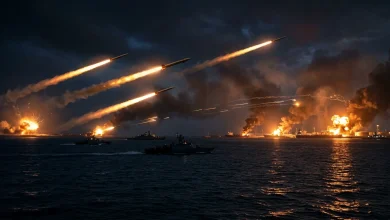
Tactical reports indicate that the attack utilized a sophisticated combination of high-speed ballistic missiles and low-flying, one-way kamikaze drones. This multi-layered attack methodology is designed to overwhelm air defense batteries by presenting multiple radar profiles simultaneously. One-way attack unmanned aerial vehicles (UAVs) are typically deployed in swarms to distract defensive radars and deplete ammunition stocks, while precision-guided ballistic missiles target key infrastructure at terminal velocities.
The use of direct-fire ballistic weapons from Iranian state territory represents a profound shift in operational doctrine. Historically, regional conflicts were mediated through local proxy networks. However, the direct deployment of Iran’s primary missile arsenal demonstrates a willingness to engage in state-on-state kinetic warfare. Military strategists are currently assessing whether the defense networks deployed at Jordanian installations were bypassed due to saturation tactics or if localized radar gaps played a role in the high-casualty outcome.
Geopolitical Implications of Striking Jordan
Jordan occupies a critical position as one of the primary non-NATO allies of the United States in the Middle East. Hosting crucial logistical hubs, such as the Muwaffaq Salti Air Base in al-Azraq, Jordan serves as a primary staging ground for regional counter-terrorism and intelligence-gathering operations. Engaging in combat operations on Jordanian soil without the explicit consent of the host nation is a highly sensitive diplomatic issue that poses serious questions under international law.
While Jordan has long cooperated with Western powers to maintain regional stability, direct foreign attacks on its territory threaten to destabilize the domestic political environment. The kingdom must continuously balance its deep strategic alliance with Washington against domestic public opinion and regional diplomatic relations. Iranian decision-makers, by launching attacks on bases within Jordan, are sending a clear signal that no US presence in the region is immune to kinetic interdiction, regardless of local sovereignty agreements.
| Key Metrics & Details | Operational Status & Observations |
|---|---|
| Date of Incident | Friday, July 17, 2026 |
| Geographic Location | Jordan (Identified in reports as Muwaffaq Salti Air Base) |
| US Casualties Reported | 2 Killed in Action (KIA), 1 Missing in Action (MIA), 4 Medically Evacuated |
| Attack Vectors Used | State-launched Ballistic Missiles & One-way Kamikaze Drone Swarms |
| Defending Entity | US Central Command (CENTCOM) & Jordanian Partner Forces |
| Subsequent US Response | Airstrikes on IRGC military assets on Qeshm Island, Sirik, and Bandar Abbas, Iran |
| Secondary Regional Response | Iranian drone attacks on US facilities in Kuwait (Camp Udairi & Ali Al Salem) |
The Immediate US Military Response and Escalation
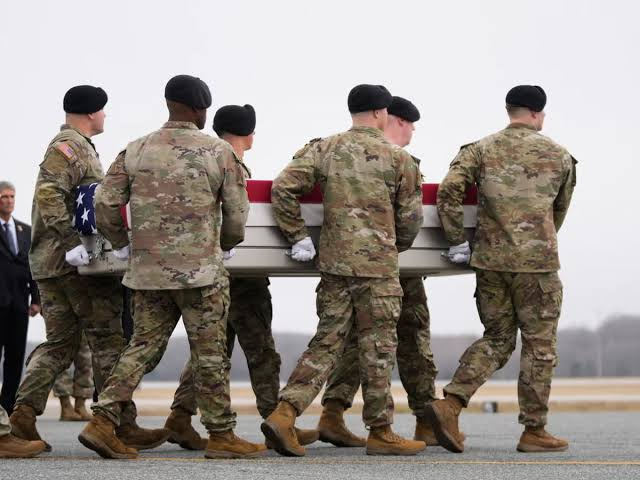
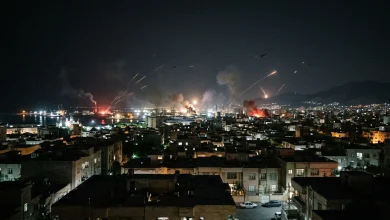
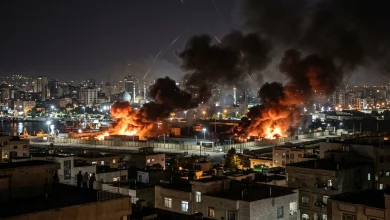
In response to the fatal attacks, the United States launched massive retaliatory airstrikes on Iranian state targets early on Sunday, July 19, 2026. Directed by President Donald Trump, US Central Command launched a series of precision strikes designed to swiftly punish the Islamic Revolutionary Guard Corps (IRGC) and degrade their capabilities. The strikes reportedly targeted military facilities in southern Iran, including assets on Qeshm Island and positions near Sirik and Bandar Abbas.
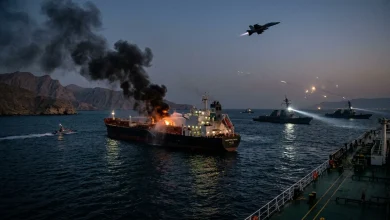
Almost immediately after the US retaliatory campaign commenced, Iran’s military retaliated by launching kamikaze drones targeting two US bases in Kuwait—specifically the ammunition depot at Camp Udairi and air surveillance radars at Ali Al Salem Air Base. This rapid escalation cycle demonstrates how easily localized skirmishes can expand into a wider war, reminiscent of prior military confrontations where Strait of Hormuz maritime security operations were disrupted by heavy exchanges of fire.
History of the Conflict and Ceasefire Collapse
The sudden escalation in Jordan did not occur in a vacuum; it is the culmination of months of deteriorating relations and failed diplomatic initiatives. Only a month prior, a temporary diplomatic agreement had briefly paused hostilities, but the strategic situation changed rapidly when the conflict’s fragile truce collapses due to escalating tensions. Strategic differences, political maneuvers, and unresolved maritime disputes in the Persian Gulf ultimately led to a resumption of direct fire.
As both sides rejected the terms of the interim agreement, military postures hardened. The Pentagon has initiated a series of counter-measures, recalling when escalating airstrikes against Iranian forces defined previous phases of the campaign. This cycle of strike-and-counter-strike has steadily eroded any hopes of a negotiated settlement, bringing the regional adversaries closer to full-scale kinetic engagement than they have been in decades.
Defense Systems Performance and Military Posture
Questions are now being raised in Washington regarding the efficacy of US air defense networks in Jordan. Bases such as Muwaffaq Salti Air Base rely on integrated air defense systems, including Patriot missile batteries and localized counter-UAV technologies. The ability of Iranian ballistic missiles and drone swarms to penetrate these defenses raises questions about system saturation limits and tactical preparedness.
Historically, US installations in the region have successfully intercepted a high percentage of incoming threats. However, when faced with simultaneous ballistic trajectories and low-altitude cruise or drone profiles, even advanced radars can experience tracking delays. This is similar to previous incidents, including attacks on military bases near Bushehr, where defense systems on both sides were pushed to their absolute limits.
Legal and Diplomatic Frameworks Under Pressure
The strike on Jordan has triggered intense debates among international legal scholars. From a legal standpoint, the use of force by Iran on Jordanian territory without Amman’s consent constitutes a clear violation of the United Nations Charter’s provisions on state sovereignty. Although Iran has claimed that its actions were taken in self-defense against US military assets, legal experts point out that the principles of necessity and proportionality are difficult to justify in this context.
Furthermore, the retaliatory nature of US campaigns has drawn scrutiny regarding the potential for unintended casualties. Historically, the White House and the Pentagon have defended these actions as necessary defensive operations, despite controversies surrounding collateral damage and US air raids and their strategic fallout. As the legal justifications are debated in international forums, the tactical reality on the ground continues to dictate the pace of operations.
The Broader Middle East Security Outlook
The escalation of direct hostilities between Washington and Tehran has transformed the security outlook for the entire Middle East. With US forces now striking targets on mainland Iranian territory, and Iran retaliating against American positions in Kuwait, the conflict has expanded far beyond its original boundaries. This geographical expansion resembles prior periods of high tension, such as the strikes targeting critical coastal facilities and ports that severely impacted commercial maritime shipping.
Countries hosting US military personnel, including Qatar, Bahrain, Kuwait, and the UAE, now find themselves in precarious security situations. If regional bases continue to be targeted by drone swarms, host nations may face internal political pressure to restrict US combat operations from their territory. This would severely limit CENTCOM’s operational flexibility and complicate the overall defense posture in the region.