Iran Bets on Calibrated Escalation to Outlast Washington 2026
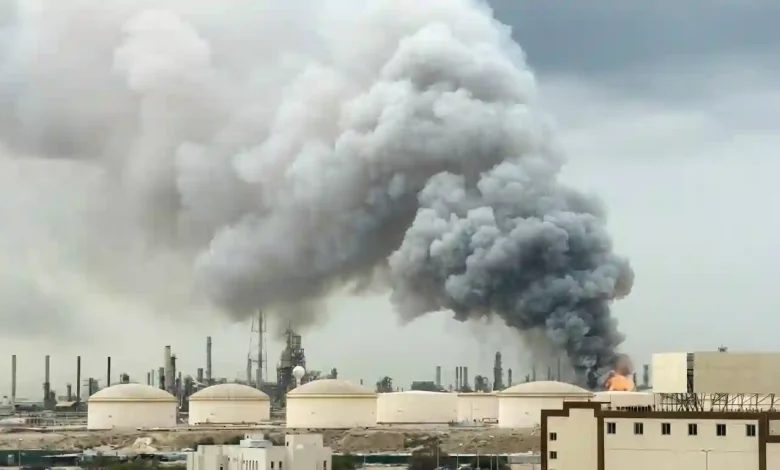
Table of Contents
Introduction: The Calibrated Game of Endurance
Iran is betting it can outlast Washington by turning the Middle East’s trade routes, shipping lanes, and energy infrastructure into pressure points that steadily raise the cost of confrontation, according to Gulf officials and analysts. Rather than seeking a decisive military victory, Tehran is pursuing a strategy of calibrated escalation aimed at widening the conflict without triggering full-scale war. This strategic standoff has evolved from sporadic proxy clashes to a systemic, highly calculated war of attrition designed to test the endurance of Western powers. Indeed, the Islamic Revolutionary Guard Corps (IRGC) has drafted a comprehensive retaliation plan designed to keep the U.S. and its regional allies in a perpetual state of high alert. By steadily manipulating the economic levers of the global market, Tehran hopes to force Washington into a diplomatic corner where concession becomes more attractive than continued enforcement.
This asymmetric philosophy rests on the assumption that while the United States possesses vastly superior conventional military power, its political leadership is highly sensitive to economic disruption, protracted foreign entanglements, and maritime instability. Consequently, Iran’s tactics do not require a direct military victory on the battlefield; instead, they seek to demonstrate that the security umbrella provided by Washington is increasingly costly, volatile, and ultimately ineffective. Through this prolonged campaign, Iran hopes to reshape the security architecture of the Persian Gulf in its favor.
Expanding Pressure Points Beyond the Strait of Hormuz
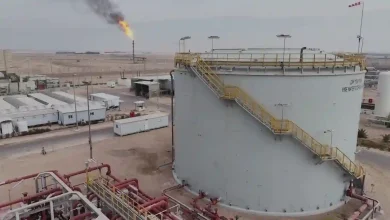
Having demonstrated its ability to disrupt traffic through the Strait of Hormuz, which carried about one-fifth of global oil consumption before the war, Tehran has signaled that no maritime chokepoint is off-limits. As the Pentagon accelerates its campaign of military strikes against Iran, Tehran’s asymmetrical approach has diversified to include critical maritime bottlenecks. Threatening the Red Sea and Saudi energy infrastructure suggests a broader effort to raise the cost of protecting global trade while testing Washington’s tolerance for continued disruption. Analysts emphasize that by expanding the theater of confrontation, Tehran is effectively playing a multi-dimensional game of chess. No longer is the confrontation restricted to the immediate waters of the Persian Gulf.
Iranian-engineered pressure points now extend to the Bab al-Mandab strait, the Gulf of Aden, and potentially even broader Indian Ocean trade corridors. By threatening these diverse maritime routes, Tehran presents a dilemma to international maritime coalitions: they must either spread their naval forces thin to protect thousands of miles of shipping lanes or accept that shipping companies will reroute vessels, drastically increasing shipping times, insurance premiums, and retail prices across the globe.
The Economic and Maritime Battlefield
With the imposition of a U.S. naval blockade on Iran, Tehran has recognized that traditional shipping lines are no longer just economic transit routes but actively contested militarized zones. This pivot to maritime economic warfare targets the exact vulnerabilities of the globalized trade network. Modern supply chains run on highly optimized, “just-in-time” logistics schedules that leave very little margin for delay or volatility. When Iranian naval forces or their proxy entities, such as the Yemen-based Houthis, target merchant vessels, the ramifications are immediately felt in Western capitals. Container freight rates soar, and supply-chain logistics firms are forced to recalculate risks.
These deliberate disruptions ensure that global crude oil prices spike, impacting consumer economies worldwide and putting immense political pressure on Western democratic leaders who are highly vulnerable to inflation spikes. Iran’s core calculation is that Western public opinion will not support long-term naval commitments or high energy prices for an open-ended, poorly defined conflict in the Middle East, particularly when local regional states also suffer the collateral economic damage.
Tactical Summary of Iran’s Escalation Strategy
To understand the breadth of this campaign, it is helpful to look at how specific geographic pressure points correspond to asymmetric actions and strategic outcomes. Below is a comparison table analyzing these key assets.
| Pressure Point | Geographic Focus | Mode of Threat | Strategic Objective |
|---|---|---|---|
| Strait of Hormuz | Arabian Gulf / Gulf of Oman | Mines, drone swarms, naval harassment, ship seizures | Control 20% of global oil flow, force international concessions |
| Red Sea & Bab al-Mandab | Horn of Africa / Yemen | Houthi missile and drone strikes, boarding operations | Disrupt European trade, divide US and European alliance interests |
| Regional Energy Infrastructure | Saudi, Emirati, and Gulf facilities | Long-range ballistic missiles, loitering munitions | Prove US cannot protect security of Gulf regional allies |
| Digital & Cyber Domain | Global financial and maritime networks | Distributed state-sponsored cyberattacks | Force regional states to decouple from US-led pressure campaigns |
Through this matrix of threats, Iran seeks to establish a new status quo where any hostile action by the U.S. or its allies triggers an immediate, costly, and highly visible counter-response in global markets. This ensures that the cost of containing the crisis is constantly perceived as higher than the cost of accommodating Tehran’s regional security interests.
Psychological Warfare and ‘Strategic Patience’
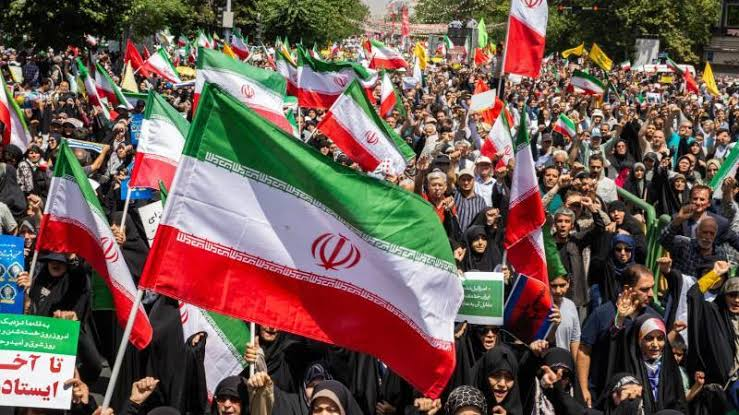
As observers analyze the ongoing dynamics of the Iran war, it is increasingly clear that the regime in Tehran relies heavily on historical paradigms of strategic patience. This concept of “strategic patience” is not merely passive endurance; it is an active, psychological strategy designed to wear down the political will of democratic adversaries. Unlike Western administrations that operate on short electoral cycles, the clerical and military leadership of the Islamic Republic plans in terms of decades and generations. They have carefully observed previous Western interventions in Iraq, Afghanistan, and Libya, noting how domestic political fatigue eventually forces U.S. administrations to withdraw or scale back commitments.
By maintaining a slow, steady rhythm of calibrated escalation, Iran aims to induce a sense of chronic exhaustion among U.S. policymakers and military planners. Every drone attack, minor shipping delay, or localized missile strike acts as a psychological needle prick, designed to remind Washington that the conflict cannot be easily resolved by military force alone, and that the long-term presence of American forces is a liability rather than an asset.
Regional Alliances, Proxies, and Asymmetric Warfare
While the direct military fighting between the United States and Iran remains characterized by high-tech skirmishes, proxy actions provide Tehran with a degree of plausible deniability. The “Axis of Resistance,” comprising Hezbollah in Lebanon, various Shia militias in Iraq and Syria, and the Houthi movement in Yemen, acts as a force multiplier for Iranian strategic intent. These groups are not merely passive puppets; they are highly integrated, autonomous actors capable of executing complex military maneuvers tailored to their local environments.
By decentralizing its retaliatory capabilities, Iran ensures that a military strike on its own soil can be answered from multiple geographically dispersed fronts simultaneously. This creates a complex target environment for U.S. and allied forces. Decoupling the source of the provocation from the location of the retaliation makes it incredibly difficult for Washington to establish effective deterrence without risking a massive, multi-front regional war that would devastate regional partners and permanently close critical trade routes.
The US Strategy: Naval Blockades and Response Dynamics
Western military planners are increasingly concerned about falling into a perceived strategic dead end where standard deterrent moves only fuel Iran’s asymmetrical escalation. The United States has attempted to counter Tehran through a combination of heavy economic sanctions, direct maritime policing, and localized air strikes on military depots. However, these conventional tools often produce diminishing returns against a regime that has spent decades adapting to economic isolation. When the U.S. conducts airstrikes, it often targets unmanned launch sites or low-cost drone facilities that are easily replaced, while the political cost of launching those strikes remains high.
Furthermore, a strict naval enforcement campaign is incredibly expensive to maintain over months or years, requiring a massive concentration of carrier strike groups and international partner assets that are desperately needed to counter challenges in other geopolitical theaters, such as the Indo-Pacific. This imbalance of costs—where a low-cost Iranian drone can threaten a multi-billion-dollar merchant vessel and require a million-dollar defense missile to intercept—lies at the heart of Iran’s asymmetric advantage.
Geopolitical Ramifications and the Shift in Global Order
Despite ongoing discussions regarding a diplomatic ceasefire, Tehran continues to build leverage to secure deep concessions from the White House. The broader implications of this conflict extend far beyond the borders of the Middle East, signaling a profound shift in the post-Cold War global order. For decades, the global economy has relied on the implicit guarantee of the United States Navy as the ultimate protector of the global commons and maritime freedom of navigation. By successfully challenging this guarantee and demonstrating that Washington cannot fully secure crucial maritime corridors like the Strait of Hormuz, Iran is accelerating the transition toward a multipolar world.
Emerging global powers and non-aligned states are observing this strategic vulnerability and adjusting their diplomatic calculations accordingly. If Western security guarantees are no longer seen as absolute, regional players may seek alternative security arrangements or adopt a more accommodating posture toward regional revisionist powers, fundamentally undermining the geopolitical dominance that the United States has enjoyed for over half a century.
Conclusion: A War of Attrition with No Simple Resolution
In conclusion, Iran’s strategic gamble in the Middle East is a sophisticated application of asymmetric warfare designed for the modern, globalized era. By avoiding a direct, conventional clash that it would undoubtedly lose, and instead targeting the delicate arteries of international trade and energy, Tehran has found a way to project power far beyond its borders. The battle is no longer about territory or military dominance in the traditional sense; it is an economic and psychological contest of endurance. As long as Washington remains committed to maintaining regional hegemony without paying the prohibitive cost of a full-scale ground war, Iran will likely continue its strategy of calibrated escalation, betting that its capacity to endure pain will ultimately outlast the political will of the United States.