Trump cancels Iran attacks pending rapid agreement 2026
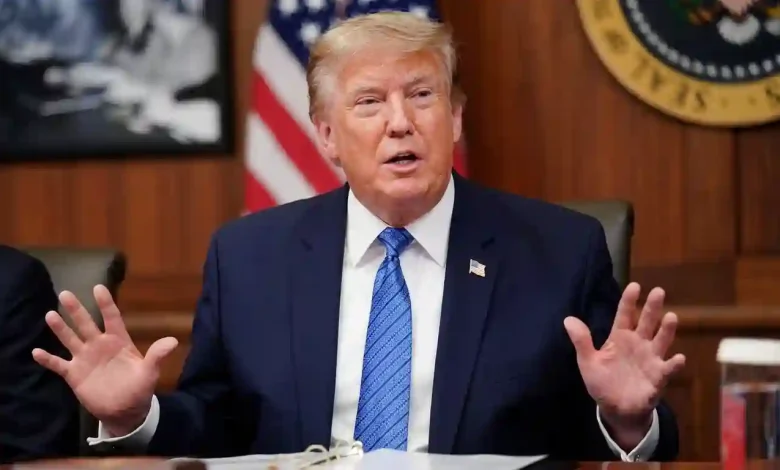
Table of Contents
Trump cancels Iran attacks in a dramatic, eleventh-hour diplomatic twist that has reshaped the geopolitical landscape of the Middle East overnight. Just hours after intelligence reports suggested that the United States and Israel were preparing to launch one of the most devastating aerial bombardment campaigns against Tehran’s energy infrastructure, the American president caught allies and adversaries alike off guard by declaring a freeze on all planned military strikes. The announcement came at a moment of peak tension, following days of escalating naval skirmishes, regional drone operations, and intense geopolitical posturing. This decision represents a stark pivot from the aggressive posturing seen on Iran war day 151, where bilateral talks had completely broken down and both nations seemed on the precipice of an all-out, catastrophic military confrontation.
According to sources within the White House and diplomatic circles, military aircraft were virtually fueled and waiting on flight decks when the executive order to stand down was issued. The abrupt de-escalation reflects President Trump’s characteristic transaction-based foreign policy, favoring sudden negotiations over protracted military engagements. The decision has introduced a fragile pause in a conflict that has severely strained international alliances, disrupted global supply chains, and triggered panic across global stock exchanges. While the immediate threat of a regional war has receded, the success of this temporary peace hinges entirely on the ability of international negotiators to turn a vague preliminary framework into a binding, comprehensive diplomatic accord.
The Truth Social Announcement: A High-Stakes Proclamation
Taking to his proprietary social media platform, Truth Social, in the late-night hours, President Trump asserted that he chose to halt the massive offensive because “the perimeters of a deal has been agreed to”. In typical rhetorical fashion, he coupled this peaceful gesture with a stern reminder of America’s overwhelming military capabilities, writing that “the USA is locked and loaded and ready to go against the Islamic Republic of Iran, at levels of military terror, strength and Power not seen since World War II”. He asserted that both Iran and key regional intermediaries had practically pleaded with Washington to postpone any destructive kinetic action, offering in return a commitment to secure a rapid diplomatic resolution.
According to the president, the agreed-upon framework would result in the “immediate, complete, and total” reopening of critical sea lanes and an absolute “end to Iran’s nuclear threat”. This sudden pivot represents a dramatic change of course from previous weeks when US airstrikes hit Iran for 12th night as Red Sea blockades tightened, bringing the entire region to the absolute brink of disaster. Critics have pointed out that Trump’s announcement relies heavily on unilateral assertions, especially as Iranian state media and semi-official channels have treated the claim with skepticism, characterizing it as psychological warfare. Nevertheless, the physical stand-down of American strike wings has provided the region with a much-needed breathing space.
Behind the Scenes: Interventions from Middle Eastern Partners
The diplomatic breakthrough was not achieved in a vacuum but was rather the result of intense, behind-the-scenes lobbying by regional powers who stand to suffer the most from an unchecked military conflict. Foreign intelligence briefs reveal that Saudi Crown Prince Mohammed bin Salman, the Emir of Qatar Sheikh Tamim bin Hamad Al Thani, and UAE President Mohamed bin Zayed Al Nahyan made direct personal appeals to Trump. These leaders cautioned the White House that a massive attack on Iranian oil fields and refineries would trigger severe retaliatory strikes, threatening neighboring energy facilities and rendering the entire Persian Gulf highly unstable.
Saudi officials, in particular, emphasized that regional stability was paramount. The warning came as a response to several instances where regional proxy groups and IRGC targets US base facilities had heightened the threat landscape. A series of intense phone consultations on Saturday afternoon ultimately convinced the president to hold off. For Gulf Arab states, a direct military clash between Washington and Tehran represents an existential threat to their domestic economic visions, motivating them to serve as active intermediaries and propose the framework that Trump eventually embraced.
Reopening the Strait of Hormuz: The Core Economic Deliverable
At the absolute center of any sustainable diplomatic arrangement is the resolution of the chokehold on global energy shipping. For several months, a de facto closure of the Strait of Hormuz has paralyzed commercial transport, sparked by a tight U.S. blockade on Iran strikes escalate in the Gulf. Tehran’s naval forces had repeatedly seized foreign commercial vessels, mined shipping lanes, and utilized fast-attack boats to disrupt trade, culminating in the critical Strait of Hormuz tanker crisis. The blockading of this critical trade route, through which more than 20% of the world’s daily petroleum consumption passes, threatened to trigger a severe global energy crisis.
The preliminary framework announced by Trump explicitly mandates the immediate and unhindered reopening of the Strait. Under the proposed terms, Iran must withdraw its naval patrols, remove sea mines, and guarantee the safe passage of all international commercial vessels, irrespective of flag or ownership. In return, the United States has hinted at a structured easing of its aggressive naval interdictions. Finding a workable mechanism to monitor and enforce these commitments remains the primary challenge facing regional diplomats, as any minor maritime incident could immediately unravel the fragile armistice.
The Impact on Global Markets and Shipping
The immediate financial response to President Trump’s late-night announcement was marked by extreme volatility and relief. In the weeks leading up to the canceled strikes, international oil prices projected to soar past $120 a barrel, threatening to spark inflation and stall economic growth worldwide. Global shipping companies had begun rerouting mega-tankers around the Cape of Good Hope, a costly and time-consuming alternative that severely delayed supply chains.
Following the announcement of the deal’s “perimeters,” global crude benchmarks fell sharply, reflecting market optimism that a catastrophic supply disruption might be avoided. Shipping insurers, who had raised premiums to prohibitive levels for vessels entering the Persian Gulf, indicated they are closely monitoring the talks before adjusting rates. Analysts warn, however, that the market’s relief may be short-lived. Until a formal treaty is signed and verified, the risk of a sudden return to hostilities remains exceptionally high.
Strategic Dynamics: The Stance of Israel and the US Defense Apparatus
While Trump declared that “the country of Israel joins me in this commitment,” officials in Jerusalem have remained noticeably quiet. Israeli Prime Minister Benjamin Netanyahu and his defense cabinet have historically viewed any diplomatic deal with Tehran with deep skepticism, arguing that bilateral agreements merely allow Iran to rebuild its economic strength while continuing its covert nuclear enrichment. Israeli military intelligence had been deeply involved in planning the canceled strikes, hoping to permanently disable Iran’s nuclear centrifuges and missile-production facilities.
Within the United States, the decision has exposed significant divisions. The sudden shift was finalized during a high-stakes Camp David cabinet meeting, where national security advisors debated the long-term feasibility of a deal. Pentagon officials have expressed concern that canceling the strikes without securing immediate, concrete concessions from Tehran could be interpreted as a sign of weakness, potentially emboldening proxy forces across Iraq, Syria, and Yemen.
Congressional Reaction and Public Opinion
Reaction on Capitol Hill has fallen strictly along partisan lines. Republican allies of the president praised his decision as a masterclass in brinkmanship, arguing that the threat of overwhelming military force was the precise catalyst needed to drag Iran back to the negotiating table. They assert that Trump’s willingness to walk away from a conflict demonstrates profound leadership and a desire to avoid another costly, “endless war” in the Middle East.
Conversely, Congressional Democrats and foreign policy traditionalists expressed profound concern over the administration’s erratic decision-making process. They point out that the massive war with Iran costs 37.5b as Hegseth demands additional defense appropriations have already severely burdened the federal budget. Critics argue that conducting foreign policy via sudden social media posts undermines the credibility of the United States’ military deterrent and leaves key international allies, who were prepared to support the offensive, in a state of diplomatic limbo.
Implementation and Obstacles: Can a “Rapid Deal” Be Secured?
Translating the rough “perimeters” of an agreement into a durable international treaty is an incredibly complex task. The primary obstacle lies in the deep-seated lack of trust between Washington and Tehran. Iranian officials have historically insisted on the complete, unconditional lifting of all economic sanctions before committing to any permanent changes in their nuclear or defense programs. The Trump administration, meanwhile, demands immediate compliance and rigorous, unannounced international inspections of all Iranian military sites.
Furthermore, any deal must address the regional activities of Iran’s proxy network, including the Houthis in Yemen and Hezbollah in Lebanon. These groups operate with a high degree of autonomy, and a failure to rein in their actions could easily derail the peace process. If a drone or missile attack is launched from Yemen against a commercial vessel, Washington would face immediate pressure to abandon the talks and resume military strikes, highlighting the precarious nature of the current ceasefire.
Disputes Over Sanctions Relief and Frozen Assets
A primary point of contention in the upcoming negotiations will be the status of over $100 billion in frozen Iranian assets held in international banks. Tehran has demanded the immediate release of these funds as a gesture of good faith, arguing that the domestic economy is in desperate need of liquidity. The United States and its European allies, however, are highly reluctant to release such a massive sum without securing irreversible steps toward denuclearization.
Diplomats are reportedly exploring a phased approach, where assets are released in increments as Iran achieves specific verification milestones. However, establishing an independent, reliable monitoring system that satisfies both sides will take weeks, if not months, of intense technical negotiations. This timeline directly clashes with President Trump’s demand for a “rapid” deal, creating a dangerous bottleneck that could cause the entire diplomatic effort to collapse.
Summary of Key Developments in the Iran-US Conflict
To contextualize the rapid evolution of this crisis, the table below outlines the major geopolitical milestones and shifts in strategy leading up to the president’s sudden decision to call off the military offensive.
| Phase / Milestone | Key Strategic Actions | Economic & Geopolitical Impact |
|---|---|---|
| Escalation & Blockade | U.S. naval forces implement tight blockades; Iranian forces target maritime shipping in the Strait. | Oil price projections surge; international shipping companies reroute fleets around Africa. |
| Kinetic Engagements | Severe aerial and missile strikes are carried out by both sides; proxy groups target U.S. bases. | Substantial military expenditures; regional embassies issue urgent evacuation alerts to citizens. |
| The Diplomatic Turn | Middle Eastern leaders make direct appeals; Trump announces cancellation of planned airstrikes. | Crude oil prices decline; global stock markets stabilize under a fragile maritime truce. |
Conclusion: A Precarious Path Toward Peace
The cancellation of the planned offensive represents a critical turning point, but it remains a highly volatile gamble. President Trump has clearly indicated that the military option remains very much on the table if a comprehensive deal is not finalized in short order. For the global community, the next few weeks will be crucial. Diplomats from Washington, Tehran, Riyadh, and other major capitals must work around the clock to draft a verifiable agreement that addresses nuclear proliferation, maritime security, and regional proxy warfare.
If successful, this unexpected diplomatic opening could usher in a new era of relative stability in the Middle East, reopening the Strait of Hormuz and bringing an end to months of destructive economic warfare. If it fails, however, the region will almost certainly slide back into an even more intense cycle of violence, with the potential for an all-out war that could reshape global politics and economics for decades to come.