US troops killed: Regional Tensions Surge After Fatal Incidents in Jordan and Iraq 2026
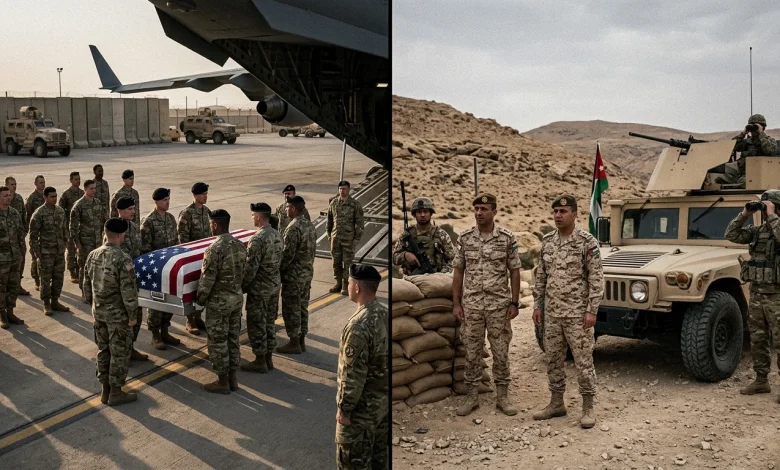
Table of Contents
US troops killed in Jordan and Iraq have pushed Washington and Tehran to the brink of an all-out regional conflict, sparking intense military retaliation and complex diplomatic posturing. The fatal strikes, which represent the most significant combat losses for American forces in several months, have shaken Washington’s defense establishment and raised serious questions regarding the efficacy of active air defense systems deployed in the region. Even as the Pentagon initiates sweeping counter-offensives, the transitional political context adds another layer of geopolitical complexity, with multiple official channels simultaneously signaling an openness to negotiation alongside aggressive battlefield operations. This comes as CENTCOM confirms fatal strike on US forces in other sectors of the Middle East theatre, indicating that the threat to forward-deployed troops has reached critical thresholds.
Escalating Middle East Hostilities and the Price of Conflict
Our forces have been stationed across the Levant and Iraq for years, largely engaged in advisory and counter-terrorism missions. However, the direct targeting of US assets by Iranian-linked systems has dramatically shifted the strategic calculus. The loss of American lives changes the parameters of engagement, forcing the administration to respond with overwhelming force while attempting to manage the threat of an uncontrolled escalatory spiral. Military analysts indicate that the current situation represents the most dangerous flashpoint in the region in years, as both nations exchange devastating kinetic blows while attempting to maintain lines of communication through neutral intermediaries.
Detailed Identification of the Fallen American Soldiers
On Monday morning, the Department of Defense officially released the names of the two soldiers killed in the Friday attack on a base in Jordan, bringing a somber human element to the escalating geopolitics. The deceased were identified as 1st Lieutenant Tyler James Feehan, 25, of Ewa Beach, Hawaii, and Private Isabella Gonzales, 19, of Carrollton, Texas. Both soldiers were assigned to the Army Air Missile Defense Command and were actively supporting Operation Inherent Resolve, the long-standing international coalition mission aimed at defeating the remnants of the Islamic State group. Their loss has sent shockwaves through their respective home communities, with local leaders and family members issuing moving statements of mourning and remembrance.
Lt. Feehan, a dedicated young officer, and Pvt. Gonzales, who had joined the service to build a brighter future, represented the front line of American air defense capabilities in the region. The Defense Department announced that the circumstances surrounding their deaths are under active investigation by military authorities. In addition to the confirmed fatalities, the Pentagon noted that several other service members were injured in the strike, requiring medical evacuations to nearby military hospitals in Jordan. Fortunately, those who were evacuated have since been treated and discharged, though they remain under close medical observation due to the risk of traumatic brain injuries from blast exposure.
The Tragic Incident in Jordan: Air Defense Under Fire
The tragic incident in Jordan took place at the Muwaffaq Salti Air Base, a vital operational hub for American and partner forces. According to reports from the Pentagon, the facility was targeted by a sophisticated coordinated attack involving both ballistic missiles and one-way attack drones. While the base’s air defense systems were highly active and successfully intercepted the vast majority of the incoming threats, one missile managed to slip through the defensive umbrella. Secretary of State Marco Rubio acknowledged the tragic failure, noting that although almost all systems worked as designed, the one that leaked through resulted in the heart-wrenching loss of life.
Adding to the complexity of the situation on the ground, a third service member was initially listed as missing in action following the chaotic strike. On Sunday, U.S. Central Command confirmed that search and rescue teams had recovered unidentified human remains at the impact site. An intensive forensic examination process is currently underway to verify whether these remains belong to the missing soldier. This grim discovery underscores the ferocity of the Iranian strike and highlights the massive vulnerabilities of forward-deployed bases when subjected to saturated missile and drone attacks. Analysts point out that when Iran adapts ballistic missiles to evade US systems, even highly advanced defenses like the Patriot and NASAMS can face saturation challenges, putting American lives at extreme risk.
The Accident in Northern Iraq: Decommissioning Downed Drones
A separate but equally tragic incident occurred on Saturday, July 18, in the Kurdistan Region of northern Iraq, claiming the life of another American service member. According to statements released by U.S. Central Command, this fatality was not the result of a direct strike, but rather a hazardous accident during active operations. The service member was killed in action during a controlled detonation of unexploded ordnance from a downed Iranian one-way attack drone. A second service member sustained minor injuries during the same operation but is expected to make a full recovery after receiving immediate medical attention.
Secretary of State Marco Rubio addressed the incident with reporters, explaining that the military’s work in the region is inherently dangerous and that even tasks such as decommissioning downed enemy drones carry extreme risks. He noted that the unexploded drone presented an active hazard to civilian and military personnel in the area, necessitating a controlled demolition that unfortunately went wrong. This death brings the total number of American military fatalities since the resumption of direct hostilities in February to 17, emphasizing the heavy price paid by service members tasked with containing regional aggression. The incident highlights the complex tactical realities of dealing with unexploded drone components, which often feature sophisticated booby-traps or unstable explosive payloads designed to detonate upon tampering.
Nine Nights of Retaliation: US Strikes and Tactical Responses
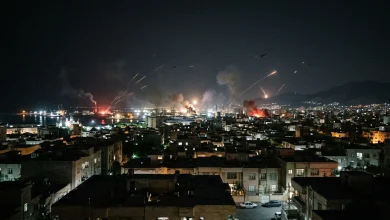
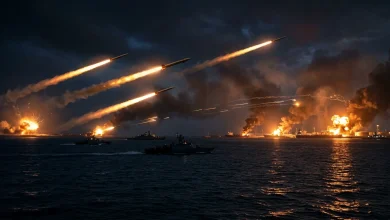
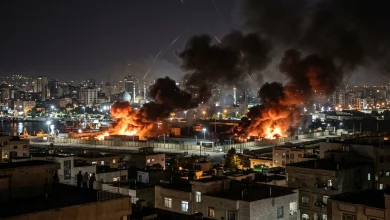
In immediate response to the lethal attacks on US forces in Jordan and Iraq, President Donald Trump ordered a massive retaliatory air campaign. Sunday night marked the completion of nine consecutive nights of US strikes against Iranian military targets. According to Central Command, the latest waves of strikes were highly targeted, focusing on degrading the Islamic Revolutionary Guard Corps’ (IRGC) coastal surveillance capabilities, air defense networks, maritime intelligence assets, and key missile and drone storage depots. This sustained bombardment represents one of the most intense and prolonged US military operations in the region in recent history.
The military’s operational trajectory shows a systematic escalation over the past week. Prior to Sunday’s missions, the U.S. airstrikes against Iran eighth night campaign had focused heavily on command-and-control facilities. Similarly, the U.S. airstrikes against Iran enter seventh night operations targeted strategic logistics routes and bridges inside Iranian territory, aiming to disrupt the movement of weapons and materials to proxy groups. These systematic efforts to degrade enemy capabilities demonstrate that the military’s strategy is not merely punitive, but deeply preventative. The official statements confirm that the US military strikes Iran for seventh wave, and the successive attacks that followed, were fully designed to undermine the IRGC’s ability to coordinate attacks on both American military bases and international shipping lanes.
Trump Declares Strikes Honor Fallen Patriots
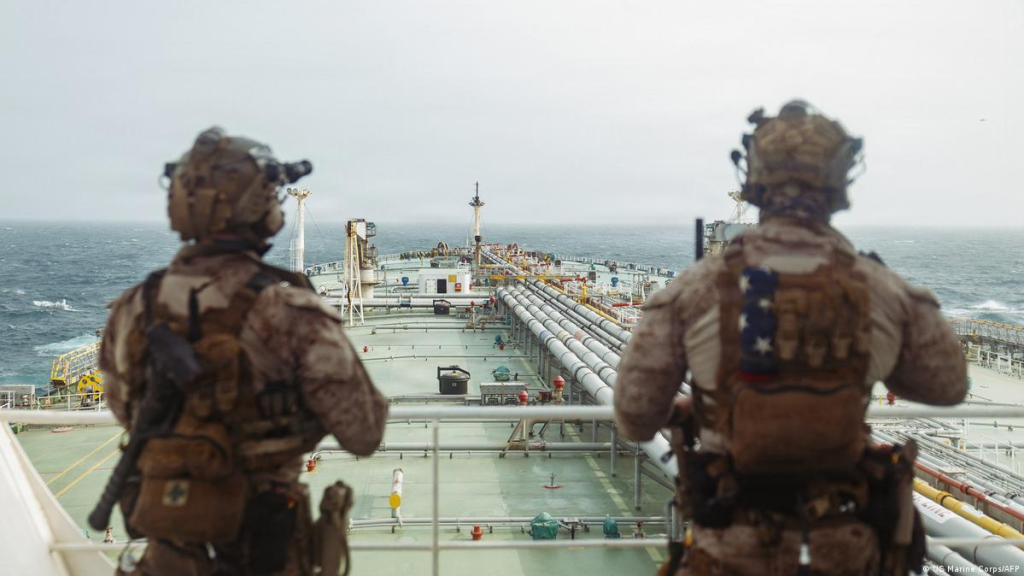
President Donald Trump spoke forcefully about the ongoing military operations, declaring that the ninth consecutive night of strikes had hit the Iranian military very hard. Trump emphasized that these aggressive actions were carried out in honor of and as a direct response to the sacrifice of the American soldiers who lost their lives in Jordan and Iraq. Speaking to reporters at Joint Base Andrews, the President praised the fallen service members as great patriots who were fighting to ensure that a hostile regime like Iran does not acquire nuclear weapons capabilities. He argued that the swift and heavy punishment delivered by US forces was necessary to maintain American deterrence and prevent further loss of life.
While the President’s rhetoric was firmly nationalistic and focused on military might, the administration is also facing intense domestic pressure. Critics of the administration argue that the rapid escalation of airstrikes risks dragging the country into an open-ended, highly unpopular regional war, especially with pivotal midterm elections approaching. However, supporters maintain that showing any weakness in the face of direct attacks on US troops would only invite further aggression from Tehran and its network of regional proxies. The administration’s focus on stopping Iran’s nuclear ambitions remains a central justification for the ongoing deployment and the aggressive use of force.
The Strait of Hormuz: A Strategic Bottleneck Under Threat
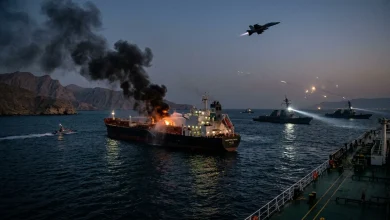
A major driver behind the recent escalation is the ongoing struggle for maritime control in the region, particularly surrounding the strategically vital Strait of Hormuz. The US military’s strikes have been heavily focused on coastal installations to stop Iranian attacks on commercial vessels. These tensions are further compounded by the controversial Strait of Hormuz Iran Oman transit fee proposal, which has threatened to disrupt the free flow of global trade through the narrow waterway. This proposed fee, combined with military harassment of tankers, has raised fears of a catastrophic disruption in global energy supplies.
The critical nature of the maritime threat was recently highlighted when a dramatic Iranian drone attack on cargo ship shatters the fragile peace in international waters, prompting immediate warnings from global maritime organizations. In his comments to reporters, Secretary of State Marco Rubio pointed out that Iran’s aggressive actions against commercial tankers have effectively killed the memorandum of understanding (MoU) designed to keep the Strait of Hormuz open. He stressed that a diplomatic agreement cannot exist when one party is actively attacking peaceful merchant ships and attempting to use the vital shipping lanes as leverage against the international community.
Open to Talks: The Paradox of Backchannel Diplomacy
In a surprising development amidst the intense military escalation, both Washington and Tehran have indicated that they remain open to diplomatic discussions. This dual-track approach—exchanging heavy military blows on the battlefield while signaling a willingness to negotiate—highlights the complex, multi-dimensional nature of modern state conflict. The latest round of airstrikes against Iran U.S. launches Sunday took place even as backchannel diplomatic communications were actively moving through various international mediators, showing that neither side is entirely closed to a negotiated settlement.
This willingness to engage suggests that both nations are highly aware of the catastrophic costs of an all-out, unmitigated war. The geopolitical leverage sought on the battlefield is directly tied to the concessions each side hopes to secure at the negotiating table. Analysts note that while public statements remain highly aggressive, the private communications show a mutual desire to find an off-ramp before the conflict expands into a broader theater involving other regional powers.
Rubio’s Diplomatic Stance Amid Armed Conflict
Secretary of State Marco Rubio told reporters that despite the heartbreaking loss of American soldiers, the United States remains open to a diplomatic solution, but emphasized that any negotiation has to be real. Rubio stated that if productive elements within the Iranian system can take control of the negotiations, a diplomatic resolution would be a very positive development. However, he soberly added, that’s not where we are tonight, unfortunately, indicating that despite the symbolic openings, the practical reality on the ground remains highly kinetic and dangerous.
Iranian Response: Dialogue Through Mediators
On the other side of the conflict, Iranian Foreign Ministry spokesman Esmaeil Baqaei confirmed during a press briefing in Tehran that diplomatic exchanges with the United States are ongoing via neutral mediators. He noted that ideas have been actively conveyed in recent days, confirming that the diplomatic apparatus has not been entirely shut down by the violence. This parallel track of warfare and dialogue highlights the delicate balancing act both leaderships must perform, satisfying domestic demands for strength while avoiding a catastrophic regional war.
Comparative Regional Dynamics: A Breakdown of Recent Events
To understand the geographic and tactical scope of the current conflict, the following table summarizes the key incidents involving American forces and the corresponding military and diplomatic responses:
| Date | Location | Incident Type | US Casualties | Status / Retaliation |
|---|---|---|---|---|
| July 17, 2026 | Muwaffaq Salti Air Base, Jordan | Ballistic missile and drone attack | 2 killed (identified), 1 missing (remains found), dozens wounded | Under active Pentagon investigation; triggered heavy airstrikes |
| July 18, 2026 | Kurdistan Region, Iraq | Controlled detonation of downed drone ordnance | 1 killed, 1 wounded | Ruled an operational accident during decommissioning |
| Ongoing | Strait of Hormuz | Hostility against commercial shipping vessels | None (civilian crew risks) | Addressed through continuous US retaliatory airstrikes |
Implications for Global Security and the Path Forward
The tragic deaths of American soldiers in Jordan and Iraq, combined with the unprecedented nine consecutive nights of US retaliatory strikes, mark a dangerous inflection point in Middle East security. As oil prices surge past ninety dollars a barrel in global markets and shipping lanes remain highly contested, the international community faces the very real prospect of a prolonged conflict that could disrupt global energy security and economic stability. The path forward remains deeply uncertain; while the military campaign seeks to degrade Iran’s capabilities, the only lasting resolution will likely require a robust, enforceable diplomatic framework. Whether the ongoing backchannel exchanges can bridge the deep divide between Washington and Tehran remains to be seen, but the high cost of failure is already being measured in the loss of heroic American lives.