Strikes against Iran Enter Ninth Night in Retaliatory Wave 2026
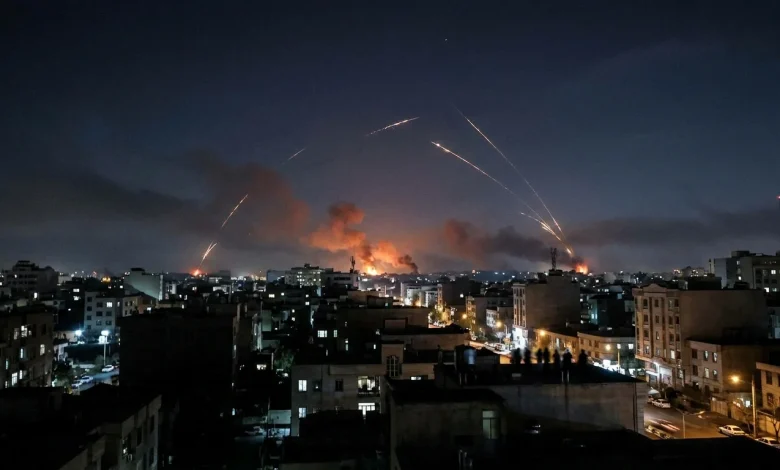
Table of Contents
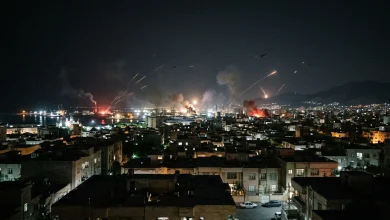
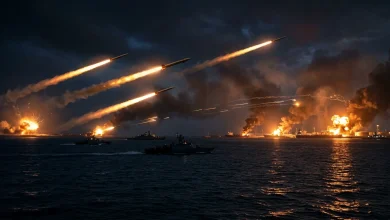
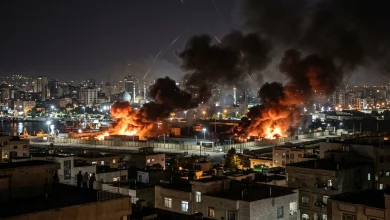
Strikes against Iran escalated into a ninth consecutive night of heavy military actions as U.S. Central Command (CENTCOM) launched a massive wave of strategic air and missile bombardments late Sunday evening, carrying over into the early hours of Monday local time. This latest sequence of military actions represents one of the most intense aerial campaigns conducted by Western forces in recent years, heavily targeting municipal and military installations across major Iranian hubs including Tabriz, Chabahar, Konarak, Bandar Mahshahr, and Bandar Imam Khomeini. President Donald Trump, addressing the nation regarding the operations, noted that these latest strikes hit Iranian forces ‘very hard’ and were executed to honor the sacrifices of American troops killed in Jordan and Iraq. The ongoing 2026 Iran war has rapidly evolved from localized proxy skirmishes into a direct, high-stakes military exchange that is redefining the safety of the entire Middle East, threatening to close vital maritime corridors, and pushing regional defenses to their absolute limit.
President Trump Pays Tribute to Fallen American Soldiers
In a deeply somber but resolute statement, President Donald Trump paid tribute to the ‘great patriots’ who lost their lives in the theater of operations over the weekend. Trump confirmed that the ninth consecutive night of combat was specifically executed ‘in honour’ of the three U.S. military personnel killed in Jordan and Iraq. This public stance has signaled a dramatic shift in Washington’s rules of engagement, signaling to Tehran that any loss of American life will trigger an immediate, disproportionate military response. The president emphasized that the courage of these service members represents the highest ideals of American bravery, reinforcing that the military will not stand by as regional actors attempt to undermine national security interests. As Centcom confirms fatal strike on US forces, domestic political pressure has intensified, driving the administration to take decisive measures to dismantle the command structures responsible for authorizing these fatal hostiles. The operational tempo has risen significantly, reflecting an administration determined to showcase absolute strength, even as global allies call for restraint to prevent a total descent into regional chaos.
Details of the Casualties in Jordan and Iraq
The catalyst for this latest escalatory cycle was the tragic loss of three American service members under highly volatile circumstances. Two of the service members were killed in northern Jordan at the Muwaffaq Salti Air Base during an intense drone and missile barrage originating from Iran-backed factions. U.S. officials disclosed that although regional air defenses intercepted the vast majority of incoming projectiles, a single missile penetrated the perimeter defense systems, resulting in immediate fatalities and wounding dozens of others. Separately, in northern Iraq, a third American soldier was killed during a highly dangerous ordnance disposal mission, attempting to defuse an unexploded payload recovered from a downed Iranian one-way attack drone. This rapid succession of fatalities underscored the severe risk posed by Tehran’s active proliferation of advanced unmanned aerial systems and guided munitions throughout the region. The preceding operations, including the airstrikes against Iran Sunday, were swift, but the ninth night was explicitly designed as a targeted campaign to systematically eliminate the logistics networks that supply these deadly attack assets.
Strategic Targets: Securing the Strait of Hormuz
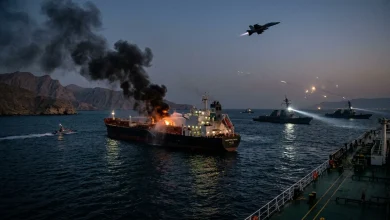
A primary objective of the overnight military action was the defense of the Strait of Hormuz, a critical global choke point where nearly a fifth of the world’s petroleum passes daily. CENTCOM assets—ranging from carrier-based aircraft to precision-guided standoff missiles—specifically targeted Iranian military command centers, sophisticated coastal surveillance radar installations, active air defense batteries, and vital communications networks. According to military briefings, these assets were systematically selected to dismantle Iran’s ability to coordinate attacks against civilian and commercial maritime shipping. Prior to this campaign, a series of hostiles, including a catastrophic drone attack on commercial cargo ships, had effectively disrupted international shipping routes, causing insurance premiums to skyrocket and forcing container ships to take expensive detours around Africa. By targeting maritime radar stations and missile storage facilities along the Iranian coastline, the U.S. hopes to restore a level of deterrence, ensuring that commercial crews can navigate the strategic waterway without the threat of sudden kinetic strikes.
The Demise of the Maritime Memorandum of Understanding (MOU)
The widening conflict has also shattered delicate diplomatic tracks that had been working quietly behind the scenes. Secretary of State Marco Rubio, speaking to journalists before departing for a security summit in the Philippines, stated that Iran’s aggressive actions in the maritime domain have effectively killed a previously drafted memorandum of understanding (MOU). This diplomatic framework was meant to establish basic guarantees for the transit of commercial vessels through the southern route of the Strait of Hormuz in exchange for some relief on trade restrictions. However, Rubio emphasized that by directly attacking tankers and launching ballistic missiles into neighboring sovereign territories, Iran chose escalation over diplomatic resolution. While Rubio maintained that the United States is still fundamentally willing to engage in backdoor channels and diplomacy via international mediators, he made it clear that military pressure would remain active until Tehran halts its aggressive operations. This breakdown of diplomatic agreements means that both nations are now operating without clear guardrails, elevating the risk of a miscalculation that could lead to an even broader international conflict.
Comparative Analysis of the Ninth Night Strikes
The sheer scale of the ninth consecutive night of operations surpassed many of the previous engagements in terms of target complexity and geographical diversity. U.S. and allied militaries utilized heavy bombers, fighter jets, and naval vessels to saturate Iranian defensive positions. Let us examine the target categories and specific regions struck during this intensive wave of operations compared to earlier engagements:
| Target Category | Key Iranian Regions Struck | Primary Strategic Objective | Estimated Operational Impact |
|---|---|---|---|
| Air Defense & Coastal Surveillance | Bandar Abbas, Qeshm Island, Sirik | Blind Iranian early-warning systems along the Gulf | Severe degradation of maritime radar networks |
| Command & Control Infrastructure | Tabriz, Bandar Mahshahr | Disrupt military communications and field commands | Interruption of real-time coordinating capabilities |
| Missile & Drone Storage Facilities | Hajiabad, Bandar Imam Khomeini | Destroy launch platforms before deployment | Dozens of launch structures neutralized |
| Industrial & Nuclear Logistics | Darkhovin (Under-construction site) | Deter dual-use military infrastructure development | Construction halted; minimal physical nuclear risk |
This structured approach shows that rather than launching random retaliatory strikes, CENTCOM is executing a methodical campaign to dissect Iran’s coastal defenses, paving the way for sustained maritime security.
Iran Strikes Back: Surprise Attacks in Syria and Jordan
Tehran did not remain passive in the face of these heavy bombardments. Almost immediately after the U.S. strikes began, the Islamic Revolutionary Guard Corps (IRGC) announced a coordinated series of retaliatory actions, which they characterized as a ‘surprise strike’ against coalition forces. The most prominent of these counter-operations targeted the sensitive Al-Tanf garrison in southern Syria. This base, which occupies a highly strategic location near the borders of Jordan and Iraq, was targeted with several waves of suicide drones and short-range rockets. Simultaneously, the IRGC claimed to have launched ballistic missiles targeting the Aqaba Airport in Jordan, alleging that the airport had been utilized to support American heavy transport aircraft and combat operations. Although Jordan’s military air defense systems intercepted several of the incoming missiles, the fragments that crashed down caused significant disruption, leading local authorities to temporarily evacuate sections of both the airport and the nearby seaport. This indicates that despite the U.S. airstrikes against Iran eighth night and the massive kinetic pressure of the ninth night, Iran retains the capability to strike back across multiple national borders simultaneously.
Ballistic Missiles Target Aqaba Airport and Al-Tanf Garrison
The use of advanced ballistic missiles to target Aqaba Airport represents a major escalation that threatens to drag neighboring Israel directly into the conflict. Israel, which sits immediately adjacent to the Aqaba Gulf region, was forced to launch its own interceptor missiles to down fragments that drifted into its sovereign airspace. The IRGC claimed that their strikes caused ‘severe damage’ to heavy transport and command-and-control aircraft, although U.S. and Jordanian officials have contested the extent of these claims, reporting that while infrastructure was damaged, critical air assets remained operational. This retaliatory strike shows that Iran’s adapted ballistic missiles are being deployed with highly precise guidance systems specifically designed to penetrate regional air defenses. By striking Jordan—a key U.S. ally that has historically maintained a delicate diplomatic balance in the region—Tehran is sending a clear warning to any nation that permits its military bases or airspace to be used for American retaliatory operations.
Broad Regional Fallout: Air Raids in Kuwait and Bahrain
The kinetic exchanges have triggered defensive responses throughout the entire Gulf Cooperation Council (GCC) region. Kuwait’s military announced that its sophisticated air defense systems were forced to engage and intercept several hostile drone attacks aimed at its domestic infrastructure, including a water desalination plant and the critical Camp Arifjan ammunition depot. In Bahrain, the home of the U.S. Navy’s Fifth Fleet, warning sirens were activated in the capital city of Manama, prompting civil defense authorities to urge the public to seek immediate shelter. These incidents highlight the immense risk of a wider regional conflict that could engulf moderate Arab states that host American military infrastructure. During the historical progression of the campaign, which saw the Iran airstrikes seventh night and subsequent actions, the geographic footprint of the conflict has steadily expanded. Moving forward from the localized US strikes central region campaigns, the entire Persian Gulf has now been transformed into an active war zone, where commercial aviation and basic public utilities are under constant threat of collateral damage.
Conclusion: The Unfolding Strategic Balance in the Middle East
As the sun rises over the Middle East following this ninth consecutive night of intense combat, the strategic balance between the United States and Iran remains highly precarious. President Donald Trump’s aggressive posture has demonstrated that Washington is prepared to sustain high-intensity operations to honor its fallen soldiers and protect vital economic arteries. However, Iran’s resilient and widespread asymmetric capabilities mean that a quick or easy military victory is highly unlikely. With diplomatic channels frayed and key regional actors like Kuwait, Jordan, and Bahrain being drawn into the line of fire, the international community faces a critical juncture. The coming days will determine whether this overwhelming display of force can successfully re-establish a lasting deterrence or if it will instead act as the catalyst for an unrestricted regional war that could reshape Middle Eastern geopolitics for decades to come.