Airstrikes against Iran 2026: U.S. Launches Sunday Retaliation
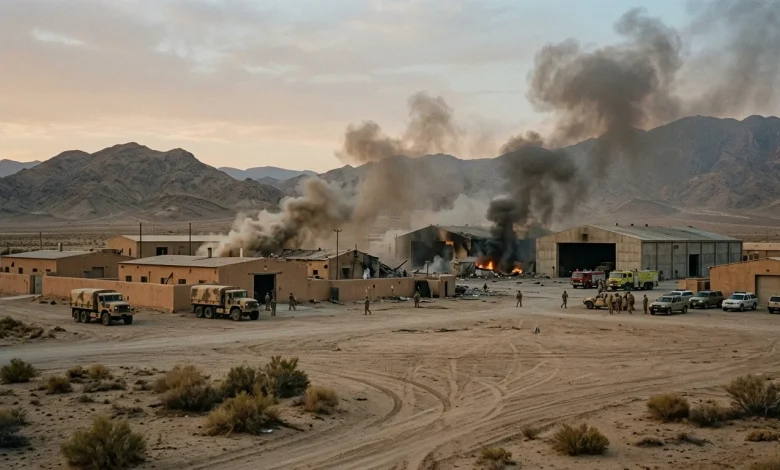
Table of Contents
Airstrikes against Iran were carried out by the U.S. military on Sunday in a massive, coordinated effort to “swiftly punish” the country’s Islamic Revolutionary Guard Corps (IRGC). This high-stakes retaliation occurred under direct authorization from President Donald Trump, who vowed to degrade Tehran’s capacity to restrict international trade. The strikes were designed to further degrade Iran’s ability to restrict the traffic of oil tankers through the Strait of Hormuz, U.S. Central Command (CENTCOM) said. This vital waterway accounted for roughly 20% of global oil supplies before the war. Iran effectively closed the strait to shipping traffic after the war started with joint U.S. and Israeli strikes on Feb. 28. The Sunday strikes represent a massive escalation, coming only hours after the U.S. military announced its first troop deaths due to direct Iranian fire since the opening days of the war. These deaths followed a drone and missile attack on a base in Jordan on Friday.
Introduction: A New Phase of Escalation
Sunday’s offensive specifically focused on degrading Iran’s logistical capabilities near the strategically vital Strait of Hormuz. The targeted actions follow the first recorded U.S. military deaths from direct Iranian fire since the initial phases of the war. These casualties marked a psychological and strategic threshold for the Washington administration, which has faced mounting pressure from domestic lawmakers to respond with overwhelming force. Though CENTCOM initially withheld the names of the fallen service members out of respect for family notifications, military leaders underscored that these losses would not go unpunished. The strikes have once again shattered any lingering hopes for a sustained ceasefire, plunging the broader Middle East back into a cycle of offensive maneuvers, regional proxy warfare, and economic strangulation.
The Jordan Base Attack: A Deadly Catalyst
Friday’s devastating drone and missile assault on the Jordan military facility crossed a red line for U.S. policymakers. For months, the escalating U.S.-Iran conflict had been defined by proxy skirmishes, naval standoffs, and cyber warfare. However, direct Iranian fire causing immediate American combat deaths has dramatically shifted the calculus. The strike targeted a critical airbase in Jordan, a nation that has hosted U.S. personnel and advanced aircraft since the conflict’s inception on Feb. 28. While Central Command has withheld the names of the two fallen service members pending family notification, the incident has galvanised bipartisan support in Washington for robust military countermeasures. Prior to this, the U.S. had managed to avoid combat deaths from direct Iranian actions, with previous losses stemming largely from tragic aviation mishaps and indirect proxy engagement. This event represents a psychological breaking point, forcing Washington to pivot from defensive deterrence to active punishment.
Targeting Iran’s Southern Coastline: Sunday’s Strikes
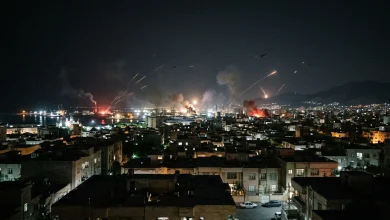
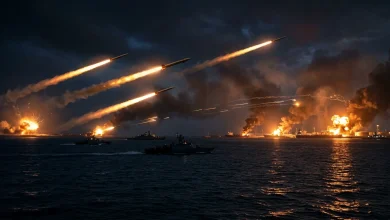
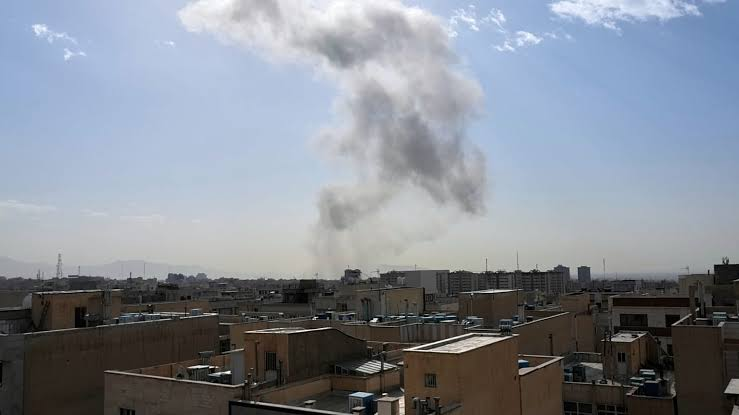
In response to the Jordan tragedy, Sunday’s operations targeted strategic coastal nodes along southern Iran. Around 1:30 a.m. local time, residents across the southern Hormozgan province reported hearing thunderous explosions. According to the state-run IRNA news agency, a critical coastal area near Sirik on the Strait of Hormuz was hit by precision-guided munitions. Simultaneously, military installations near Hajiabad were targeted, and the sound of heavy blasts echoed throughout the port city of Bandar Abbas. Additionally, Iranian state television reported strikes targeting Qeshm Island, an important naval staging ground for the Islamic Revolutionary Guard Corps (IRGC) located within the narrowest corridor of the strait itself. These strikes succeeded a prior seventh night of U.S. military strikes, illustrating a relentless, multi-day aerial bombardment campaign aimed at removing Iran’s offensive capabilities along the Persian Gulf. Although the White House denied hitting civilian targets, Iranian officials claimed that critical infrastructure, including an electricity and desalination plant, suffered catastrophic damage, disrupting main logistics corridors near Bandar Abbas.
The Geopolitical Stranglehold: Strait of Hormuz
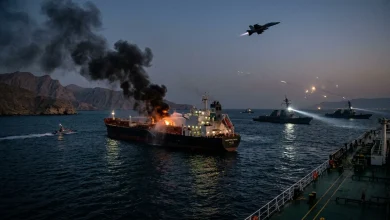
The Strait of Hormuz remains the ultimate prize and geopolitical leverage point in this unfolding war. Before the Feb. 28 escalation, approximately 20% of the world’s daily oil supply navigated through this 21-mile-wide passage. Following the initial U.S. and Israeli airstrikes, Iran’s clerical establishment, now led by Supreme Leader Mojtaba Khamenei, enacted a tight naval blockade. Under this blockade, Tehran asserted sole sovereignty over the international waterway, demanding transit fees and threatening non-compliant commercial vessels. U.S. airstrikes have systematically targeted anti-ship missile sites, radar installations, and fast-attack craft bases in an attempt to reopen the shipping lanes. However, Iran’s deeply fortified coastal tunnels and mobile launchers have allowed the IRGC to maintain a threatening posture, effectively driving global energy markets into unprecedented volatility and forcing international shipping conglomerates to seek costly, alternative trade routes around the Cape of Good Hope.
Retaliation Across the Region: Kuwait and Iraq
Following the Sunday airstrikes, Iran and its regional allies launched an immediate, multi-pronged counteroffensive. Iranian state TV announced that its army had executed “large-scale attacks with kamikaze drones” against U.S. military assets in Kuwait. The targets included the ammunition depot at Camp Udairi and the advanced Patriot missile defense systems at Ali Al Salem Air Base. Concurrently, in northern Iraq, a drone strike hit a military facility belonging to the Kurdistan Freedom Party near Irbil. The attack wounded eight members of the Iranian Kurdish dissident group, which has historically aligned with Western interests. This expansion of targets demonstrates Tehran’s ability to project force across multiple national borders, retaliating against the sixth night of U.S. attacks and sending a stark warning to Gulf Arab nations hosting American personnel. Regional air defenses remain on high alert as military analysts warn that the threat of a wider regional conflagration is now higher than at any point since the war’s onset.
The Collapse of Diplomacy: From Switzerland to Warfare
The current hostilities mark the total collapse of a short-lived diplomatic breakthrough. Only a month prior, high-level talks in Switzerland and subsequent mediation in Doha, Qatar, had raised hopes of an impending ceasefire. Under a preliminary agreement, both sides had explored terms to end the blockade of the Strait of Hormuz in exchange for sanctions relief. However, the agreement disintegrated as disputes arose regarding sovereign oversight of maritime transits. With the resumption of U.S. airstrikes, Mojtaba Khamenei warned of “unforgettable lessons” for the U.S. military, officially declaring the peace process null and void. The breakdown of these talks highlights the deep-seated mistrust between Washington and Tehran, rendering diplomatic solutions highly unlikely in the near term. Instead, both nations have committed to a war of attrition, with the U.S. seeking to degrade Iran’s military infrastructure and Tehran utilizing its regional proxy network to impose severe costs on American forces.
Domestic and Regional Impact: Tunnels, Bridges, and Daily Life
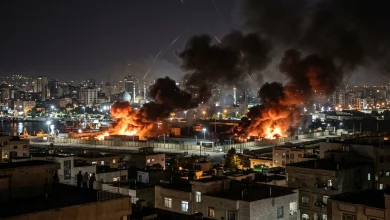
The structural damage caused by the continuous bombardment has had a profound impact on southern Iran’s civilian population. The targeting of transit networks has disrupted highways leading to major ports, hindering the distribution of essential goods and fuel. Furthermore, the persistent threat of aerial bombardment has led to widespread exam cancellations in southern provinces, as schools and universities closed their doors to ensure student safety. Meanwhile, historical contexts from earlier phases of the conflict remind observers of the heavy toll exacted by these operations, including strikes in the central region and previous airstrikes hitting Bushehr. The systematic degradation of bridges, tunnels, and logistics lanes has severely isolated Hormozgan province, raising the risk of a humanitarian crisis if supply chains remain broken.
Statistical Analysis of the Ongoing Conflict
To understand the sheer scale of the conflict, it is essential to examine the cumulative metrics of the war since its commencement on February 28, 2026. The conflict has resulted in substantial human, economic, and military costs for both sides, as illustrated in the table below:
| Conflict Metric | Details & Figures | Strategic Significance |
|---|---|---|
| U.S. Combat Casualties | 16 service members killed, 430+ wounded | Highlights the rising human cost and potential shift in American public opinion. |
| Strait of Hormuz Status | Effectively blocked by Iranian forces | Disrupts 20% of global oil shipments, causing global energy market instability. |
| U.S. Strike Targets (Sunday) | Sirik, Hajiabad, Bandar Abbas, Qeshm Island | Focuses on neutralizing IRGC maritime threat and logistical support networks. |
| Iranian Retaliation Targets | Camp Udairi, Ali Al Salem Air Base, Irbil | Demonstrates Iran’s multi-theater drone and missile projection capability. |
| Diplomatic Status | Peace negotiations collapsed | Resumes an active war of attrition without immediate avenues for ceasefire. |
Future Outlook: Escalation or Re-negotiation?
As the conflict enters this dangerous new phase, the prospects for a diplomatic resolution appear increasingly remote. President Donald Trump has reiterated that the U.S. will not tolerate attacks on its service members and will continue to target Iran’s core military assets. Conversely, Tehran has demonstrated its resilience and willingness to absorb significant infrastructure damage while executing retaliatory strikes against U.S. bases in Kuwait and Iraq. With the Strait of Hormuz remaining closed, the global economy faces prolonged energy supply disruptions, which could compel international powers to intervene. Whether this latest round of airstrikes will force Iran back to the negotiating table or spark a full-scale regional war remains to be seen. What is certain is that the geopolitical landscape of the Middle East has been fundamentally altered, with both sides locked in a high-stakes confrontation with no clear exit strategy.