Iran Adapts Ballistic Missiles to Evade US Defenses 2026
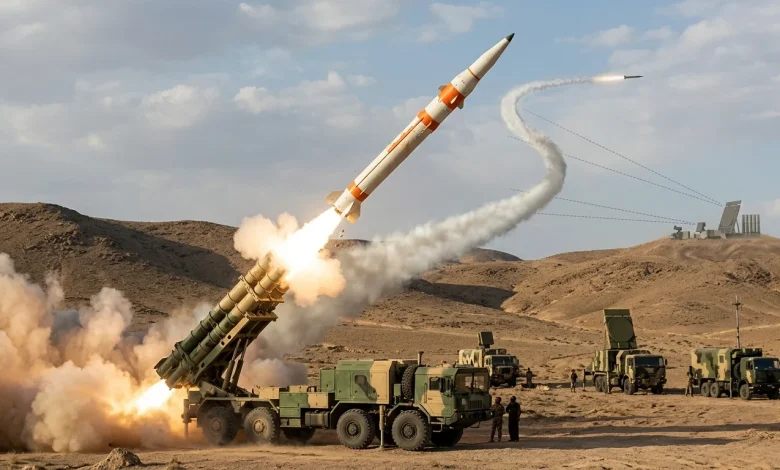
Table of Contents
Iran has engineered a major tactical shift in the Middle Eastern security landscape by adapting its theater strike capabilities to counter robust United States and allied defense arrays. Over the past decade, the Islamic Republic’s missile doctrine has pivoted from a raw focus on volume and payload to a sophisticated emphasis on high-speed kinetic evasion and precision terminal guidance. This operational pivot has introduced an unprecedented layer of threat, directly targeting coalition assets and challenging the long-standing defensive bubble in the region. As geopolitical tensions flare in the Persian Gulf, US military strikes in the region have highlighted the delicate security paradigm, demonstrating that defensive superiority is no longer a static certainty but a dynamic, contested battleground. By deploying highly maneuvering missiles, Tehran aims to neutralize the advanced intercept networks that have historically protected Western bases, altering the geopolitical calculus of theater deterrence.
Our comprehensive investigation into these emerging threats is outlined below:
- The Evolution of Iran’s Ballistic Missile Strategy
- Anatomy of Maneuverable Reentry Vehicles (MaRVs)
- Breaking Down Circular Error Probable (CEP)
- The Wall Street Journal July 18 Intelligence Disclosures
- Countering Advanced US Air Defense Networks
- Comparison of Key Iranian Ballistic Missiles
- Strategic Implications for US National Security Interests
- Lessons from the 2024 Operations and the 2026 Context
- Regional Escalation and the Future of Missile Warfare
The Evolution of Iran’s Ballistic Missile Strategy
To understand Iran’s modern capabilities, we must examine its historical trajectory. Traditionally, Iranian missile programs relied heavily on liquid-fueled, Soviet-era Scud designs. Missiles like the early Shahab series were notorious for their poor accuracy and slow preparation times. These systems were primarily designed for theater deterrence or strategic terror rather than high-precision military targeting. However, over the past decade, Iranian state aerospace firms have rapidly integrated solid-fuel technology, composite casings, and advanced guidance packages, yielding a highly modular, rapidly deployable force that can be prepared for launch in minutes rather than hours.
In response to frequent intercept actions by coalition forces, Tehran began looking for ways to bypass multi-layered missile shields. This shift led to the development of maneuverable reentry vehicles (MaRVs) and hypersonic glide technologies, which allow weapons to break the predictable ballistic arcs that early air defense batteries were optimized to track. This advancement has forced a complete reassessment of allied interceptor limits, resulting in U.S. airstrikes against Iran, further intensifying the stand-off and leading to repeated cycles of escalation across key logistical hubs in the region.
Anatomy of Maneuverable Reentry Vehicles (MaRVs)
At the core of Iran’s modern threat matrix is the deployment of Maneuverable Reentry Vehicles (MaRVs). Traditional ballistic missiles travel on a parabolic path: once the booster burns out, the payload behaves like a thrown rock, moving along a mathematically predictable trajectory. This predictability allows tracking radars to calculate an intercept point with extreme accuracy. In contrast, a MaRV-equipped missile detaches its warhead during the midcourse or early terminal phase, which then utilizes active aerodynamic control surfaces (such as fins) or small rocket thrusters to alter its course.
These maneuvering capabilities present two distinct challenges to defense systems:
1. Evasion: By performing random trajectory changes during the terminal phase, the reentry vehicle breaks the track file of interceptor systems, making it incredibly difficult for systems like the Patriot PAC-3 or THAAD to finalize a hit-to-kill solution.
2. Accuracy: Active terminal guidance allows the warhead to self-correct during atmospheric descent, neutralizing the degrading effects of high-altitude winds and manufacturing tolerances.
For a detailed analysis of MaRV developments globally, security analysts often consult the Center for Strategic and International Studies (CSIS), which tracks theater-level missile proliferation and technological integration. To minimize the threat of these advanced warheads, the Pentagon has repeatedly launched counter-force operations, prompting severe countermeasures, including US strikes targeting central regions to limit command and control networks.
Breaking Down Circular Error Probable (CEP)
All ballistic missiles have a circular error probable (CEP), which is the radius of a circle, centered at the intended target, within which 50 percent of the missiles would be expected to impact. If a missile has a CEP of 1,000 meters, half of the launched projectiles will hit within a one-kilometer radius of the target, while the other half will fall outside that boundary. Historically, older systems like the Shahab-3 had CEPs exceeding 2,500 meters, rendering them ineffective against hardened military targets unless equipped with non-conventional warheads.
Modern Iranian medium-range ballistic missiles (MRBMs) have closed this gap significantly. The stated and publicly known CEPs of newer Iranian MRBMs are now between 20 and 500 meters. By employing advanced inertial navigation systems (INS) hybridized with Global Navigation Satellite System (GNSS) receivers, alongside terminal aerodynamic control, Iran has achieved unprecedented tactical precision. This capability transforms their missile force from an offset weapon of terror to a viable counter-force tool capable of striking individual hangars, radar installations, and command offices.
The Wall Street Journal July 18 Intelligence Disclosures
On July 18, 2026, senior US officials told the Wall Street Journal that Iran’s operational deployment of these advanced systems has accelerated. According to the intelligence disclosures, Iran is using missiles that “travel at extremely high speeds and can maneuver as they streak toward the earth”. These reports highlight a critical milestone in Iran’s indigenous military-industrial complex. US defense analysts have warned that the integration of high-speed maneuvering warheads is no longer a theoretical exercise but an active battlefield reality.
This technological evolution is heavily suspected to have benefited from external technology transfers or reverse engineering of downed foreign systems, which has seen strategic geopolitical alignments shift in response to persistent theater threat architectures. This development significantly raises the threshold of conflict, as traditional deterrence paradigms are rapidly eroded by the threat of precision, high-velocity strikes.
Countering Advanced US Air Defense Networks
The primary driver behind Tehran’s push for maneuvering payloads is the dense concentration of US and allied air defenses in the Persian Gulf. Systems such as the Patriot PAC-2 and PAC-3, the Terminal High Altitude Area Defense (THAAD), and shipboard Aegis Combat Systems form a layered shield designed to protect critical infrastructure. However, these systems rely on tracking algorithms that assume a predictable trajectory.
When a warhead maneuvers at hypersonic or near-hypersonic speeds during the terminal phase, the window of interception shrinks to seconds. This tactical breakthrough has compromised the perceived safety of regional staging grounds. This latest escalation comes amid a fragile truce collapsing, triggering concerns of a multi-front regional war where defensive missile stocks could be rapidly depleted by waves of high-speed, maneuvering targets.
Comparison of Key Iranian Ballistic Missiles
To illustrate the stark contrast between older and newer Iranian missile generations, the table below provides a comparative analysis of their fuel systems, operational ranges, CEP metrics, and guidance technologies.
| Missile Model | Fuel Type | Range (km) | Estimated CEP (m) | Terminal Guidance & Warhead Characteristics |
|---|---|---|---|---|
| Shahab-3 | Liquid | 1,300 – 2,000 | 2,500 | Inertial Guidance (INS); basic parabolic trajectory with low terminal accuracy. |
| Qiam-1 (Modernized) | Liquid | 750 – 800 | 100 – 150 | Detachable warhead, integrated aerodynamic fins for terminal path correction. |
| Kheibar Shekan | Solid | 1,450 | 10 – 50 | Solid-propellant MRBM with high terminal velocity and active MaRV capability. |
| Fattah-1 | Solid | 1,400 | 10 – 25 | Solid-fuel motor with thrust vectoring; hypersonic maneuverability within the atmosphere. |
As shown in the data, the transition from liquid to solid fuel has not only drastically reduced launch preparation times but has also allowed for smaller, more agile warhead designs that can maintain aerodynamic stability at high atmospheric velocities.
Strategic Implications for US National Security Interests
The rapid advancement of Iran’s ballistic missile program poses an escalating threat to US national security interests across the Middle East. With over 20,000 US service members stationed in close proximity to Iranian launch sites, the vulnerability of key installations—such as Al Udeid Air Base in Qatar, Prince Sultan Air Base in Saudi Arabia, and naval assets in Bahrain—has reached a critical threshold.
Historically, the US relied on the assumption that early warning systems and defensive batteries could intercept the vast majority of theater threats. However, with the advent of terminal maneuverability, the risk of “leakers”—missiles that bypass air defenses—has risen exponentially. Consequently, the Pentagon has focused its operational capabilities on striking key ports and naval bases to disrupt Iran’s maritime leverage, hoping to contain the proliferation of support technologies.
Lessons from the 2024 Operations and the 2026 Context
Iranian leaders have expressed intense interest since at least the Iranian strikes on Israel in April and October 2024 in employing maneuverable reentry vehicles in order to improve the relatively low accuracy of Iranian missiles. During those operations, although hundreds of missiles and drones were launched, a combined coalition effort successfully intercepted the vast majority of threats. However, those engagements served as an invaluable real-world laboratory for Iranian engineers.
Tehran observed how regional air defense networks operated under saturation pressure. They realized that volume alone was insufficient against high-tech, multi-layered defense networks. The integration of MaRV technology on platforms like the Kheibar Shekan and the Fattah-1 was the direct result of those observations. Today, as regional retaliatory airstrikes hit vital facilities, raising the stakes of escalation, the battlefield performance of these maneuverable systems is being watched closely by defense planners worldwide.
Regional Escalation and the Future of Missile Warfare
The missile race in the Middle East has entered a highly volatile phase. As Iran continuously modernizes its strike packages, the US and its regional partners are forced to invest heavily in next-generation defensive technologies, such as glide-phase interceptors and directed-energy weapons. However, the cost-imbalance remains heavily skewed in Iran’s favor; an indigenous Iranian ballistic missile costs a fraction of the advanced interceptor missiles required to shoot it down.
This fiscal and operational strain is complicating long-term strategic planning, potentially affecting commerce through the critical Strait of Hormuz maritime corridor. In an era where precision-guided, maneuvering missiles can hold entire military bases hostage, the traditional methods of power projection are undergoing a fundamental transformation. If defensive networks cannot adapt to high-speed, maneuverable terminal threats, the strategic balance of power in the region may tilt permanently toward asymmetric missile dominance.