Uranium enrichment: Iran Weighs Abandoning Program for Peace
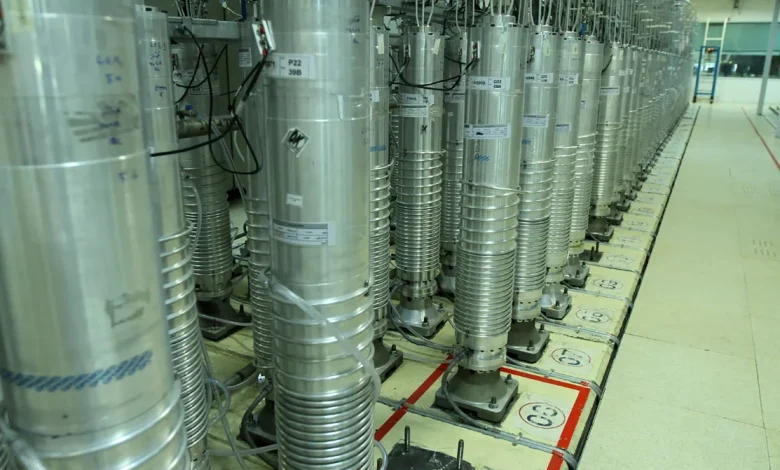
Uranium enrichment represents the most critical and contentious element in the ongoing geopolitical chess match defining the Middle East. As reports surface in early 2026 indicating that Iranian officials are studying whether to completely abandon their nuclear fuel cycle capabilities as a fundamental U.S. condition for ending the regional war, global markets and international diplomatic circles have been sent into a frenzy. This potential pivot marks a historic deviation from decades of Tehran’s steadfast commitment to mastering the atomic fuel cycle, a pursuit that has defined its national pride and strategic posture. The implications of such a monumental concession are vast, potentially unwinding years of military escalation, crippling economic sanctions, and the constant looming threat of a broader regional conflagration. The diplomatic corridors are buzzing with speculation as analysts attempt to decode the internal maneuvering within the Islamic Republic and whether this signals a genuine capitulation or a temporary tactical retreat designed to buy crucial time.
Historical Context and the Historic Proposition
For over two decades, the Islamic Republic of Iran has maintained that its nuclear program is exclusively intended for peaceful civilian purposes, including energy generation and medical research. However, the international community, led heavily by the United States and its allies, has continuously scrutinized the program due to fears of nuclear weapons proliferation. The proposition currently being debated by the Iranian leadership—abandoning the process of purifying uranium entirely—is a stark contrast to their previous diplomatic posturing. In the past, observers have noted why U.S.-Iran negotiations failed, primarily because Tehran vehemently refused to dismantle its advanced centrifuge arrays or cap its enrichment below thresholds deemed safe by western powers. Now, confronted with the devastating realities of a prolonged and expanding regional war, the supreme leadership is reportedly weighing the survival of the regime and the state economy against the ideological victory of maintaining an indigenous nuclear fuel cycle. This debate highlights a massive structural shift in how Iran’s leadership interprets national security in 2026.
Strategic Calculations in Tehran
The strategic calculations occurring within the halls of power in Tehran are complex, multifaceted, and fraught with internal division. Hardliners within the Islamic Revolutionary Guard Corps (IRGC) have long viewed the nuclear program as the ultimate sovereign right and a vital deterrent against foreign intervention and regime change. Yet, the current military landscape has shifted dramatically. Analysts evaluating the broader theater of conflict have highlighted how Iran rebuilding missiles amid tactical pause scenarios reflects a pivot toward conventional asymmetric deterrence rather than relying solely on the increasingly precarious nuclear umbrella. If the nation can secure binding security guarantees and the immediate lifting of suffocating economic blockades by satisfying the primary American condition of ending the atomic project, pragmatists argue that this trade-off is not only acceptable but strictly necessary for national survival. This internal debate underscores a pivotal crossroads: whether to double down on an isolated resistance economy or to tentatively reintegrate into the global financial system at the high cost of the nuclear crown jewel.
Economic Pressures and Domestic Realities
To fully understand why abandoning this capability is even on the table, one must critically examine the dire domestic economic realities facing the Iranian populace. Years of successive “maximum pressure” campaigns and secondary sanctions have decoupled Iran from the global banking system, cratered the value of the national currency, and severely restricted the export of its vital hydrocarbon resources. Rampant hyperinflation, soaring youth unemployment, and widespread public dissatisfaction have culminated in recurring, dangerous waves of domestic unrest. The political elite are acutely aware that while they can project formidable proxy power abroad, internal instability poses the single most existential threat to their continuous governance. Conceding the nuclear program could potentially unlock hundreds of billions of dollars in frozen sovereign assets and future unrestricted oil revenues. The massive potential financial influx would allow the government to stabilize the currency, subsidize essential consumer goods, and invest in desperately needed public infrastructure, thereby effectively neutralizing a significant portion of domestic opposition.
The United States Demands for Ending the War
From the unwavering perspective of Washington, the complete and verifiable cessation of the nuclear fuel cycle is the holy grail of its modern Middle Eastern foreign policy. Successive administrations have attempted to box in Iran’s nuclear ambitions through various iterative frameworks of diplomacy and coercion, culminating most famously in the Joint Comprehensive Plan of Action (JCPOA), which ultimately unravelled and left a vacuum of mistrust. In the context of the current intensive regional war, the U.S. has reportedly communicated through backchannels that partial measures, temporary freezes, or sunset clauses are no longer sufficient to de-escalate the conflict. The central demand is unequivocal: the total dismantlement of all enrichment infrastructure. Recent diplomatic leaks suggest that this maximalist approach is rooted in the strategic assessment that Iran is in a weaker negotiating position than ever before. Observers tracking these developments acutely remember when a previous U.S. final and best offer ignored by Tehran led directly to further entrenchment of punitive sanctions. Now, the stakes are undeniably existential, and Washington is heavily leveraging the implicit threat of direct military confrontation and the continuation of a devastating regional proxy war to force a definitive resolution to the decades-long nuclear crisis.
Assessing Leverage and Long-Term Stability
The geopolitical leverage currently wielded by the United States is arguably unprecedented in recent diplomatic history. The forward deployment of formidable naval strike groups, the strengthening of regional integrated defense coalitions, and the seamless intelligence sharing with allied Gulf states have created an ironclad containment ring around Tehran. Furthermore, the broader geopolitical environment—including the dangerous complexities of the Strait of Hormuz standoff—has demonstrated the hard limits of Iran’s ability to disrupt global energy markets without triggering a catastrophic, regime-ending kinetic response from a unified international coalition. By strictly demanding the end of the nuclear program as an absolute prerequisite for peace, the U.S. aims to permanently alter the balance of power, ensuring long-term stability by removing the most destabilizing variable from the strategic equation. If successfully executed, this diplomatic maneuver would undoubtedly be hailed as a historic masterclass in coercive diplomacy, achieving a core strategic objective without resorting to a full-scale invasion or sustained bombing campaigns against deeply buried, heavily fortified nuclear facilities.
Regional Security and the Middle East Dynamic
The vast implications of an Iranian withdrawal from the nuclear arena extend far beyond bilateral U.S.-Iran relations; they would fundamentally rewire the security architecture of the entire Middle East. For decades, the looming specter of a nuclear-armed Iran has driven an intense, high-stakes arms race, prompting neighboring Gulf states to invest hundreds of billions in advanced missile defense systems, stealth fighter fleets, and their own nascent civilian nuclear energy programs. An ironclad, verifiable commitment by Iran to abandon its enrichment capabilities would significantly and immediately de-escalate these regional tensions. It would undermine the primary security justification for the rapid militarization of the Persian Gulf and could actively pave the way for a new era of regional economic and security cooperation. However, the path to such a utopian outcome is fraught with highly motivated potential spoilers. Modern history has shown repeatedly how easily such delicate agreements can be violently disrupted, as clearly seen when Israel torpedoes U.S.-Iran peace talks out of a deep-seated, existential mistrust of any arrangement that leaves even a fraction of Iran’s latent industrial capacity intact.
Reactions from Neighboring Adversaries and Allies
The immediate reaction from regional stakeholders to these unprecedented reports has been a volatile mixture of cautious optimism and profound skepticism. In Israel, the dominant political and military establishment views any Iranian concession with intense, hyper-vigilant suspicion, often demanding the physical, irreversible destruction of underground facilities like Natanz and Fordow rather than relying on diplomatic assurances or international monitoring protocols. Conversely, key Gulf states such as Saudi Arabia and the United Arab Emirates might quietly welcome the development as a pragmatic, necessary step toward cooling regional friction, provided the final agreement is backed by robust, formalized American security guarantees. Meanwhile, Iran’s traditional strategic allies and partners, particularly Russia and China, are observing the fluid situation closely. While they have historically supported Iran’s sovereign right to peaceful nuclear technology, a broad de-escalation that stabilizes the volatile global energy market and prevents an unpredictable regional war ultimately serves their broader macroeconomic interests, even if it signifies a massive diplomatic victory for Washington.
| Strategic Element | Current Iranian Stance (Pre-2026) | Proposed U.S. Peace Condition (2026) | Potential Regional Impact |
|---|---|---|---|
| Uranium Enrichment Level | Up to 60% purity (near weapons-grade) | Complete cessation of domestic enrichment | Massive reduction in immediate nuclear proliferation fears across the globe. |
| Centrifuge Operations | Deployment of advanced IR-6 and IR-8 centrifuges | Dismantlement and international impounding | Prevents rapid breakout capabilities, satisfying core Israeli and Gulf security demands. |
| Stockpile Management | Tons of enriched material stockpiled domestically | Export of all enriched material to neutral third parties | Neutralizes the existing threat matrix without requiring highly risky kinetic military action. |
| Economic Status | Subject to crippling global sanctions and financial isolation | Gradual lifting of sanctions; unfreezing of national assets | Economic revitalization, currency stabilization, and increased global oil supply. |
The Future of Global Nuclear Diplomacy
Should this historic, groundbreaking concession materialize, it will serve as a permanent watershed moment in the complex history of global nuclear diplomacy, establishing an entirely new paradigm for how the international community addresses severe proliferation threats. The total abandonment of enrichment by a sovereign state that has invested so heavily in its nuclear infrastructure would powerfully validate the effectiveness of sustained, multifaceted pressure campaigns combining crippling economic sanctions, severe diplomatic isolation, and highly credible military threats. However, the operational execution and enforcement of such a sweeping agreement will be monumentally complex. It will require an unprecedented level of intrusiveness from international regulatory bodies, particularly the International Atomic Energy Agency (IAEA), which would be aggressively tasked with overseeing the highly technical dismantling of sophisticated centrifuge cascades and verifying the secure export of all existing nuclear stockpiles. The technical, legal, and logistical challenges involved in executing this granular oversight cannot be overstated, and any perceived violation, delay, or obfuscation could instantly reignite the devastating conflict.
Monitoring and Verification Protocols
The absolute bedrock of any successful, enduring agreement will be the strict monitoring and verification protocols. Unlike previous, heavily criticized frameworks that relied on periodic scheduled inspections and managed access to declared sites, the new U.S. conditions would likely demand a 24/7, unhindered physical presence of international inspectors across Iran’s entire nuclear supply chain—from remote uranium mines and milling facilities to highly secure centrifuge manufacturing plants. Advanced, next-generation surveillance technologies, including real-time environmental sampling, persistent high-resolution satellite monitoring, and continuous remote data transmission, would be forcefully deployed to ensure total and absolute compliance. The Iranian government’s willingness to officially submit to such intensely intrusive measures will be the ultimate, undeniable litmus test of their true commitment to ending the war. For the international community, firmly establishing these protocols is absolutely critical to preventing the stealthy development of a covert, parallel nuclear weapons program hidden deep within the country’s vast mountainous terrain.
Conclusion: A Pathway to Unprecedented Peace
In sweeping conclusion, the emerging reports indicating that Iranian officials are seriously studying the distinct possibility of abandoning their nuclear program represent one of the most significant geopolitical developments of the entire 21st century. If Tehran officially crosses this Rubicon, it will definitively alter the trajectory of the Middle East, swapping its long-cherished, highly controversial atomic ambitions for vital economic survival and a definitive end to a devastating regional war. The United States’ uncompromising demand for total cessation reflects a bold, maximalist strategy that appears to be finally yielding tangible diplomatic results in the face of deep-seated Iranian domestic crises and an overwhelming conventional military disparity. While the arduous path to a finalized, verifiable, and enduring agreement is still fraught with enormous structural obstacles, deep historical mistrust, and the constant, looming threat of active sabotage by entrenched hardline factions on all sides, the mere high-level consideration of this monumental concession signals a profound, undeniable shift in strategic calculations. As the entire world anxiously watches these incredibly delicate negotiations unfold behind closed doors, the immense potential for an unprecedented era of peace and stability in the Middle East hangs precariously in the balance, entirely dependent on whether the lofty promises made at the negotiating table can ultimately withstand the harsh, unforgiving realities of on-the-ground implementation and enforcement.