Iran Condemns Trump’s Jesus Depiction and Defends The Pope
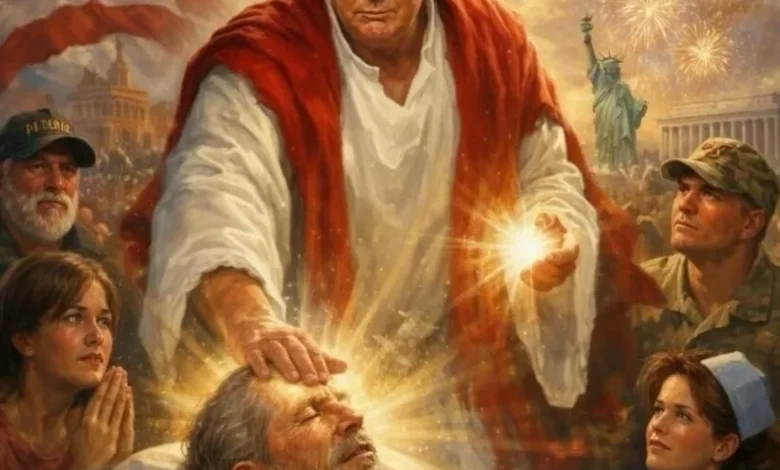
Iran has entered the geopolitical and theological discourse in a manner that few international analysts could have ever predicted. In an extraordinary and unprecedented public address, the president of Iran publicly condemned Donald Trump’s self-depiction as Jesus Christ, explicitly denouncing the imagery as severe blasphemy. What makes this declaration even more paradigm-shattering is that the Iranian administration did not stop there. Speaking “on behalf of the great nation of Iran,” the president vigorously condemned Trump’s accompanying insults aimed at His Holiness the Pope. Yes, you are reading the historical record of 2026 correctly: the Islamic Republic is aggressively defending the head of the Catholic Church against the provocations of a United States political leader. The sheer irony of this moment has left political scientists, theologians, and the global public utterly astounded, leading many to echo the viral sentiment that modern reality increasingly resembles an unpredictable simulation.
The Geopolitical and Theological Context of the Condemnation
To fully grasp the magnitude of this event, one must deconstruct the intricate interplay of international relations and religious dogma that underpins it. For decades, the rhetorical battlelines between Washington and Tehran have been defined by mutual animosity, often framed in stark, almost apocalyptic terms. The United States has frequently been demonized within Iranian political rhetoric, while Iran has been heavily targeted by American sanctions and military posturing. However, the introduction of ecumenical defense into this hostile dynamic marks a radical departure from traditional script.
When Trump circulated imagery depicting himself in a messianic light—specifically adopting the iconography of Jesus Christ—and subsequently directed disparaging remarks toward the Pope, he unwittingly triggered a deeply rooted theological sensitivity within the Islamic world. The Iranian president’s intervention is not merely a political stunt designed to embarrass an American adversary; it is anchored in genuine religious doctrine. In Islam, blasphemy against any recognized prophet is considered a grievous offense, fundamentally indistinguishable from insulting the Prophet Muhammad himself.
Jesus in Islam: A Deep Dive into the Quranic Perspective
Western audiences often mistakenly presume a total theological disconnect between Christianity and Islam. However, Jesus—known as Isa al-Masih in Arabic—is a profoundly revered figure in Islamic tradition. To understand why an Iranian president would passionately defend the sanctity of Jesus, one must examine the text of the Quran. Jesus is mentioned by name in the Quran significantly more times than the Prophet Muhammad. He is explicitly acknowledged as the Messiah, a worker of miraculous healings, and the Word of God breathed into the Virgin Mary (Maryam), who herself holds the distinction of having an entire chapter of the Quran named in her honor.
Islam mandates absolute respect for all prophets in the Abrahamic lineage. Therefore, mocking, degrading, or arrogantly co-opting the image of Jesus for political self-aggrandizement is viewed not just as poor taste, but as an intolerable desecration of the sacred. When Trump utilized this imagery, he crossed a theological red line that resonated deeply with millions of practicing Muslims globally. By acting as the vocal vanguard against this perceived blasphemy, Iran strategically positions itself not only as the defender of Islamic values but as a protective shield for Abrahamic reverence as a whole, a move that intricately complicates the traditional Western narrative of the Islamic Republic.
A Diplomatic Shift: The Islamic Republic Defending the Pope
The defense of the Pope by a Shia theocracy introduces a staggering twist to contemporary diplomacy. The Vatican and Tehran have maintained diplomatic relations for decades, often quietly collaborating on issues of mutual social concern, such as anti-poverty initiatives and family values. Yet, a public, high-stakes defense of the Pontiff against a Western leader is virtually unprecedented.
This maneuver highlights a fascinating realignment. Iran is essentially leveraging this controversy to underscore a shared moral high ground with the Catholic world, projecting an image of pious solidarity against what it characterizes as the decadent, sacrilegious nature of modern American populism. By framing Trump as a mutual antagonist to both sincere Christians and Muslims, the Iranian leadership effectively weaponizes ecumenical empathy. This calculated diplomacy suggests a sophisticated understanding of global cultural currents, recognizing that alienating a mutual detractor can foster unconventional alliances and reshape international public perception.
Analyzing Trump’s Controversial Depiction
The catalyst for this global uproar is rooted in the increasing convergence of political populism and religious iconography in American domestic politics. Throughout his political career, Trump has frequently enjoyed the fervent support of specific evangelical demographics, some of whom have historically drawn parallels between his political survival and divine providence. However, directly leaning into visual representations that superimpose his likeness onto traditional depictions of Jesus represents an escalation in rhetorical audacity.
This tactic, intended perhaps to galvanize a devout base or to generate media spectacle, fundamentally miscalculated the global, cross-cultural ramifications. While it may play effectively within isolated echo chambers, on the world stage, it is viewed through a remarkably different lens. To traditional institutional religions—both Christian and Islamic—such actions reek of extreme hubris and idolatry. The backlash transcends political disagreement; it strikes at the core of religious orthodoxies that vehemently reject the conflation of mortal, flawed political figures with divine or prophetic entities.
Global Reactions: Do We Live in a Simulation?
The public reaction to the Iranian condemnation has been a mix of bewilderment, dark humor, and genuine philosophical questioning. Social media platforms and international editorial boards alike have echoed a common refrain: “We live in a simulation.” This phrase, initially a niche concept from digital physics and science fiction, has evolved into a cultural shorthand for events that are so wildly improbable and historically dissonant that they defy logical progression.
The surreal nature of an Islamic theocracy passionately defending the Catholic Pope against the capitalist icon of the American right-wing genuinely feels like a glitch in the geopolitical matrix. It upends decades of established narratives regarding the “Clash of Civilizations.” Instead of a straightforward East versus West or Islam versus Christianity dichotomy, the current reality reveals a fragmented, unpredictable landscape where traditional adversaries find themselves aligned on the most unexpected moral battlefields.
The Broader Implications for US-Iran Relations in 2026
This incident does not exist in a vacuum; it occurs against the backdrop of highly volatile US-Iran relations. The fallout from this theological skirmish must be contextualized within the broader strategic theater. For instance, the ongoing friction detailed in the collapsed peace negotiations highlights a diplomatic environment already fraught with insurmountable tension and mutual distrust.
Iran’s strategic posturing has been increasingly bold, capitalizing on perceived American missteps. The recent controversies parallel Trump’s aggressive posturing towards NATO and Iran, demonstrating a pattern of polarizing rhetoric that alienates traditional allies while unintentionally providing diplomatic ammunition to adversaries. Furthermore, Iran’s ability to pivot seamlessly from military exercises to high-level moralizing is evident in Iran’s strategic dominance in the Strait of Hormuz. They recognize that soft power—such as defending the global religious order—is just as crucial as hard power in modern statecraft.
It is increasingly clear that unilateral aggressive tactics, such as Trump’s blockade posturing, often fail to yield desired outcomes when adversaries adeptly maneuver through both geopolitical strategy and ideological public relations. By capturing the moral narrative regarding religious respect, Iran complicates any US effort to isolate Tehran internationally, presenting itself instead as a rational, respectful actor amidst American political chaos.
Comparative Analysis of Religious Rhetoric in Statecraft
To fully contextualize this bizarre event, it is crucial to analyze how different global actors integrate religious concepts into their statecraft. The table below illustrates the stark contrasts in how different entities are currently navigating the intersection of religion and politics.
| Geopolitical Entity | Primary Rhetorical Stance on Religion | Stance on Papal/Christian Authority | Recent Actions & Controversies |
|---|---|---|---|
| The Islamic Republic of Iran | Theocratic defense of Abrahamic Prophets, strict adherence to Islamic jurisprudence against blasphemy. | Protective and diplomatically supportive; views insults against Christian figures as an attack on shared divine lineage. | Publicly condemning US political figures for blasphemous use of Jesus imagery. |
| Trump Political Apparatus | Populist integration of Christian nationalist iconography; blending personal political destiny with divine right. | Dismissive of institutional critiques; willing to alienate traditional religious hierarchies for populist appeal. | Circulating self-aggrandizing messianic imagery and publicly insulting the Pope. |
| The Vatican | Global ecumenism, pastoral guidance, promotion of social justice and interfaith dialogue. | Centralized authority; maintains diplomatic neutrality but pushes back against political co-optation of faith. | Navigating complex diplomatic fallout while facing rhetorical attacks from US politicians. |
This comparative framework clearly demonstrates that the modern application of religious rhetoric is no longer confined to expected boundaries. Entities are willing to cross historical lines to score ideological points, further complicating international diplomacy.
Conclusion: A Convergence of Unlikely Allies
The modern era consistently challenges our assumptions, but few events have crystallized the sheer unpredictability of global affairs quite like Iran’s defense of the Pope against Donald Trump. By invoking the Quranic reverence for Jesus to condemn an American political figure, the Iranian president has masterfully blended theology with geopolitical opportunism. This act has exposed the vulnerabilities of employing unchecked, sacrilegious populism on the world stage, demonstrating that cultural insensitivity can forge the most unlikely alliances.
As we analyze these unfolding events, it becomes imperative to seek out extensive, globally focused international journalism to understand the full scope of such nuanced geopolitical shifts. The reality we navigate in 2026 demands a sophisticated understanding of not just political science, but theology, history, and the incredibly complex ways they intertwine. If the Islamic Republic of Iran can become the most vocal defender of the Catholic Pope against the President of the United States, it is safe to conclude that the old rules of geopolitics have been permanently rewritten. Whether we are living in a simulation or merely witnessing the ultimate, chaotic evolution of global diplomacy, the outcome is undeniably historic.