Bakersfield Hostage Standoff: Bomb Threat and Key Releases
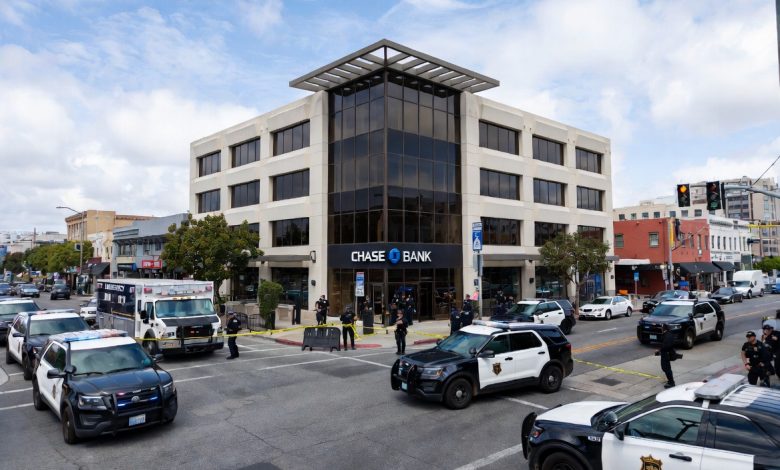
Bakersfield, California, became the epicenter of an intense tactical emergency on Tuesday, June 2, 2026, when a heavily armed suspect barricaded himself inside a prominent downtown bank. The developing crisis, which drew immediate national attention, unfolded at the Chase Bank branch located near 17th Street and Chester Avenue. What began as an early afternoon call regarding a bomb threat quickly escalated into a high-stakes hostage situation, prompting a massive mobilization of local, state, and federal law enforcement agencies.
The incident has paralyzed the downtown core of this major agricultural hub, which is home to over 420,000 residents. Officers blocked off numerous major intersections, evacuated key government offices, and scrambled tactical response teams, including the Federal Bureau of Investigation (FBI) and the Bureau of Alcohol, Tobacco, Firearms and Explosives (ATF). As negotiations stretched into the late hours of the night, authorities successfully secured the release of multiple hostages, providing some relief to a community gripped by fear.
The Standoff Begins: A High-Stakes Crisis in Downtown Bakersfield
The tension commenced at approximately 1:00 PM on Tuesday when the Bakersfield Police Department (BPD) received a highly concerning emergency call reporting an active bomb threat at the Chase Bank building located at 17th Street and Chester Avenue. Upon arriving at the scene, first responders discovered a highly volatile situation: an unidentified male subject had barricaded himself inside the facility. Crucially, the suspect was not alone; several “community members” were trapped inside with him, transforming the call from a localized bomb threat into an active, multi-casualty hostage crisis.
As the minutes ticked by, local news outlets and eyewitnesses reported a heavy tactical presence descending upon the area. A spokesperson for JPMorgan Chase later confirmed the bank’s awareness of the situation, stating that the branch itself was located on the ground floor of the building and that the company was cooperating fully with law enforcement. The suspect reportedly claimed to have an explosive device strapped directly to his body, dramatically raising the stakes for the response teams assembled on the perimeter.
The Initial Bomb Threat and Police Response
First responders, recognizing the immediate threat posed by an explosive device in a crowded commercial sector, acted swiftly. Patrol officers established a strict containment line around the block, establishing a safety buffer designed to limit the potential blast radius. Within the first hour of the incident, a small number of bank customers and employees managed to escape the building through side exits, but several others remained trapped inside, subject to the whims of the barricaded individual.
BPD immediately activated its specialized units, calling in SWAT, a dedicated bomb squad, and the department’s Crisis Negotiation Team. Given the complexity of a bomb threat combined with hostages, local authorities also initiated emergency contact with federal partners, bringing in advanced tactical support from the FBI and the San Francisco Field Office of the ATF.
Tactical Cordons and Major City Lockdowns
The operational scale of the response required an immediate, sweeping shutdown of the downtown area. Bakersfield police officers cordoned off multiple city blocks, closing H through L streets completely between Truxtun Avenue and 18th Street. This massive physical perimeter was put in place to protect the public from potential shrapnel and blast waves, as well as to give tactical vehicles unhindered access to the scene.
In addition to the road closures, the immediate proximity of major civic infrastructure necessitated unprecedented safety measures. The threat forced a series of preventative lockdowns and evacuations that ground local government operations to a halt. Officers systematically cleared nearby commercial structures and mandated strict safety protocols for those unable to safely evacuate.
Evacuating Municipal Buildings and Restricting Movement
The geographical footprint of the Chase Bank building placed it directly adjacent to several critical government hubs. Consequently, authorities ordered the immediate evacuation of Bakersfield City Hall (both the North and South buildings), the local Development Services Building, and even the Bakersfield Police Department Headquarters itself. Employees and visitors were escorted to safety as SWAT vehicles and armored tactical units took up positions around the perimeter.
A local livestreamer, Jacob Davidson, who operates a nearby business, described the scene as the largest law enforcement presence he had ever witnessed in the city. Davidson observed officers entering the rear parking garage of the bank and setting up specialized tactical command centers. Crucially, emergency responders also established color-coded trauma tents—utilizing green, yellow, red, and black tags—a standard, preventative procedure used during high-risk scenarios where mass casualties are a potential outcome.
The Hostages: Trapped Inside the Chase Bank
The presence of innocent civilians inside the bank significantly complicated any immediate tactical entry. Bakersfield Police spokesperson Sally Selby stated to reporters that “several community members” were inside the location with the barricaded suspect. While the exact number of hostages remained unconfirmed by officials throughout the afternoon, the psychological toll on those trapped—and their families waiting outside the perimeter—was immense.
Hostage situations involving alleged explosives present a unique set of operational challenges for police. Any sudden movement or perceived threat from the outside could prompt the suspect to detonate the device, making patience and communication the primary weapons of the response team. According to CBS News coverage of the event, the suspect maintained telephone communication with negotiators, allowing authorities to continuously monitor the health and status of those held inside.
Negotiations and the Safe Release of Hostages
Negotiation efforts formed the cornerstone of the strategy to resolve the standoff without loss of life. Members of the Bakersfield Police Department’s Crisis Negotiation Team, working alongside highly trained FBI crisis negotiators, worked tirelessly to build rapport with the barricaded suspect. These specialists focused on de-escalating the suspect’s emotional state, gathering intelligence about his motivations, and pleading for the safe release of the captives.
These intense, hours-long efforts eventually yielded positive results. Late in the afternoon, Sgt. Eric Celedon announced that negotiators had successfully secured the release of the first hostage. “Through our negotiations with the individual inside, we were able to negotiate the safe surrender of one of the hostages inside the building,” Celedon confirmed in a video statement. The released individual was immediately met by emergency medical personnel, evaluated, and transported to a safe location for debriefing.
FBI and Local Hostage Negotiation Synergy
The successful extraction of the first hostage was followed by several more hours of tense, quiet stalemate. However, shortly after 9:00 PM local time, the Bakersfield Police Department issued an update on social media confirming that a second hostage had been safely released. The gradual release of the hostages pointed to the highly coordinated effort between the BPD and federal negotiators, who meticulously used psychological leverage to win concessions from the suspect.
Despite the prolonged duration of the crisis, Sgt. Celedon reassured the public that the remaining hostages were in “good health” and that no injuries had been reported. The tactical team’s priority remained a completely peaceful resolution, avoiding an armed assault on the bank unless absolutely necessary to prevent imminent loss of life.
Chronological Timeline of the Downtown Bakersfield Standoff
The following table outlines the key chronological markers and operational events that transpired during the hourslong standoff at the Chase Bank building on June 2, 2026:
| Time / Phase | Operational Developments | Key Agencies Involved | Outcome / Current Status |
|---|---|---|---|
| 1:00 PM | Initial emergency call reporting an active bomb threat at Chase Bank. | Bakersfield Police Department (BPD) | Officers arrive, confirm a barricaded subject, and establish a perimeter. |
| 2:00 PM | Mass evacuations ordered for nearby municipal facilities and businesses. | BPD, City Administration | Bakersfield City Hall and Police Headquarters locked down; road closures active. |
| Mid-Afternoon | Activation of specialized tactical and medical response units. | BPD SWAT, Bomb Squad, Local EMS | Color-coded trauma tents erected; telephone contact with suspect established. |
| Before 5:00 PM | First major breakthrough in crisis negotiations. | BPD Crisis Negotiation Team, FBI | Safe release and surrender of the first hostage confirmed by Sgt. Celedon. |
| Evening | Prolonged physical standoff; federal backup arrives. | BPD, FBI, ATF San Francisco Field Office | Surrounding area completely cordoned; Primary Election events canceled. |
| 9:00 PM | Second hostage successfully negotiated out of the bank. | BPD, FBI Negotiators | Second captive released safely; remaining hostages reported in good health. |
The Tactical Reality: Bomb Squads, Trauma Tents, and Perimeters
The physical environment surrounding the bank resembled a military staging area as night fell over Bakersfield. Bomb squad units utilized remote-controlled robotic devices to scan the exterior of the building, checking for secondary devices or checking structural entry points. Tactical teams stood by in full body armor, prepared to breach the facility if negotiations collapsed.
The setup of the color-coded trauma tents, while standard practice, underscored the grim reality of the situation. These tents are designed to rapidly sort and treat victims based on the severity of their injuries, ensuring that if an explosion occurred, medical personnel could administer life-saving care immediately. Fortunately, because of the careful pace of the negotiations, these emergency medical resources remained on standby and did not have to be utilized.
Impact on Primary Election Night Events
The geographical and temporal intersection of the crisis also had broader societal impacts, particularly because the incident occurred on a major Primary Election Day in California. Voters across the region were casting ballots in several key local and state-level races, with many campaign watch parties planned for the evening. The massive road closures and security lockdowns in downtown Bakersfield forced the immediate cancellation or relocation of several political events.
Specifically, a major election night gathering for Dr. Jasmeet Bains, a candidate for California’s U.S. Congressional District 22, had to be canceled due to its proximity to the active scene. The disruption highlighted how a localized security threat can rapidly ripple through the civic and political life of an entire metropolitan area, forcing leaders to prioritize immediate physical safety over democratic celebrations.
A History of High-Stress Law Enforcement Incidents
The patience and strategic restraint demonstrated by the Bakersfield Police Department and the FBI in this standoff reflect a broader trend in modern law enforcement. Across the United States, police tactics during high-stakes confrontations have come under intense scrutiny. Incidents involving immediate force often spark intense national debate regarding accountability, escalation, and the necessity of non-lethal de-escalation tools.
For instance, cases like the highly publicized killing of Casey Goodson Jr. have highlighted the devastating consequences when tactical encounters escalate rapidly, leading to criminal convictions of officers and deeply dividing communities. To prevent such outcomes, contemporary police training emphasizes the use of specialized crisis intervention teams, psychological profiling, and prolonged negotiations, particularly when dealing with barricaded subjects or mental health crises.
When these incidents do occur, thorough investigative transparency is vital for public trust. Much like when an agency releases report on Buford’s Bar shooting, detailed after-action reviews allow departments to analyze what went right and what went wrong during complex operations. This analytical approach helps refine the tactical protocols that were successfully deployed in downtown Bakersfield to protect both the officers and the hostages.
Ultimately, the legal and professional accountability of emergency responders remains a focal point of civil rights and safety discussions. Standoffs that end in violence or operational failure often culminate in complex legal battles, such as those analyzed in the Shaknovsky manslaughter trial, where professional duty of care and decision-making under pressure are legally dissected. By prioritizing negotiation over immediate physical breach, the agencies in Bakersfield chose a path designed to minimize legal, ethical, and physical casualties.