Peace talks collapse: Why U.S.-Iran negotiations failed
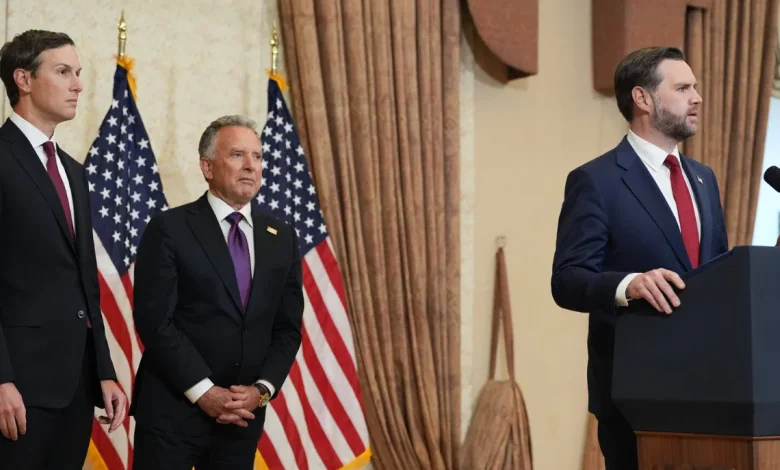
Peace talks between the United States and the Islamic Republic of Iran have spectacularly unraveled, leaving the international community bracing for profound geopolitical and economic shockwaves. The collapse of these high-stakes negotiations was fundamentally rooted in a classic, intractable standoff: the United States demanded immediate caps on Iran’s advancing uranium enrichment program and the unconditional reopening of the strategically vital Strait of Hormuz. In stark contrast, Tehran delivered an uncompromising ultimatum, insisting that Washington must first lift all crippling economic sanctions and unfreeze billions of dollars in blocked overseas assets before any discussions regarding maritime navigation or nuclear concessions could commence. This diplomatic stalemate ultimately deteriorated into an intense test of geopolitical brinkmanship, where neither side was willing to blink first. Now, as officials in both capitals feign surprise at the breakdown, the global theater shifts from diplomatic ballrooms to war rooms, leaving the world anxiously questioning whether the next phase of this protracted conflict will bring renewed dialogue or devastating military strikes.
The Anatomy of a Diplomatic Breakdown
The recent diplomatic failure did not occur in a vacuum; it is the culmination of years of mistrust, broken agreements, and escalating hostilities. For months, back-channel intermediaries in Oman and Qatar had labored tirelessly to lay the groundwork for a viable de-escalation framework. The objective was clear: prevent a catastrophic regional conflict while addressing the most urgent security concerns of both Washington and Tehran. The United States approached the table with a mandate to secure maritime trade routes and neutralize the immediate threat of a nuclear-armed Iran. Conversely, the Iranian delegation arrived with a mandate heavily influenced by recent internal Iranian political shifts, focusing entirely on economic survival and regime preservation.
As the talks transitioned from preliminary discussions to formal negotiations, the fundamental chasm between the two nations became agonizingly apparent. The U.S. negotiating team presented a phased approach that required upfront, verifiable Iranian compliance on security and nuclear fronts before any economic relief would be considered. Iran, citing the unilateral withdrawal of the United States from the 2015 Joint Comprehensive Plan of Action (JCPOA), refused to offer preliminary concessions, arguing that the burden of trust-building lay squarely on Washington. This mutual intransigence transformed the negotiation table into a theater of stubbornness, where every proposal was met with a rigid counter-demand, ultimately dooming the peace process to failure.
The U.S. Demands: Strait of Hormuz and Uranium Enrichment
At the core of the American diplomatic strategy were two non-negotiable pillars: guaranteeing freedom of navigation through the Strait of Hormuz and halting Iran’s rapid accumulation of highly enriched uranium. These demands reflect Washington’s primary strategic interests in the Middle East—ensuring the uninterrupted flow of global energy supplies and preventing nuclear proliferation.
Securing the Strait of Hormuz
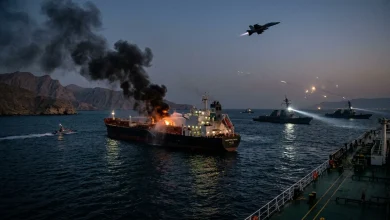
The Strait of Hormuz is arguably the world’s most critical strategic chokepoint, with approximately 20 to 30 percent of the world’s total oil consumption passing through its narrow waters daily. For the United States and its global allies, any disruption to this maritime artery poses an existential threat to the global economy. During the negotiations, Washington insisted that Iran immediately cease all harassment, seizures, and aggressive posturing against commercial shipping vessels in the Persian Gulf and the Gulf of Oman. The U.S. demanded ironclad guarantees that the IRGC Navy would pull back its fast-attack crafts and anti-ship missile batteries from the coastline, allowing international commerce to proceed unimpeded. Without this fundamental guarantee, U.S. negotiators argued, any broader agreement would be virtually meaningless, as global markets would remain perpetually hostage to Tehran’s military whims.
Immediate Caps on Uranium Enrichment
Parallel to the maritime security demands, the U.S. delegation prioritized the absolute containment of Iran’s nuclear program. International Atomic Energy Agency (IAEA) reports had recently indicated that Iran was enriching uranium to 60 percent purity—a mere technical step away from the 90 percent weapons-grade threshold. Washington demanded an immediate freeze on all advanced centrifuge operations and the dilution of existing highly enriched stockpiles. Furthermore, the U.S. required the immediate restoration of comprehensive IAEA monitoring, including the reinstallation of surveillance cameras that Tehran had previously dismantled. The American stance was unequivocal: the timeline for an Iranian nuclear breakout had shrunk to an unacceptably short window, and verifiable capping of enrichment was a prerequisite for any conversation regarding sanctions relief.
Iran’s Counter-Demands: Sanctions Relief and Frozen Assets
Iran’s negotiating posture was characterized by a profound sense of grievance and a singular focus on immediate economic emancipation. For Tehran, the geopolitical leverage afforded by its nuclear program and its geographical dominance over the Strait of Hormuz were its only viable bargaining chips against what it views as a relentless Western economic siege.
Demanding the Unfreezing of Capital
The Iranian delegation’s primary directive was the total and immediate lifting of the comprehensive sanctions architecture that has severely crippled the nation’s economy. This included not only the primary sanctions on its oil, banking, and petrochemical sectors but also secondary sanctions that penalize foreign entities attempting to do business with Iran. More specifically, Tehran demanded the immediate release of tens of billions of dollars in frozen sovereign assets locked in international accounts stretching from South Korea to Iraq and Europe. Iranian negotiators adamantly stated that economic asphyxiation could no longer be used as a tool of coercion. They argued that unfreezing these funds was not a concession by the West, but simply the return of stolen Iranian property, and a necessary first step before any technical talks on uranium or naval operations could legitimately occur.
Sovereignty Over Naval Passages
In response to U.S. demands regarding the Strait of Hormuz, Iran doubled down on its sovereign rights. Tehran’s response was chillingly direct: “Lift the sanctions first, unfreeze our money, and we’ll decide who sails through Hormuz.” Iran considers the waters adjacent to its coastline as sovereign territory and views the heavy presence of U.S. and allied naval forces as a provocative occupation. The Iranian military establishment maintained that they have an inherent right to police their territorial waters and defend against perceived acts of espionage or smuggling. By linking maritime security to immediate financial relief, Iran effectively weaponized global energy security, betting that the resulting market panic would force Washington’s hand.
The Stalemate: Who Blinks First in Global Geopolitics?
The collapse of the talks ultimately came down to a high-stakes game of diplomatic chicken. Both Washington and Tehran entered the negotiations fully aware of the dire consequences of failure, yet both were politically constrained from offering the crucial first concession. For the U.S. administration, offering upfront sanctions relief without tangible, verifiable nuclear rollbacks would be politically suicidal domestically, instantly branded as capitulation to a hostile regime. For the Iranian leadership, surrendering their primary leverage—nuclear advancement and maritime control—before securing guaranteed economic relief would be viewed internally as a humiliating defeat, especially by hardline factions within the IRGC.
This mutual fear of appearing weak created an insurmountable deadlock. The classic question of “who blinks first” paralyzed the negotiation process. The mediators’ attempts to propose simultaneous, synchronized steps—often referred to as “action-for-action” frameworks—were repeatedly rejected, as neither side trusted the other to fulfill their corresponding obligations. Consequently, the delegations packed their bags, returning to their respective capitals to prepare for the inevitable fallout of a failed diplomatic venture.
Diplomatic Comparison: Evaluating the Core Differences
To fully grasp the magnitude of the deadlock, it is essential to juxtapose the foundational demands of both parties. The table below outlines the irreconcilable differences that led to the collapse of the negotiations.
| Negotiation Parameter | United States Demand | Iran Counter-Demand |
|---|---|---|
| Strait of Hormuz | Unconditional, permanent reopening and cessation of IRGC naval harassment. | Control over transit rights; cessation of Western naval presence in the Persian Gulf. |
| Uranium Enrichment | Immediate cap below 60%, dilution of stockpiles, and full IAEA verification. | Refusal to cap enrichment until all economic sanctions are verifiably removed. |
| Sanctions & Economy | Phased relief only after strict compliance and verifiable nuclear rollback. | Immediate lifting of all banking, oil, and secondary sanctions as a prerequisite. |
| Frozen Assets | Release tied to humanitarian mechanisms and specific geopolitical milestones. | Unconditional transfer of billions in trapped sovereign wealth directly to Tehran. |
Market Reaction and Global Economic Fallout
The immediate aftermath of the collapsed talks sent violent tremors throughout the global economy. As news of the diplomatic failure hit the trading floors, energy markets reacted with predictable volatility. The realization that the Strait of Hormuz remains a contested flashpoint erased previous market stability, causing crude oil futures to spike aggressively. This volatility has significant cascading effects on the broader economic landscape, particularly impacting global oil markets and travel sectors. Airlines, logistics networks, and heavy industries are now forced to recalculate their operational costs against the backdrop of an impending energy crisis.
Furthermore, the collapse has intensified anxieties within the banking sector. Prominent financial institutions and central banks are issuing dire warnings regarding the potential for a severe economic contraction. Analysts are pointing out that the current geopolitical instability is heavily contributing to a potential global financial crisis driven by U.S.-Iran war fears. Concurrently, foreign exchange markets are experiencing severe fluctuations. Investors are seeking safe-haven assets, which is creating erratic shifts in currency markets and dollar valuation. The economic reality is grim: without a diplomatic resolution, the uncertainty surrounding Middle Eastern stability acts as a massive deadweight on global economic growth.
The Regional Implications for the Middle East
The termination of dialogue is not merely a bilateral issue between Washington and Tehran; it is a profound destabilizing force for the entire Middle East. Neighboring Gulf states, who rely heavily on secure maritime routes for their economic survival, are now caught in the crossfire of a renewed superpower standoff. Countries like Saudi Arabia, the UAE, and Bahrain are rapidly elevating their military readiness, fearing that any escalation in the Persian Gulf could quickly spill over their borders.
Moreover, the failure of diplomacy empowers hardline elements across the region. Iran’s vast network of allied militia groups—stretching from Hezbollah in Lebanon to the Houthis in Yemen and various factions in Iraq and Syria—are likely to interpret the breakdown as a green light to intensify their asymmetric campaigns against U.S. interests and allied infrastructure. By refusing to capitulate at the negotiating table, Tehran has signaled its readiness to rely on its “Axis of Resistance” to project power and deter military action, virtually guaranteeing a surge in localized conflicts, drone strikes, and proxy warfare throughout the Levant and the Arabian Peninsula.
What Comes Next: Diplomacy or Military Escalation?
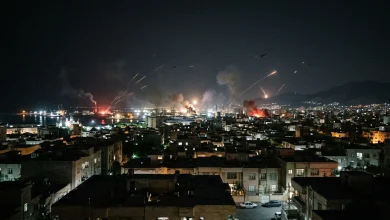
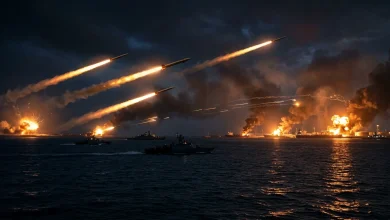
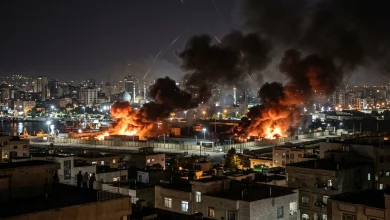
As the dust settles on the shattered peace talks, the international community, informed by international geopolitical monitors, is left facing a terrifying dichotomy: more talks or more bombs. Officially, diplomats on both sides are maintaining a facade of deliberate calm, suggesting that the door to future negotiations remains slightly ajar. However, defense analysts and military strategists recognize that the window for a peaceful resolution is closing rapidly. The United States and its regional allies are already expanding their military footprint in the region, positioning carrier strike groups, reinforcing air defense systems, and updating target lists for potential preemptive strikes against Iranian nuclear facilities and IRGC command centers.
Conversely, Iran continues to advance its nuclear capabilities, methodically shrinking the breakout time required to construct a viable nuclear device, thereby creating an artificial ticking clock that forces Washington’s hand. The collapse of these negotiations marks a dangerous turning point. The transition from diplomatic maneuvering to military brinkmanship is fully underway. Unless a dramatic, unforeseen back-channel breakthrough occurs to restart dialogue, the trajectory is terrifyingly clear: the region is moving closer to an overt, devastating military confrontation that could fundamentally reshape the geopolitical architecture of the 21st century.