Rebecca Bennett Wins NJ-07 Primary, Challenging Tom Kean
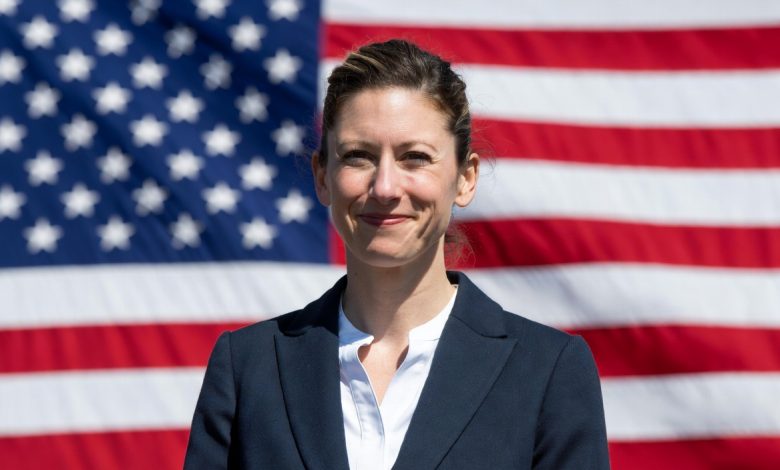
Rebecca Bennett Clinches Victory in NJ-07
Rebecca Bennett secured a resounding victory in the Democratic primary for New Jersey’s 7th Congressional District on June 2, 2026, setting the stage for one of the most high-stakes, closely watched general election battles in the country. The former U.S. Navy helicopter pilot and healthcare business executive defeated a competitive field of three other primary contenders, proving her strong appeal within a district that political analysts view as a critical battleground for control of the U.S. House of Representatives.
The primary contest was intensely fought, with each candidate presenting a distinct vision for the district. Bennett’s victory over physician Dr. Tina Shah, former Small Business Administration (SBA) official Michael Roth, and entrepreneur Brian Varela marks a major milestone in her political journey. The general election will see Bennett face off against two-term Republican incumbent Rep. Tom Kean Jr., who is running for a third term under highly unusual circumstances that have drawn national attention. With New Jersey’s 7th Congressional District having been carried by President Donald Trump by a razor-thin margin of just 1 percentage point in 2024, the upcoming November matchup represents one of the most tightly divided congressional districts in the entire nation.
The Democratic Primary: How the Battle Unfolded
The Democratic primary in NJ-07 was characterized by robust debates, substantial fundraising, and contrasting policy visions. For months, the candidates traveled across the diverse district—which spans suburban towns, rolling farmland, and industrial corridors—to make their case to voters. As the frontrunner in fundraising and organizational support, Bennett consistently projected an image of pragmatic leadership, drawing heavily on her 15 years of military service as a Navy pilot and an officer in the Air National Guard.
Throughout the primary, Bennett positioned herself as a consensus builder capable of appealing to independent voters and center-right Republicans who have voted Republican in the past but may be growing uncomfortable with the national direction under the Trump administration. Her strategy was designed to align with the unique political realities of NJ-07, a district with a substantial population of unaffiliated voters. By focusing on economic affordability, healthcare stability, and local representation, she managed to build a broad coalition that ultimately carried her to a decisive victory on Tuesday night.
Defeating Tina Shah, Michael Roth, and Brian Varela
The three candidates who challenged Bennett for the nomination represented different wings of the Democratic Party, contributing to a healthy and highly competitive primary debate. Dr. Tina Shah, an intensive care unit physician and former health policy advisor under the Obama and Biden administrations, campaigned extensively on healthcare reform, aiming to lower out-of-pocket medical expenses and improve patient care standards. Her professional background gave her strong credibility on issues related to public health and community wellness.
Michael Roth, a former interim official with the Small Business Administration (SBA), focused his platform on economic fairness and structural reform. Roth championed changes to the federal tax code to increase taxes on ultra-wealthy Americans, arguing that the revenue generated should be used to deliver tangible federal benefits and infrastructure improvements directly to the district. Meanwhile, entrepreneur Brian Varela offered a strong progressive alternative, advocating for Medicare for All and aggressive limits on campaign spending to reduce the influence of corporate PACs in congressional elections.
The policy contrasts during the primary highlighted an ongoing debate within the Democratic Party. While Varela championed progressive ideals and sought to capture the grassroots energy of the party’s left wing, Bennett maintained a pragmatic, center-left approach designed to appeal to moderate Republicans and independent voters. This ideological tension in suburban New Jersey mirrors a larger national dialogue, as seen in the ongoing debates surrounding the battle for the hard-left’s future and the ideological direction of the party heading into subsequent election cycles.
Overview of the NJ-07 Democratic Primary Candidates
To better understand the dynamics of the primary campaign, the following table summarizes the key attributes, professional backgrounds, and core platform issues of the four candidates who competed for the Democratic nomination in New Jersey’s 7th Congressional District.
| Candidate | Professional Background | Key Platform Issues | Campaign Focus & Dynamics |
|---|---|---|---|
| Rebecca Bennett | Former Navy helicopter pilot, Guard officer, healthcare executive | Economic affordability, practical healthcare reform, veteran services | Positioned as a pragmatic consensus builder; strong fundraising leader |
| Dr. Tina Shah | Frontline ICU physician, former Obama & Biden health advisor | Healthcare accessibility, reducing medical costs, public health | Emphasized healthcare expertise; ran highly competitive campaign |
| Michael Roth | Former interim leader of the federal Small Business Administration | Progressive tax reform, small business support, local infrastructure | Focused on federal agency experience and targeted wealth taxes |
| Brian Varela | Business owner, Morris County Hispanic Caucus chair | Medicare for All, campaign finance reform, progressive outreach | Backed by progressive groups; prioritized systemic electoral changes |
Why New Jersey’s 7th District is a Critical National Swing Seat
New Jersey’s 7th Congressional District has a long-standing reputation as one of the most volatile and closely watched political battlegrounds in the United States. Geographically expansive, the district covers Hunterdon and Warren counties, as well as parts of Morris, Somerset, Sussex, and Union counties. It represents a microcosm of the political divide in suburban America, encompassing affluent commuter towns, rural agricultural areas, and suburban communities that have shifted politically over the past decade.
This high volatility makes NJ-07 a premier battleground that could decide the majority in the House of Representatives. Analysts point out that suburban districts like New Jersey’s 7th are the ultimate testing grounds for both major parties. In a midterm environment where every seat counts, a Democratic victory here would deal a severe blow to the Republican House majority, drawing comparisons to other major swing-state battles where unexpected victories shifted the balance of power, such as when Greene won the Michigan Senate seat, stunning Republican strategists nationally. The district’s historical voting patterns demonstrate this flip-flop tendency; voters ousted a Democratic incumbent in 2022 to elect Kean, just four years after unseating a Republican incumbent in 2018.
The Absent Incumbent: The Medical Mystery of Tom Kean Jr.
The general election matchup comes at a time when the sitting congressman, Republican Representative Tom Kean Jr., has faced intense scrutiny over his prolonged absence from Washington and his home district. Kean, who is the scion of a historic New Jersey political family (his father, Thomas Kean Sr., served as a highly popular moderate Republican governor in the 1980s), has not been seen in public for nearly three months. According to official records reported by the Associated Press, the incumbent has missed over 100 consecutive House votes since early March.
Kean’s congressional office has consistently blamed his ongoing absence on an unspecified ‘medical illness’ or ‘personal health crisis,’ assuring the public that his medical team expects him to make a full recovery and return to work in the near future. However, the refusal of Kean and his staff to provide further details regarding the nature or severity of his condition has sparked growing frustration among constituents, political opponents, and media observers alike. The vacuum of information has led to various political debates, bringing local representation to the forefront of the campaign trail.
Missed Votes and Growing Public Frustration
For voters in NJ-07, the lack of a visible representative in the House has become a central issue of discussion. During the primary campaign, all four Democratic contenders seized on Kean’s absence, framing it as a serious failure of public duty. They argued that regardless of personal health challenges, constituents have a right to transparent and consistent representation, especially during critical legislative votes in Washington.
At her victory rally in Somerville, Bennett addressed Kean’s absence head-on, asserting that the representative was failing his constituents by refusing to communicate transparently. ‘You are failing us,’ Bennett said of Kean, ‘and you do not deserve to represent us in Washington.’ This narrative of an ‘invisible congressman’ is expected to serve as a cornerstone of the Democratic campaign strategy heading into the general election, as Bennett looks to draw a sharp contrast between her active, service-oriented background and Kean’s recent lack of public presence.
Campaign Funding and the Influence of Outside Spending
The financial scale of the NJ-07 race is poised to reach historic heights, as both national parties view the seat as essential to their respective goals. Ahead of the primary, Bennett proved to be a formidable fundraiser, amassing over $2.6 million from more than 13,000 individual donors without relying on personal self-funding. This financial strength allowed her campaign to build a sophisticated grassroots organizing operation across all six counties that make up the district.
However, the primary also highlighted the powerful role of outside political action committees. Bennett’s campaign came under substantial fire from a political action committee called ‘Real Change,’ which spent approximately $650,000 running negative campaigns against her from the left. Among the tactics used was a direct-mail campaign featuring a doctored photo of Bennett wearing a red ‘Make America Great Again’ cap, an attempt to alienate progressive voters. Bennett dismissed the attacks as a sign that Republican-aligned groups were attempting to weaken her before the general election, recognizing her as the strongest general election candidate.
Electoral Comparison: From Trump 2024 to the 2026 Midterm Landscape
The political math in New Jersey’s 7th District underscores the narrow margins that will define the upcoming race. Historically, the district voted for Donald Trump by six percentage points in 2016, swung to Joe Biden by four points in 2020, and then narrowly supported Trump again by just one point in 2024. This split personality makes it one of the most unpredictable districts in the country, where local candidates can easily override national party trends if they align with the district’s moderate suburban sensibilities.
The economic policies of the Trump administration remain a highly contentious topic in the district. Suburban voters in NJ-07, many of whom are business owners, corporate executives, or highly educated professionals, are highly sensitive to trade policies and economic disruptions. For instance, ongoing debates over executive power and economic stability—such as the recent high-profile legal battles where courts ruled tariffs illegal—have become major talking points on the campaign trail. Bennett intends to seize on these issues, arguing that her experience as a healthcare business executive gives her a practical understanding of how national trade and regulatory policies directly affect local businesses and household affordability.
National Democratic Ambitions and the Fight for House Control
For national Democrats, reclaiming the House of Representatives is the top priority for the 2026 midterm election cycle. To achieve this, the Democratic Congressional Campaign Committee (DCCC) has targeted dozens of Republican-held seats nationwide, with NJ-07 occupying a premier position on their target list. The race is seen as a key indicator of whether Democrats can rebuild the suburban coalition that has historically driven their electoral successes.
The national Democratic Party’s strategy in swing districts like NJ-07 is closely tied to its broader rebuilding efforts. Following the narrow defeats of the previous cycle, party leaders have engaged in an extensive democratic postmortem of the 2024 election. This evaluation has led to a renewed focus on nominating candidates with strong local ties, military or business experience, and pragmatic policy platforms. Rebecca Bennett represents the exact archetype of candidate that national strategists believe can win back suburban voters who are alienated by ideological extremes.
Policy Priorities: Affordability, Healthcare, and Immigration
As the general election campaign begins, Bennett has outlined a policy platform designed to address the direct concerns of middle-class families in New Jersey. Chief among her priorities is economic affordability. New Jersey’s high cost of living, property taxes, and transit costs are major burdens for local residents. Bennett has pledged to advocate for federal measures that lower energy costs, expand local manufacturing, and restore tax fairness for middle-class families.
In addition to affordability, healthcare remains a major priority for Bennett’s campaign. Relying on her executive experience in the healthcare sector, she has called for market-driven reforms to lower prescription drug prices and improve healthcare delivery, avoiding some of the more progressive proposals like single-payer healthcare that might alienate moderate voters. Immigration is also expected to be a major battleground issue in the general election, particularly after controversial discussions surrounding proposed federal facilities. Bennett has advocated for comprehensive border security paired with humane and orderly processing systems, navigating a careful line between local concerns and national party policies.
Conclusion: The Road to November in NJ-07
With the primary behind her, Rebecca Bennett now faces the formidable task of unseating an incumbent in a highly polarized political environment. The matchup in New Jersey’s 7th Congressional District will serve as an important indicator of the national political mood and the viability of moderate, service-oriented platforms in suburban America. As both parties prepare to pour millions of dollars into television ads, digital campaigns, and field operations, the voters of NJ-07 will ultimately decide whether they want to stay the course or choose a new path in Washington.
The unique dynamics of the race—combining a closely divided electorate, a highly motivated challenger, and an incumbent whose absence has created unprecedented political uncertainty—guarantee that NJ-07 will remain in the national spotlight all the way to Election Day in November. Both campaigns understand that in a district decided by just a single percentage point, every vote, every public appearance, and every policy stance could make the difference between victory and defeat.