U.S. strikes on Iran Enter 10th Night Amid High Casualties
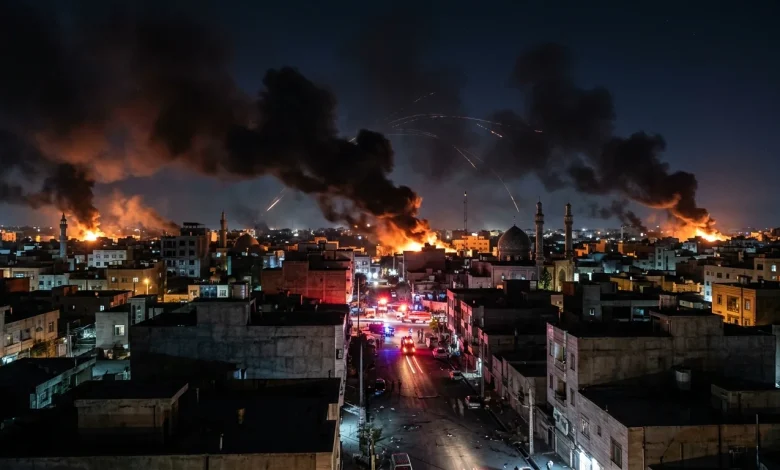
Table of Contents
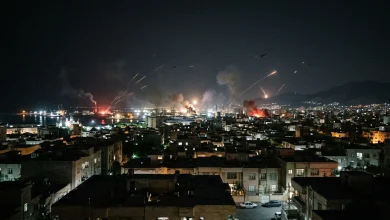
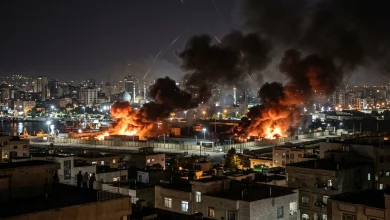
U.S. strikes on Iran entered their tenth consecutive night on Monday as U.S. Central Command (CENTCOM) confirmed a series of devastating aerial bombardments targeting Iranian military hubs, command centers, and air defense systems. This relentless campaign is the latest phase in an explosive geopolitical spiral that began after a fragile, short-lived diplomatic ceasefire fell apart. The intensity of these operations indicates that Washington has abandoned its previous posture of measured deterrence in favor of a sustained campaign to systematically degrade Iran’s offensive capabilities. As U.S. airstrikes escalate Middle East tensions, the entire region is bracing for an all-out war that could draw in multiple regional powers and reshape the global security landscape.
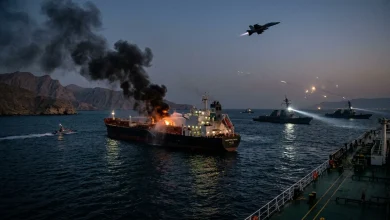
The strategic rationale behind this tenth night of operations is deeply rooted in securing international shipping lanes, particularly the vital Strait of Hormuz. For weeks, the maritime corridor has been a primary theater of conflict, with commercial vessels coming under sustained missile attacks and drone harassment. American policymakers have asserted that these strikes are crucial to preventing a chokehold on global energy supplies. However, the costs of this deployment are rising rapidly. The current wave of strikes marks a desperate effort to restore deterrence after several days of dramatic tactical exchanges. It follows a highly active week of operations; indeed, Iran airstrikes escalate as the US launches its seventh night of retaliatory bombardments, showing that neither side is willing to back down. This cyclical pattern of action and reaction has turned the Persian Gulf into an active war zone.
The Tenth Night of Strikes: Operations and Strategic Goals
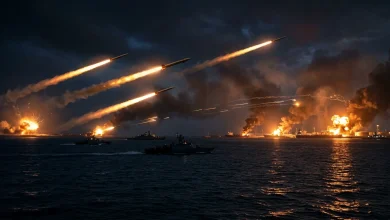
Under the directive of the White House and military planners in Tampa, the latest operations on Monday night represented a massive coordination of joint force capabilities. According to official CENTCOM releases, the strikes targeted heavily fortified military installations across several Iranian provinces. This followed reports from earlier in the weekend, where the US military strikes Iran for seventh consecutive night in an attempt to neutralize mobile missile launchers before they could be deployed. Military analysts note that the sheer repetition of these nightly raids is designed to exhaust Iranian air defense personnel and deplete their stockpiles of surface-to-air missiles.
Demolishing Command Centers and Shipping Safety Assets
Specifically, the targets selected for Monday’s raid included command-and-control centers, maritime assets, and sophisticated air defense systems. CENTCOM officials reported that the primary objective was to degrade Iran’s ability to monitor and strike international shipping transiting through the Strait of Hormuz. This focus on coastal infrastructure mirrors the tactical pattern established last week when U.S. airstrikes against Iran entered their eighth night, systematically dismantling key radar facilities in Bandar Abbas and Bushehr. Monday’s strikes utilized precision munitions launched from carrier-based F/A-18 Super Hornets and Air Force F-35A Lightning II stealth fighters, alongside Tomahawk land-attack missiles fired from naval destroyers stationed in the Arabian Sea.
Severe Casualties: American Forces Killed and Injured in the Middle East
The relentless tempo of the American bombardment is driven by mounting domestic pressure in Washington following a series of devastating casualties among U.S. personnel. Over the past weekend, the human toll of the conflict became painfully clear, sparking intense debates in Congress over the safety of forward-operating bases. These casualties are the direct result of a highly coordinated Iranian retaliatory campaign that intensified after the airstrikes against Iran launched on Sunday targeted key logistical hubs. The loss of American lives has catalyzed a shift in U.S. military strategy, prompting a transition from localized defense to proactive, theater-wide destruction of Iranian military infrastructure.
The Deadly Jordan Base Assault
The most severe loss occurred over the weekend when a hostile one-way attack drone breached the air defenses of a U.S. military outpost in Jordan. The strike resulted in the deaths of at least two American soldiers, while another service member is officially listed as missing in action. This tragic event was a watershed moment in the conflict, and CENTCOM confirms fatal strike on US forces as a catalyst for the escalating retaliatory strikes that have followed. The vulnerability of these remote outposts, which are crucial for regional counter-terrorism missions, has raised serious questions about the adequacy of tactical air defense networks like the Patriot and C-RAM systems in countering low-altitude, low-radar-signature unmanned aerial vehicles (UAVs).
Fatal Drone Detonation in Iraq and Spreading Injuries
In a separate and equally concerning incident in neighboring Iraq, a third American service member was killed during what military officials described as “a controlled detonation” of an downed Iranian drone. The explosion occurred as explosive ordnance disposal (EOD) experts were working to neutralize the captured UAV, illustrating the complex and highly dangerous nature of the threat. Beyond these fatal casualties, the overall physical toll on American personnel has escalated dramatically. U.S. officials told CBS News that nearly 100 American service members have been injured in multiple Iranian airstrikes on bases throughout the Middle East this month alone. Many of these injuries involve traumatic brain injuries (TBIs) resulting from the concussive force of heavy missile impacts, highlighting the intensity of the incoming fire.
Iran’s Retaliation: Targeting Kuwait and Bahrain
Iran’s response to the continuous American airstrikes has not been confined to defensive maneuvers. Instead, the Islamic Republic’s armed forces have widened the theater of war by launching direct attacks on U.S. assets hosted within neighboring Gulf countries. Iran’s military high command announced on Tuesday that it had targeted several critical U.S. facilities in Kuwait and Bahrain, utilizing cruise missiles and long-range suicide drones. This strategic expansion represents a calculated attempt by Tehran to raise the geopolitical cost of the conflict for Washington’s regional allies, signaling that no nation hosting American military infrastructure can remain safe from the fallout of the war.
Missiles Aimed at Air Defenses and Data Centers
Reports from Iranian state media and independent intelligence monitors indicate that the retaliatory strikes specifically targeted high-value military and logistics infrastructure. Among the claimed targets were a U.S.-operated Patriot air defense system and associated radar installations in Kuwait, designed to degrade the coalition’s regional early-warning network. In an even more alarming development, the IRGC claims to have targeted central data infrastructure belonging to the American multinational technology company Amazon in Bahrain, using several precision cruise missiles. While coalition officials have downplayed the operational impact of these strikes, asserting that many of the incoming projectiles were successfully intercepted, the attacks demonstrate Iran’s willingness to strike deep into the territories of key Gulf Cooperation Council (GCC) member states.
Breakdown of the US-Iran Peace Framework and Diplomatic Initiatives
This rapid military escalation comes in the wake of a complete breakdown of diplomatic channels. Just weeks prior, international mediators had expressed cautious optimism that a newly brokered memorandum of understanding (MoU) could establish a stable framework for regional security. However, the fragile US-Iran ceasefire on the verge of collapse proved unable to withstand the pressure of localized skirmishes and mutual distrust. The rapid transition from diplomatic negotiations to sustained military bombardment underscores the profound instability of the regional security architecture and the difficulty of maintaining a stand-down agreement when proxy forces and national militaries remain in such close, hostile proximity.
Pakistan’s Mediary Efforts in Islamabad
Despite the intense fighting, desperate back-channel diplomatic efforts are underway to prevent the conflict from devolving into an uncontainable global crisis. On Tuesday, Iranian Interior Minister Eskandar Momeni arrived in Islamabad, Pakistan, to initiate urgent talks with high-ranking Pakistani officials. Pakistan has historically maintained delicate diplomatic relations with both Washington and Tehran and played a key role in brokering the initial June MoU. Momeni met with Pakistan’s powerful army chief, Field Marshal Asim Munir, and is expected to hold discussions with Prime Minister Shehbaz Sharif. Diplomats are working around the clock to draft a potential framework for a mutual stand-down, though the ongoing strikes and high casualty numbers make an immediate breakthrough highly challenging.
Regional Implications and Global Oil Security
The broader consequences of this tenth night of strikes are reverberating throughout the global economy and international political forums. The Strait of Hormuz, through which approximately one-fifth of the world’s petroleum transits daily, is now considered a highly hazardous zone for commercial shipping. Standard transit routes have been disrupted, and insurance premiums for maritime tankers have skyrocketed, forcing many operators to bypass the Gulf entirely. This major disruption has triggered warnings from economists about the potential for a severe global supply chain shock. As the 2026 Iran War how regional conflict redefined global politics, the international community is forced to confront a new reality where regional maritime choke points can be closed off by asymmetric drone warfare and sustained missile campaigns, threatening the economic stability of both developing and industrialized nations.
Comparison of Recent Military Operations
To understand the trajectory of the ongoing hostilities, the following table outlines the different phases of military operations, primary target zones, casualties, and their immediate strategic and diplomatic consequences over the past ten days:
| Date (July 2026) | Operation / Strike Phase | Primary Targets / Locations | Reported Casualties & Losses | Strategic & Diplomatic Impact |
|---|---|---|---|---|
| July 12–14 | Nights 1 to 3 | Bandar Abbas, Bushehr ports, coastal radar networks | 1 civilian mariner killed, multiple injured on regional cargo vessels | U.S. establishes naval blockade; Trump declares control of the Strait of Hormuz |
| July 15–17 | Nights 4 to 6 | Air defense nodes, maritime assets, surveillance sites | Over 40 personnel injured; minor material damages to Gulf outposts | MoU ceasefire officially declared dead; commercial vessels re-routed |
| July 18–19 | Nights 7 to 9 | Drone storage, missile silos, military communication hubs | 2 U.S. soldiers killed in Jordan, 1 MIA; 1 soldier killed in Iraq | Airstrikes enter a critical escalatory phase; public outrage grows in Washington |
| July 20 | Night 10 | Command centers, IRGC air defense systems across mainland Iran | Nearly 100 total U.S. casualties this month; Iranian personnel casualties unconfirmed | IRGC retaliates against Kuwait and Bahrain; Pakistan initiates urgent mediation talks |