Houthis Blockade Saudi Ships as US-Iran Conflict Deepens 2026
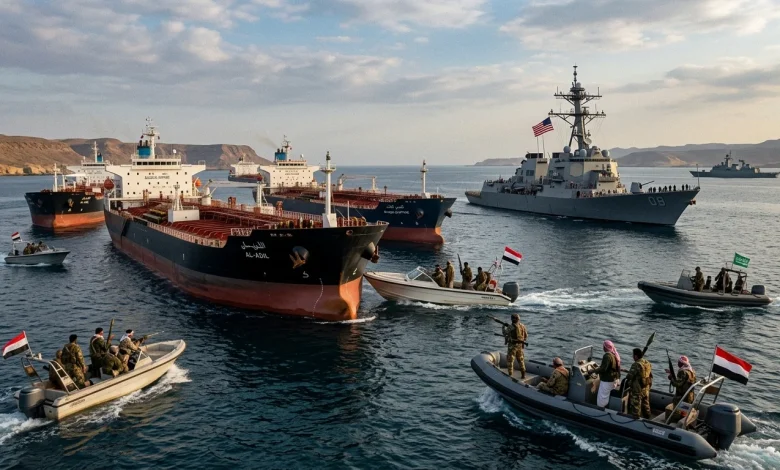
Table of Contents
Houthis, the Iranian-backed armed faction in Yemen, on Monday announced a dramatic and volatile maritime embargo against Saudi Arabia, threatening to open an unpredictable new front in the Middle East conflict and raising the pressure on volatile global energy markets. The bold declaration has introduced severe complications to an already fragile geopolitical landscape, coming at a time when regional powers and global markets are tensely monitoring the escalating warfare between the United States and Iranian forces in the Persian Gulf.
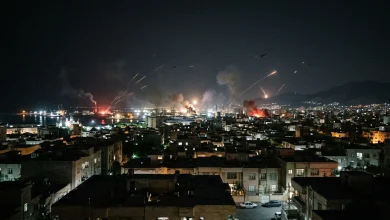
This severe naval escalation coincides with a dramatic campaign of mutual bombardment. Even as international mediators scrambled to de-escalate the situation, the United States and Iran traded fresh attacks on Monday. While Iran targeted countries hosting U.S. military bases, the United States launched retaliatory strikes on Iranian military infrastructure for a tenth consecutive night. The implementation of a shipping blockade targeting Saudi Arabia by the Houthi movement threatens to merge these local conflicts into a single, multi-front regional war with devastating economic consequences.
The Declaration of the Maritime Embargo
The announcement was formally broadcasted on Monday by Houthi military spokesperson Yahya Saree, who declared “a maritime embargo against the criminal Saudi enemy, based on the equation of ‘an eye for an eye,’ effective immediately upon the issuance of this statement”. The rebel group positioned the blockade as a direct retaliatory measure to what they termed Saudi Arabia’s long-standing, oppressive policies in the region.
For over a decade, Yemen has been mired in a devastating civil conflict since the Houthi faction seized the capital, Sanaa, prompting a Saudi-led coalition to intervene in 2015 to support the internationally recognized government. By declaring an immediate blockade, the Houthis aim to dismantle Saudi Arabia’s regional dominance, challenging the kingdom’s naval supremacy and its access to critical Red Sea shipping corridors.
Rising Tensions and the ‘Eye for an Eye’ Strategy
The “eye for an eye” doctrine invoked by the Houthis stems from a rapid breakdown of the relative peace established by an informal 2022 truce. Tensions flared dramatically last week when the two traditional rivals traded fire for the first time in years. This exchange of hostilities was originally ignited when an Iranian plane attempted to land at Sanaa International Airport, directly challenging Saudi Arabia’s control over Yemeni airspace.
In response to the attempted landing, Saudi-backed forces targeted the airport infrastructure to block the flight, which was alleged to be carrying an official Iranian delegation. The Houthis immediately retaliated by launching ballistic missiles and drones at an airport in the southern Saudi city of Abha. The group’s military leaders have warned that any subsequent military action by Riyadh will be met with a comprehensive, decisive, and asymmetric escalation across both land and sea.
Impact on Volatile Global Energy Markets
With Saudi Arabia operating as the world’s leading crude oil exporter—producing over 10 million barrels per day—this maritime embargo has sent shockwaves through global energy markets. Investors and energy traders were already on edge due to the effective closure of the Strait of Hormuz, which has been severely disrupted by Iranian mining and threat campaigns. The prospect of a simultaneous blockade in the Red Sea means that the Middle East’s two primary oil export pathways could be choked off at the same time.
The economic impact of these overlapping conflicts was felt immediately. Brent crude oil, the global benchmark, surged above $90 a barrel for the first time in over five weeks as market analysts calculated the risk of prolonged logistics disruptions. In the United States, retail fuel prices began showing rapid increases, with the national average price for gasoline climbing past $4 per gallon, reflecting deep anxieties over global supply stability. This instability illustrates how the broader 2026 Iran war and how the US-Israel coalition reshaped regional calculations, leaving global energy networks highly exposed to local conflicts.
The Strategic Importance of the Bab el-Mandeb Strait
The core geographic focus of the Houthi threat is the Bab el-Mandeb Strait, a narrow chokepoint at the southern gateway of the Red Sea. Under normal trading conditions, approximately 10 to 15 percent of all global maritime trade, including 7.4 million barrels of petroleum products per day, passes through this strait on its way toward the Suez Canal and European markets.
To bypass the current gridlock and Iranian threats in the Persian Gulf, Saudi Arabia has relied heavily on its East-West Pipeline to transport crude oil to its western ports along the Red Sea coast. From there, tankers must navigate southward through the Bab el-Mandeb Strait to access Asian and African markets. If the Houthis successfully enforce their naval blockade, they will effectively neutralize Saudi Arabia’s primary alternative export route, forcing tankers to make the lengthy and expensive 2,700-mile detour around the Cape of Good Hope. This follows the highly controversial Strait of Hormuz Iran-Oman transit fee proposal, which sought to tax maritime commercial shipping and heavily restricted alternative transit choices.
The Broader US-Iran Conflict and the Gulf Escalation
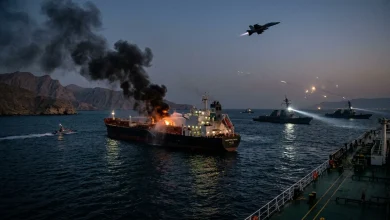
The Houthi blockade cannot be analyzed in isolation; it is a critical component of the wider, direct military confrontation between the United States and the Islamic Republic of Iran. The region has watched with immense trepidation as both nations engage in high-intensity conventional warfare. The vulnerability of regional shipping lanes became evident after an Iranian drone attack on a cargo ship shatters the fragile maritime security framework in the Arabian Sea, setting the stage for direct U.S. intervention.
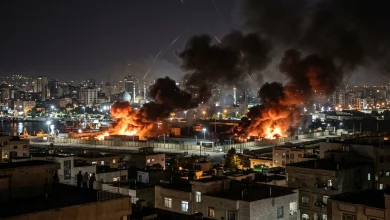
This escalation reached a peak when the Iran-US conflict airstrikes hit Bushehr, destroying major air defense batteries and marine transport units. Despite these heavy losses, Tehran has continued to strike back, utilizing advanced weaponry. Defense analysts note that Iran adapts ballistic missiles to evade US interceptors, utilizing low-altitude maneuvers and advanced guidance systems to successfully strike allied installations.
Ten Nights of Continuous American Bombardment
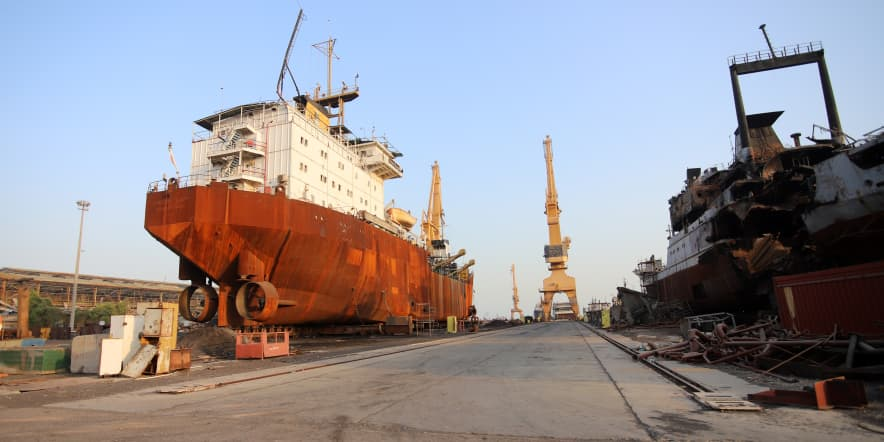
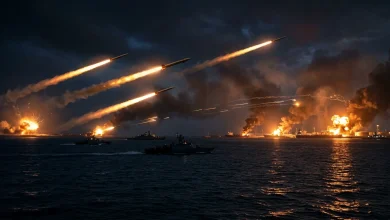
The U.S. military campaign against Iranian state assets and proxy forces has reached unprecedented levels of intensity. U.S. Central Command (CENTCOM) conducted its tenth consecutive night of heavy bombardment targeting Iranian command centers, air defenses, and coastal missile installations. This relentless campaign is designed to systematically degrade the Islamic Revolutionary Guard Corps’ (IRGC) ability to project power and threaten global maritime transit.
The ongoing campaign saw significant military operations, most notably the intense U.S. airstrikes against Iran on their eighth night, which targeted coastal surveillance networks and drone launch sites in southern Iran. The airstrikes were heavily accelerated following a devastating Iranian ballistic missile and drone strike on a U.S.-linked military installation in Jordan, which resulted in the deaths of multiple American service members and left another missing in action. The Pentagon has vowed to continue its strikes until Tehran halts its aggressive actions against both commercial shipping and regional U.S. forces.
Regional Responses and Defense Measures
The international community and neighboring Gulf nations have reacted with deep alarm to the Houthi announcement. UN Secretary-General spokesman Stephane Dujarric warned that the naval embargo threatens to expand the existing localized conflict into an “even wider” and highly uncontrollable regional war. The threat comes at a time when diplomatic solutions are desperately needed, yet geopolitical negotiations remain at an impasse, even as the Iran-US conflict escalates as Islamabad MoU discussions stall.
Security dynamics worsened rapidly as the Iran war escalates with US strikes on the central region, demonstrating a clear pivot toward degrading inland military targets. Consequently, neighboring states like Kuwait, Bahrain, and Jordan have put their national air defense networks on maximum alert to guard against potential spillover missile attacks from both Iran and Yemen.
Saudi Arabia’s Vow to Respond with Force
Riyadh has rejected the Houthi threats as illegal acts of maritime piracy and has vowed to respond with overwhelming military force. The Saudi-led coalition in Yemen released a strongly worded statement affirming that it has begun implementing comprehensive protection and escort measures for all commercial vessels traveling through the Bab el-Mandeb Strait.
Saudi military officials declared that any hostile action directed at the kingdom’s shipping lanes or sovereign territory will be met with a swift, firm, and decisive response. Concurrently, Saudi diplomats have actively condemned the Houthi actions on international platforms, arguing that the militant group is simply attempting to deflect domestic attention away from its severe economic mismanagement and the growing public discontent within Houthi-controlled territories.
Comparative Analysis of Middle Eastern Maritime Routes
The escalation of hostilities across multiple waterways has placed immense stress on global shipping. The following table highlights the critical maritime transit corridors currently impacted by the US-Iran war and proxy blockades:
| Chokepoint / Route | Daily Oil Volume (m bpd) | Current Threat Level | Primary Geopolitical Threat | Operational Status |
|---|---|---|---|---|
| Strait of Hormuz | 20.5 | Extreme | Iranian mine laying and missile batteries | Severely disrupted / restricted |
| Bab el-Mandeb Strait | 7.4 | High | Houthi drone, missile, and boat attacks | Partially active / under embargo threat |
| Saudi East-West Pipeline | 5.0 (capacity) | Medium | Houthi land-based missile strikes | Fully operational but threatened |
| Cape of Good Hope Route | N/A (diversion) | Low | Logistical delays and increased shipping costs | Active (high traffic volume) |
Geopolitical Consequences and the Future of the Truce
The direct confrontation between the Saudi-led coalition and the Houthi faction effectively shatters the fragile peace framework that has loosely held since 2022. While a formal truce had technically expired, both sides had largely avoided major military operations in hopes of securing a permanent diplomatic resolution. However, the current cycle of escalation has set those diplomatic efforts back by years, locking both parties into a zero-sum conflict.
Ultimately, the Houthi maritime embargo serves as a powerful lever for Tehran, allowing Iran to project asymmetric power against both the United States and its regional allies without relying solely on direct conventional engagements. As U.S. and allied naval forces work to secure the Red Sea, they face a deeply entrenched adversary equipped with specialized anti-ship technologies and highly mobile land-based launchers. The coming days will determine whether international convoy operations can preserve the freedom of navigation or if the Red Sea will descend into a prolonged zone of active naval warfare, permanently reshaping global trade routes and the global economy.