Nancy Grace Roman Space Telescope Lifespan May Reach 22 Years
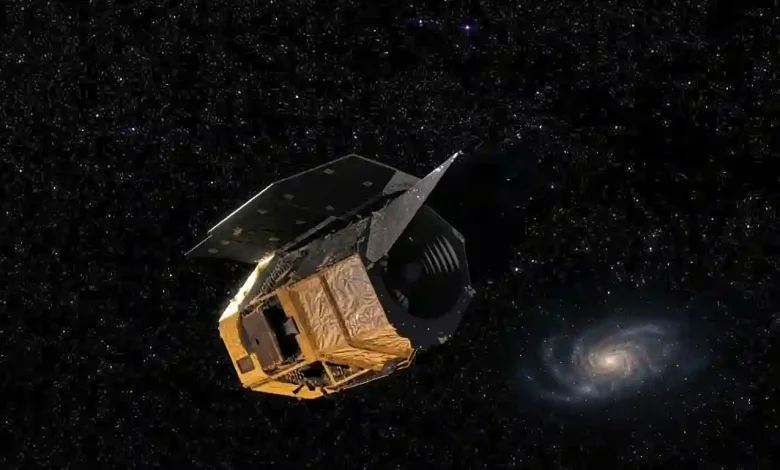
Table of Contents
Nancy Grace Roman Space Telescope operations are poised for an unprecedented multi-decade era of deep-space discovery after NASA announced that the observatory could maintain active scientific observations for up to 22 years. This remarkable projection more than doubles the initial baseline operational window communicated prior to launch. Originally designed for a primary mission phase lasting five years with an option for a five-year extended phase, Roman carried an onboard propellant budget conceived to sustain approximately ten years of operational maneuvers. However, extraordinarily precise launch performance, flawless post-separation trajectory execution, and conservative thruster burns have radically expanded the spacecraft’s orbital life expectancy at the second Sun-Earth Lagrange point (L2).
Nancy Grace Roman Space Telescope: Unprecedented Longevity Projection
The revised timeline represents one of the most substantial longevity reassessments for any flagship astrophysics mission in modern spaceflight history. When NASA first architected the mission, planners calculated propellant reserves under conservative statistical margins to guarantee mission completion even in worst-case trajectory deviations. Because the initial ascent profile eliminated nearly all corrective drift, mission engineers preserved valuable chemical propellant that would have otherwise been expended during early station-keeping adjustments. This massive surplus enables astronomical survey work to extend into the 2040s, providing scientists with an unbroken generational record of the changing cosmos.
Astrophysicists worldwide have greeted the news with enthusiasm, recognizing that long-duration wide-field infrared astronomy transforms baseline science from static snapshot observation into true cinematic time-domain analysis. The mission’s prolonged operational envelope directly mirrors past success stories, including the longevity of the Hubble Space Telescope, while setting a new benchmark for automated, uncrewed platforms operating far beyond low Earth orbit. For background on the mission’s trajectory milestones, explore the Nancy Grace Roman Space evolution that established the foundation for these orbital parameters.
Orbital Dynamics and Near-Perfect Launch Insertion
Operating approximately one million miles from Earth at the Sun-Earth L2 point requires a delicate balance of gravitational dynamics and propellant expenditure. Spacecraft at L2 travel in complex halo orbits that require regular, periodic station-keeping burns to counteract solar radiation pressure and gravitational perturbations from Earth and the Moon. Launch vehicle injection precision is therefore the single greatest factor in determining a spacecraft’s eventual propellant ceiling.
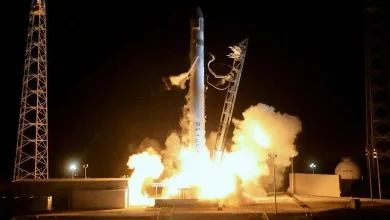
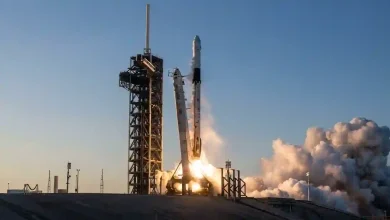
During its initial flight sequence, the heavy-lift booster deployed Roman into a trajectory so accurate that mid-course correction maneuvers required only a fractional percentage of allocated fuel reserves. Because launch vehicles must account for multiple contingency scenarios, the nominal deployment left virtually the entirety of the on-board chemical monopropellant unspent. High-precision navigation teams confirmed that the energy expenditure required to finalize insertion into the halo orbit was negligible compared to the agency’s pre-flight statistical modeling. Related advances in orbital transport have been demonstrated across similar programs, as documented in coverage of modern heavy-lift launch profiles that optimize payload mass to celestial insertion points.
Fuel Efficiency and Extended Mission Architecture
With an operational runway that may span 22 years, mission architects at NASA Goddard Space Flight Center must revise their extended mission roadmaps. Propellant on uncrewed observatories is utilized not only for station-keeping maneuvers, but also for angular momentum management. Reaction wheels, which rotate to orient the observatory toward targets, naturally accumulate angular momentum due to external torque from solar photons striking the sunshield. Chemical thrusters periodically fire to “dump” this momentum and reset wheel rotation speeds.
Flight dynamics teams have instituted hyper-efficient slewing protocols and solar balance profiles designed to minimize solar radiation torque. By aligning the observatory in orientations that use solar pressure symmetrically, flight controllers can drastically reduce momentum build-up. This intelligent attitude management drastically preserves monopropellant reserves, directly supporting earlier assessments published regarding infrared space platform architecture and deep-space thermal stabilization.
Wide-Field Astronomy and Survey Power
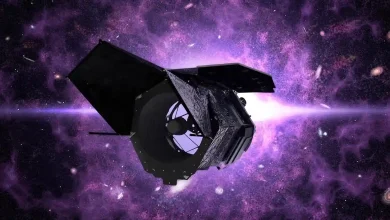
The Nancy Grace Roman Space Telescope features a 2.4-meter primary mirror—the same size as Hubble’s primary optic—but is equipped with an imaging field of view that is approximately 100 times larger than that of Hubble’s Wide Field Camera 3. This expansive optical footprint allows Roman to survey vast swaths of the night sky at high resolution in a tiny fraction of the time required by predecessors.
Equipped with the Wide Field Instrument (WFI) and the Coronagraph Instrument (CGI), the observatory is uniquely tailored to produce unprecedented astronomical datasets. The WFI incorporates an array of 18 state-of-the-art mercury-cadmium-telluride (HgCdTe) detectors, providing 300 million pixels of resolution across near-infrared wavelengths. A 22-year mission lifespan ensures that the wide-field survey will not be confined to a singular synoptic map; instead, it can execute continuous time-domain monitoring to catalog fleeting astrophysical events, supernova explosions, and variable stars across decades.
Unraveling Dark Energy and Cosmic Expansion
One of the cornerstone scientific objectives of Roman is deciphering the true nature of dark energy, the mysterious cosmic pressure driving the accelerated expansion of the universe. To achieve this, the telescope will execute high-latitude wide-area surveys that measure the positions and shapes of hundreds of millions of galaxies spanning billions of light-years. These measurements enable astronomers to study weak gravitational lensing and baryon acoustic oscillations—relic sound waves from the early universe that serve as a standard cosmic ruler.
With a mission envelope stretched to 22 years, the scientific community can greatly expand the survey area and repeat observations to diminish statistical noise. Long-term baseline consistency allows researchers to track high-redshift Type Ia supernovae across unprecedented observational volumes. For additional technical perspectives on how these survey methodologies were structured during the development phase, see the analysis of observational cosmic mapping and wide-field infrared programs.
Microlensing and Exoplanet Discovery Potential
Beyond cosmology, Roman’s extended mission will reshape exoplanetary science. The observatory employs gravitational microlensing—a technique that relies on the gravitational field of a foreground star bending and magnifying the light of a background star when they momentarily align. If the foreground star hosts an exoplanet, the planet’s own gravitational pull creates a secondary spike in the magnification pattern.
Gravitational microlensing is sensitive to planets located at distances from their parent stars comparable to the outer planets of our Solar System, filling a critical gap left by the transit and radial velocity detection methods. By maintaining station at L2 for two decades, Roman can monitor millions of densely packed stars in the galactic bulge over long orbital periods. This long-term monitoring will unlock the discovery of long-period gas giants, ice worlds, and even free-floating rogue planets drifting unbound through interstellar space, expanding upon prior datasets detailed in early mission capability studies.
Mission Specifications and Lifespan Comparison
To contextualize the scale of this mission extension, the table below highlights the operational milestones, hardware baselines, and updated metrics for the Roman observatory compared to initial engineering expectations.
| Parameter | Pre-Launch Baseline | Current Adjusted Outlook | Impact on Science Output |
|---|---|---|---|
| Nominal Mission Lifetime | 5 Years Primary | 5 Years Primary | Guarantees completion of initial core surveys |
| Extended Mission Expectation | 5 Years (10 Years Total) | Up to 17 Years (22 Years Total) | Enables long-duration time-domain cosmology |
| Propellant Margin at Injection | Standard Statistical Reserves | Over 90% Preserved Post-Burn | Massive reduction in required station-keeping fuel |
| Primary Target Orbit | Sun-Earth L2 Quasi-Halo | Sun-Earth L2 Quasi-Halo | Ultra-stable thermal environment maintained |
| Galactic Bulge Monitoring | 6 Cold Seasons (~432 Days) | Up to 15+ Seasons Multi-Year | Multiplies confirmed cold exoplanet detections |
| Data Generation Potential | ~20 Petabytes (10-Year Run) | Over 45+ Petabytes (22-Year Run) | Generational open-access cosmic repository |
Hardware Durability and Thermal Maintenance at Sun-Earth L2
Extending a mission from 10 to 22 years requires hardware robustness far beyond fuel economy. The harsh environment of deep space subjects spaceborne systems to continuous galactic cosmic ray strikes, solar energetic particles, and severe radiative cooling. The spacecraft’s solar arrays, batteries, and solid-state recording devices must demonstrate resilient performance over extended thermal cycling.
Roman was constructed with high radiation tolerances and modular shielding around critical electronic buses. In addition, the optical bench is actively maintained at stable cryogenic temperatures to preserve detector sensitivity. Long-term success relies on maintaining clean detector calibration profiles without significant degradation of the cadmium-zinc-telluride substrates. These design disciplines parallel ongoing initiatives in modern satellite engineering, including contemporary strategies in orbital payload integration and component longevity.
Synergies with Other Deep-Space Observatories
A 22-year operational lifespan creates an extraordinary opportunity for cross-observatory collaboration. Because Roman operates in the near-infrared spectrum with wide-field optics, it serves as the ultimate scouting engine for targeted flagship observatories. Roman will identify faint, anomalous deep-space phenomena across wide fields, instantly cueing targeted follow-up observations by the James Webb Space Telescope (JWST), the Hubble Space Telescope, and next-generation ground facilities like the Vera C. Rubin Observatory and the European Extremely Large Telescope (E-ELT).
As space agencies field new orbital platforms and autonomous constellations, cross-calibrated multi-wavelength surveys become the gold standard of scientific inquiry. Strategic multi-mission logistics are increasingly commonplace as organizations align payloads to optimize astronomical coverage, similar to cooperative operational alignments observed across space agency flight architectures and allied deep-space monitoring assets.
The Future of Wide-Field Infrared Astrophysics
The potential for the Roman observatory to remain operational through the 2040s fundamentally reshapes long-term planning for astrophysics decadal surveys. Instead of racing against an impending propellant exhaustion date, researchers can develop intricate multi-year cadence programs that revisit faint cosmological fields, trace the evolution of stellar streams, and map the cosmic web in structural detail never before imagined. This longevity ensures that the telescope will not just answer today’s questions regarding dark energy and planetary formation, but will remain aloft to probe astrophysical phenomena that have yet to be discovered.
Through intelligent thruster conservation, automated operational workflows, and extraordinary launch precision, Roman stands as a testament to the benefits of meticulous aerospace planning. As it settles into its permanent orbital post at Sun-Earth L2, the global scientific community prepares for a rich, decades-long cascade of cosmic discoveries that will define human understanding of the universe for generations to come, complementing the broader spectrum of ongoing orbital launch initiatives.