Nancy Grace Roman Space Telescope Launch: NASA Sets $4B Mission Date
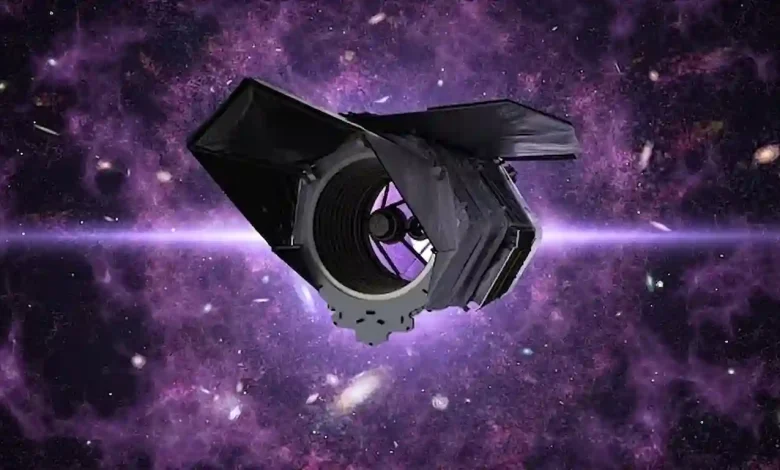
Table of Contents
Nancy Grace Roman Space Telescope is preparing for a historic flight on Sunday, August 30, 2026, marking a monumental milestone for deep-space exploration as NASA readies its next flagship observatory for launch. In a surprising turn of events, the U.S. space agency announced that preparations have culminated nine months ahead of schedule, setting the stage for a spectacular liftoff aboard a SpaceX Falcon Heavy rocket from Launch Complex 39A at the Kennedy Space Center in Florida. Priced at approximately $4 billion, this highly anticipated astrophysics mission is designed to answer some of the most profound questions of modern cosmology. From understanding the nature of dark energy and dark matter to testing Albert Einstein’s theory of general relativity at cosmological scales and hunting for worlds outside our solar system, Roman stands as a beacon of next-generation astronomical discovery.
- A Historic Leap for Infrared Astronomy
- Launch Logistics and SpaceX Falcon Heavy Integration
- Unraveling the Secrets of Dark Energy and Dark Matter
- The Search for Exoplanets via Gravitational Microlensing
- Comparing Next-Generation Space Observatories
- International Collaboration and Technological Contributions
- Conclusion: A New Era of Astronomical Discovery
A Historic Leap for Infrared Astronomy
The telescope is built on the scientific legacy left by its prestigious predecessors. Since its conception, Roman has been designed to operate as a survey instrument of unmatched scale. While the Hubble Space Telescope has spent over three decades delivering exquisite, highly targeted images of the deep cosmos, its narrow field of view limits its ability to rapidly scan the heavens. To study the universe at large scales, astronomers require a wide-angle perspective. To explore these vast vistas, scientists have integrated state-of-the-art panoramic imaging technologies that will allow Roman to perform wide-field surveys nearly a thousand times faster than Hubble, mapping billions of galaxies with unprecedented precision.
A Wide-Field Eye on the Universe
Equipped with a 2.4-meter primary mirror—the same size as Hubble’s—Roman’s strength lies not in the size of its eye, but in its vast scope. The observatory is fitted with a 300-megapixel Wide Field Instrument that provides a field of view at least 100 times larger than Hubble’s infrared channel. This allows the telescope to capture sweeping, panoramic views of space in a single exposure. In just a few years of operation, Roman will map more of the sky in infrared light than Hubble has in its entire 36-year lifetime. Much like the critical work that goes into rescuing high-precision scientific instruments on Earth, such as the recent Swift Observatory rescue, engineering Roman has required years of meticulous testing to ensure its optical systems survive the harsh, unshielded environment of outer space.
The Legacy of Nancy Grace Roman
The telescope is named in honor of Dr. Nancy Grace Roman, NASA’s first chief of astronomy, widely recognized as the “Mother of Hubble” for her pivotal role in planning and securing the necessary funding for the Hubble Space Telescope. By carrying her name, the observatory symbolizes a commitment to pushing the boundaries of what is possible in space science. Dr. Roman’s vision was always to look beyond the immediate horizon, a sentiment that aligns perfectly with this telescope’s primary goals. While our planet focuses on immediate global crises like the Ebola virus epidemic, investment in pure astrophysics ensures that our long-term scientific progress remains uninterrupted.
Launch Logistics and SpaceX Falcon Heavy Integration
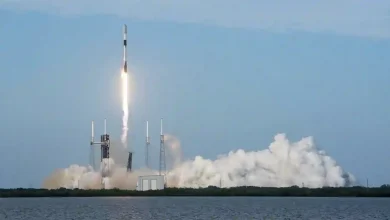
As launch day approaches, SpaceX teams have successfully encapsulated the Roman observatory inside the protective 43-foot-tall payload fairing of the Falcon Heavy rocket. The Flight Readiness Review, which was completed at the Kennedy Space Center, confirmed that all systems are green for a targeted liftoff at 7:26 a.m. EDT on Sunday. Moving the telescope to the launchpad is a highly choreographed logistics process. Because of its massive size and fragile optical instruments, any physical shock during transport or fueling could jeopardize the mission. Just as modern edtech implementation hurdles teach us the value of seamless systems integration, NASA’s meticulous planning has minimized risk at every phase of payload mating.
Why Falcon Heavy?
The Falcon Heavy rocket, one of the most powerful heavy-lift vehicles currently in operation, was selected to provide the enormous velocity needed to send the 10,500-kilogram observatory beyond low Earth orbit. With three core boosters firing in unison at liftoff, the Falcon Heavy delivers over 5 million pounds of thrust. This thrust is vital for throwing the heavy payload into a direct transfer orbit toward its deep-space home. The booster reuse program of SpaceX will also be utilized, with the side boosters slated to land back at Cape Canaveral shortly after stage separation.
The Journey to Sun-Earth L2 Lagrange Point
After separating from the Falcon Heavy upper stage, Roman will embark on a 30-day transit to the Sun-Earth Lagrange Point 2 (L2). Situated roughly one million miles (1.5 million kilometers) from Earth in the opposite direction of the Sun, L2 is an gravitationally stable region of space. At this point, the gravity of the Sun and Earth balance the centrifugal force of the spacecraft, allowing it to maintain a stable relative position with minimal fuel consumption. The L2 point is also home to the James Webb Space Telescope, providing an ideal vantage point where the telescope can shield its instruments from the heat and light of the Sun, Earth, and Moon. This international push for strategic positioning echoes other global scientific endeavors, such as China’s Chang’e-7 lunar mission, where space nations target highly specific regions for lunar and cosmic exploration.
Unraveling the Secrets of Dark Energy and Dark Matter
One of Roman’s main tasks is to untangle the nature of dark energy and dark matter, which together comprise roughly 95% of the universe, yet remain completely invisible to modern instruments. Ordinary matter—the stuff that makes up stars, planets, and human beings—accounts for less than 5% of the cosmic makeup. Dark matter acts as an invisible scaffolding that holds galaxies together, while dark energy is the mysterious force driving the accelerated expansion of the universe. To map these elusive forces, Roman will perform large-scale cosmic surveys, tracking the positions and shapes of hundreds of millions of galaxies.
Probing the Cosmic Expansion
By looking back billions of years into cosmic history, Roman will measure how the expansion rate of the universe has changed over time. If dark energy is a constant force—a cosmological constant as proposed by Einstein—Roman’s measurements will confirm it. However, if dark energy is dynamic and changes over time, as suggested by some recent cosmological data, Roman’s wide-field surveys will expose this fluctuation. The sheer volume of data generated will be immense, with the telescope transmitting nearly a terabyte of raw data to Earth every day. To manage and parse this deluge, astronomers will rely on cutting-edge machine learning and data processing pipelines, drawing parallels to the revolutionary advancements from OpenAI and ChatGPT in processing immense datasets.
Einstein’s General Relativity on Trial
Additionally, Roman will test general relativity at the largest physical scales. Einstein’s theory of gravity has passed every local test with flying colors, but scientists do not yet know if it holds true across vast distances spanning billions of light-years. By analyzing how massive clusters of galaxies warp the path of light traveling from more distant background galaxies—a phenomenon known as weak gravitational lensing—Roman will determine if gravity behaves differently on cosmic scales. This profound exploration represents a vital scientific frontier. Even as the ongoing artificial intelligence race shapes geopolitical and industrial priorities on Earth, basic physical research remains the ultimate benchmark of human capability.
The Search for Exoplanets via Gravitational Microlensing
Beyond cosmic structures, Roman is poised to become a premier exoplanet-hunting machine. Rather than focusing on hot, close-in planets as previous missions have, Roman will utilize a technique called gravitational microlensing. When a foreground star passes directly in front of a more distant background star, its gravity acts like a natural magnifying glass, bending and brightening the background light. If the foreground star has a planet orbiting it, the planet’s gravity will create an additional tiny blip in the light signal.
Finding Colder, Distant Worlds
This technique is uniquely sensitive to planets that orbit far from their host stars—including cold gas giants, rocky ice worlds, and even “rogue planets” that float freely through interstellar space without a parent star. Through microlensing surveys, Roman is expected to find thousands of new exoplanets, helping scientists map the demographic layout of planetary systems and understand how common planetary configurations like our own solar system are across the Milky Way. This level of technological sophistication shows how far deep-space engineering has come, even amidst global disruptions and broader U.S. economic sanctions that have impacted trade and international technological cooperation.
Direct Coronagraph Imaging Technology
In addition to microlensing, Roman is carrying a revolutionary technology demonstration: the Coronagraph Instrument. This instrument uses a complex system of internal masks, prisms, and flexible mirrors to block out the blinding glare of individual stars, allowing the telescope to capture direct images of nearby giant exoplanets. The Coronagraph will test technologies that will lay the foundation for future missions designed to find and characterize habitable, Earth-sized worlds in other star systems. To ensure that users can dive deeper, they can access NASA’s official Roman Space Telescope mission portal to monitor ongoing updates.
Comparing Next-Generation Space Observatories
To better understand how the Roman Space Telescope fits into the global fleet of astronomical instruments, we can compare its capabilities directly with the Hubble Space Telescope and the James Webb Space Telescope. While each observatory has a distinct role, their synergy will provide the most complete picture of the universe ever obtained.
| Feature | Hubble Space Telescope | James Webb Space Telescope | Nancy Grace Roman Space Telescope |
|---|---|---|---|
| Launch Date | April 1990 | December 2021 | August 2026 (Planned) |
| Primary Mirror Diameter | 2.4 meters (7.9 feet) | 6.5 meters (21.3 feet) | 2.4 meters (7.9 feet) |
| Field of View | 1x (Baseline) | Comparable to Hubble (Narrow) | At least 100x larger than Hubble |
| Primary Wavelengths | UV, Visible, Near-IR (0.1–1.7 µm) | Near-IR, Mid-IR (0.6–28.3 µm) | Visible to Near-IR (0.48–2.3 µm) |
| Core Mission Focus | General-purpose cosmic imaging | Deep universe, first stars & galaxies | Wide-field dark energy and exoplanet survey |
International Collaboration and Technological Contributions
Though led by NASA, the Roman Space Telescope represents a major triumph of global cooperation. Key components and software systems have been contributed by a consortium of international partners, including European agencies, research institutes in Japan, and global aerospace leaders. The development of Roman’s optics, particularly the Optical Telescope Assembly engineered by L3Harris Technologies, highlights how private industry and public agencies must collaborate to solve near-impossible engineering challenges. This network of international collaboration mirrors recent advances in Italy’s space industry and other European initiatives, proving that modern space exploration is an inherently global endeavor.
Global Space Research Context
The completion of Roman nine months ahead of its original schedule is an extremely rare feat in the aerospace sector, where complex space telescopes frequently suffer from multi-year delays and massive budget overruns. According to NASA officials, the early readiness was achieved through streamlined testing procedures, exceptional project management, and a highly efficient integration phase. The lesson here is clear: when adequate resources are paired with clear scientific objectives, the results can surpass even the most optimistic projections.
Conclusion: A New Era of Astronomical Discovery
Ultimately, the upcoming launch of the Nancy Grace Roman Space Telescope promises to redefine our relationship with the cosmos. Over its primary five-year mission, the telescope’s wide-field surveys will generate a wealth of open-access data, allowing astronomers around the globe to make unexpected discoveries for decades to come. As the Falcon Heavy prepares to lift off from the Florida coast, humanity is on the verge of opening a panoramic window to the universe—one that will bring the invisible dark universe into sharp, undeniable focus.

One Comment