Tesla SpaceX Merger: Musk Explores Historic Corporate Union 2026
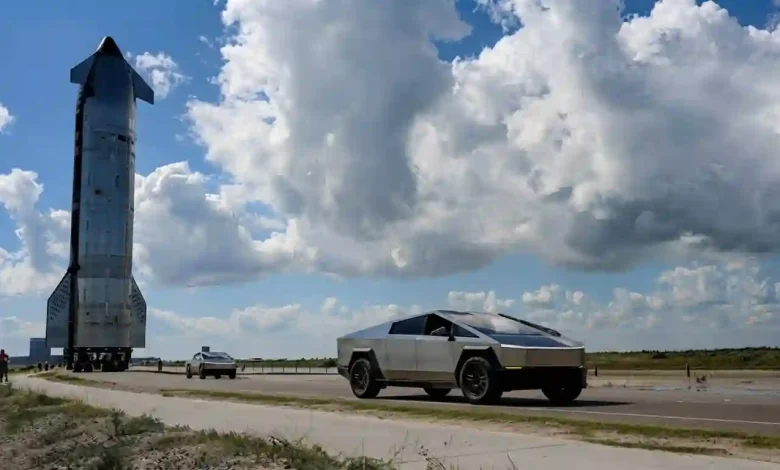
Table of Contents
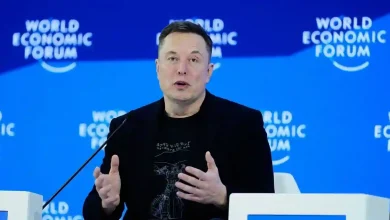
Tesla SpaceX merger considerations have officially transitioned from speculative thought experiments into tangible board-level evaluations following public confirmation from Chief Executive Officer Elon Musk. Speaking on Tuesday, Musk disclosed that consolidating electric vehicle and clean energy leader Tesla Inc. with aerospace pioneer Space Exploration Technologies Corp. represents what he characterized as a good idea. To examine the feasibility, legal architecture, and financial structure of such a historic combination, both corporations have formally established special board committees tasked with initiating formal exploratory discussions. The revelation sent shockwaves through global financial markets, propelling Tesla shares up by over 8% in extended trading as institutional investors recalibrated valuations across the broader industrial and technology complex
Tesla SpaceX Merger Announcement and Market Reaction
The announcement represents one of the most consequential corporate restructuring proposals in modern industrial history. While rumors of inter-company collaboration have circulated for years, formalizing exploration via independent board oversight indicates an intentional shift toward operational consolidation. The immediate 8% rally in extended trading reflects intense market curiosity and aggressive positioning by retail and institutional desks alike. Analysts noted that integrating the world’s most valuable automotive and robotics powerhouse with the preeminent private orbital launch provider creates an unprecedented conglomerate spanning ground transportation, orbital logistics, telecommunications, and artificial intelligence.
Market participants reacted decisively to the prospect of mutual balance sheet reinforcement. Tesla, which operates with significant liquid reserves but faces cyclical retail margin pressure in automotive manufacturing, could leverage the non-cyclical defense and aerospace contracts held by SpaceX. Concurrently, SpaceX capital-intensive ventures—ranging from the massive orbital testing programs seen in the SpaceX Starship launch campaigns to orbital constellation maintenance—would gain direct, seamless access to public equity markets and established cash generation engines without undergoing a conventional initial public offering.
Establishment of Independent Special Committees
The creation of dedicated special committees is a vital procedural prerequisite for any potential consolidation. Because Elon Musk maintains significant equity stakes, executive titles, and controlling voting influence in both enterprises, any proposed combination inherently presents complex conflict-of-interest challenges under Delaware corporate law. Legal observers emphasize that to fulfill fiduciary standards, the board committees must operate entirely independently of Musk, armed with autonomous legal counsel, investment banking advisers, and independent fairness opinions.
These committees are mandated to evaluate whether a statutory merger, a stock-for-stock acquisition, or a parent holding company structure best serves the distinct classes of public and private shareholders. Corporate governance scholars point out that public Tesla investors will scrutinize the valuation multiples assigned to SpaceX, while private aerospace stakeholders will demand equitable governance rights and protections against the public market volatility that historically characterizes the automotive titan. This procedural scrutiny mirrors complex historic consolidations within the broader technological ecosystem, where strategic alignment must withstand intense regulatory and judicial evaluation.
Strategic Synergies: AI, Materials, and Communications
Underpinning the strategic thesis of the combination are profound technological cross-pollinations that have already yielded ad-hoc benefits. By collapsing corporate divisions into a unified corporate structure, leadership aims to streamline joint research, resource deployment, and patent utilization. Foremost among these overlaps is advanced material science. Tesla has long utilized aerospace-grade alloys originally designed by SpaceX metallurgists for vehicle structural castings, while SpaceX has adapted automotive battery pack automation paradigms to power rocket avionics and launch hardware.
Furthermore, terrestrial autonomy heavily intersects with space-based communications infrastructure. Tesla vehicle fleet autonomy and robotics initiatives, explored thoroughly in analyses of Tesla 2026 innovations, rely on continuous low-latency data pipelines. Direct integration with the Starlink satellite internet constellation provides unmatched global connectivity for Full Self-Driving (FSD) fleet telematics and humanoid robotics operating in remote logistics deployments. A consolidated entity could natively embed phased-array transceiver silicon directly into vehicle roofs, transforming every electric car and heavy commercial vehicle into an active node of a planet-wide distributed data relay network.
Financial Architecture and Valuation Realities
Structuring the financial transaction presents immense logistical complexity. Tesla is a publicly traded entity subject to stringent reporting requirements, quarterly disclosures, and broad market exposure, as detailed in recent Tesla stock 2026 market analysis reports. SpaceX, conversely, remains private, periodically conducting internal secondary tender offers that have historically valued the firm in the hundreds of billions of dollars. Determining an equitable exchange ratio requires consensus on SpaceX orbital launch dominance, government defense utility, and recurring subscription revenue derived from global Starlink subscriptions.
Investment bankers speculate that a multi-trillion-dollar valuation framework would emerge from the combined entity. Beyond equity swaps, debt capitalization structures must also be harmonized. Recent institutional developments, including broader capital market actions such as when SpaceX seeks 40B in private capital facilities, demonstrate that both enterprises require sophisticated financing mechanisms. A unified balance sheet could dramatically lower the overall cost of capital, offering credit rating agencies a blended portfolio of recurring telecom consumer cash flows, industrial automotive scale, and mission-critical government launch backlog.
Antitrust and National Security Scrutiny
Even if the independent special committees and respective shareholder bases approve a combination, the transaction faces a daunting gauntlet of domestic and international regulatory reviews. In the United States, the Federal Trade Commission (FTC) and the Department of Justice (DOJ) Antitrust Division will rigorously probe vertical and horizontal integration vectors. Regulators will evaluate whether a combined automotive-aerospace-telecommunications giant exercises undue market dominance across launch services, consumer satellite internet, and connected automotive platforms.
Moreover, the Committee on Foreign Investment in the United States (CFIUS) and the Department of Defense (DOD) will review the national security ramifications. SpaceX is a vital strategic asset to the national security apparatus, executing sensitive classified launches for the National Reconnaissance Office and Space Force. Regulating foreign investor exposure in Tesla public shares—particularly sovereign wealth fund allocations and global passive index fund inclusions—will require airtight ring-fencing of orbital intellectual property, International Traffic in Arms Regulations (ITAR) compliance, and defense communications infrastructure.
Autonomous Systems and Orbital Computation Integration
Looking further into technical convergence, the intersection of autonomous systems and distributed compute offers immense transformative potential. The deployment of heavy transport assets, including commercial electric fleets evaluated in discussions regarding the Tesla Semi subscription model, requires real-time routing, active edge computation, and pervasive sensor ingestion. Merging engineering divisions enables synchronized design cycles between ground robotics and orbital operations.
Furthermore, broader strategic frameworks surrounding high-density data centers, such as concepts analyzed in the Muskonomy singularity inside the 1.25T SpaceX xAI merger, highlight a clear strategic imperative: migrating energy-intensive computation and global neural network routing beyond terrestrial bottlenecks. By pooling mechanical engineering, thermal dissipation patents, and high-efficiency solar harvesting methodologies, an integrated entity could deploy scalable space-based compute clusters serviced directly by reusable orbital rockets, completely altering how artificial intelligence models are trained and executed globally.
Comparative Corporate Profile Table
To evaluate the structural components of this contemplated union, the following table details the primary operational, financial, and strategic dynamics of both organizations prior to the proposed consolidation.
| Strategic Metric | Tesla Inc. (TSLA) | Space Exploration Technologies Corp. (SpaceX) | Merged Entity Projection |
|---|---|---|---|
| Primary Market Classification | Public (NASDAQ: TSLA) | Private Enterprise | Unified Public Holding Giant |
| Core Revenue Drivers | Electric Vehicles, Energy Storage, Autonomous Software | Falcon Launch Services, Starlink Broadband, Starship | Integrated Mobility, Orbital Logistics, Global Telecom |
| Key Technological Asset | FSD Neural Nets, 4680 Cells, Optimus Humanoid | Raptor Engines, Reusable Boosters, Phased-Array Tech | Comprehensive Terrestrial-Orbital Tech Stack |
| Regulatory Oversight Bodies | NHTSA, SEC, EPA, DOE | FAA, FCC, DoD, NASA, Space Force | Combined Multi-Agency Regulatory Portfolio |
| Capitalization Profile | High Public Float, Institutional Index Core | Venture Backed, High Sovereign/Private Allocation | Multi-Trillion Dollar Super-Conglomerate |
| Primary Supply Chain Overlap | Advanced Metallurgy, High-Voltage Inverters, Solar | Specialized Alloys, Cryogenic Storage, Avionics | Shared Material Science and Scaled Procurement |
Shareholder Sentiment and Governance Considerations
Shareholder sentiment remains bifurcated as investors digest the implications of a combined corporate balance sheet. On one hand, Tesla equity holders who have tracked broad macroeconomic headwinds and price fluctuations—frequently examined in Tesla stock TSLA analysis—welcome the non-correlated revenue streams and commercial monopoly advantages held by SpaceX in launch services. The potential inclusion of Starlink high-margin recurring subscriptions could structurally uplift consolidated operating margins and insulate the public firm from automotive trade policy shifts and consumer discretionary spending slumps.
Conversely, corporate governance watchdogs caution that existing operational linkages, which have historically been analyzed in depth across SpaceX and Tesla collaborations, could expose public shareholders to outsized developmental risks. Developing next-generation deep-space hardware entails astronomical capital expenditures with non-linear return timelines. If the combined balance sheet is tapped to subsidize speculative deep-space infrastructure or long-range interplanetary ambitions, conservative institutional funds bound by strict ESG and automotive mandates may reevaluate their portfolio concentrations, triggering structural capital reallocations across global market indices.
Long-Term Strategic Implications for the Musk Ecosystem
Looking ahead, the establishment of special committees marks only the initial phase of what promises to be an extensive corporate evaluation. Independent financial and legal teams will spend months auditing operational interdependencies, patent assignments, and financial models before drafting a formal transaction proposal. The ultimate structure will likely set historic precedents for corporate cross-ownership, executive governance, and public-private capital convergence.
Should the special committees reach mutually agreeable valuation parameters and formulate robust safeguards for all investor tranches, a merger of Tesla and SpaceX would establish the world’s first fully integrated terrestrial and extraterrestrial technology conglomerate. Bridging daily ground mobility with planetary telecommunications and orbital infrastructure, such an enterprise would redefine 21st-century manufacturing capability, establishing an unprecedented economic footprint across transportation, aerospace, and global defense architecture.