SpaceX Falcon 9 Launch Plume Forms Majestic Bird Over Florida
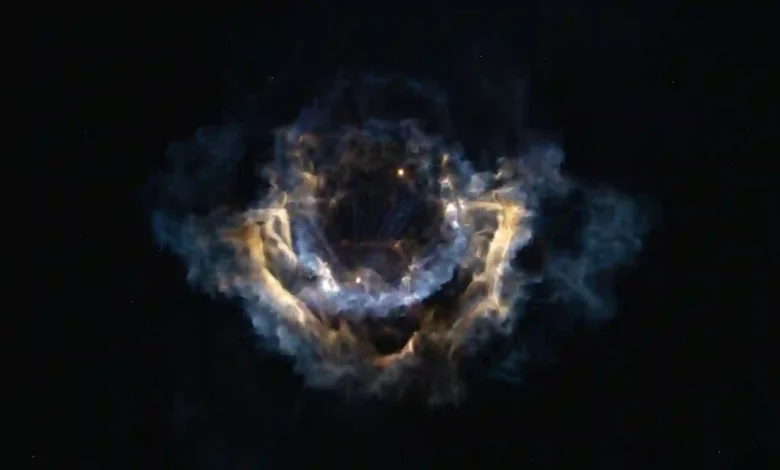
Table of Contents
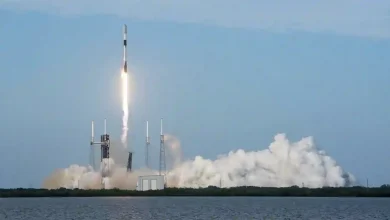
SpaceX Falcon 9 rocket launches have become a common sight along Florida’s Space Coast, yet the early morning mission on August 25, 2026, delivered a breathtaking visual spectacle that transcended standard aerospace operations. As the rocket soared into the dark sky, its expanding exhaust plume assumed a stunning, crystalline silhouette that closely resembled a massive bird in mid-flight. Carrying a payload of 29 Starlink satellites, the medium-lift launcher painted a glowing masterpiece across the upper atmosphere. The extraordinary moment was immortalized by veteran photojournalist Craig Bailey of FLORIDA TODAY, via the USA TODAY NETWORK, capturing the imagination of spectators across the southeastern United States. While SpaceX launches are typically evaluated based on payload mass, booster reusability, and orbital trajectory, this particular flight will be remembered for the artistic harmony between mechanical power and natural atmospheric conditions.
Introduction to the Majestic August 25 Launch
The dawn of August 25, 2026, was anything but ordinary for skywatchers in Florida. The launch of the Falcon 9 was already highly anticipated, but the visual manifestation that followed liftoff transformed a standard cargo run into an unforgettable event. As the booster climbed through the upper layers of the atmosphere, it left behind a trail of superheated gases that quickly expanded and cooled. Due to prevailing wind shear and localized atmospheric conditions, the resulting cloud of ice crystals and exhaust particulates warped into the unmistakable shape of a massive bird rising toward the heavens. For those on the ground, the sight was a powerful reminder of how human technology can interact with the natural world to produce brief, spectacular works of art.
The Technical Breakdown of the Mission and Payload
The liftoff occurred from Space Launch Complex 40 (SLC-40) at Cape Canaveral Space Force Station. The mission utilized SpaceX’s workhorse Falcon 9 Block 5 architecture. This highly reliable launch vehicle relies on nine Merlin 1D engines burning a combination of highly refined kerosene (RP-1) and liquid oxygen (LOX). Generating over 1.7 million pounds of thrust at sea level, the booster propelled the upper stage through the thickest parts of the Earth’s atmosphere before performing a flawless stage separation. The second stage, equipped with a single Merlin Vacuum engine optimized for space propulsion, then took over to guide the payload of 29 Starlink satellites to their target low-Earth orbit. This mission represents another methodical step in expanding SpaceX’s broadband network, aiming to provide high-speed internet to remote regions globally. Meanwhile, the first-stage booster executed its controlled entry burn and successfully landed on an autonomous droneship positioned downrange in the Atlantic Ocean.
The Fluid Dynamics and Chemistry of the Bird-Shaped Plume
The mesmerizing “bird” shape that captivated onlookers is a direct consequence of fluid dynamics and rocket exhaust behavior at extreme altitudes. At sea level, the high pressure of Earth’s atmosphere (approximately 101.3 kilopascals) keeps the exhaust gases from a rocket tightly confined in a narrow, stream-like column. However, as the Falcon 9 climbs past the stratosphere and enters the mesosphere, the atmospheric pressure drops exponentially, eventually approaching a near-vacuum. This transition triggers a phenomenon known as an underexpanded flow regime. Inside the rocket nozzle’s exit plane, the pressure of the burning gas is significantly higher than the external, thin atmospheric air. Consequently, the moment the exhaust—consisting primarily of water vapor, carbon dioxide, carbon monoxide, and microscopic soot particles—exits the engine, it undergoes rapid, violent expansion in all directions. As these gases expand, they interact with ambient stratospheric wind shear and thermal gradients, sculpting the billowing cloud into the distinct wings and tail feathers of a colossal bird.
The Twilight Phenomenon: When Space Meets Solar Illumination
The brilliant, neon-like illumination that defined the bird shape is attributed to a meteorological optical occurrence known as the twilight phenomenon. This happens when a rocket launches roughly 30 to 60 minutes before sunrise or after sunset. On the morning of August 25, 2026, observers at Cape Canaveral Space Force Station were still in complete darkness, with the sun nestled below the horizon. However, as the Falcon 9 reached altitudes exceeding 50 kilometers, it climbed high enough to emerge from the shadow of the Earth’s curvature. At this altitude, the rocket’s expanding plume of water vapor and engine exhaust was immediately illuminated by unblocked, direct solar rays. The microscopic water droplets and ice crystals suspended in the freezing upper-atmospheric temperatures acted as high-altitude mirrors, scattering the sunlight and creating a vibrant, glowing cloud against the dark pre-dawn sky. This celestial display was visible for hundreds of miles, appearing as a glowing, iridescent specter of light across the region.
Capturing the Moment: Craig Bailey’s Legendary Photography
Documenting such a fleeting, high-altitude display requires immense preparation, and Craig Bailey of FLORIDA TODAY succeeded in capturing a definitive image of the event. Rocket photography is an incredibly challenging discipline, particularly during night and twilight launches. Photographers must contend with extreme high-contrast environments, balancing the intense, blinding glare of the rocket’s rocket engines against the deep darkness of the night sky, all while tracking an object traveling at several times the speed of sound. Bailey’s precise framing and timing captured the perfect moment when the expanding plume bloomed into its avian configuration. Published via the USA TODAY NETWORK, the image quickly circulated on social media, earning praise from space enthusiasts, scientists, and art lovers alike. The photograph serves as a reminder of the unique aesthetic value of space exploration, proving that the machines we send into the heavens can write transient poetry in the sky.
Expanding the Starlink Constellation: Connectivity of the Future
The deployment of the 29 Starlink satellites on this mission represents a continuous push by SpaceX to strengthen its orbital communications network. Once released into their target orbital plane, these satellites deploy their solar arrays and use highly efficient krypton or argon ion thrusters to maneuver into their operational slots within the low-Earth orbit constellation. This satellite network aims to reduce latency and increase bandwidth across the globe, especially for rural, maritime, and aviation sectors. While this global digital grid is built out in the skies, similar technological developments are occurring on land to handle the massive volumes of data and energy required to sustain modern networks. For example, substantial resources are being directed toward high-capacity energy storage infrastructure on Earth to power advanced data networks and computational facilities, emphasizing that space-based connectivity and land-based infrastructure are deeply complementary.
Comparative Analysis of Famous Rocket Plume Visuals
The shapes of rocket plumes are never identical; they are highly dependent on atmospheric winds, the angle of the sun, fuel composition, and launch timing. For instance, some launches produce a “jellyfish” silhouette, while others create a vast, nebula-like cloud. The table below compares some of the most notable Falcon 9 plume phenomena recorded by astronomers and photojournalists:
| Date of Launch | Phenomenon Shape | Mission / Payload | Launch Site | Photographer / Source |
|---|---|---|---|---|
| March 4, 2026 | Jellyfish Nebula | Starlink Deployment | Cape Canaveral SFS, FL | Michael Seeley / Spaceporn |
| August 5, 2026 | Billowing Blue Nebula | BlueBird Satellites (AST SpaceMobile) | Cape Canaveral SFS, FL | SpaceX Official Media |
| August 25, 2026 | Flying Bird Shape | 29 Starlink Satellites | Cape Canaveral SFS, FL | Craig Bailey / FLORIDA TODAY |
The Broadening Commercial Space and Launcher Landscape
While SpaceX continues to maintain a highly dominant position in orbital logistics, the broader market for a commercial space launch paradigm is diversifying rapidly. Major defense contractors, private space startups, and international agencies are aggressively developing and testing new hardware to lower the cost of reaching orbit. Among these, reusable medium-to-heavy lift vehicles like the Rocket Lab Neutron are entering the fray. These new systems are designed to provide rapid launch cadences, competitive pricing, and high reliability, challenging SpaceX’s monopoly on smallsat and medium-payload rideshares. This burgeoning aerospace competition is accelerating scientific breakthroughs, giving universities and commercial firms unprecedented access to low-Earth orbit and deep space.
Global Economic and Technological Parallels
The tremendous capital and engineering talent flowing into aerospace development reflect a broader global surge in deep-tech and high-hardware investments. For instance, just as aerospace engineers are pushing the boundaries of fuel efficiency and thruster design, computing companies are investing billions into next-generation processing units, such as the hardware being developed by the AI chip startup Etched. These computational engines are crucial for simulating fluid dynamics, orbital mechanics, and rocket plume expansion models, illustrating how closely hardware and software innovations are intertwined. However, these high-tech breakthroughs do not happen in an economic vacuum. They are deeply susceptible to global supply chain adjustments and fluctuations in commodity prices. For example, when global oil prices slip, the resulting ripple effects can lower shipping and logistics costs for massive aerospace components, but can also shift investment priorities in global energy markets. The sheer physical scale of rocket manufacturing and testing facilities is immense, with advanced gigafactories and construction sites rivaling some of the largest sports arenas, such as the ongoing Highmark Stadium construction updates. To sustain this intensive level of production, aerospace companies increasingly adopt highly automated, precision manufacturing techniques first pioneered by high-volume automotive giants, which is evident in Tesla’s dominance in the Chinese EV market. These highly automated, vertically integrated production models are critical for keeping up with SpaceX’s rigorous launch schedule. Furthermore, as the density of human-made objects in orbit increases, the necessity of maintaining and protecting astronomical equipment becomes paramount. This was recently demonstrated during the dramatic and complex Swift Observatory rescue, where a collaborative effort by ground scientists successfully saved a vital space telescope, proving that space exploration requires a robust, continuous network of both ground-based and orbital support.
Final Reflections: Human Ingenuity in Low Earth Orbit
The extraordinary Falcon 9 launch on August 25, 2026, was a vivid demonstration of the incredible achievements of modern engineering. The “bird” in the sky was more than just a transient cloud of exhaust; it was a poetic metaphor for humanity’s persistent drive to escape terrestrial boundaries and explore the stars. As SpaceX, international competitors, and research institutions push deeper into the cosmos, we will undoubtedly witness many more such moments where physics, engineering, and nature collide to produce unforgettable art in the heavens.